
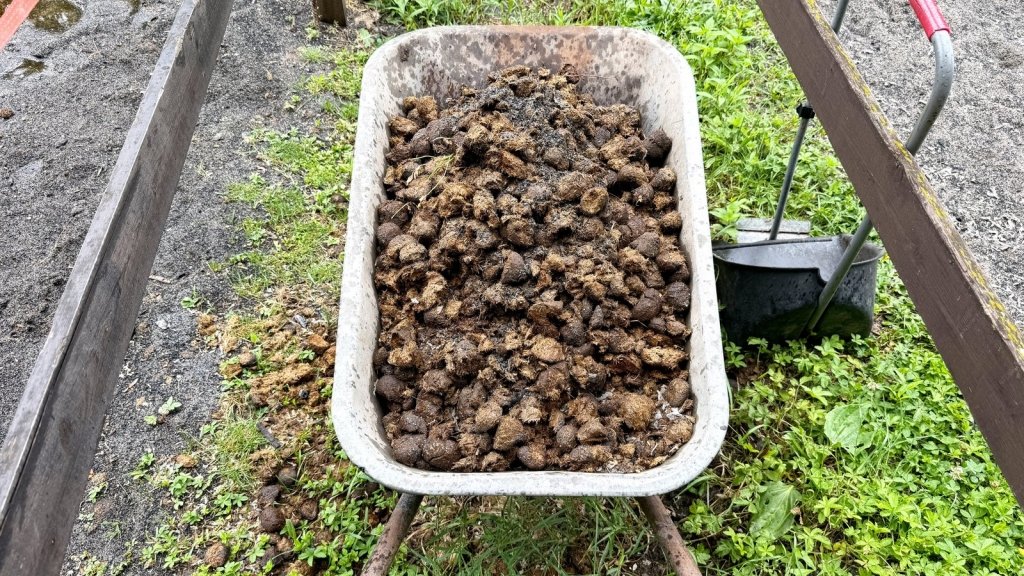
The short version: If new growth on tomatoes, beans, peas, potatoes or lettuce turned cupped, twisted and fern-like within weeks of spreading manure, bought compost, lucerne or straw, suspect a persistent pasture herbicide. Aminopyralid, clopyralid and picloram pass through grazing animals and survive composting, and they distort sensitive crops at a few parts per billion. Rake the mulch off, keep the soil warm and moist, crop the bed with grasses for a season, and test the next load in pots of pea seed.
It usually starts with a good deed: a trailer of horse manure, a few bales of hay, or six bags of compost for the new beds. A fortnight later the tomato leaves come out narrow and strappy, the bean tips cup like spoons, the pea shoots twist, and the lettuce sown that day comes up in patches.
The plants are not hungry, thirsty or diseased. They are being dosed at parts per billion by a herbicide sprayed on a paddock long before that manure arrived.
What these herbicides are, and why they last
The group that matters is the pyridine carboxylic acids: aminopyralid, clopyralid and picloram, with triclopyr a shorter-lived relative. Sustainable Gardening Australia lists the trade names they arrive under, including Tordon, Grazon, Lontrel and Stinger, and puts the half-life of aminopyralid at 32 to 533 days. Neither digestion nor composting heat breaks them down.
A New South Wales trial settled that second point: six-tonne piles of shredded garden organics were dosed and composted for 16 weeks, and while triclopyr fell below the 1 part per billion detection limit by week nine, clopyralid and picloram underwent little degradation.
So the controls sit at the farm gate. The label for Grazon Extra, a triclopyr, picloram and aminopyralid mix approved by the APVMA as 60830/147022, rules out making compost, mulch or mushroom substrate from treated plant material, and rules out sending straw from treated pasture off the farm for those purposes or for animal bedding at all. Hay or silage cut within six months of spraying must not go off the farm either, nor may manure or effluent from animals that grazed pasture sprayed in the previous six months.
In February 2021, more than 200 Victorian gardeners lost zucchini, tomatoes, eggplant, capsicum and radish to a commercial compost, while sweet corn, broccoli and cabbage in the same beds came through. The recycler traced the residues to council green waste, naming dicamba, 2,4-D, MCPA, triclopyr and picloram. An earlier Mudgee case came from stable manure.
What the damage looks like, and what it is not
The signature is that it hits new growth. Leaves already open stay normal, while everything made afterwards comes out wrong: narrow strappy leaflets, tips cupped like a spoon, fern-like shoots, twisted stems, distorted fruit. Legumes and the tomato family react first, then lettuce, spinach, potatoes and carrots. The pattern follows the material, not the plant: it turns up where the mulch went.
- Mosaic virus gives a mottle of light and dark green first, distortion second, and picks off plants one at a time rather than a whole bed. See tomato leaf problems.
- Spray drift twists growth the same way, but it lands on whatever faces the source, on many kinds of plant including trees and weeds, within days of a still warm morning. Your own knapsack, used for a hormone weedkiller and then for something else, does it too. Some garden blackberry killers hold picloram or triclopyr, so check yours on the APVMA register.
- Nitrogen drawdown under fresh woody mulch turns older leaves uniformly pale, oldest first, with no distortion. That is a feeding problem: see nitrogen drawdown.
- Tomato big bud, a phytoplasma spread by the leafhopper Orosius argentatus, swells flower buds, greens their petals and leaves hard, woody fruit. Cold and waterlogging give purpling and leathery rolling that passes as the soil warms.
Test a load before you spread it
A pot bioassay costs a packet of pea seed and three weeks. It is the method the Grazon Extra label sets out for paddocks, and the New South Wales Government notes it works in pots.
- Take a handful from at least ten places around the heap or trailer, going 200 mm down as the label asks, and mix it together.
- Fill three control pots with plain potting mix, and three test pots with two parts sample to one part mix, by volume.
- Sow three pea or bean seeds per pot just under the surface, and keep all six pots in one warm, bright place, evenly moist.
- Compare them at 14 to 21 days, once three sets of leaves show: cupped leaves, twisted shoots, stem elongation and pale narrow tips in the test pots and not the controls.
- Read it carefully. The label counts poor emergence among the signs, but the Washington gardener protocol warns that poor germination also follows immature compost, salt, pests or cold. Cupped, twisted new growth is the answer.

What to ask before you buy
- Where did this come from, and what was sprayed on it? Sustainable Gardening Australia suggests asking the source, the sprays used and whether withholding periods were kept. For manure, ask what the animals grazed and when that pasture was sprayed: six months is the supplier's obligation under the label, not yours.
- Pea straw and lucerne carry less risk, since those legumes are damaged by these herbicides and so are not sprayed with them. Lower risk, not a clearance.
- For compost, does it meet AS 4454, which includes a plant growth test, and does the supplier run it? The 2021 Victorian batch reportedly sat within Australian standards, so compliance alone is not an assurance. Buy one bag and test it first.

If a bed is already affected
- Stop using that material elsewhere. Rake off and remove loose mulch and un-rotted manure, because it keeps releasing as it rots; the Royal Horticultural Society puts removal first too.
- Keep it out of your heap and out of the council green bin, the route that contaminated the 2021 Victorian compost. Spread it thinly on lawn or rough grass, where the label says grasses are normally unaffected.
- Where it is already dug in, help the microbes: the label says to incorporate manure evenly through the surface soil, and that breakdown is faster in warm, moist soil and can be helped by watering.
- Crop the bed with sweet corn or a cereal cover crop; broccoli and cabbage came through the Victorian case. For a crop this summer, use fresh bags of clean mix.
- Tell the supplier, and consider a report to the APVMA Adverse Experience Reporting Program, which takes crop damage reports.
What does not work
Composting it for longer is the first instinct and the weakest: 16 weeks of windrow composting barely touched clopyralid or picloram. Soil microbes are the breakdown route, and we found no Australian label or official source that gives a home rate for any amendment, including activated charcoal or biochar, so there is nothing here we can recommend you spread. Flushing the bed moves soluble residue down the profile instead of destroying it, and black plastic dries and cooks the soil, the opposite of what the label relies on. And brewing a tea from affected hay puts the problem in the watering can.
Supply and risk across Australia's climate zones
These zones are broad groupings with soft edges, so gardeners between them can lean on local cues such as first and last frosts. What changes here is supply, not only weather.
- Tropical (Darwin in the Northern Territory, Cairns and Townsville in Queensland): manure comes from cattle and horse country where woody weed spraying is routine, so ask the spray history. Warm, wet soil breaks residue down fastest.
- Subtropical (Brisbane, Ipswich and Toowoomba in Queensland, northern New South Wales): parts of the south east sit inside fire ant biosecurity zones, where soil, mulch, compost, manure and hay cannot leave a zone without meeting movement controls, so supply is often local.
- Arid and semi-arid (Alice Springs in the Northern Territory, Broken Hill in New South Wales, Mildura in Victoria, Port Augusta in South Australia, Kalgoorlie in Western Australia): manure comes from stables, feedlots and stations, hay is trucked in from cropping districts, and the label warns plant-back periods run far longer in drought.
- Temperate (Sydney and the New South Wales coast, Melbourne in Victoria): council green waste compost is most used here, and this is where the 2021 contamination happened. Ask about the feedstock.
- Mediterranean (Perth and the south west of Western Australia, Adelaide and the South Australian mid north): sandy soils mean gardeners import a lot of compost and manure, and dry summers slow breakdown, so keep an affected bed watered.
- Cool and alpine (Tasmania, Ballarat in Victoria, Orange and Armidale in New South Wales, Canberra and the ACT, Stanthorpe in Queensland): horse manure and pasture hay are the local supply, from the Tasmanian midlands to the horse properties around Canberra, and cold soil slows the breakdown that clears residue.
Frequently asked questions
How long until I can plant peas and tomatoes again?
Nobody can give you a date. After a paddock spray, label plant-back periods run from two months for wheat in Queensland up to 24 months for peas and lucerne in southern New South Wales. A garden dose is smaller, and the Royal Horticultural Society reports that repeated digging over between summer and autumn can bring ground back in under a year. Test each season.
Is produce from an affected bed safe to eat?
We have found no Australian official statement covering produce from a home bed affected by carryover, so we will not put a figure on it. The APVMA sets residue limits in food and is the body to ask.
Can I tell by looking at the manure or compost?
No. Nothing about the smell, colour or texture gives it away at a few parts per billion, which is why the pot test is the practical home check. Our choosing mulch guide covers the other risks.
It is a rotten thing to happen to a gardener who was trying to feed the soil. One pot of pea seed, sown before the trailer tips, catches it.
Related growing guides
- Choosing mulch for the vegetable garden
- Nitrogen drawdown: why plants go yellow under fresh mulch
- Composting for beginners
Rest an affected bed under a cover crop and soil builder, then sow again with our vegetable seeds.