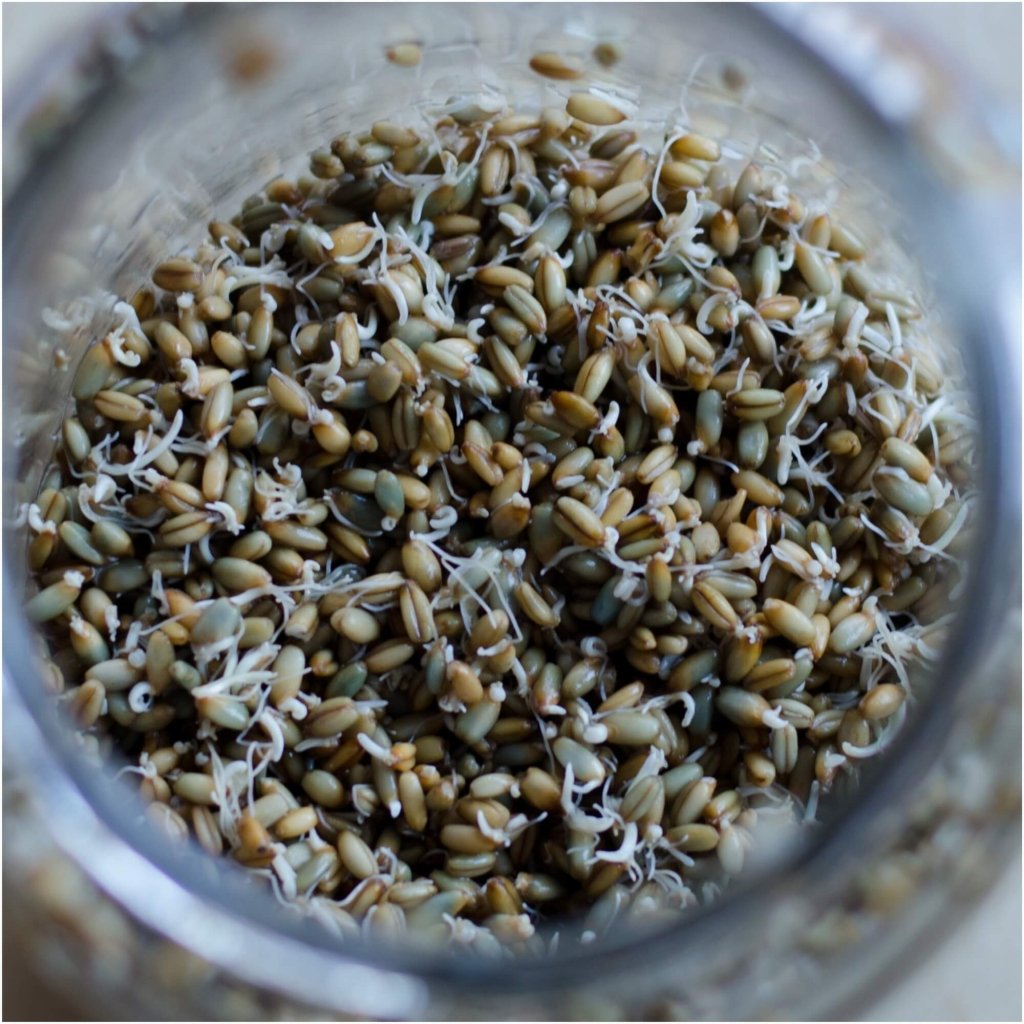
Rye Grain Grass Seeds (NOT to WA, TAS)
Untreated cereal rye grain (Secale cereale) for growing rye grass on a tray, from 400 g to 2 kg. This product cannot be shipped to Western Australia or Tasmania.
Rye grass is the young leaf of cereal rye, not ryegrass, the lawn and pasture grass. It is grown thickly on a shallow tray, cut with scissors and juiced like wheatgrass, usually 6 to 10 days from the start of the soak.
How to grow rye grass on a tray
- Tip the dry grain onto a plate and pick out stones, chaff and broken grains. Allow about 330 g for a 25 x 50 cm tray.
- Rinse it, cover it with two to three times its volume of cool drinking water and soak for 6 to 12 hours, the short end in a warm kitchen.
- Drain, then rinse and drain every 8 to 12 hours until most grains show a root tip.
- Spread the grain in one even, dense layer on damp seed raising mix, press it gently on, cover the tray and keep it dim until the shoots stand 2.5 to 5 cm tall.
- Uncover it and grow it in bright, indirect light, watering the mix from below.
- Cut the blades with clean scissors 2 to 3 cm above the mix when they stand 10 to 15 cm tall.
Store cut grass dry and sealed at 5°C or colder for about a week at most, and drink juice as soon as it is made.
Rye grain can carry ergot, hard dark purple to black bodies longer than the grain, which are poisonous. A packet with ergot bodies in it goes back to the seller and is not grown. Rye grain contains gluten, which people with coeliac disease avoid.
Food safety
Sprouted grain is a raw sprout and can carry Salmonella, E. coli and Listeria, even when grown with care at home. The NSW Food Authority advises cooking all sprouts thoroughly before eating. People who are pregnant, aged 70 or over, children under 5 and anyone with a weakened immune system should not eat raw or lightly cooked, still crunchy sprouts or drink raw grass juice. Wash, rinse and sanitise jars, trays and tools before the first batch and between batches, and use only water fit to drink. Potting mix can carry Legionella bacteria: follow the warning on the bag, wet the mix down, wear gloves and a P2 mask, and wash your hands afterwards.
Guides and articles