
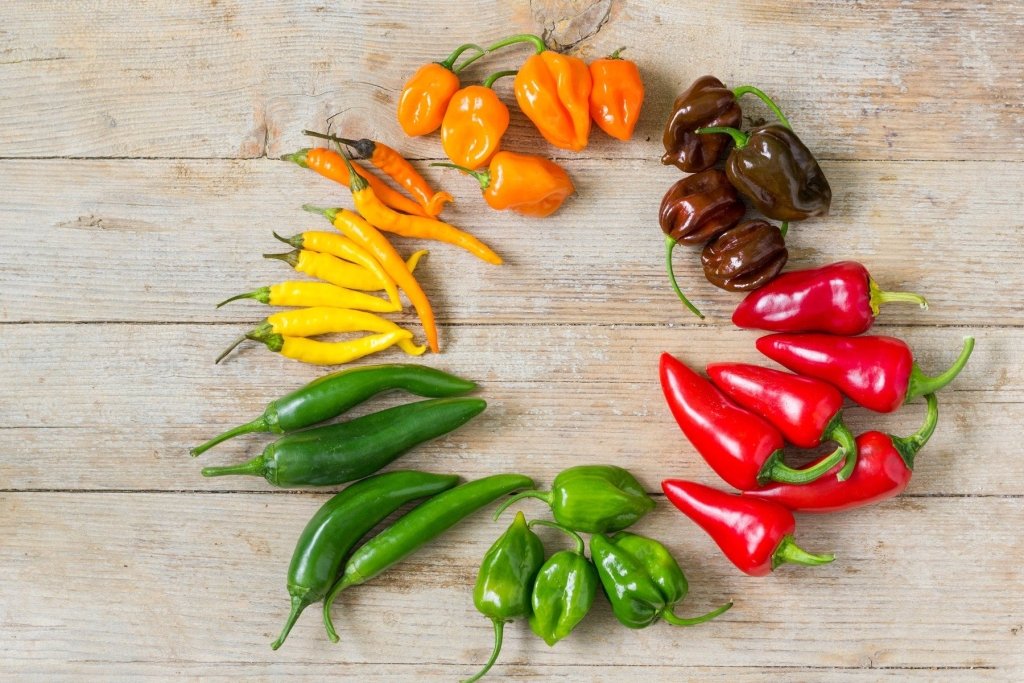
The short version: Chillies are one of the most rewarding things you can grow, and the basics are simple. They are a warm-season crop that is slow from seed, so it pays to start early and give them a long, sunny summer. Heat is measured on the Scoville scale, which runs from gentle types you can eat by the handful to extreme ones you treat with real respect. Once you are picking, the harvest dries, freezes and turns into sauces and flakes beautifully, with just one safety rule to remember about chilli in oil.
There is a chilli for everyone, from a mild type that adds warmth without tears to a superhot that needs gloves and a glass of milk on standby. The trick is knowing how hot is hot, picking varieties that match what you actually like to eat, and giving the plants the warm, patient start they want. Do that, and a couple of plants can often keep your kitchen in chilli all season and well beyond.

How hot is hot? The Scoville scale
The heat in a chilli comes from a compound called capsaicin, and it is measured in Scoville Heat Units. The scale is a useful guide rather than an exact science, because the heat of any given chilli also shifts with the variety, the season and how the plant was grown, but it gives you a sense of what you are in for.
As a rough map, sweet capsicums sit at zero, a jalapeno lands somewhere around the low thousands, cayenne and bird's eye climb into the tens of thousands, habanero and scotch bonnet reach the hundreds of thousands, and the superhots such as the Carolina Reaper push past a million. The numbers matter less than the jump between each step, which is bigger than it looks: a habanero is not twice a jalapeno, it is in another postcode.

Choosing your chilli, from mild to wild
The best chilli to grow is the one you will actually use, so start with the kitchen rather than the bragging rights. For everyday cooking, a mild to medium type like a jalapeno or a cayenne gives plenty of flavour and a manageable kick, and both are generous croppers.
If you like real heat, habanero and scotch bonnet bring a fruity fire that suits sauces and salsas. The superhots are a project in their own right, slow and demanding, and worth it mainly if extreme heat is the point. A good plan for a first year is one mild, one medium and, if you are tempted, just one hot, so you learn what each does before you commit a whole bed.

Growing chillies, the short version
Chillies are close cousins of the capsicum and want the same things: warmth, sun, steady water and patience. The seed is slow to germinate and needs genuine warmth, more than a cool spring windowsill provides, so most Australian gardeners start early, in late winter or early spring, somewhere warm or on a seedling heat mat. You plant out once the soil has warmed and the last frost has passed.
From there they ask for full sun, a sheltered spot, free-draining soil and even watering. They are slow to fruit, so do not panic at a quiet early summer, and go easy on high-nitrogen feed, which gives you leaf instead of pods. Interestingly, a plant that is kept a little lean and even a touch dry late in the season can often produce hotter fruit, since mild water stress may concentrate the capsaicin.

Handling hot chillies safely
The capsaicin that makes a chilli hot will happily burn your skin and eyes, so with anything medium or above it is worth wearing gloves to cut and deseed, and keeping your hands well away from your face until you have washed them thoroughly. This is the part new growers often learn the hard way. Soap and water helps, and a little milk or oil lifts the burn better than water alone.
When you are drying or grinding hot chillies, do it in a well-ventilated spot, because the airborne dust can catch in your throat and eyes. None of this is cause for alarm, it is just sensible care, and it matters more the further up the scale you go.

Making the most of the harvest
A good chilli plant is generous, so it pays to have a plan for the glut. You can pick chillies green or leave them to ripen to red, orange or yellow, when they are usually sweeter, and often hotter too, depending on the variety. The simplest ways to keep them are also the safest: chillies freeze well whole with no blanching, and they dry beautifully, whether strung up in a warm airy spot, run through a dehydrator, or dried slowly in a low oven, then crushed into flakes or ground to powder.
From there the kitchen opens up. Fresh chillies make salsas and quick refrigerator pickles in vinegar, and a batch of dried flakes will see you through winter. One thing to keep front of mind, though, is oil.

A safety note on chilli in oil
Homemade chilli oil and chillies bottled in oil are a genuine food-safety risk, because chillies are low in acid and, sealed under oil with no air, they create exactly the conditions that the bacterium behind botulism likes. It is a real hazard, not a theoretical one, and CSIRO's guidance on preserving vegetables and herbs in oil explains why low-acid foods like chillies should not be kept in oil at room temperature. The safest approach is to keep chillies out of oil and use an acidic method instead, such as a vinegar pickle or sauce. If you do make a chilli oil, make only a little, keep it refrigerated, use it quickly, and throw out anything that turns cloudy, fizzes or smells off.
Chillies across Australia
Chillies grow right across the country; only the timing and the main challenge shift with your climate.
- Tropical (Darwin, Cairns): a long warm season, and a plant can sometimes carry over to a second year; grow through the drier months.
- Subtropical (Brisbane, Sunshine Coast): generous warmth, with humidity the main thing to manage.
- Arid and semi-arid (Alice Springs, Mildura): plenty of heat, so the job is a sheltered spot and steady, deep watering.
- Temperate (Sydney, Melbourne, Canberra): start early under cover, plant out after frost, and pick from summer into autumn.
- Mediterranean (Perth, southern WA, Adelaide): reliable summer heat suits chillies well, as long as the water stays steady.
- Cool and alpine (Tasmania, the tablelands): a short season, so start early under cover and lean towards quicker varieties.

So pick a couple of varieties that suit your taste, give them a warm early start, and respect the heat once you are picking. You can browse our chilli seeds for types from mild to ferocious, and settle on the ones you will reach for again and again.
More than most crops, chillies reward a patient start with months of colour and heat. A jar of your own flakes on the shelf in winter is a quiet kind of triumph.
Frequently asked questions
What is the Scoville scale?
It is a measure of how hot a chilli is, based on its capsaicin content, running from zero for sweet capsicums up past a million for the superhots. It is a useful guide, though the actual heat of a chilli also varies with the variety, the season and growing conditions.
Which chilli should a beginner grow?
A mild to medium type such as a jalapeno or a cayenne is a great start, since both crop well and give flavour with a manageable kick. Grow one mild and one medium first, and add a hot variety only once you know you want it.
How do I start chilli seeds in Australia?
Start early, in late winter or early spring, somewhere warm such as a bright windowsill or on a heat mat, since the seed needs real warmth to germinate and the season is long. Plant the seedlings out once the soil has warmed and the last frost has passed.
Do I need gloves to handle chillies?
For anything medium or hotter, gloves are well worth it. Capsaicin burns skin and eyes, so wear gloves to cut and deseed hot chillies, keep your hands from your face, and wash thoroughly afterwards.
What is the best way to preserve a chilli glut?
Freezing and drying are the easiest and safest. Chillies freeze whole with no blanching, and they dry well for flakes or powder. Vinegar pickles and sauces also keep well.
Is homemade chilli oil safe?
Treat it with care. Chillies are low in acid, and storing them in oil at room temperature can allow the bacteria that cause botulism to grow. Keep any homemade chilli oil refrigerated and use it within a few days, and prefer vinegar-based sauces for longer storage.
Related growing guides
- Growing Capsicum in Australia: From Seed to Harvest
- Why Your Zucchini Keeps Flowering But Not Fruiting
- Unusual Vegetables You Can Grow from Seed in Australia
Ready to plant? Browse our Chilli seeds.