
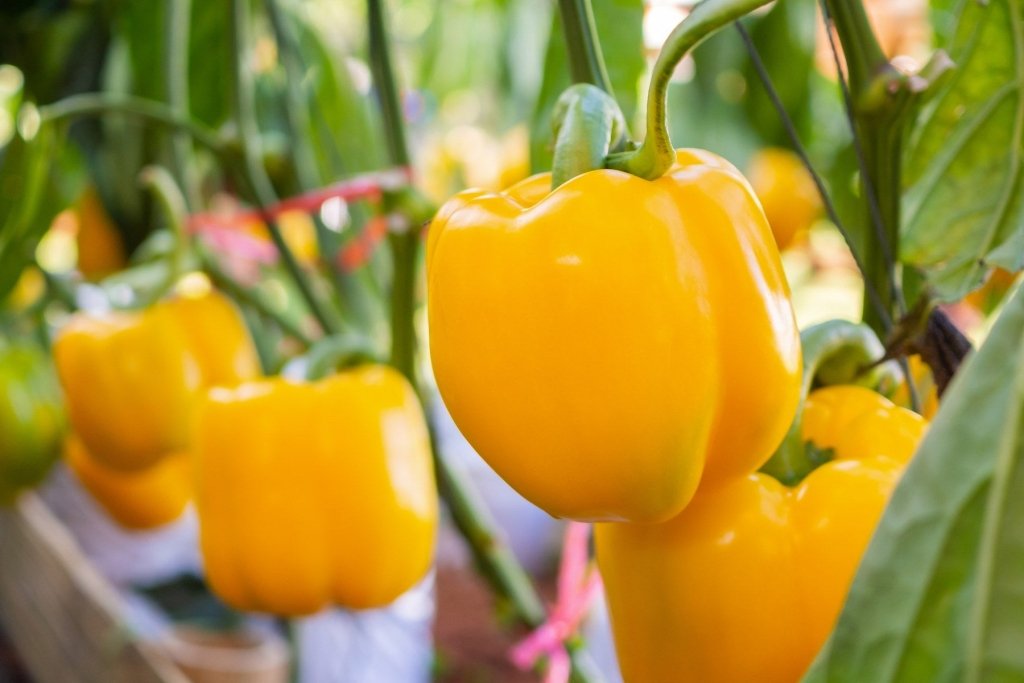
The short version: Capsicums reward patience more than anything else. They need a long, warm season, a sunny spot and steady water, and they are slow from seed, so in most of Australia it pays to start early. Give them warmth and time and they move from green to red, yellow or orange right on the plant, sweetening as they ripen. The usual things that trip people up are starting too late, extreme heat or cold making the flowers drop, and picking the whole crop green, so none ripen to their sweeter colour.
Capsicums test a gardener's patience like few other crops. For weeks a young plant can sit there looking like it has forgotten what it is for, then all at once it sets fruit and keeps going until the cold arrives. Once you know what the plant needs, and how long it likes to take, the guesswork falls away.

Start with warmth, and start early
Capsicum seed is slow and a little fussy to sprout, wanting real warmth, ideally around 25°C to 30°C in the mix, and a week or two of patience. Because the run from seed to ripe fruit is long, most Australian gardeners get ahead by starting seed early, in late winter or early spring, somewhere warm such as a bright windowsill or with a seedling heat mat. You then plant out once the weather and soil have warmed and the last frost has passed.
That head start matters more in the south than the north. In a short, cool season, seedlings raised early and planted out warm are the difference between a good crop and a handful of late fruit.

Give them a long, warm, sunny season
Capsicums are warm-season plants and frost-tender, so they crop happily through the warm months and sulk in the cold. They ask for full sun, a sheltered warm position, free-draining soil and steady moisture. None of that is fussy, but all of it helps a slow plant make the most of the season.
In frost-free parts of Australia a capsicum can live and crop for more than one year, slowing in winter and picking up again in spring. In cold zones it is simplest to treat it as a summer annual and start fresh each year.

Be patient: fruit takes its time
The hardest part of growing capsicum is the wait. Plants are slow to get going and can take a couple of months or more from planting out to the first pickable fruit, then longer again to ripen to colour. This is completely normal.
A capsicum that seems to be doing nothing in early summer is usually just building the leafy frame it needs before it carries a crop. Resist the urge to overfeed it into a hurry, because that tends to backfire.

Why flowers drop without setting fruit
If your capsicum flowers and then drops them with no fruit behind, temperature is the usual culprit. Very hot spells, often above the mid 30s, and cold nights below about 15°C, can both push a plant to shed its flowers rather than set fruit. It is the plant protecting itself, not a disease.
The fix is mostly patience. Keep the water steady, give a little afternoon shade through a heatwave, and wait for milder weather, and the fruit usually follows once the temperature settles.

Feeding and water, kept simple
Capsicums are steady, moderate feeders rather than hungry ones. A lot of high-nitrogen fertiliser gives you a big leafy bush and little fruit, so once flowering starts, favour a potassium-leaning feed such as sulphate of potash or a fish and seaweed blend, and keep the watering even.
That even watering does double duty. Uneven moisture is the usual cause of blossom-end rot, the dark sunken patch that can appear on the base of the fruit, so a steady drink and a layer of mulch go a long way.

Green, red, or somewhere in between
Every red, yellow or orange capsicum starts out green. You can pick them green and firm, or leave them on the plant to ripen to their final colour, when they turn sweeter and often carry more vitamin C. Ripening to colour takes extra weeks, so it is a trade between quantity and sweetness.
Picking some fruit while it is green often nudges the plant to set more, so a lot of gardeners do both: a few green ones for cooking now, and a few left to colour up for later.

Pests, and a fruit fly note
Capsicums are fairly hardy and not much troubles them, but a couple of things are worth keeping half an eye on. Aphids can gather on soft new growth and are easily hosed or wiped off. Sunscald, a pale, leathery patch, can show up on fruit left exposed to fierce sun, so a little leaf cover over the crop helps.
The one to plan around in much of the country is fruit fly. In eastern and northern Australia, capsicum is a host of Queensland fruit fly (Bactrocera tryoni), and in parts of Western Australia, Mediterranean fruit fly (Ceratitis capitata). Where these are present, exclusion netting, baiting and promptly clearing fallen fruit all help keep a crop clean, and government fruit fly guidance sets out what works in your area. If you do net, choose wildlife-safe netting with a mesh small enough that you cannot poke a finger through, so birds, possums and bats cannot get caught.
A quick word on climate
The plant is the same everywhere, but the timing and the main worry shift with your weather:
- Tropical (Darwin, Cairns): grow through the dry season, when disease pressure is lower, and keep up fruit fly control year round.
- Subtropical (Brisbane, Sunshine Coast): a long warm season is generous, and plants often crop into a second year; watch for fruit fly and humid-weather disease.
- Arid and semi-arid (Alice Springs, Mildura): heat is plentiful, so the job is steady water and a little afternoon shade to prevent sunscald and flower drop.
- Temperate (Sydney, Melbourne, Canberra): start seed early under cover, plant out after frost, and picking can run from summer into autumn.
- Mediterranean (Perth, southern WA, Adelaide): long hot summers suit capsicums well, with even water the main thing to get right.
- Cool and alpine (Tasmania, the tablelands): the season is short, so start early, choose a warm or sheltered spot, and consider growing under cover to push it along.
So before you worry that a slow capsicum has stalled, give it warmth, steady water and time, and ease off the high-nitrogen feed. You can browse our capsicum seeds for types to suit your season, from quick small fruit for cool gardens to big blocky kinds for a long summer. If you are short on space, capsicums also crop well in a large pot, as our small-space and balcony edible garden guide covers.
More than any trick, capsicums want a head start and a patient gardener. Give them both and a single plant can keep the kitchen in colour from late summer well into autumn.
Frequently asked questions
Why is my capsicum not producing fruit?
The most common reasons are timing and temperature. Young plants are simply slow, and once flowering, very hot or cold spells make the flowers drop rather than set. Steady water, some afternoon shade in heatwaves, and patience for milder weather usually bring the fruit on.
When should I start capsicum seed in Australia?
Because the season is long, it pays to start early, in late winter or early spring, somewhere warm such as a bright windowsill or on a heat mat. Plant the seedlings out once the soil has warmed and the last frost has passed, which comes earlier in the north than the south.
How long does capsicum take from seed to harvest?
It is a slow crop. Expect a couple of months or more from planting out to the first green fruit, and several weeks more again if you want it to ripen to red, yellow or orange. Starting early gives the plant the long, warm run it needs.
Should I pick capsicums green or wait for them to colour?
Either works. Green fruit is firm and ready earlier, while fruit left to ripen to colour is sweeter and often higher in vitamin C. Picking some green often encourages the plant to set more, so many gardeners harvest a mix.
Why do my capsicums have a dark patch on the bottom?
That is blossom-end rot, usually caused by uneven watering rather than a disease. Keeping the moisture steady and mulching to even it out is the best way to avoid it.
Can I grow capsicum in a pot?
Yes. Capsicums grow well in a large pot of quality potting mix in a warm, sunny spot, which also lets you move them out of the worst heat or cold. Keep the water steady, since pots dry out faster than garden beds.
Related growing guides
- The Chilli Grower's Starter Guide
- Why Your Zucchini Keeps Flowering But Not Fruiting
- Unusual Vegetables You Can Grow from Seed in Australia
Ready to plant? Browse our Capsicum seeds.