
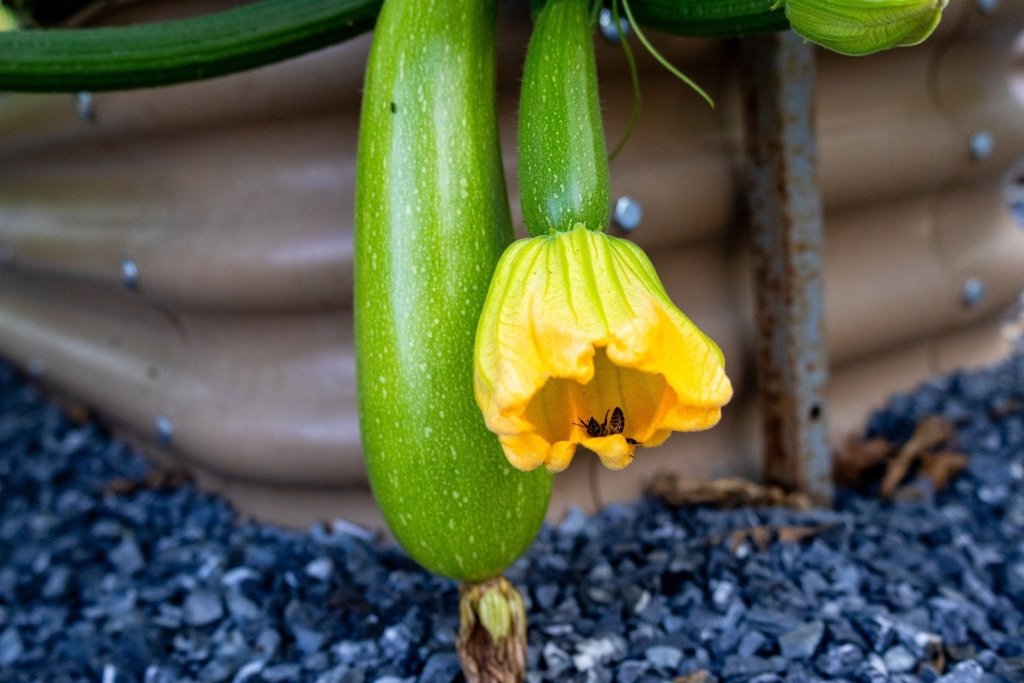
The short version: If your zucchini is covered in flowers but setting no fruit, the usual reason is timing or pollination, not a sick plant. Plants often open a run of male flowers first, before the females arrive, so early on there is simply nothing to set fruit. Once female flowers appear, each with a tiny zucchini behind it, they need pollinating, and in cool, wet or windy weather the bees may not manage it, so the little fruit yellows and rots instead of swelling. The fixes are patience, a few pollinator-friendly habits, and hand-pollinating when you need to.
Few things in the summer patch are as puzzling as a big, healthy zucchini plant smothered in flowers, with not a single zucchini to show for it. It looks like something is wrong, but quite often the plant is doing exactly what it should. You just need to know what to look for.

First, the usual reason: males before females
Most of the time, a young zucchini simply has not started making female flowers yet. Zucchini plants tend to open a run of male flowers first, often for a week or two, before the first females arrive. With only male flowers open, there is nothing for them to pollinate, so no fruit forms. This is completely normal and usually sorts itself out with a little patience.
Telling the two apart is easy once you know the trick. A female flower has a tiny zucchini, the swollen ovary, sitting right behind the petals. A male flower sits on a plain, slender stem with nothing behind it. Spend a moment looking and the pattern becomes obvious.

When pollination is the problem
Once both kinds of flower are open, the female still needs pollen carried to her from a male flower, a job normally done by bees. In cool, wet or windy weather, or in gardens where few pollinators visit, such as balconies, courtyards and heavily sprayed yards, that transfer does not happen.
The tell-tale sign is a small fruit that starts to form behind the flower, then yellows, softens and rots at the tip rather than swelling. It is easy to mistake for disease, but at this tiny-fruit stage it is very often a pollination failure: the plant set the fruit hopefully, then let it go when no pollen arrived. If instead a larger fruit develops a dark, sunken patch at the blossom end, that points more to blossom-end rot, which comes back to steady watering.

How to hand-pollinate, the reliable fix
When the bees are not obliging, you can play bee yourself. It takes about a minute, a soft brush or a steady finger, and the reward is a fruit that actually swells. Do it in the morning, when the flowers are freshly open, because they often close by the afternoon.
Pick or snip a freshly open male flower from the plant, then peel back or strip off the petals to expose the pollen-covered centre. Then dab that centre gently onto the middle of each open female flower, or use a small soft brush to move the pollen across. One male flower carries enough pollen for several females. Within a day or two, a pollinated fruit begins to swell rather than shrivel, and you will know it worked.

Other things that hold fruit back
Pollination is the main gatekeeper, but a few other habits can leave a healthy plant running on the spot:
- Too much nitrogen: a plant fed heavily on a high-nitrogen fertiliser puts its energy into lush leaf and can be slow to fruit. Ease off, and once flowering starts favour a balanced or potassium-leaning feed such as sulphate of potash or a fish and seaweed blend.
- Heat stress: in extended heat above about 32°C, plants may drop flowers or pause female flowering for a while. They usually pick up again as the weather eases, so steady water and a little afternoon shade help them through.
- Too much shade or crowding: zucchini want full sun and air moving around them. A shaded or crammed plant flowers poorly and sets less fruit.
- Leaving fruit too long: once fruit does set, pick it young and often. A big marrow left on the plant can signal it to slow down, so regular picking often helps keep new fruit coming.

Encouraging the bees to do it for you
The longer-term answer is a garden the bees want to visit. Keep something flowering near the veg patch through the season, avoid spraying insecticides while flowers are open since the spray can harm the bees you are relying on, and tuck a few bee-friendly plants among the vegetables, such as borage, cosmos, or basil left to flower, with a shallow dish of water in the shade nearby. The more pollinators about, the less hand-pollinating you will need to do, and the better the fruit set across the cucurbits that rely on insect visits.

A quick word on climate
The puzzle looks the same in every state, but the missing piece changes with your weather:
- Tropical (Darwin, Cairns): grow through the milder, drier months, keep airflow up to limit disease, and expect bees to be busiest on warm mornings.
- Subtropical (Brisbane, Sunshine Coast, Coffs Harbour): a long warm season suits zucchini, but watch for disease in humid spells and keep an eye on pollination after wet weather.
- Arid and semi-arid (Alice Springs, Mildura): pair the heat advice with regular deep watering, since stressed plants are quick to drop flowers.
- Temperate (Sydney, Melbourne, Canberra): in a cool or wet spring, early-season pollination is the usual problem, so hand-pollinate until it warms and the bees turn up.
- Mediterranean (Perth, southern WA, Adelaide): hot dry summers can bring heat-related flower drop, so keep the water steady and offer a little afternoon shade in heatwaves.
- Cool and alpine (Tasmania, the tablelands): a short, cool season means slow early pollination, so hand-pollinate and make the most of warm mornings.

So before you give up on a flowering-but-fruitless zucchini, check which flowers are open, have a look for the tiny fruit behind the females, and be ready to lend a hand first thing in the morning. A minute with a male flower and a soft brush is often all it takes. You can browse our vegetable seeds for zucchini and other summer croppers, and if you are growing in a small or balcony space where pollinators can be scarce, our small-space and balcony edible garden guide is worth a read.
More often than not, a fruitless zucchini is just a plant waiting for the right flowers and a little help. Give it both, and the famous zucchini glut is usually not far behind.
Frequently asked questions
Why does my zucchini have flowers but no fruit?
Most often because only male flowers are open so far, or because the female flowers are not being pollinated. Plants usually produce male flowers first, then females, and the females need pollen moved to them by bees or by hand to set fruit.
How do I tell male and female zucchini flowers apart?
Look behind the flower. A female flower has a tiny zucchini, the swollen ovary, just behind the petals. A male flower sits on a plain, thin stem with nothing behind it. A plant needs both, and the females are the ones that become fruit.
Why do my baby zucchini turn yellow and rot?
That is the classic sign of a female flower that was not pollinated. The little fruit forms, then yellows, softens and rots at the tip instead of swelling. Hand-pollinating the female flowers usually fixes it.
How do I hand-pollinate a zucchini?
In the morning, pick a freshly open male flower, remove the petals, and dab the pollen-covered centre onto the middle of each open female flower, or use a small soft brush. One male flower can pollinate several females, and a pollinated fruit will start to swell within a day or two.
Can too much fertiliser stop zucchini fruiting?
Yes. A lot of high-nitrogen fertiliser encourages leafy growth at the expense of fruit. Once flowering begins, ease back and favour a balanced or potassium-leaning feed, and make sure the plant has full sun.
Will hot weather stop zucchini setting fruit?
It can. In extended heat above about 32°C, plants may drop flowers or slow female flowering for a time. They usually recover as it cools, so keep the water up and give a little afternoon shade during heatwaves.
Related growing guides
- Growing Capsicum in Australia: From Seed to Harvest
- The Chilli Grower's Starter Guide
- Unusual Vegetables You Can Grow from Seed in Australia
Ready to plant? Browse our Vegetable Seeds.