
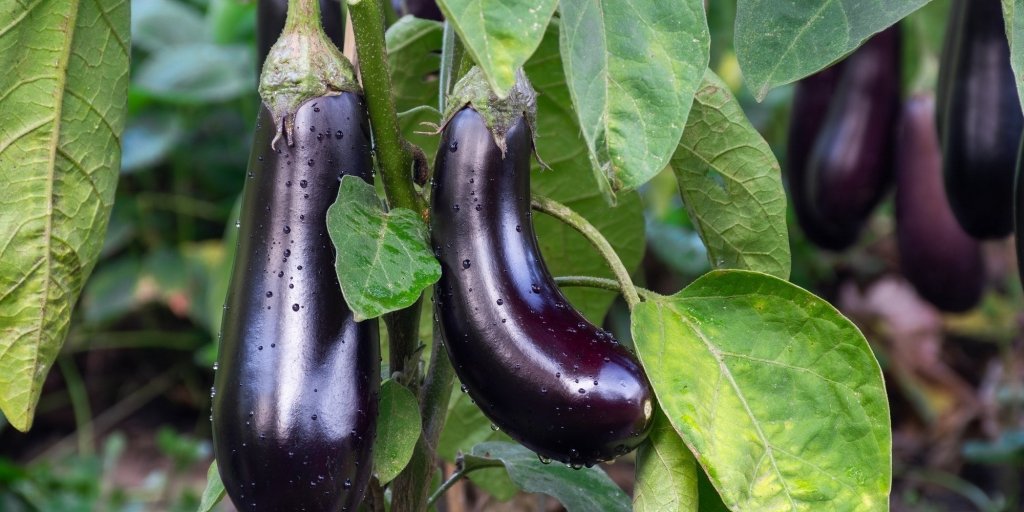
Why grow eggplant from seed
Eggplant is a rewarding warm season crop to raise from seed, and seed opens up far more of the family than any seedling rack will offer. Long slim Asian types, small round Thai types, striped Italian heirlooms and white, green or orange varieties are all available as seed, and almost none of them turn up as punnets in a garden centre.
Solanum melongena, known as eggplant, aubergine or brinjal, belongs to the Solanaceae family along with tomatoes, capsicums and potatoes. It is native to South Asia and is grown through the warmer parts of the world. The plants are grown for their fleshy fruit, which holds up to roasting, grilling, frying and long slow curries. Here is how to grow it from seed in an Australian garden.
When to sow eggplant, zone by zone
Eggplant needs warmth from the first day to the last. It will not germinate reliably in cold mix and it will not set fruit in cold soil, so timing matters more than almost anything else you do. These sowing windows follow the Happy Valley Seeds sowing calendar.
- Tropical (the Top End, far north Queensland and the Kimberley): sow Aug to May, avoiding the wettest weeks of the wet season.
- Subtropical (south east Queensland up to Bundaberg and the NSW north coast): sow Aug to Feb.
- Arid and semi-arid (inland NSW, SA, WA, the NT and western Queensland, from Mildura to Alice Springs): start seed undercover in Aug, then sow or plant out Oct to Nov once the frosts have finished.
- Temperate (coastal NSW and southern Victoria, including Sydney, Melbourne and Newcastle): start seed undercover from late Jul through Aug, sow undercover or direct in Sep, then sow direct or plant out Oct to Nov.
- Mediterranean (Perth, Adelaide, the south west of WA and the SA gulf country): follow the temperate months, and plan for the dry summer with deep watering and a thick mulch rather than shifting the sowing date.
- Cool and alpine (Tasmania, Canberra, and the tablelands and alpine districts of NSW and Victoria): start seed undercover with bottom heat from late Jul to Sep, and plant out only once the last frost has passed, usually Nov or early Dec. A warm north facing wall, a large pot or a tunnel makes the difference in a short season.
These are broad groupings. Gardeners who sit between two zones, or well above the nearest capital city, should lean on their own local frost dates rather than the zone name.
How to start eggplant seeds
Soak the seeds in water for about 24 hours to soften the seed coat. Fill a punnet or tray with a fine seed raising mix, sow the seeds about 5mm deep and water gently. Keep the mix moist but never soggy.
Warmth is the part most people get wrong. Eggplant germinates best when the mix sits between 25°C and 30°C, which is warmer than most houses in late winter, so a heat mat is worth the money. At that temperature seedlings usually appear in 7 to 14 days. Below about 20°C germination is slow and patchy, or it does not happen at all.
Prick the seedlings out into individual pots once they have their first pair of true leaves. Grow them on in good light until they are 15 to 20cm tall and stocky, then harden them off over a week of half days outside before planting out.

Caring for eggplant seedlings
Water seedlings regularly and deeply, because eggplant checks quickly when it dries out and is slow to recover. Water at the base rather than over the leaves, which keeps the foliage dry and fungal problems down, and lay a light mulch around each plant to hold moisture and even out the soil temperature.
Plant out only after the last frost has passed and the soil has warmed to about 18°C. A kitchen thermometer pushed 5cm into the bed in the morning will tell you more than the calendar will.
Dig a hole roughly twice as wide as the root ball so the roots can spread, set the plant at the depth it sat in the pot and water it in well. Space plants 50 to 60cm apart with about 80cm between rows. That spacing gives every bush light and moving air, which is the cheapest disease control there is.

Protecting young plants from cold
Eggplant is damaged by cold nights well before a true frost arrives. Mulch protects the roots but does nothing for the leaves, so cover the plant itself: a cloche, a frost cloth over hoops, or an upturned pot or bucket placed at dusk and lifted in the morning. A row planted along a north facing wall or fence picks up stored heat overnight and gets away faster.
Feeding, watering and support
Dig compost or aged manure through the bed a few weeks before planting and add a balanced fertiliser at planting time. Once the first flowers open, switch to a feed that leans towards potassium, such as sulphate of potash or a liquid tomato food, applied at the rate on the label. Skip the high nitrogen feed at that point, because it grows a big leafy bush carrying very little fruit. Extra phosphorus is not the answer either. Bone meal and rock phosphate are often sold as a way to force more flowers, but unless a soil test shows the bed is genuinely short of phosphorus they simply add to a level that is already high in most home garden beds.
Water deeply and regularly through summer rather than lightly every day, and keep the mulch topped up. Eggplant wants at least six hours of direct sun a day and is happiest above 21°C.
Eggplant flowers are self fertile, but they set more and heavier fruit when bees visit, so a few flowering herbs or annuals nearby will help. If fruit set is poor in still, humid weather, a gentle flick of each open flower with a finger can shake the pollen loose.
Support the bush once the fruit sizes up. Tie the main stems to a stake or a small trellis so the branches do not split and the fruit does not sit on wet soil.
Pests and diseases
Aphids, spider mites and the 28-spotted potato ladybird, which chews the leaves to lace and should not be confused with the helpful spotted ladybirds, are the usual insect problems. In warmer districts Queensland fruit fly will sting the fruit as well.
Work through it in order rather than reaching for a spray first.
- Identify the pest before doing anything. A good many of the beetles and bugs on an eggplant are harmless or actively useful.
- Knock aphids and mites off with a firm jet of water, and pick larger pests off by hand in the cool of the morning.
- Exclude what you can. Fine insect netting over a frame keeps fruit fly, moths and beetles off the plant, and it is the only reliable answer to fruit fly in a home garden. Individual fruit can be bagged instead.
- Encourage predators. Ladybirds, hoverflies, lacewings and small parasitic wasps work on aphids for nothing, provided the garden carries some flowers for them.
- Only if the damage is still building, use an APVMA-registered product for that pest on that crop, used exactly as the label says, including the withholding period before harvest.
Where fruit fly is about, pick up fallen and stung fruit promptly and dispose of it rather than adding it to the compost. Our guide on fruit fly in the home garden covers netting and safe disposal in more detail.
Bacterial problems are a different matter, because no spray cures them and a soap spray does nothing at all to bacteria. Bacterial wilt makes individual leaves droop and then collapses the whole plant, often on a hot day. Once a plant has it, pull it out, bin it rather than compost it, and keep the Solanaceae family out of that spot for several years. Protect the rest of the patch with ordinary hygiene: water at the base, work among the plants only when the foliage is dry, wipe secateurs down between plants, and rotate the beds each season.
When and how to harvest eggplant
Size and colour are poor guides on their own, because the range runs from golf ball sized Thai types to Ping Tung Long at 30 to 40cm, and from deep purple through white, green, orange and striped. The reliable test is the skin and the feel of the fruit.
- The skin should be glossy. Dull or bronzed skin means the fruit is past its best and the seeds will have gone hard.
- Press the side gently with a thumb. A ripe fruit springs back. If the dent stays, it is over-ripe.
- Pick at the size that is right for the variety you sowed rather than at a fixed number of centimetres.
Cut the fruit off with secateurs or a sharp knife, leaving 2 to 3cm of stem attached. Do not twist or pull, because the stems are woody and the branch tears. Pick often: a plant holding ripe fruit slows down and sets fewer new flowers.

Storing and preserving eggplant
Choose firm fruit free of bruises and soft spots. Eggplant dislikes the cold more than most vegetables, so it keeps best in a cool spot around 10°C, and a few days in a bag in the crisper is usually the practical limit before the flesh begins to pit.
For longer keeping, cook first and then freeze. Roasted, grilled or fried slices, and finished dips, freeze well for several months. Raw eggplant does not.
Dehydrating works too. Slice thin rounds, dry at a low temperature until they are leathery, and store them in an airtight jar in a cool, dark cupboard.
Pickled eggplant is worth making, but treat it as a refrigerator pickle only. Salt thin slices for an hour and pat them dry, pack them into a clean jar with garlic, peppercorns and curry leaves, and cover them completely with a cooled brine of two parts white vinegar at 5 percent acidity to one part water, plus one teaspoon of salt for every 250ml of brine. Keep the jar in the fridge and use it within about a month. Eggplant is a low acid vegetable, so do not water bath it or keep it in the cupboard unless you are following a tested recipe from a food safety authority.
Simple ways to cook eggplant
Roasting is the easiest start. Slice into thick rounds, brush with olive oil, season with salt and pepper and roast in a hot oven until tender and browned at the edges.
Grilling suits thinner slices brushed with oil and cooked over a medium high heat until they colour and soften.

Eggplant also makes a good dip or spread. Roast or grill it first, then blend it with olive oil, garlic, lemon juice and spices. Slices marinated overnight in oil, vinegar, garlic and herbs are good on a sandwich, and diced eggplant simmered in a spiced sauce is the base of countless curries.

That is the whole run, from a soaked seed in late winter to a tray of roasted rounds in autumn. Our eggplant seed range holds more than 35 varieties, from compact patio types to the long Asian ones, so there is usually a match for your climate and your kitchen. Sowing instructions are printed on every packet.

Related growing guides
- Growing Capsicum in Australia: From Seed to Harvest Without the Guesswork
- The Kitchen Thermometer Test: When Your Soil is Actually Ready For Tomatoes, Beans and Corn
- Fruit Fly in the Home Garden: Netting, Hygiene and Safe Disposal
Ready to plant? Browse our Eggplant seeds.