
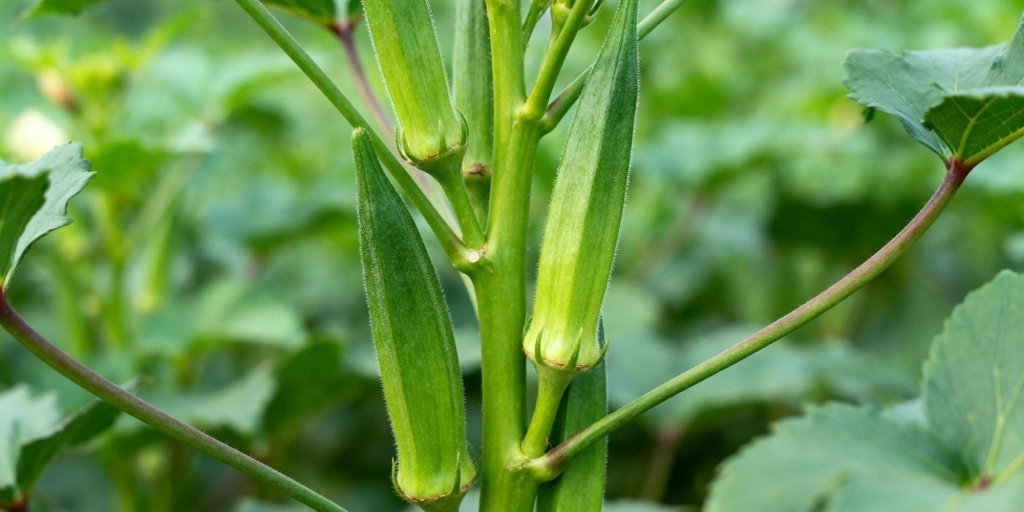
Okra in the Australian garden
Abelmoschus esculentus, or okra, is an increasingly popular summer vegetable here. It usually starts setting pods about eight to ten weeks after sowing, and keeps producing while the heat holds.

When to sow okra in your zone
Okra will not move until the soil is genuinely warm. These are broad groupings: if you garden between two zones, lean on your own local frost dates.
- Tropical (Darwin, Cairns, Townsville, the Top End and far north Queensland): Aug to Mar, dry season sowings easiest.
- Subtropical (Brisbane, Bundaberg, Coffs Harbour and the New South Wales north coast): late Sep to Feb.
- Arid and semi-arid (Alice Springs, Broken Hill, Kalgoorlie, Mildura and most of the inland): late Oct to Jan, with afternoon shade in the worst heat.
- Temperate (Sydney, Melbourne, Newcastle and coastal southern New South Wales and Victoria): Nov to Dec, once the soil has warmed.
- Mediterranean (Perth, Adelaide, south west Western Australia and the South Australian gulf country): the same Nov to Dec window, though the dry summer calls for steady watering.
- Cool and alpine (Hobart, Canberra, Ballarat, Armidale and the tablelands): okra is marginal. Start undercover with warmth in Oct, plant out after the last frost, and use a large pot in your warmest corner.
Soil preparation
Work compost, aged manure and mulch through the bed, because okra is hungry and sends down a deep taproot. Aim for a pH between 6.0 and 6.8. Drainage matters as much as fertility, as okra sulks in wet ground.
Choosing a variety
Okra Clemsons Spineless is a reliable, widely grown choice in Australia. The full okra seed range covers open pollinated lines, dwarf types for pots, and long or red podded types.

Soaking and sowing
Okra seed has a hard coat, so soak it for a few hours or overnight and sow it straight into warm soil. Seed in warm ground usually comes up in about a week, while unsoaked seed in cool soil can take three weeks or fail. Trays give you more control in an unsettled spring, and thin or transplant while seedlings are small.
Sun and spacing
Okra wants full sun all day, so keep containers out in the open. Plants in partial shade stretch, flower late and set far fewer pods. They also grow tall, often 1.2 to 1.8m, so space them 30 to 45cm apart along the row and leave about 90cm between rows, which gives room to pick and lets air move. Dwarf varieties can go closer.

Feeding, weeding and rotation
Keep the bed weed free while the plants are young, because okra competes poorly at that stage. Feed with compost, aged manure, blood and bone or a balanced fertiliser, and ease off high nitrogen once flowering starts, or you will grow leaves instead of pods. Cover crops in the off season build organic matter for next year.
Okra shares root knot nematodes and soil borne wilts with the tomato family, so do not plant it where tomatoes, capsicums, eggplant or potatoes grew, and leave about three years between them.
Pests
Okra can be damaged by root knot nematodes, caterpillars, whitefly, aphids and jassids, also called leafhoppers, which curl the leaves. In the warmer states, fruit and shoot borer tunnels into growing tips and young pods. Start with the non chemical controls: rotation, exclusion netting, picking caterpillars off by hand, hosing aphids down and encouraging predatory insects. Cut out and bin tunnelled shoots. If a spray is genuinely warranted, use an APVMA-registered product for that pest, used exactly as the label says.
Diseases
Fusarium wilt is the wilt most often seen on okra, and Verticillium wilt can also occur. Both yellow the leaves and collapse the plant, they live in the soil, and neither can be sprayed out, so rotation and drainage are the defence. Powdery mildew shows as a white, dusty bloom in warm, dry weather, and improves with wider spacing. In the humid tropics the more common trouble is leaf spot, often Cercospora, which makes distinct dark spots. Remove affected leaves and avoid wetting the foliage late in the day.
Harvesting
Pick pods young and tender, at about 7 to 10cm, and pick often. Past that size they turn woody, and a plant carrying mature pods stops flowering, so in hot weather pick every day or two. Wear gloves and long sleeves, because the fine hairs on most varieties irritate the skin.
Related growing guides
- Growing Bitter Melon, Okra and Snake Beans from Seed
- Root-Knot Nematode: The Hidden Cause of Wilting and Forked Roots
- Crop rotation made simple: a plan for the Australian home garden
Ready to plant? Browse our okra seeds.