
Prepare your garden
Put the plant support in the bed before you sow. Most squash can be grown upright, which saves space and keeps the leaves off the soil. Vining types climb a trellis readily, and bush types such as zucchini and button squash fruit along a short central stalk that can be held in a tomato cage. Heavier fruit needs a sling of old hosiery or a mesh onion bag tied to the trellis so it does not snap off, and winter squash finishing at 3 to 6kg, such as Queensland Blue, is better left to run along the ground. Growing upright improves air circulation, which can reduce fungal problems.

When to sow across Australia
These months follow the Happy Valley Seeds sowing calendar. They are broad groupings, so gardeners between two zones should lean on their own local frost dates. Squash seed rots in cold, wet ground, so wait for the soil to warm.
- Cool and alpine (Tasmania, the ACT, the NSW and Victorian tablelands): start in pots undercover late Sep into Oct, and plant out in Nov once frost is past.
- Temperate (coastal NSW, Victoria and the southern mainland generally): late Sep to Dec, with zucchini worth one more sowing in early Jan.
- Mediterranean (Perth, Adelaide, the south west of WA and the SA gulf country): the same months as temperate, with mulch and deep watering through the dry summer.
- Subtropical (south east Queensland and the NSW north coast): late Aug to Nov, plus a late summer sowing in Feb to early Mar.
- Arid and semi-arid (inland NSW, Queensland, SA and WA, and central Australia): Sep to Oct, with a second window late Feb into early Mar.
- Tropical (the Top End, far north Queensland and the Kimberley): the dry season, Apr to May and again Aug to Sep.
Planting
Squash seeds are larger than most vegetable seeds and easy to handle. The shell is hard, and a soak of a few hours can soften it, but sow straight afterwards, because a long soak leaves the seed without oxygen and it will often rot instead.
Plant the seeds about 2 to 3cm deep. Germination is reliable, so one seed per hole is enough. Give bush zucchini and button squash 60 to 90cm between plants with about 1m between rows, and allow vining squash and pumpkins 1 to 1.5m each way. Water deeply two or three times a week rather than a light splash every day, at the base and in the morning, and mulch once the plants are away.
Companion planting
The Three Sisters method grows corn, legumes and squash together. The beans climb the corn, and the squash covers the ground, shading the soil and slowing evaporation. The beans do fix nitrogen, though most of it stays in the plant, so the benefit reaches the following crop as the residues break down rather than feeding the corn beside them.
Plant the corn first and let it reach about 10cm before the beans and squash go in. Our guide to companion planting in Australia works through the method and what the evidence supports. Bordering the beds with flowers such as marigolds brings bees and predatory insects into the patch.
Pests and problems
Powdery mildew is the usual complaint, a white bloom on the older leaves in warm weather and worst when the days are hot and the nights cool. Space the plants, keep water off the foliage, remove the worst leaves and choose varieties with some resistance.
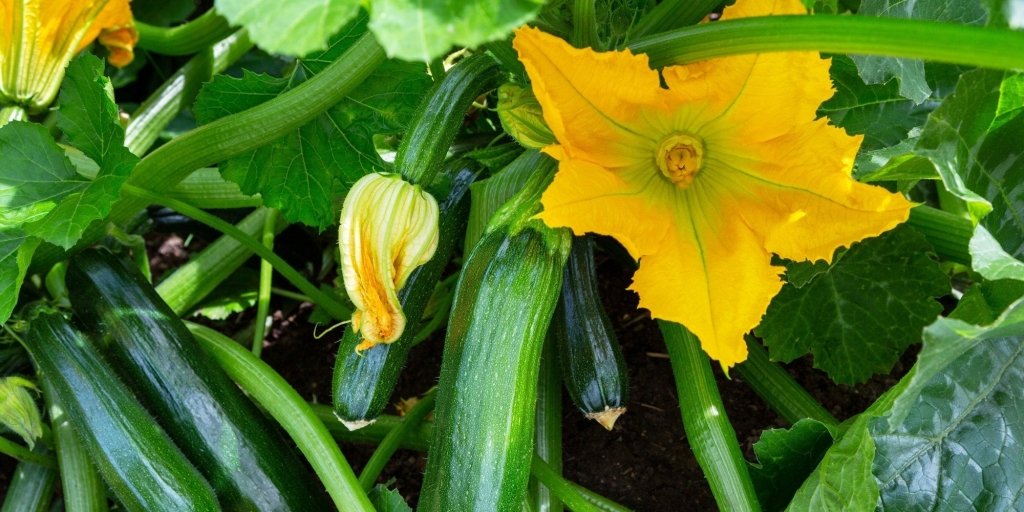
Small fruit that yellows and rots at the flower end is almost always poor pollination rather than disease. Squash carry separate male and female flowers, and a female flower that no bee visits will drop its fruit. When bees are scarce, pick a male flower in the morning, strip the petals and dab the pollen onto an open female flower.
Harvest
When to pick splits neatly in two. Summer squash, which covers zucchini, button squash, scallopini and marrow types, is picked young and picked often: zucchini at 15 to 20cm, button squash at 5 to 8cm across. The more you take, the more flowers the plant sets.

Winter squash and pumpkins, such as butternut, jap and Queensland Blue, are left on the vine until the foliage dies back and the skin resists a thumbnail. Cut them with a few centimetres of stem attached, then cure them somewhere warm and dry for a week or two before they go into storage.
Related growing guides
- Why Your Zucchini Keeps Flowering But Not Fruiting, and How to Fix It
- Powdery mildew, blossom end rot and other common vegetable troubles
- Pumpkin Growing in Australia: Timing, Space, Pollination, and Curing for Storage
Ready to plant? Browse our Squash seeds.
1 comment
Georgia Moudakis
I received a pack of Ronde De Nice seeds on 6 October which I planted immediately together with Gourd Small Warted Professional Mix. The Gourd Small Warted seeds have sprouted beautifully, however the Ronde De Nice seeds are yet to sprout. It’s been three weeks now, is this normal? If they don’t sprout in the next week can you advise what is wrong as I prepared the garden bed and have been successful growing vegetables for many years.
Kind Regards
Georgia Moudakis