
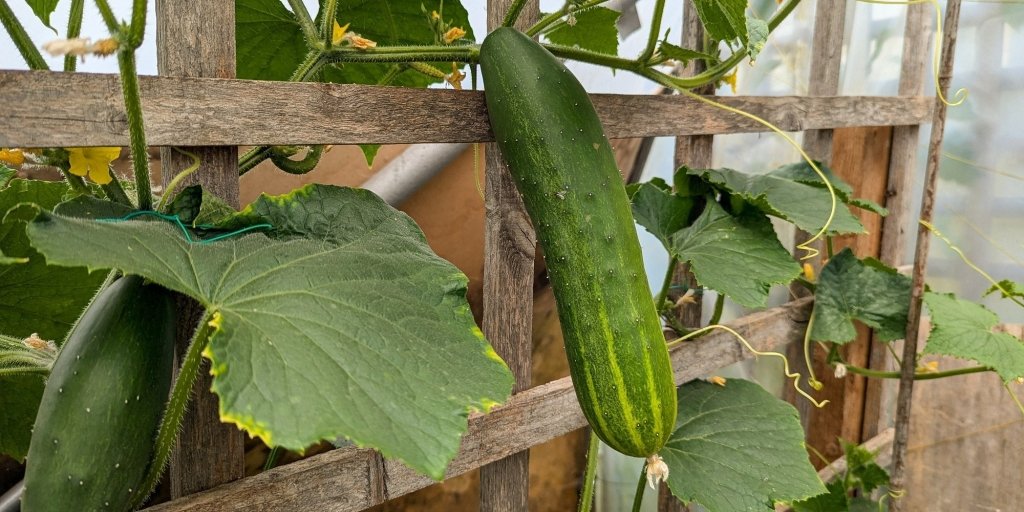
Why cucumbers turn bitter
Planting cucumbers beside sunflowers does not make them sweeter. Bitterness comes from cucurbitacins, natural compounds the plant makes in its leaves, stems and fruit, and how much reaches the fruit depends on the variety, on steady watering, on heat stress and on the age of the fruit at picking. Those four are the levers you hold, and steady water is the biggest of them.
Start with a mild variety
Variety does more for flavour than anything added to the soil. Burpless and Lebanese style cucumbers carry very low levels of cucurbitacin and stay mild even in a hard season, while some older heirlooms are more variable. Round types such as the apple and lemon cucumbers are prolific and crisp when picked small. Choose one from the cucumber seeds range described as burpless, sweet or mild.

When to sow across Australia
Cucumbers are a warm season crop. Sow once the soil holds 18°C at about 5cm deep and is still rising, because seed in cold soil rots rather than germinates.
- Tropical, the Top End, far north Queensland and the Kimberley: April to September in the dry season, and December to March on a trellis.
- Subtropical, south-east Queensland and the NSW north coast: late August to March.
- Arid and semi-arid, central Australia, western Queensland and the inland: September to November, then February to early March.
- Temperate, coastal NSW, Victoria and the southern districts: late September to December, plus a last sowing in early January.
- Mediterranean, Perth, Adelaide and the south-west of WA: the same months, with deep watering and thick mulch through the dry summer.
- Cool and alpine, Tasmania, the ACT and the tablelands: pots undercover from late September, plant out in late October once frost has passed, sow direct in November.
These are broad groupings, so gardeners between two zones should lean on local frost dates.
Soil, and what not to bury
Dig compost and aged manure through the bed two to three weeks before sowing, and keep any coconut coir to a modest share of the top 20cm. Do not bury banana peels and fish heads under each planting hole, because buried fish scraps draw rats, foxes, dogs and cats. Compost them instead, or feed with fish emulsion, blood and bone or sulphate of potash. Cucumbers are mainly nitrogen and potassium feeders, and extra phosphorus does not drive fruiting, so test the soil before adding any.
Sowing, spacing and support
Put the trellis in before planting so the roots are never disturbed. Sow 2cm deep, two seeds per station, and thin to the stronger seedling. Space plants 40cm to 50cm apart on a trellis, or 90cm if they sprawl. Mulch straight away, 5cm to 7cm thick, leaving the soil above each seed clear until the seedling is up.
Sunflowers as a living trellis
Sunflowers still earn a place beside cucumbers, just not as a sweetener. A tall, single stemmed sunflower sown two to three weeks ahead gives support, afternoon shade in a heatwave, and flowers that bring in bees and predatory insects. Keep it to one vine per sunflower, and because sunflowers are mildly allelopathic, pull the spent stems out at the end of the season rather than digging them in.
The Three Sisters, with cucumber in the squash seat
In a Three Sisters planting the corn is the trellis, the beans fix nitrogen that mostly feeds the following crop rather than the corn beside them, and the sprawling cucurbit shades the soil. Cucumber stands in for the squash sister.
Plant the corn first, 30cm apart in a block of at least four by four, because corn is wind pollinated and a single row sets poorly. Two to three weeks later, once it is 15cm tall, sow one climbing bean at the base of each stem, since beans sown at the same time smother young corn. Use climbing beans, not snow peas, which are a cool season crop and stop setting pods above 25°C. Add the cucumbers last, one plant per 50cm by 50cm.
Watering and feeding
A cucumber is mostly water and resents swings between dry and drenched, so water deeply two or three times a week rather than lightly every day, keep the mulch topped up, and check pots daily in summer.
Alternate a seaweed concentrate and a fish emulsion every two weeks: seaweed works as a biostimulant, while the fish emulsion supplies nitrogen and phosphorus. Once flowering starts, a light dressing of sulphate of potash supports fruit quality. Leave the monthly Epsom salts out, because routine magnesium does not sweeten anything and too much can compete with calcium uptake. Use it only where a soil test or older leaves yellowing between green veins point to a shortage, at about one tablespoon in 4.5L of water.
Pick young and pick often
Cucurbitacins concentrate as fruit ages, so an over-mature cucumber is more likely to taste bitter. Pick at the size the packet gives for your variety and check the vine every second day in warm weather, because a vine carrying one fat old fruit stops setting new ones. If one does taste bitter, most of it sits in the stem end and the skin, so trimming and peeling usually rescues it.

Related growing guides
- Lebanese vs Heirloom Cucumbers: The Difference and Which Grows Better in Your Climate
- Stop watering a little every day: how to water vegetables so the roots go down
- Companion planting in Australia: what really helps, and what is folklore
Ready to plant? Browse our cucumber seeds.