
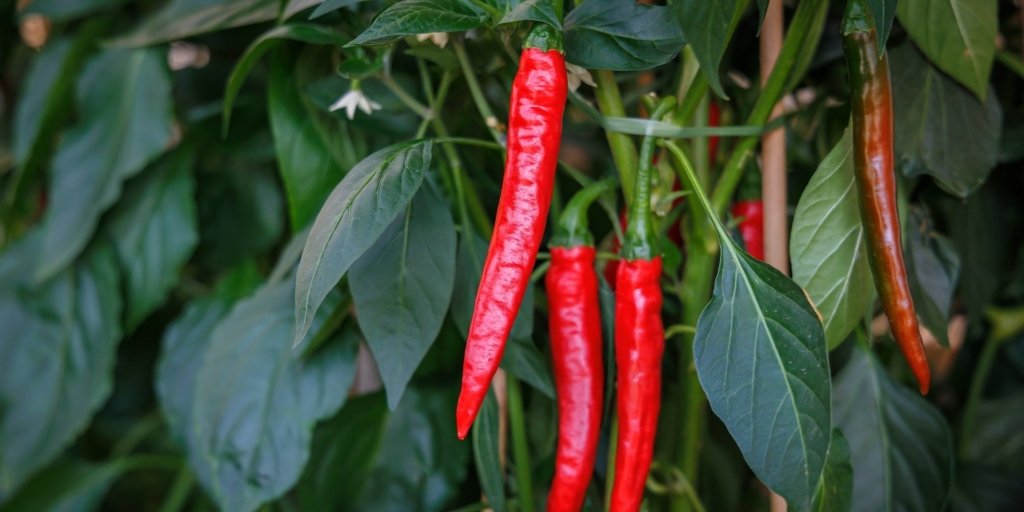
Capsicums and chillies from seed
Capsicums and chillies are close relatives grown for different ends, and they want the same things: warmth, a long season and a soil that drains but does not dry out.
Preparing your soil
Capsicums do best in soil that is slightly acid to close to neutral. Aim for a pH of about 6.0 to 6.8, and test before you change anything. Where a test shows the soil is too alkaline, elemental sulphur applied at label rate well before planting is the material that actually shifts pH, and it is worth testing again before you sow.
Compost, aged manure and well rotted leaves are still worth adding, but for structure, moisture holding and feeding rather than for pH. Manures do not acidify soil, and poultry manure usually pushes pH up rather than down. Peat is often suggested for the job, but it is dug from wetlands that take centuries to form and it repels water once it dries out. Sphagnum moss comes from the same wetlands, so it is no better a choice.

Potassium helps fruiting, which is why banana peels are often buried under fruiting plants. A peel holds only a small amount of potassium, so it is better used in the compost heap. If a soil test shows potassium is short, sulphate of potash is the straightforward fix.
When to sow across Australia
These months follow the Happy Valley Seeds sowing calendar. They are broad groupings, so gardeners between two zones should lean on their own local frost dates.
- Cool and alpine (Tasmania, the ACT, the NSW and Victorian tablelands): undercover with warmth from late Jul through Sep, planting out once frost has finished, usually Nov.
- Temperate (coastal NSW, Victoria and the southern mainland generally): undercover from late Jul, then direct or planted out Sep to Nov.
- Mediterranean (Perth, Adelaide, the south west of WA and the SA gulf country): the same months as temperate, with mulch and steady watering through the dry summer.
- Subtropical (south east Queensland and the NSW north coast): Jul to Nov, with a second sowing Feb to early Mar. Seedlings raised in Dec and Jan need shade.
- Arid and semi-arid (inland NSW, Queensland, SA and WA, and central Australia): undercover Jul to Aug, planting out late Sep into Oct.
- Tropical (the Top End, far north Queensland and the Kimberley): the dry season, late Mar through Sep.
Planting
The seed is small, so sow about 5 to 10mm deep, three seeds to a station. Germination is slow below 20°C, so a warm windowsill or a heat mat makes a real difference. Once the first true leaves appear, at around two to three weeks, keep the strongest seedling and cut the others off at soil level so its roots are not disturbed.
In a cool or cool temperate region, start seedlings indoors about 8 to 10 weeks before the last expected frost. Planting out a sturdy seedling buys back several weeks of a short season.
Growing capsicums in cooler regions
Capsicums like heat, so cool temperate gardens will not match the crops grown in tropical, subtropical and warm temperate areas. There are still ways to improve the odds.
- A glasshouse, polytunnel or even a simple cloche creates a warmer pocket for the plant.
- Grow in pots on a patio or close to the house, where concrete and brick radiate stored heat and make a microclimate warmer than the open beds.
- Place a dark object, such as a compost bin lid, on the south side of the plant. In Australia the sun sits to the north, so from that side the object soaks up the sun without shading the plant and radiates the heat back.
Rotation and companion plants
Capsicums, chillies, tomatoes, eggplants and potatoes are one family and one rotation group. They share pests and soil borne diseases, so do not follow one with another in the same bed, and leave about three years between them.
Flowers along the edge of the bed are worth the space. Marigolds and nasturtiums bring in bees and predatory insects, and aphids will often settle on nasturtium in preference to the crop. Capsicum flowers are self fertile, so fruit does not depend on bees, but insect visits and a bit of breeze do improve set.
Fruit fly
Capsicums and chillies are fruit fly hosts: Queensland fruit fly through Queensland, New South Wales, Victoria and parts of South Australia, and Mediterranean fruit fly in Western Australia. Exclusion netting over the plant is the most dependable answer. Pick promptly, and never leave stung or fallen fruit lying about: seal it in a plastic bag and leave it in full sun for at least a week, or two weeks for a large load, or freeze it solid for two days, before it goes in the rubbish bin rather than the green waste bin.
Harvesting
Capsicums can be eaten green, though most people wait until they colour to red, yellow or orange. Sugars build as the fruit ripens, so a fully coloured fruit is sweeter than the same fruit picked green. The bumps on the base are simply how the fruit formed: they do not mark it as male or female, and they do not predict sweetness. Cut fruit off with secateurs, leaving a short piece of stem.

Handling chillies
Chillies get hotter as they colour, and most of the heat sits in the pale ribs inside the fruit. When you are cutting more than one or two, wear gloves, keep your hands away from your eyes, and wash the board and knife in hot soapy water afterwards, because plain water will not shift capsaicin. Open a window when roasting or drying a batch.
Related growing guides
- Growing Capsicum in Australia: From Seed to Harvest Without the Guesswork
- The Chilli Grower's Starter Guide: Heat Levels, Varieties, and What to Do With the Harvest
- Fruit Fly in the Home Garden: Netting, Hygiene and Safe Disposal
Ready to plant? Browse our Capsicum seeds.