
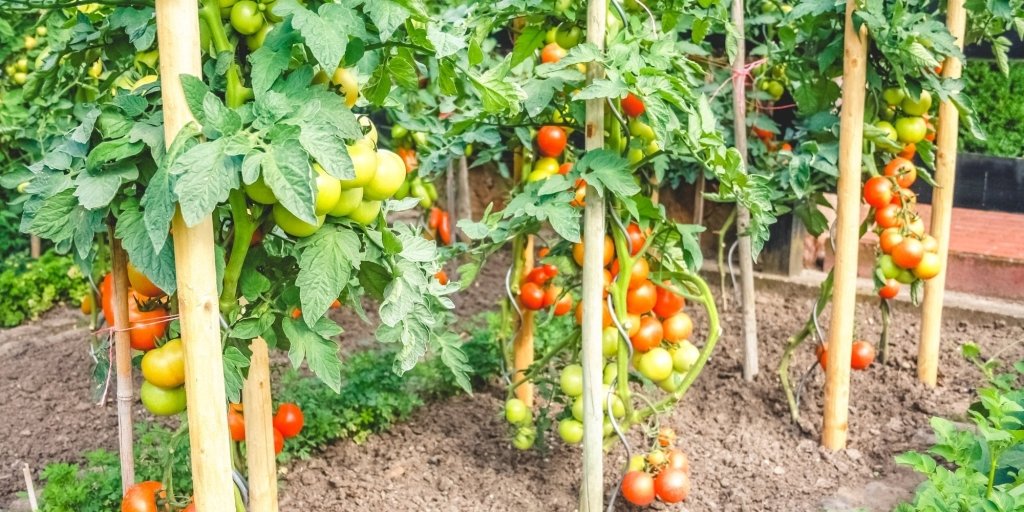
Why tomatoes earn their bed space
Tomatoes are one of the most popular crops in Australian home gardens. Even if you do not enjoy them raw, sauce, chutney, passata and sun dried tomatoes are reason enough to give them a bed, and they are an easy summer crop to raise from seed.
When to sow tomatoes in your zone
Tomatoes need warmth and will not tolerate frost, so timing matters most. These are broad groupings: if you garden between two zones, lean on your own local frost dates.
- Cool and alpine (Hobart, Canberra, Ballarat, Armidale and the tablelands): start undercover with warmth from late Jul through Sep, and plant out in Oct after the last frost.
- Temperate (Sydney, Melbourne, Newcastle and coastal southern New South Wales and Victoria): start undercover late Jul to Aug, sow direct or plant out through Sep and Oct, with a last sowing in Nov.
- Mediterranean (Perth, Adelaide, south west Western Australia and the South Australian gulf country): the same late Jul to Nov window, though the dry summer means mulch and deep watering matter more, and afternoon shade stops fruit scalding.
- Subtropical (Brisbane, Bundaberg, Coffs Harbour and the New South Wales north coast): Jul to Oct for the main crop, plus a second run late Feb to early Apr, when cherry types are most reliable.
- Tropical (Darwin, Cairns, Townsville, the Top End and far north Queensland): late Mar to Aug across the dry season, cherry types first.
- Arid and semi-arid (Alice Springs, Broken Hill, Kalgoorlie, Mildura and most of the inland): start undercover late Jul to Aug, plant out late Sep, with a final sowing in early Oct.
Determinate or indeterminate
Work out which kind of tomato you have before you build a support. Determinate, or bush, varieties grow to a set height, set most of their fruit in one burst and then finish, which suits a short season, a large pot or a batch of passata, and a low cage is enough. Indeterminate, or vining, varieties keep growing until the cold stops them, and want a single tall stake with side shoots pinched out.
Planting
Check your pH first and aim for around 6.0 to 6.8. Some sources say tomatoes like more acidic soil, and they will cope, but that works against the companion plants around them, which prefer something closer to neutral.
Improve the soil with compost, aged manure, rock minerals and coconut coir. Leave the old advice about burying a fish head under each plant alone: raw fish scraps take months to break down and they attract rats, foxes, dogs and cats long before they feed a tomato. Use a fish emulsion as a liquid feed instead. Banana peels are the same story, as a peel holds only a small amount of potassium, so compost the peels and use sulphate of potash if you want potassium the plant can take up this season.
Put the support in place now, at planting, so you are not disturbing roots later.

Prepare the bed about a week ahead so the compost and manure settle in. Mulch the top and keep it watered, so the soil life does not dry out.
If you are planting a seedling, bury up to half of it: the fine hairs on the stem are potential roots, so a buried lower half gives the plant a much bigger root system. If you are sowing seed, place two seeds in each hole about 1cm below the surface. You can also sow halfway down a partly filled hole and mound soil up the stem as it grows, never burying more than half at once.
Mulch straight away, at least 3cm thick, using compost or coconut coir if you prefer, but leave the soil directly above any sown seed bare so the mulch cannot stop it emerging. Water the new plant in with a seaweed solution.
Watering
Tomatoes want a lot of water, but not a light sprinkle every day. Water deeply two or three times a week so the moisture soaks through the mulch and reaches the root zone, and more often in a heatwave or in pots, which dry out fast. An olla, or a plastic bottle with holes punched in the side and sunk into the soil, gets water to the roots, and should go in at planting time.
Even watering is also the answer to blossom end rot, the sunken dark patch on the base of the fruit. It is not a fungus and it is not something you can spray: it is a physiological calcium disorder. There is usually plenty of calcium in the soil, but when a plant dries out and is then flooded, calcium does not reach the swelling fruit fast enough. Steady moisture and a good mulch deal with it more reliably than any additive.
Feeding
Alternate a seaweed concentrate and a fish emulsion fortnightly. The fish emulsion supplies nitrogen for leaf growth plus some phosphorus and trace elements, while seaweed is a biostimulant rather than a fertiliser, used for root development and stress tolerance. Once flowering starts, ease back on nitrogen and offer potassium instead, which is what the plant draws on for fruit development. Sulphate of potash watered in every few weeks does the job.
You may also have read that tomatoes need a regular dose of Epsom salts. Leave it alone unless a soil test has confirmed a magnesium deficiency. Magnesium and calcium compete for uptake, so routine Epsom salts on soil that does not need them can make blossom end rot worse rather than better. Where a test does show a shortage, treat it at the recommended rate.
Companion planting
Basil and marigolds are the traditional companions for tomatoes, and there is no harm in growing them together: basil likes the same warm conditions, and both flower for the bees. Be careful what you expect from them, though. The nematode effect attributed to marigolds comes from a dense stand grown across a whole bed and dug in, not from a few plants between tomatoes, and the idea that basil repels tomato pests is not well supported. Rely on netting, garden hygiene and rotation for pest control.
One note on eating them. Most of the marigolds we stock are the African and French types, Tagetes erecta and Tagetes patula, grown for colour rather than the plate. The exception is Starfire, Tagetes tenuifolia, a signet marigold with small edible petals. The golden petals people most often scatter through a salad come from calendula, or pot marigold, a different plant.

Pests and diseases
Fruit fly is the one to plan for. Queensland fruit fly is active through Queensland, New South Wales, the ACT, Victoria and parts of South Australia and the Northern Territory, while Western Australia has Mediterranean fruit fly. Tasmania is free of both. Exclusion is the reliable defence: net the whole plant with fine insect mesh once most of the flowers have been pollinated, while the fruit is still small and green, and hold the mesh clear of the fruit on a frame or stakes, because a fly can sting fruit that touches the net. Pick up fallen or stung fruit and seal it in a plastic bag and leave it in full sun for at least a week, or freeze it solid for two days, before binning it, because larvae finish developing in an open compost heap.
Beyond fruit fly, watch for aphids and whitefly on the growing tips, and for the fungal leaf troubles that follow wet foliage. Water at the base rather than over the leaves, keep the lowest leaves off the soil, space plants so air moves between them, and do not follow tomatoes with capsicums, eggplant or potatoes.
Our range of tomato seeds
The seed we sell is horticulture grade and non GMO, and most of our tomato lines are open pollinated heirlooms. There are more than 100 tomato varieties to choose from, from tiny cherries to beefsteaks and paste types.

Related growing guides
- Determinate vs Indeterminate Tomatoes: Which Should You Actually Grow?
- Fruit Fly in the Home Garden: Netting, Hygiene and Safe Disposal
- Growing Tomatoes in Pots and Containers: The Australian Guide
Ready to plant? Browse our tomato seeds.