
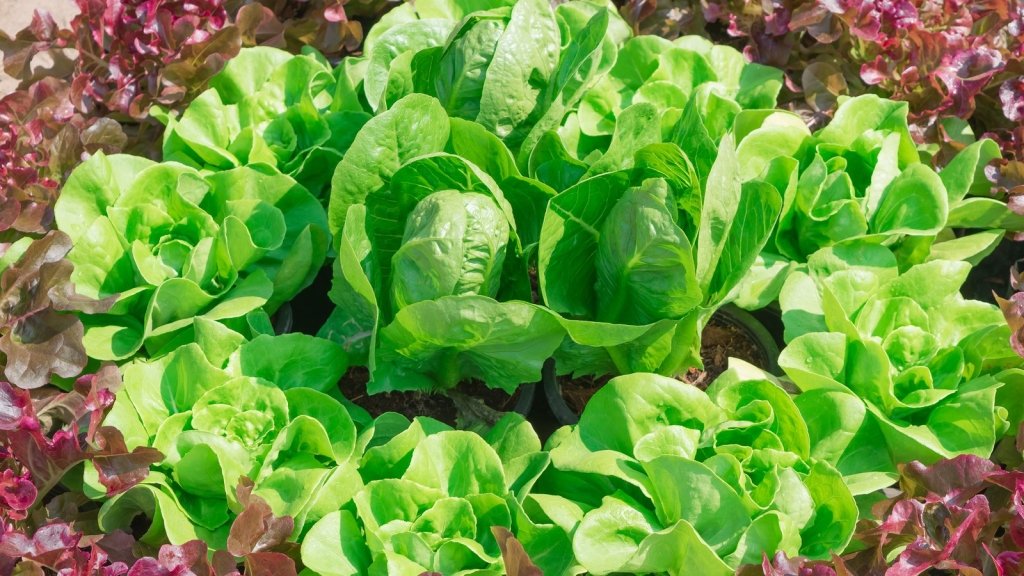
The short version: Lettuce is a cool-season crop, but with the right type for the season, a shaded bed in summer, a sunny well-drained one in winter, and a short row sown every three to four weeks, most Australian gardens can pick it in every month. Loose-leaf and cos types handle heat best; sow summer seed in trays kept cool and shaded, because lettuce seed goes dormant above the mid twenties; keep the shallow roots evenly moist so the leaves stay sweet; and deal with snails, aphids and downy mildew early. Harvest loose-leaf types leaf by leaf and hearting types whole at 9 to 12 weeks.
A salad bowl that never runs empty is one of the most satisfying things a vegetable garden can deliver, and lettuce is fast enough to make it realistic. The catch is that it dislikes both ends of the year, bolting in heat and sulking in cold wet soil. Year-round lettuce is a matter of matching type, spot and sowing rhythm to the season.

Four types, and which suit which season
Lettuce (Lactuca sativa) comes in four broad types. Crisphead or iceberg forms a tight, dense heart and is harvested all at once; it is the slowest and the fussiest about heat. Butterhead forms a soft, loose heart with tender leaves and is the best choice for cool, damp seasons. Cos or romaine grows upright, can be cut whole or picked leaf by leaf, and handles warmth well. Loose-leaf types never form a heart and are picked continuously, and they are among the most heat tolerant. For summer, choose loose-leaf and cos varieties described as bolt resistant or slow bolting: Australian Yellow Leaf, Salad Bowl, Royal Oakleaf, Lollo Rossa and Flame are reliable loose-leaf choices, and several cos types cope nearly as well. For winter, butterheads and cos hearts come into their own.
Sowing: depth, temperature and the summer trick
Lettuce seed is tiny and needs light, so sow it about 3 mm deep, barely covered with fine mix. It germinates best at about 18 to 21 degrees. In cold soil it rots or sits for weeks; in hot soil it goes dormant, a response called thermodormancy that sets in somewhere above the mid twenties, with a bare-soil bed in January easily sitting far higher. That is why summer sowings direct into the garden so often fail. Sow summer lettuce in trays or punnets in a cool, shaded spot, or indoors, and plant out at three or four true leaves after a couple of days of hardening. Some growers chill the seed on damp paper towel in the refrigerator for two or three days first, which can help but is not essential. In autumn, winter and spring, direct sowing into a moist bed works well.

Where to grow it as the seasons turn
In the cool months lettuce wants full sun, six to eight hours, in a well-drained bed where cold rain does not pool; in humid areas a spot with afternoon sun helps keep the plants dry. In summer it wants the opposite: morning sun and afternoon shade. Plant it on the eastern or southern side of taller crops such as climbing beans, corn or staked tomatoes, or rig shade cloth over the bed. A light to medium shade cloth, commonly sold in the 30 to 50 percent range, is enough, and even a light cloth makes the difference between a bolted row and a picked one. Pots and troughs that can be moved into shade in a heatwave are ideal for summer lettuce.
Soil, spacing and feeding
Lettuce likes a well-drained bed rich in organic matter, at a pH around 6 to 6.5. Prepare it a couple of weeks ahead with compost and a little pelletised manure, then mulch 5 to 7 cm deep once the seedlings are up, pulling the mulch back a little in a wet winter so the crowns can dry. Space standard varieties 20 to 30 cm apart, big hearting types up to 40 cm and minis 10 to 15 cm. Crowded lettuce bolts sooner and stays damp, which invites disease. A fortnightly liquid feed keeps growth fast, and fast growth is sweet growth.
Water: the whole secret to sweet leaves
A lettuce leaf is mostly water, the roots are shallow, and a plant that dries out even briefly turns bitter and starts to bolt. Keep the soil evenly moist, water in the morning, and water at the base with a can, drip line or soaker hose rather than over the leaves, because wet foliage in the evening breeds fungal disease. In cool, wet, dull weather, overwatered plants can also develop oedema, a blistering of the leaves caused by the roots taking up more water than the leaves can lose. In humid weather do not overwater, which rots plants and draws snails. Mulch and shade do half the watering for you in summer.

Succession: the rhythm that makes it year round
The single habit that matters most is sowing little and often. A short row or a punnet every three to four weeks, often every two to three in high summer when plants bolt faster, gives a continuous supply instead of forty lettuces in one week. Loose-leaf types stretch each sowing further: pick the outer leaves and the centre keeps producing for weeks, as our guide to cut-and-come-again greens describes. Hearting types are ready in about 9 to 12 weeks and loose-leaf from about 6, so a diary of sowing dates lets you plan the next one.
Pests and diseases
Snails and slugs are the number one lettuce pest everywhere, especially in wet weather and under mulch. Hand-collect by torchlight, set beer traps, use crushed eggshell or copper barriers around beds, and if you bait, choose the iron-based products, which are lower risk around pets and wildlife than the older metaldehyde baits, and keep any bait out of reach of pets and children. Aphids cluster in the heart and can spread lettuce viruses; a hard jet of water and a healthy population of ladybirds and hoverflies keep them down. Whitefly and thrips are occasional; damping off and a soft rot at the base can take seedlings in cold wet soil. Downy mildew appears as yellow patches on the upper leaves with a greyish furry growth beneath after warm days above about 23 degrees with leaves wet for a day or more, typically after 10 mm or more of rain; give plants room, water at the base in the morning, remove infected leaves rather than composting them, and a spray of three parts full-cream milk to ten parts water knocks it back without curing it. Browned leaf edges, tipburn, are usually linked to calcium supply within the plant under uneven watering rather than to poor soil, and they generally ease when the watering does.

Harvesting
Pick loose-leaf lettuce from the outside as soon as the leaves are big enough, and it will keep giving for a month or more. Cut cos and butterheads whole at the base when the heart is firm, or pick outer leaves and let the heart go on. Harvest in the cool of the morning and get the leaves into water and the fridge quickly. Any plant that starts to stretch upward and taste bitter has begun to bolt; pull it and let the next sowing take over, or leave one to flower for the bees and save the seed.
A lettuce calendar for Australia's climate zones
- Tropical (Cairns and far north Queensland, Darwin and the Top End of the Northern Territory, the Kimberley in Western Australia): sow loose-leaf and cos in the dry season, roughly April to August. Through the wet, grow in shaded pots or switch to heat-loving greens such as Ceylon spinach and amaranth.
- Subtropical (Brisbane and coastal Queensland, Coffs Harbour and northern New South Wales): March to September is the easy season. Summer lettuce needs shade cloth, tray-raised seedlings and bolt-resistant loose-leaf types.
- Arid and semi-arid (inland Queensland, Broken Hill and Dubbo in New South Wales, Mildura in Victoria, inland South Australia and Western Australia, Alice Springs in the Northern Territory): autumn to spring, about March to October, with frost cover on the coldest nights. Midsummer lettuce is only for shaded pots.
- Temperate (Sydney and New South Wales, Melbourne and Victoria): sow most of the year, with hearting types from autumn to spring and loose-leaf in shade through summer. Growth slows sharply in a Melbourne winter; a cloche or a sunny wall keeps it moving.
- Mediterranean (Perth and southern Western Australia, Adelaide and the Adelaide Plains in South Australia): March to November for the main crops, with summer sowings in shade and deep mulch, and extra compost in sandy soil to hold water.
- Cool and alpine (Hobart and Tasmania, Canberra and the ACT, Ballarat in Victoria, Orange and Armidale on the New South Wales tablelands, and the alpine country of the Snowy Mountains and the Victorian high country): September to April outdoors, with the mild summer suiting even hearting types. Winter lettuce needs a cold frame, greenhouse or sunny windowsill.
No single Australian source publishes a six-zone lettuce calendar, so these windows are a synthesis of state sowing guides. Use them as starting points and let the plants correct you: a bed that bolts in November wants shade a month earlier next year.
Frequently asked questions
Why is my lettuce bitter?
Heat, dry soil or age. A lettuce that has begun to bolt, or that dried out for a day, turns bitter. Sow in the right season, keep the water even and pick young.
Why will my lettuce seed not germinate in summer?
Thermodormancy. Above the mid twenties the seed shuts down. Sow in trays somewhere cool and shaded, or chill the seed in the refrigerator for two or three days before sowing.
Can I grow lettuce in winter?
Yes, in every zone, though the coldest districts need a cold frame, greenhouse or sunny windowsill. Choose butterheads and cos, give them full sun and good drainage, and expect slower growth. In frosty districts a cloche or fleece helps.
How often should I sow?
Every three to four weeks, and every two to three in summer. A punnet or a one-metre row each time is plenty for a household.
Match the type to the season, chase the shade in summer and the sun in winter, and keep a short row coming every few weeks, and the salad bowl stays full. Sustainable Gardening Australia's lettuce notes are a good companion for pest and disease detail.
Related growing guides
- Cut-and-come-again: months of greens from a single planting
- Succession planting: how to harvest continuously, not all at once
- Slugs and Snails: How to Control Them Organically in Australia
Sow a heat-tolerant loose-leaf for summer and a butterhead for winter: browse our lettuce seeds, rocket seeds and leafy vegetable seeds.