
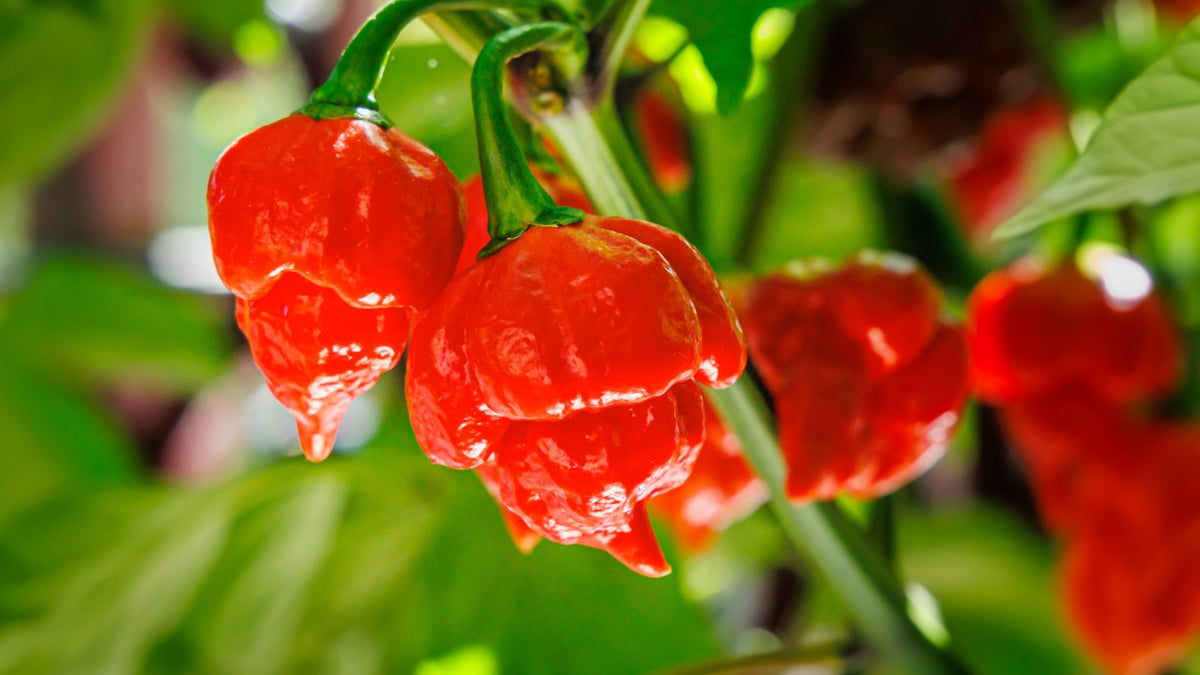

The short version: Carolina Reaper, Trinidad Scorpion, 7 Pod and Bhut Jolokia seed is slow and fussy, so a tray that has sat for weeks may simply be too cool or not ready yet. Keep the mix at about 28 to 30°C day and night, just moist, never soggy, and give it up to five weeks. Sow at the start of your chilli window, because superhots need a long, warm season to ripen. Wear gloves to handle the pods and keep them away from children.
A punnet of superhot seed can test anyone's patience. The packet promises ferocious heat, then nothing happens for a fortnight while a milder chilli sown the same day is already up.
That quiet stretch is normal. Most superhots are forms of Capsicum chinense, the habanero species, slower to start and to ripen than most chillies. Cold nights and soggy mix turn a slow tray into a failed one.
Why are my chilli seeds not germinating?
Usually the mix is too cool for at least part of the day. The Canberra Organic Growers Society gives 27 to 35°C as the best soil temperature for chilli germination, which is very slow in cooler soil. The store's superhot listings ask for 28 to 30°C, held day and night. The other usual culprits:
- Too wet. Soggy mix leaves the seed open to fungal rot. Keep it moist, not waterlogged.
- Judged too soon. New Mexico State University's Chile Pepper Institute allows up to five weeks for the habanero species, and Bhut Jolokia can take longer still.
- Guessing the temperature. A warm room is not warm mix. Push a thermometer into the mix itself.
Getting Carolina Reaper seeds up, step by step
- Sow Carolina Reaper or any other superhot 5 mm deep in seed-raising mix, at the start of your zone's window.
- Stand the tray on a heat mat. The Ryset Seed Starter Heat Mat keeps the root area 10 to 20°C warmer than the room, by its listing, so the mix still follows the room. A thermostat with its probe in the mix holds it steady; without one, lift the tray off if the mix passes 35°C.
- Check daily that the mix is just moist, since warm mix dries fast, and allow up to five weeks.
- Give seedlings bright light from the day they show. Once most are up, move the tray off the heat, at about 21°C by day and 16°C at night, so they do not stretch, and pot each into a 10 cm pot when its first true leaves appear.
Is your season long enough to ripen superhots?
Often, if you start early. The Canberra Organic Growers Society gives most chillies 60 to 100 days to maturity and some up to 180, and the Trinidad 7 Pod Primo Cross listing gives 80 to 100 days. For Bhut Jolokia the Chile Pepper Institute allows up to 160 days after transplanting before the first harvest, on top of the weeks on the bench, so an early sowing buys time.
Harden seedlings off over about a week, a little more sun each day, then plant out once frost has passed, the soil is warm and the weather has settled, ideally when they carry buds but no open flowers. New Mexico State University warns that blossoms may not set below about 16°C, so a late start can meet cooling autumn nights with green pods still hanging.
Pots help in a short season. Organic Gardener notes that pots warm the roots for an earlier harvest and can chase the sun or go under cover for winter. The How to Grow Chillies guide covers soil, feeding and pests.

Growing superhot chillies across Australia
These zones are broad groupings: between two, lean on local cues such as your last frost. The months are for chillies in general, so start superhots early in the window.
- Tropical (Darwin in the Northern Territory, Cairns and Townsville in Queensland): sow April to June as the wet season ends. Around Darwin chillies grow all year, though rain and humidity raise disease risk.
- Subtropical (Brisbane and south-east Queensland, northern New South Wales): sow August to February. Frost-free plants often crop on into a second year or more.
- Arid and semi-arid (Alice Springs in the Northern Territory, Mildura in Victoria, Broken Hill in New South Wales, Kalgoorlie in Western Australia): sow July to November, raise early sowings under cover and plant out after the last inland frost. Heat above 32°C can affect pollination, so shade plants in heatwaves.
- Temperate (Sydney and the New South Wales coast, Melbourne in Victoria): sow August to November. Sydney plants out in October and November; Melbourne often waits until early December.
- Mediterranean (Adelaide in South Australia, Perth and southern Western Australia): Adelaide sows August to December and Perth September to January. Mulch deeply against the dry summer.
- Cool and alpine (Tasmania, Ballarat in Victoria, Canberra and the ACT, Armidale and Orange in New South Wales, Stanthorpe in Queensland): the Canberra Organic Growers Society starts chilli seed in August and September, plants out in November, and calls habanero types and Carolina Reapers challenging there without greenhouse protection.
Some chilli lines cannot be sent to Western Australia; any restriction is shown on the product page.
Handling superhots safely
Superhot pods, and the seed and pale pith inside them, can make skin and eyes burn. Colorado State University Extension advises gloves and glasses when working with chillies.
- Wear disposable gloves to pick, cut or deseed superhots, and glasses to cut or deseed them.
- Take the gloves off without touching your face, then wash your hands thoroughly with soap. If skin still burns, rub on cooking oil, wipe it off and wash again.
- Keep pods, plants and saved seed out of reach of children and pets.
- If chilli gets into an eye, the NSW Poisons Information Centre's first aid for anything in the eye is to flood it gently with cool running water for 15 minutes, holding the eyelids open, then call 13 11 26 for advice.

Frequently asked questions
How long do chilli seeds take to germinate?
Most chillies come up in 7 to 21 days in warm mix. Superhots can take two to five weeks even at 28 to 30°C, and Bhut Jolokia longer. After five warm weeks with nothing up, sow a fresh tray, with newer seed if yours is over two years old, but keep the first one warm too.
Are Trinidad Scorpion and Bhut Jolokia seeds as slow as Carolina Reaper?
Treat them the same way. Trinidad Scorpion, Carolina Reaper and Bhut Jolokia are all Capsicum chinense, Bhut Jolokia possibly with a little C. frutescens in its background. The Bhut Jolokia Chocolate Brown listing says its germination is similar to habanero and slower than other chillies.
When should I start superhot seeds?
In the first month of your zone's window, on heat. The Chile Pepper Institute advises sowing chillies 8 to 10 weeks before planting out, and a superhot can spend five of them germinating, so allow ten.
Why are my superhot seedlings tall and floppy?
They are stretching for light, often from staying on the heat once up. Move them off it into bright light.
A superhot asks for a warm, patient start and a careful pair of gloves at the end, and the summer in between does most of the work.
Related growing guides
- Choosing chillies by heat, and using the harvest
- Keeping chilli plants through winter
- When a seedling heat mat helps
Browse our chilli seeds, from mild types to superhots.