
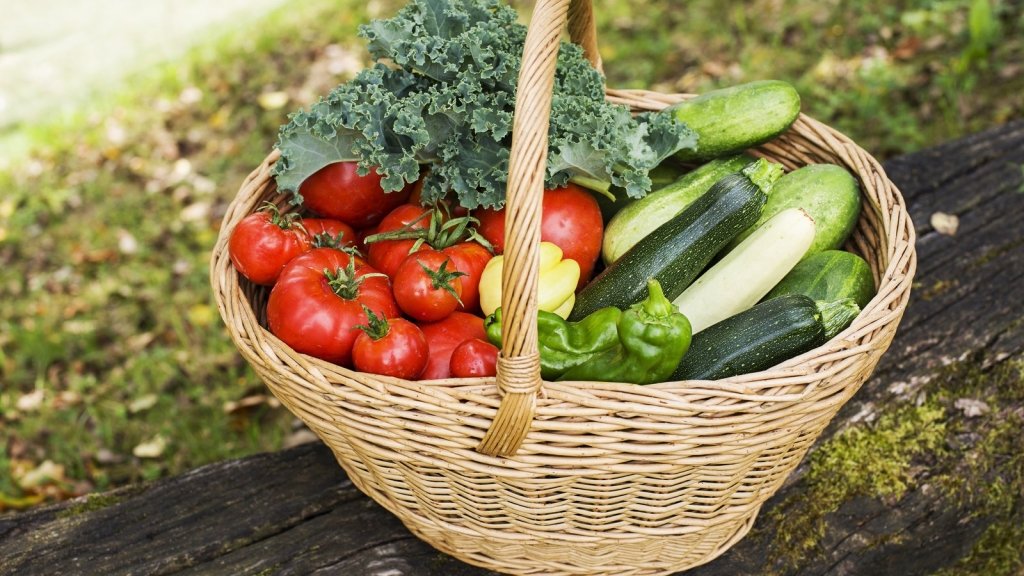
The short version: Most of the vegetable patch belongs to about a dozen botanical families, and plants in the same family share the same pests, diseases, feeding habits and seasons. Tomato, potato, capsicum and eggplant are nightshades; cabbage, broccoli, kale, radish and rocket are brassicas; peas and beans are legumes; pumpkin, zucchini, cucumber and melon are cucurbits; carrot, parsley, coriander and dill are the umbel family; onion, garlic and leek are alliums; beetroot, silverbeet and spinach are one family and lettuce, chicory and artichoke another. Once you can sort your seed packets into families, crop rotation, pest control and seed saving stop being rules to memorise and start making sense.
Botanists group plants by the structure of their flowers and, these days, by their DNA, and the groups they arrive at explain a surprising amount about what happens in a backyard. Relatives share the same soil diseases, attract the same caterpillars, want the same food and, if you let them flower together, cross with each other. This guide walks through the families you will meet on our seed packets, with the old family names you will still see in older books.

Nightshades: Solanaceae
Tomato, potato, capsicum, chilli, eggplant, tomatillo and cape gooseberry. All want warmth and a frost-free season, all are heavy feeders, and all flower with a five-pointed star. They share root-knot nematode, a range of soil-borne wilts, and the leaf blights, which is why potatoes should not follow tomatoes in the same bed. Potato is the odd one out, hardier than its cousins and grown from tubers rather than seed. Safety note: green or sprouting potato tubers and all tomato and potato foliage contain glycoalkaloids (solanine in potato, tomatine in tomato), which cause nausea and worse; peeling removes only part of it and cooking does not destroy it, so discard green potatoes and never eat the leaves of potato, tomato, eggplant or their relatives.

Brassicas: Brassicaceae (formerly Cruciferae)
Cabbage, broccoli, cauliflower, kale, Brussels sprouts and kohlrabi are all one species, Brassica oleracea, bred into different shapes over centuries, and they will cross-pollinate with each other. Turnip, mizuna and bok choy are another single species, Brassica rapa, and will cross with each other; swede, radish, rocket and mustard are further species in the same family. The old family name, Cruciferae, comes from the four petals arranged in a cross; Brassicaceae simply takes the name of the cabbage genus. Brassicas are cool-season crops that bolt in heat, heavy feeders, and the shared target of the cabbage white butterfly and the diamondback moth, whose life cycle can run under three weeks in hot weather. Clubroot, a soil disease that swells and rots the roots, persists for years once a bed has it, which is the classic argument for rotating the whole family together. Our guide to cabbage white and diamondback caterpillars covers the family's main enemies.

Legumes: Fabaceae (formerly Leguminosae)
Peas, beans, broad beans, soybeans, lentils, chickpeas, peanuts, lupins and clover. The flower is the giveaway: a banner petal at the back, two wings and a keel, like a sweet pea. Legumes host rhizobia bacteria in nodules on their roots that fix nitrogen from the air, which is why they are the soil builders of a rotation and why green manure mixes are full of them. Many garden legumes come from overseas and the matching bacteria may be missing from Australian soil, so seed is sometimes sold with an inoculant. Peas and broad beans are cool-season crops; beans want warm soil, at least 15 to 16 degrees and ideally warmer.

Cucurbits: Cucurbitaceae
Pumpkin, zucchini and other squash, cucumber, rockmelon, watermelon, gourds, luffa and bitter melon. Heat lovers with big leaves, big yellow flowers in separate male and female forms, and big flat seeds. They need space, water and food, and they share powdery mildew, which arrives in humid, crowded, still air. In Queensland, the Northern Territory and northern New South Wales they also share the cucumber fly, a native fruit fly that targets zucchini, squash, cucumber and melons. For seed savers, varieties within the same species cross freely by insect, so a Queensland Blue and a Jarrahdale flowering together (both Cucurbita maxima) will not give you either next year unless you hand-pollinate and bag the flowers. A butternut is a different species, Cucurbita moschata, and crosses with them only rarely. Our guide to powdery mildew is the one every cucurbit grower ends up reading.

The umbel family: Apiaceae (formerly Umbelliferae)
Carrot, parsnip, celery, celeriac, parsley, coriander, dill and fennel. Named for the umbrella-shaped flower heads, which are magnets for hoverflies, lacewings and parasitic wasps if you let a few plants run to seed. Most are light feeders that prefer a bed manured for the previous crop, and the root crops, coriander and dill hate transplanting, so they are sown where they will grow, while celery, celeriac and parsley are usually raised in punnets first. One myth to retire: the carrot fly that fills British and American growing guides is not established in Australia and is treated as an exotic biosecurity threat here, so Australian carrot damage has other causes. And a caution: the family includes poisonous relatives such as hemlock, which is a naturalised weed in parts of southern Australia, so never eat wild plants that look like carrot, parsley or fennel.

Alliums: Amaryllidaceae (formerly Liliaceae)
Onion, garlic, leek, shallot, chives and spring onion. Older books put them in the lily family, and some in a family of their own called Alliaceae; current classification files them with the daffodils. They are light feeders with long growing seasons, and they carry a family disease worth respecting: white rot, whose black resting bodies can survive in soil for up to 20 years, so an infected bed should never grow alliums again. Onion bulbing is triggered by day length, which is why varieties are sold for short, intermediate and long days.

Beets and spinach: Amaranthaceae (formerly Chenopodiaceae)
Beetroot, silverbeet, true spinach, quinoa and amaranth. Beetroot and silverbeet are the same species, one bred for the root and one for the leaf. International classification now folds the old beet family into Amaranthaceae, though some Australian references still list Chenopodiaceae. They are leafy crops that respond to steady nitrogen, though rotation plans usually count beetroot and silverbeet as light feeders, and they share the leaf miner that tunnels silverbeet leaves.
Daisies: Asteraceae (formerly Compositae)
Lettuce, endive, chicory, globe and Jerusalem artichoke, salsify and sunflower, plus calendula, cosmos, zinnia and many of the flowers in a beneficial insect mix. Lettuce is the family member most gardeners grow, and its habit of bolting in heat and long days comes with the territory.
The rest of the patch
- Grasses (Poaceae): sweet corn, which is wind-pollinated and is best grown in a block of several short rows rather than a single row, so the wind can carry pollen between plants.
- Mints (Lamiaceae): basil, mint, oregano, thyme, rosemary and sage, all with square stems and flowers that bees work hard.
- Morning glories (Convolvulaceae): sweet potato, which despite the name is no relation to the potato and grows storage roots rather than tubers.
- Mallows (Malvaceae): okra and rosella, along with cotton and hibiscus.
- Knotweeds (Polygonaceae): rhubarb, sorrel and buckwheat. Rhubarb stalks are food; the leaves contain enough oxalic acid to be dangerous and must never be eaten.
Why families matter: rotation
Soil-borne pests and diseases build up when the same family grows in the same soil year after year, and many take several years without a host to fade, so the longer the gap your beds allow, the better. A common home rotation moves families around four beds: heavy feeders (nightshades, brassicas, corn, cucurbits) in the freshly manured bed, then light feeders (alliums, carrots, parsnips, beetroot, silverbeet), then a green manure crop, then legumes to rebuild the soil, then back to the start. It does not need to be perfect. Even keeping the nightshades and the brassicas moving is most of the benefit. Our guide to crop rotation made simple lays out a plan.
Why families matter: pests and companions
A pest that loves one brassica loves them all, so netting the cabbages while the kale sits uncovered next door achieves little, and a family grouped together in one bed can be netted or trap-cropped as a unit. Companion planting works mostly through general diversity, flowers for the beneficial insects and a mix of families rather than a block of one, though a few specific pairings such as French marigolds against root nematodes have some support. Our guide to companion planting in Australia sorts the evidence from the folklore.
Why families matter: seed saving
Plants cross within a species, and sometimes within a family, so a seed saver needs to know which of their crops are the same species. Two Brassica oleracea crops flowering together will cross; so will two varieties of the same pumpkin species, and two capsicums. Overseas seed-saving guides quote isolation distances from a few hundred metres to well over a kilometre for insect-pollinated brassicas and cucurbits, which is impossible in a suburb, so home savers grow one variety per species per season, hand-pollinate and bag the flowers, or simply save from self-pollinating crops such as tomatoes, beans, peas and lettuce, which stay true with almost no effort. Our guide to how long seeds last covers storing what you save.
Families across Australia's climate zones
- Tropical (Cairns and far north Queensland, Darwin and the Top End of the Northern Territory, the Kimberley in Western Australia): nightshades, cucurbits, beans and the mallows grow almost year round; brassicas, peas and most umbel crops only in the dry season.
- Subtropical (Brisbane and coastal Queensland, Coffs Harbour and northern New South Wales): warm-season families from spring to autumn, brassicas and alliums through the mild winter, and fruit fly netting on nightshades (Queensland fruit fly) and cucurbits (cucumber fly).
- Arid and semi-arid (inland Queensland, Broken Hill and Dubbo in New South Wales, Mildura in Victoria, inland South Australia and Western Australia, Alice Springs in the Northern Territory): brassicas, alliums and umbels in the cool months, cucurbits and nightshades in spring and autumn shoulders with shade in summer.
- Temperate (Sydney and New South Wales, Melbourne and Victoria): the classic rotation, warm families after the last frost and cool families sown in late summer for winter.
- Mediterranean (Perth and southern Western Australia, Adelaide and the Adelaide Plains in South Australia): brassicas, peas, alliums and umbels through the wet winter, cucurbits and nightshades on irrigation through the dry summer.
- Cool and alpine (Hobart and Tasmania, Canberra and the ACT, Ballarat in Victoria, Orange and Armidale on the New South Wales tablelands, and the alpine country of the Snowy Mountains and the Victorian high country): brassicas, alliums, legumes and roots do best; nightshades and cucurbits need early varieties and a warm spot.
These are broad groupings. A frost pocket or a coastal breeze can shift a family's season by weeks either way.
Frequently asked questions
Are potatoes and tomatoes really related?
Yes, closely. Both are nightshades, both get the same blights and nematodes, and neither should follow the other in a bed. Sweet potato, by contrast, is in a different family altogether.
Which vegetables can I grow in the same bed without rotating?
Legumes and light feeders are the most forgiving. The families that really need moving are the nightshades, brassicas and alliums, whose soil diseases linger for years.
Do I need to know Latin family names?
No. Knowing that cabbage, kale and rocket are cousins is what matters. The Latin is there so you can look a plant up and be sure which group it belongs to, and our product listings carry it for that reason.
Will my zucchini cross with my cucumber?
No. They are different species. A zucchini will cross with other Cucurbita pepo types such as many pumpkins and squash, which only matters if you save the seed.
Sort the packets into families once and the seasons, the rotation and the pest netting all fall into place. Sustainable Gardening Australia's crop rotation guide lists the families and their feeding habits in one table.
Related growing guides
- Crop rotation made simple: a plan for the Australian home garden
- Companion planting in Australia: what really helps, and what is folklore
- Root-knot nematode: the hidden cause of wilting and forked roots
One family at a time: browse our tomato seeds, broccoli seeds, bean seeds and the full range of vegetable seeds.