
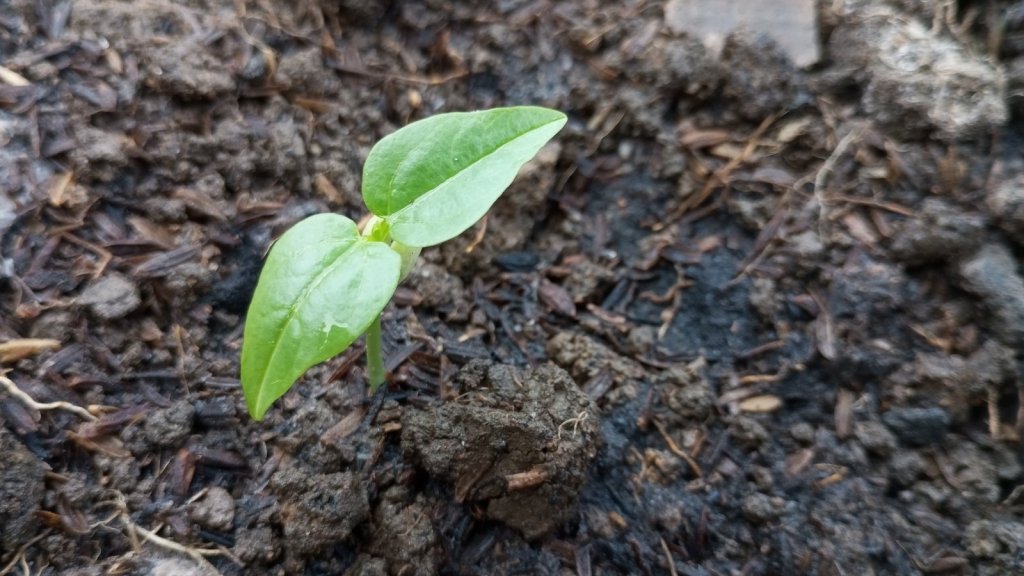
The short version: A seed is a living plant in miniature, with a root, a shoot and its first leaves already formed, packed with enough food to reach the light, and sealed in a protective coat. Germination starts when the seed takes up water, the stored food is turned into sugar, and the root pushes out, followed by the shoot. It needs water, oxygen, the right temperature for that crop and, for some small seeds, light. Most failures come from soil that is too cold, too wet or too hot, seed sown too deep, or seed that is simply too old.
A seed looks like a dead thing. It is closer to a sleeping traveller with a packed lunch: the whole plant is already there, folded up, with enough food in the lunchbox to get the shoot to the surface and the first leaves open. Once you picture it that way, most of the rules of seed raising explain themselves.
Why does depth matter? Because the lunch runs out. Why do beans lift their seed leaves into the air while peas leave theirs underground? Because they carry the lunch differently. Why does a seedling on a windowsill stretch? Because it is spending its lunch looking for light.
What is inside a seed
The outer layer is the seed coat, which keeps the seed from rotting and shields it from damage. On a bean you can see the hilum, the scar where the seed was attached to the pod, and beside it a tiny pore, the micropyle, where water first gets in. Inside sits the embryo: a radicle, which becomes the root; a short stem section below the seed leaves, the hypocotyl, and one above them, the epicotyl; and the plumule, the bud that becomes the shoot. The cotyledons are the seed leaves. In beans, peas, tomatoes and most vegetables there are two, and they hold the food. In corn and other grasses there is one, and the food is stored separately in a starchy endosperm, with the young shoot wrapped in a protective sheath.
The five things a seed needs
Germination needs a live embryo, any dormancy already broken, and then water, oxygen, the right temperature and, for some seeds, light or darkness. The growing medium has to be loose and aerated, because a waterlogged seed cannot breathe and rots. Once a seed has started to take up water it must not dry out again, because drying after germination has begun kills the embryo. Some small seeds, including lettuce, petunias and impatiens, germinate better in light and are pressed onto the surface; a few, such as calendula and verbena, prefer dark. Most do not care.

Germination, step by step
First comes imbibition, the uptake of water through the coat, which happens within hours and swells the seed. This is a physical process and it happens to dead seed too, so a plump seed is not proof of life. Next the embryo starts to respire, and enzymes break the stored starch, oil and protein into sugars and amino acids that feed it. The radicle then breaks through the coat, usually the first thing you see, and anchors the seedling. Only then does the shoot move. In beans the hypocotyl forms a hook and drags the seed leaves up into the light, where they turn green and feed the plant until the true leaves take over. In peas the seed leaves stay buried and a hooked epicotyl comes up instead. In corn a pointed sheath drills to the surface and the first leaf spears through it. The first true leaves, the ones shaped like the plant, appear next, and that is the moment a seedling is ready to move.
Soil temperature: the number that decides speed
Every crop has a minimum soil temperature below which it will not germinate, an optimum where it is fastest, and a maximum above which it stops. Classic research from the University of California, still used by extension services, puts the minimum for beans, capsicums, eggplants and cucumbers at about 16°C, tomatoes and sweet corn at about 10°C, peas, carrots, beetroot and cabbage at about 4°C, and lettuce, spinach and parsnips at about 2°C. Optimums sit in the mid to high twenties for most vegetables, and above 32°C for corn, cucumbers and pumpkins. The maximums matter too: lettuce and spinach usually refuse to germinate once soil passes about 29°C.
Temperature also sets the pace. A tomato seed germinates in about six to eight days at its optimum and can take more than forty days at 10°C, while a carrot needs seven weeks at 5°C and one week at 20°C. That is why measuring the soil beats trusting the calendar; our guide to the kitchen thermometer test shows how.

Why seeds age, and how long they last
A seed is alive and slowly using up its lunch. Warmth and moisture speed that up, which is why the rule of thumb from the same California research says a seed's storage life roughly halves for every rise of about 5 to 6°C in temperature or every 1 percent rise in its moisture content. Kept cool, dry and sealed, onion, parsnip and parsley seed last about a year, and sweet corn, capsicum and okra about two. Beans, peas, carrots and spinach last about three years, tomatoes, beetroot and pumpkins four, cucumbers and radishes five, and lettuce up to six. In a hot shed those figures shrink fast. When in doubt, lay ten seeds on damp paper towel in a bag, keep it warm, and count: seven or more up means sow a little thicker, six or fewer means buy fresh. Our guide to how long seeds last has the full table.
Why seeds fail
In rough order of likelihood:
- The soil was too cold for the crop, so warm-season seed sat and rotted.
- The mix was waterlogged and airless.
- The seed was sown too deep and the lunch ran out before the shoot reached light. That is why the rule is two to three times the seed's width, with fine seed on the surface.
- A crust formed over fine seed such as carrots after heavy watering.
- The tray dried out once after germination began.
- The seed was old.
- Damping-off fungi in cool, wet, reused mix rotted the seed before it emerged.
Supersweet corn has a hazard of its own: seed that takes up cold water below about 10°C in its first day or two suffers internal damage and looks like slow seed while being dead. Clean containers, fresh mix, warm soil and steady moisture usually prevent most of it. Our guide to 21 reasons seeds do not germinate works through the rest.
Seed and soil across Australia's climate zones
Soil temperature, not the month, is the trigger, and it varies more between beds than between suburbs. A soil thermometer costs less than the seed and weeks lost to one failed sowing.
- Tropical (Darwin in the Northern Territory, Cairns and Townsville in Queensland): soil rarely drops below the 16°C that beans, capsicums and okra want, so the limit runs the other way: lettuce and spinach stop germinating in hot soil and belong to the dry season under shade.
- Subtropical (Brisbane and south-east Queensland, northern New South Wales): warm-season seed from August, peas from March to July before the heat, and lettuce all year with summer shade.
- Arid and semi-arid (Alice Springs in the Northern Territory, Broken Hill in New South Wales, Mildura in Victoria, Kalgoorlie in Western Australia): big daily swings and winter frosts in the south. Sow warm-season seed once frost risk passes and cool-season seed in autumn, when soil drops back under about 29°C.
- Temperate (Sydney and the New South Wales coast, Melbourne in Victoria): raise tomatoes under cover from August, and sow beans and corn direct once soil holds 16°C, usually from late September on the coast and later inland.
- Mediterranean (Perth and southern Western Australia, Adelaide in South Australia): follow the temperate windows, but summer soil can pass the maximum for lettuce, spinach and even beans, so sow those in autumn and early spring.
- Cool and alpine (Tasmania, Canberra in the ACT, Ballarat in Victoria, Orange and Armidale in New South Wales, Stanthorpe in Queensland): soil may not reach 16°C until late October or November, so beans wait and capsicums start indoors on a thermostat-controlled heat mat, while peas, lettuce and spinach have the longest windows of anywhere.
Frequently asked questions
What is the difference between seed leaves and true leaves?
Seed leaves, or cotyledons, are packed inside the seed and feed the seedling first. True leaves are the plant's real, species-shaped leaves that follow. Transplant once the first true leaves show.
How long do seeds last?
From about a year for onion, parsnip and parsley to five or six years for cucumber, radish and lettuce, if stored cool, dry and sealed. Heat and humidity halve those figures quickly.
Why have my seeds not come up?
Most often the soil was too cold, too wet or too hot for that crop, or the seed was too deep or too old. A ten-seed paper-towel test rules out dead seed.
Do seeds need light to germinate?
Most do not care. Lettuce, petunias and impatiens do better in light and are surface sown; calendula and verbena prefer dark.
How deep should I sow?
About two to three times the seed's width, and fine seed pressed onto the surface. The food store has to power the shoot to the light.
What soil temperature do tomatoes, beans and capsicums need?
Tomatoes from about 10°C, beans and capsicums from about 16°C, with the sweet spot in the mid to high twenties for all three.
Warm soil, steady moisture, a shallow covering and fresh seed: give the sleeping traveller those four things and the lunchbox does the rest.
Related growing guides
- 21 reasons why your seeds did not germinate
- How long do seeds last?
- The kitchen thermometer test: when your soil is ready
Fresh seed germinates best. Browse our vegetable seeds and flower seeds.