
The short version: Plant seedlings out once they have their first true leaves and stand 5 to 10 cm tall, after a week of hardening off. Choose an overcast, calm afternoon, water the punnet first, ease each seedling out by squeezing the cell rather than pulling the stem, and plant at the same depth it grew, except tomatoes, which go in deep. Water in with seaweed solution, mulch clear of the stems, and protect against cutworms, slugs and hot sun for the first week. A pause of a week or two before new growth appears is normal.
The punnets have been sitting on the path for a fortnight. The seedlings are the right size, the bed is ready, and the first free Saturday is 34°C with a hot northerly. That Saturday is how most seedlings die: not from anything the gardener did wrong with the plants, but from the day chosen to move them.
Transplanting is a small shock at the best of times. The trick is to make everything else about the day easy.
When a seedling is ready
A seedling is ready to plant out when it has its first true leaves, the plant-shaped leaves that follow the two rounded seed leaves. It should stand roughly 5 to 10 cm tall with roots that hold the plug together. Three or four true leaves is ideal. Bigger is not better: seedlings left too long in trays check harder, and broccoli held back can produce tiny button heads soon after planting.
Seedlings raised indoors or bought from a glasshouse need a week of hardening off first, a few hours outside building to full days, or they scorch on their first afternoon. Our guide to hardening off seedlings sets out the week. Warm-season crops also wait for the soil: tomatoes should not go out until the soil holds at least 16°C, and 18 to 20°C is better, with the same rule for capsicums, chillies, eggplants and cucurbits.
Pick the day, not just the date
Plant in the late afternoon of a mild, overcast, calm day, ideally with more of the same to follow. Clear sunny days sound kind but usually bring a cold night behind them, and a hot or windy day will make even hardy seedlings suffer. If the weather refuses to cooperate, plant at dusk and rig some shade for the first few days.
Getting them out of the punnet in one piece
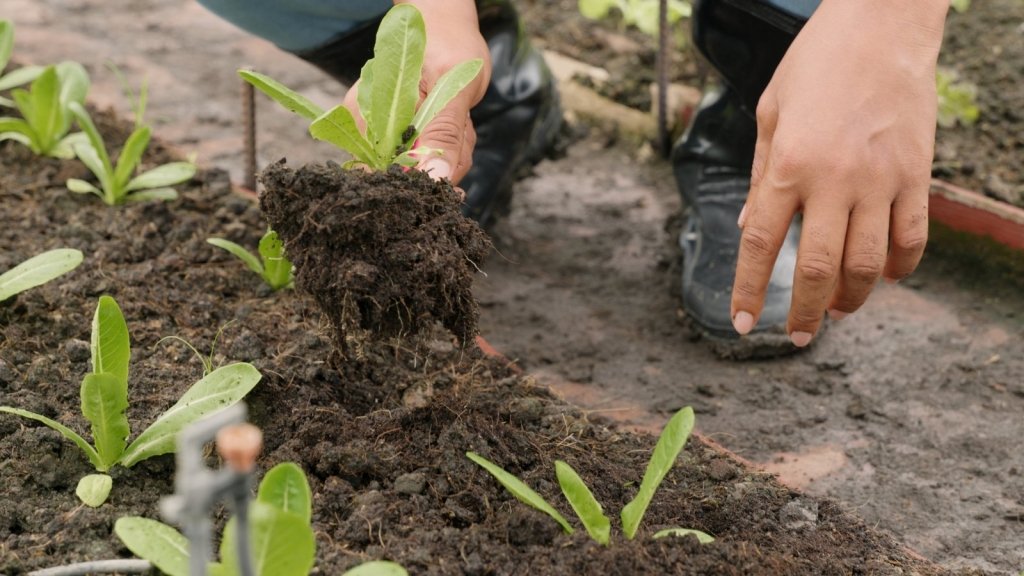
Water the punnets an hour before, or stand them in a tray of water for five minutes, so the mix holds together. Turn the punnet on its side with your fingers around the stem, squeeze the base of the cell and let the plug drop out. Never pull a seedling up by the stem. If the roots have filled the pot into a solid mat, tease the base and sides loose, or cut a shallow line down the side so the roots stop circling. A healthy, open root ball is left alone.
Seedlings sown thickly in a shared punnet come out as a tangle. Stand the clump in a shallow tray of water and let the roots float apart, then separate them gently without tearing. Work quickly: roots should be out of the ground for as short a time as you can manage, ideally no more than 10 to 15 minutes, and never in the sun.

Depth, spacing and watering in
Dig each hole almost twice the width of the root ball, at the packet spacing, and pour water into the bottom of it. Set most seedlings at the depth they grew in the punnet. Tomatoes are the exception: plant them deep, with the lower leaves removed, so that only the top few leaves sit above the soil. They grow roots along the buried stem, which can make a sturdier plant. Brassicas can go slightly deeper than they grew, and a leggy seedling a little deeper still. Lettuce and celery keep their crowns at the surface. Spacing matters more than it looks: about 50 cm for tomatoes, 40 to 60 cm for capsicums, 25 to 60 cm for cabbages depending on size, and 20 to 50 cm for lettuce by type. Halving the spacing costs airflow and invites fungal problems.
Backfill, firm the soil gently around the root ball, and water in with a seaweed solution at the label rate, which for the common Australian product is 40 mL in a 9 L can, repeated a week later. Seaweed extracts can help roots establish and cope with stress, though results vary between products, and they do not replace water and shade. Mulch afterwards, keeping a clear ring around each stem.

The first week: shade, water and the pests that strike overnight
Shade is the cheapest insurance. A single layer of white insect mesh or orchard netting over hoops gives about 10 to 15 percent shade, and doubled about 30 percent, which is as much as young plants want. Heavier shade makes them weak and leggy. Water daily until new growth shows, morning and evening if they look stressed, then ease back to deeper, less frequent watering so the roots chase the moisture down. Our guide to watering vegetables deeply explains the shift.
The first nights are the dangerous ones. Cutworms fell seedlings at soil level: a collar cut from a drink bottle, pushed 5 cm into the soil and standing 5 cm above it, stops them, as does a torchlight check after dark. Slugs and snails come out in the damp: sprinkle an iron-EDTA bait thinly at dusk after watering, never in piles, rather than metaldehyde products that are dangerous to dogs. Birds pull seedlings for the fun of it, so cover the bed with white netting of 5 mm mesh or finer, pegged to the ground; loose black bird netting entangles wildlife. Hold the fertiliser until the plants are established, because strong feed on bruised roots makes the shock worse. Then expect a pause of one to two weeks before the seedlings visibly grow. That stall is normal, and it is not a reason to water more.
Planting out across Australia's climate zones
- Tropical (Darwin in the Northern Territory, Cairns and Townsville in Queensland): tomatoes, lettuce and brassicas go out in the dry season, roughly May to September; capsicums and eggplants most of the year.
- Subtropical (Brisbane and south-east Queensland, northern New South Wales): warm-season seedlings from September to November and again in late summer, cool-season seedlings from March to September, and shade for lettuce in summer.
- Arid and semi-arid (Alice Springs in the Northern Territory, Broken Hill in New South Wales, Mildura in Victoria, Kalgoorlie in Western Australia): plant in autumn and spring so seedlings establish before extreme heat, always at dusk, with shade for the first week and water twice a day in hot spells.
- Temperate (Sydney and the New South Wales coast, Melbourne in Victoria): tomatoes and other warm-season seedlings from mid October on the coast and after the last frost inland.
- Mediterranean (Perth and southern Western Australia, Adelaide in South Australia): follow the temperate windows, but plant heat-sensitive seedlings such as lettuce, brassicas and celery in autumn or early spring rather than late spring, and expect to shade anything planted in summer.
- Cool and alpine (Tasmania, Canberra in the ACT, Ballarat in Victoria, Orange and Armidale in New South Wales, Stanthorpe in Queensland): frost-tender seedlings go out after the last frost, often the first week of November and later at altitude; cool-season seedlings have the longest run here. Canberra's tradition of planting tomatoes on Melbourne Cup Day still carries a real frost risk in about half of years, so keep covers ready.
Frequently asked questions
How big should seedlings be before planting out?
First true leaves and 5 to 10 cm tall, ideally three or four true leaves. Do not wait for 15 cm; big old seedlings check harder.
What time of day is best?
Late afternoon on an overcast, calm day, so the seedlings have a cool night to settle before they meet the sun.
Should I plant deeper than the punnet?
Only tomatoes, which go in deep with the lower leaves removed, and slightly deeper for brassicas and leggy seedlings. Everything else at the same depth, with lettuce crowns at the surface.
How do I separate seedlings that share a punnet?
Stand the clump in a tray of water and let the roots float apart, then tease them gently. Keep them wet and work fast.
Does seaweed solution stop transplant shock?
It can help roots establish, and Australian gardeners routinely water in with it, but it does not replace shade, water and gentle handling.
My seedlings wilted the day after planting. Are they dead?
Usually not. Water morning and evening, shade them with a single layer of mesh, and wait. A stall of a week or two before new growth is normal.
Choose a grey afternoon, keep the roots wet and the stems untouched, and the seedlings will do what seedlings do: sulk for a week, then take off.
Related growing guides
- Hardening off seedlings before planting out
- Cutworms: how to stop them cutting down your seedlings
- How to water vegetables so the roots go deep
Raise your own punnets from our tomato seeds and the full vegetable seeds range.