
The short version: Start with open-pollinated varieties of the self-pollinating crops, tomatoes, beans, peas and lettuce, because their seed comes true with almost no effort. Choose several healthy, typical plants rather than the first to flower, let the seed ripen fully on the plant, clean it (fermenting tomato seed, drying and winnowing beans and lettuce), dry it out of the sun somewhere cool, and store it labelled, cool, dark and dry in an airtight jar. Leave hybrids alone altogether, since seed saved from an F1 never breeds true however well it is isolated, and leave corn, pumpkins, brassicas and beetroot until you understand isolation, since they cross readily with other varieties. Check the biosecurity rules before posting seed to Western Australia or Tasmania.
Seed saving is how every variety in every catalogue came to exist, and it is not complicated once you know which crops are easy and which are not. This guide takes a beginner from the first tomato to a labelled jar, and explains the few rules that keep the seed true.

Why save seed
Saved seed is free, which matters most for varieties sold a few seeds to a packet. It keeps rare and heirloom varieties in circulation. Over a few seasons, seed selected from the plants that did best in your garden adapts to your soil and climate, and to your preferences, whether that is a lettuce that bolts later or a bean that sets earlier. And letting a few plants run to flower feeds the bees and hoverflies that pollinate the rest of the garden.
Rule one: only open-pollinated varieties
Seed comes true only from open-pollinated varieties, most of which have been stabilised over generations so that each plant resembles its parent. Heirloom varieties are open-pollinated by definition. Hybrid varieties, marked F1 on the packet, are the first-generation cross of two parent lines; their seed germinates perfectly well but grows into a random mix of the grandparents' traits, mostly inferior to the hybrid. Check the packet before you begin. Our guide to heritage vegetables is a good place to find varieties worth keeping.
Rule two: start with the self-pollinators
Tomatoes, beans, peas and lettuce pollinate themselves inside the flower before it even opens, so different varieties can grow side by side with very little crossing. They are the beginner's crops. Capsicum and chilli mostly self-pollinate but cross more readily when insects visit, so grow one variety, or bag a few flowers and hand pollinate them, if purity matters. The cross-pollinators are the advanced class. Brassicas, pumpkins and other cucurbits, corn, beetroot, silverbeet, onions and carrots rely on wind or insects and cross freely with any related variety within a considerable distance. Diggers gives beetroot an isolation distance of about 1.6 kilometres; American guides give squash around 800 metres. On a suburban block that means growing one variety of each, timing flowering so varieties do not overlap, covering plants with insect mesh and hand pollinating, or bagging individual flowers. Biennials such as carrot, onion and cabbage also flower only in their second year, so the plant occupies the bed for a long time. Save the easy crops first.

Choosing the parents
Save seed from healthy, vigorous plants that look and taste the way the variety should. Mark them with a ribbon so nobody picks them. Take seed from several plants, not one; a minimum of about six is the usual advice, fewer for beans and peas and more for corn, to keep enough genetic variety that the line stays vigorous. Pull out any plant that looks off-type before it flowers. And resist saving seed from the first plant to bolt. For lettuce, coriander and other bolt-prone crops, seed from the plants that held longest gives you a later-bolting strain over time.
Harvesting: dry seed and wet seed
Dry-seeded crops such as beans, peas, lettuce, coriander and rocket ripen their seed in pods or heads on the plant. Leave bean and pea pods until they are tan, dry and rattling; if rain threatens, pull the whole plant and hang it under cover to finish. Lettuce and coriander shed progressively, so pick heads as they fluff or brown, or tie a paper bag over a ripening head to catch the seed. Harvest on a dry day after the dew has lifted.
Wet-seeded crops such as tomatoes, cucumbers, pumpkins and capsicum carry seed inside fleshy fruit. Let tomatoes go a little overripe, and leave cucumber and zucchini well past eating size, several weeks after full size, so the seed matures. Scoop the seed out with its pulp. Capsicum and pumpkin seed can simply be rinsed clean and dried.
Cleaning
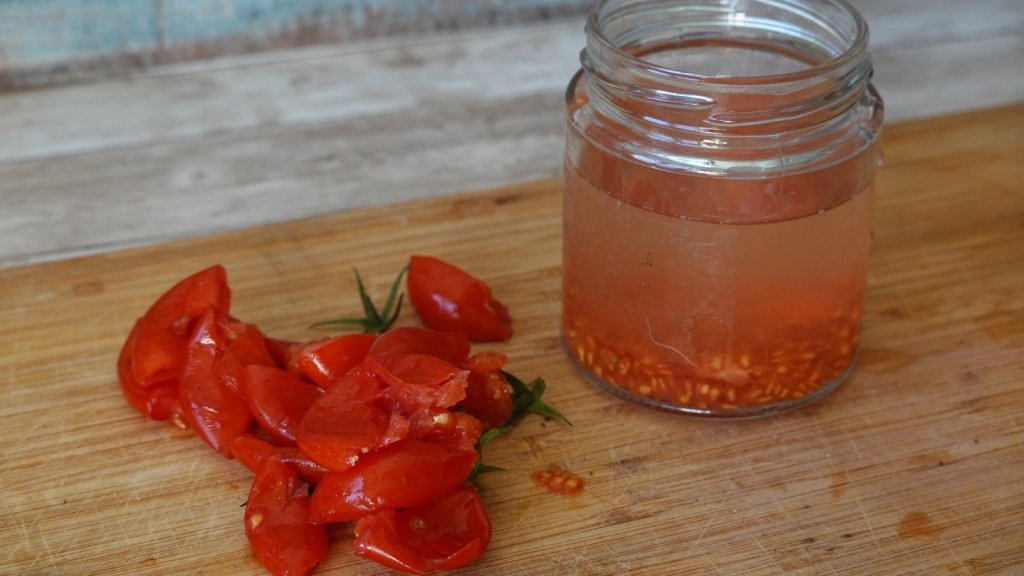
Tomato seed wears a gel coat that inhibits germination, and the best way to remove it is fermentation. Put the seed and pulp in a jar with a little water, leave it uncovered at room temperature somewhere ventilated, and within two to five days a film of mould forms on top and the good seed sinks. Rinse the seed thoroughly in a sieve, spread it on a plate or a piece of baking paper and dry it quickly, and wash your hands and the jar afterwards. One fruit gives 150 to 300 seeds or more. Fermentation also kills some seed-borne diseases. For dry seed, rub pods and heads over a tray, then winnow the chaff away in a light breeze or in front of a fan on low, tipping the seed from one bowl to another, or sieve it through progressively finer kitchen strainers.

Drying and storing
Seed must be dry before it is stored or it moulds or sprouts. Spread it thinly on a plate, tray or paper in a shaded, airy place, never in direct sun and never anywhere above about 40 degrees, and leave it for a week or two, stirring occasionally. Large seed is dry when it shatters rather than dents under a hammer. Then store it in labelled paper envelopes inside an airtight jar with a sachet of silica gel, somewhere cool, dark and dry; the fridge is ideal if the jar is sealed. Label with the variety, the year and anything you noticed. Most vegetable seed keeps three to five years stored this way, tomato up to ten, while onion and other short-lived seed such as parsley, parsnip and leek fade after a year or two. Our guide to how long seeds last explains the germination test that tells you what is still alive.
Sharing and posting seed
Swapping seed with friends and seed savers' groups is part of the pleasure, but Australia's states protect their farms with strict plant biosecurity. Western Australia allows in only seed of species on its permitted organism list and checks consignments at the border, and Tasmania requires seed to come from an approved supplier or a registered importer with advance notice, and admits no genetically modified seed. Western Australia can seize or destroy seed sent without the paperwork, and Tasmania can act on it too. Check the current rules on the state agriculture websites before posting saved seed interstate, and never post seed of a plant that is a declared weed in your state or the destination state.

Seed saving across Australia's climate zones
- Tropical (Cairns and far north Queensland, Darwin and the Top End of the Northern Territory, the Kimberley in Western Australia): humidity is the challenge. Dry seed indoors with a fan or over silica gel and store it in the fridge, and harvest dry seed in the dry season.
- Subtropical (Brisbane and coastal Queensland, Coffs Harbour and northern New South Wales): time bean and lettuce seed crops for the drier months, and expect to finish drying pods under cover.
- Arid and semi-arid (inland Queensland, Broken Hill and Dubbo in New South Wales, Mildura in Victoria, inland South Australia and Western Australia, Alice Springs in the Northern Territory): seed dries fast and well; the only care is keeping drying seed out of the direct sun and heat.
- Temperate (Sydney and New South Wales, Melbourne and Victoria): the easiest zone for the full range, with a summer for tomatoes and beans and a winter for peas and lettuce to run to seed in spring.
- Mediterranean (Perth and southern Western Australia, Adelaide and the Adelaide Plains in South Australia): dry summers make seed drying effortless, and biennials overwinter well in the mild wet season.
- Cool and alpine (Hobart and Tasmania, Canberra and the ACT, Ballarat in Victoria, Orange and Armidale on the New South Wales tablelands, and the alpine country of the Snowy Mountains and the Victorian high country): choose early tomatoes so fruit ripens fully for seed, and bring late bean plants under cover to finish drying before the frosts.
Everywhere, the seed that matters most is from the plants that did well where you live.
Frequently asked questions
Can I save seed from supermarket tomatoes or pumpkins?
You can, but most are hybrids or unknown varieties, so the results are unpredictable. Start with a named open-pollinated variety.
Will my tomatoes cross if I grow several varieties together?
Rarely, and mostly where bees visit large-flowered beefsteak types. A metre or two between varieties is usually enough, and bagging a truss guarantees it.
Why do my saved pumpkin seeds grow strange fruit?
Pumpkins, zucchini and squash of the same species cross with each other via bees. Grow one variety, or hand pollinate and tape the flower closed.
How do I know the seed is dry enough to store?
Bean and corn seed shatters under a hammer rather than squashing; small seed snaps rather than bends. If in doubt, dry it another week.
Start with a tomato, a bean and a lettuce this season, and by next spring you will have a jar of seed that suits your garden better than anything you can buy. Green Harvest's seed saving and storage notes go into the technical detail on moisture and viability.
Related growing guides
- How long do seeds last? Storing seeds and testing if they still grow
- Forgotten Heritage Vegetables Worth Rediscovering from Seed
- The patch that helps itself: gardening for bees and beneficial insects
Begin with varieties bred to be saved: browse our heirloom seeds, tomato seeds and bean seeds.