Erosion Control & Land Rehabilitation Mix
NOT to WA & TAS
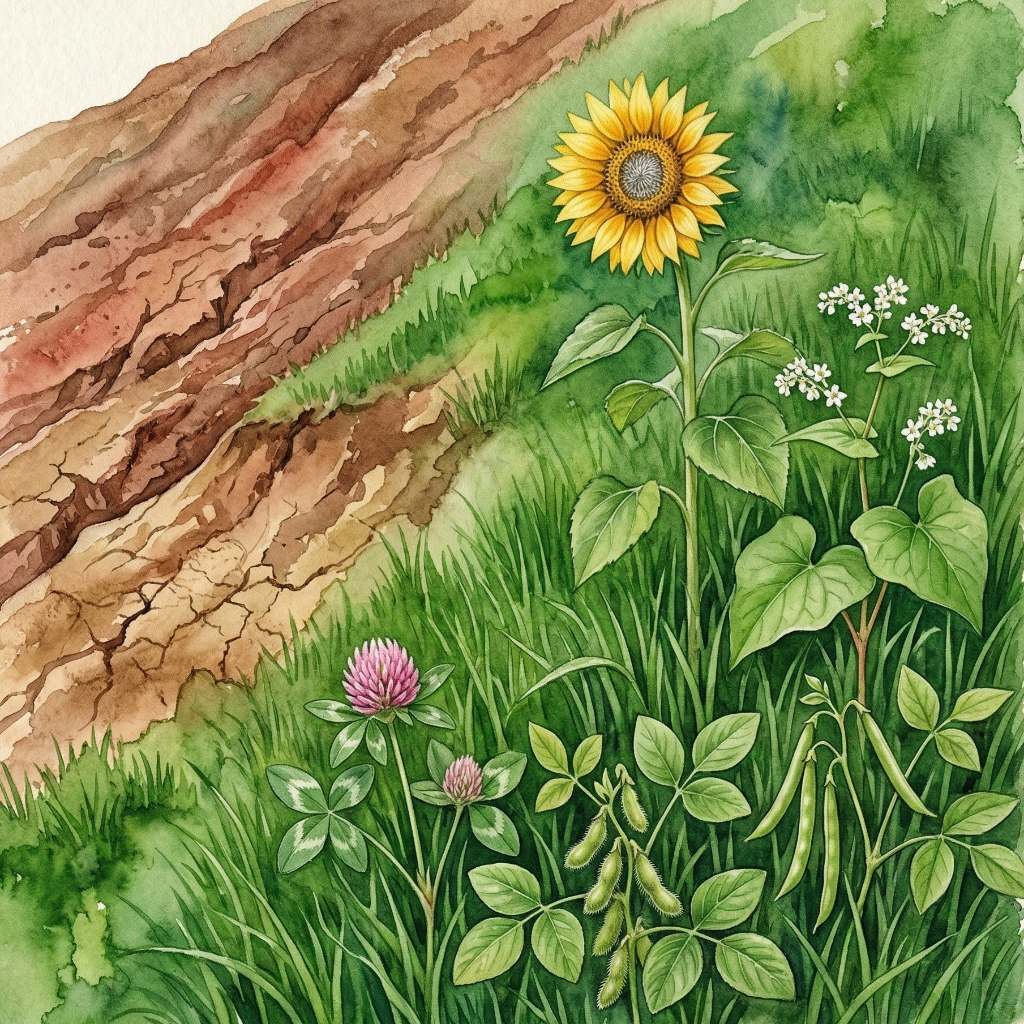
Lolium perenne, Fagopyrum esculentum, Trifolium pratense, Glycine max, Helianthus annuus, Panicum miliaceum, Vigna radiata, Medicago sativa
Suitable for: Home gardeners, Landscapers, builders, councils, fire recovery, dam walls, creek banks, roadside batters, rural property owners, and new subdivision developers
Sowing rate: Slopes and high-risk areas: 80–120 g/sqm. Flat land: 60–80 g/sqm. 1 kg covers approximately 10–15 sqm on slopes.
Season: Sow immediately when soil is exposed - year-round urgency product. Rye grass and clover tolerate frost and dominate cool sowings. Buckwheat, millet, mung, and soybean dominate warm sowings. The 8-species diversity ensures coverage year-round.
Contains: Rye Grass, Buckwheat, Red Clover, Soybean, Sunflower Grey Stripe, Millet, Mung Bean, Alfalfa.
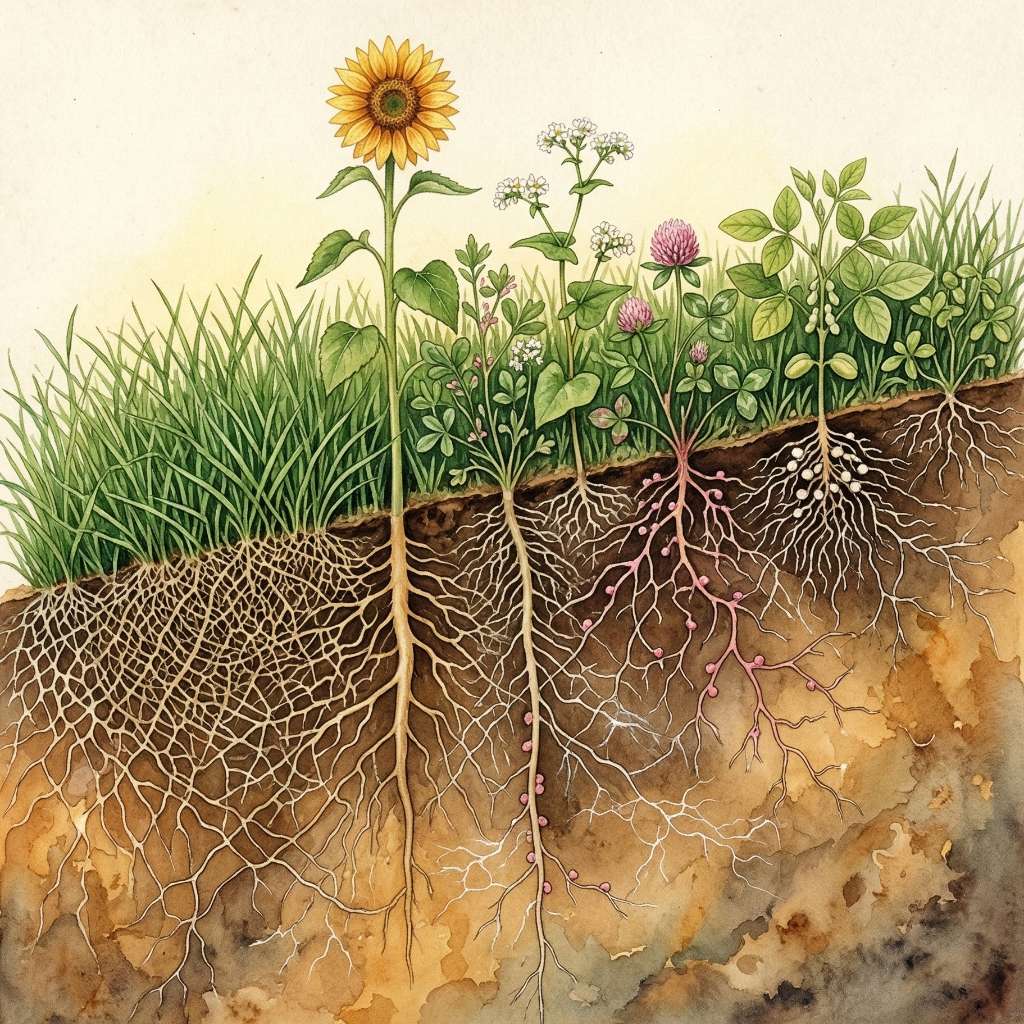
Bare soil is bleeding - losing topsoil, nutrients, and structure with every rain event. Our Erosion Control mix is designed for one job: get roots into the ground as fast as possible and hold that soil in place.
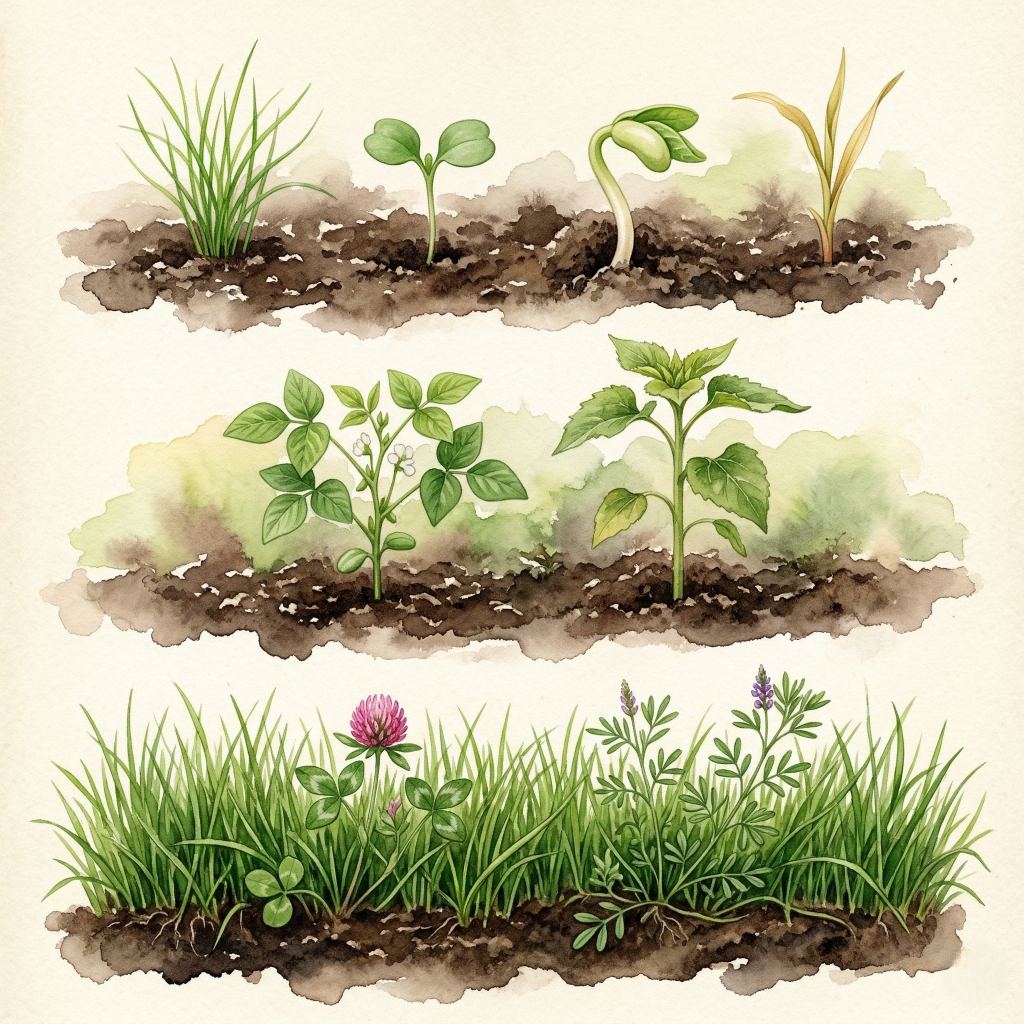
This 8-species cereal-free blend uses a three-phase stabilisation strategy. In the first two weeks, fast-germinating species (rye grass, buckwheat, mung bean, and millet) create a dense root net that immediately anchors the topsoil. Their rapid above-ground growth also protects the soil surface from raindrop impact - the single biggest driver of erosion on bare land. In weeks 3–8, soybean and sunflower fill gaps with additional root mass and begin rebuilding soil fertility through nitrogen fixation. From month 3 onwards, the perennial species (rye grass, red clover, alfalfa) take over as permanent ground cover, ensuring the site doesn’t revert to bare soil.
Rye grass is the key long-term species - it forms a dense, persistent turf that handles foot traffic, mowing, and even light grazing while holding soil long-term. Unlike annual cereals that die after one season, rye grass persists for years.
Sowing Instructions
1. Sow as soon as possible after soil is exposed. Every day of delay increases erosion risk.
2. If soil is heavily compacted, scarify the top 3–5 cm with a rake or harrow to create a seed bed.
3. On slopes: broadcast seed at the higher rate (80–120 g/sqm) and rake downhill to settle seeds.
4. On flat ground: broadcast at 60–80 g/sqm and rake lightly.
5. For large areas: broadcast with a hand-crank or tow-behind spreader at 60–80 kg/ha.
6. Water in immediately if no rain is expected within 48 hours. Use fine mist on slopes.
7. Optional: apply a light layer of straw mulch (1–2 cm) over seeded slopes to reduce seed wash.
8. Rye grass, buckwheat, and mung emerge within 3–7 days. Visible ground cover within 14 days.
9. Do not mow for the first 8–12 weeks to allow maximum root establishment.
10. After 3 months, the perennial rye grass and clover will provide long-term ground cover. Oversow clover every 2–3 years to maintain the legume component.