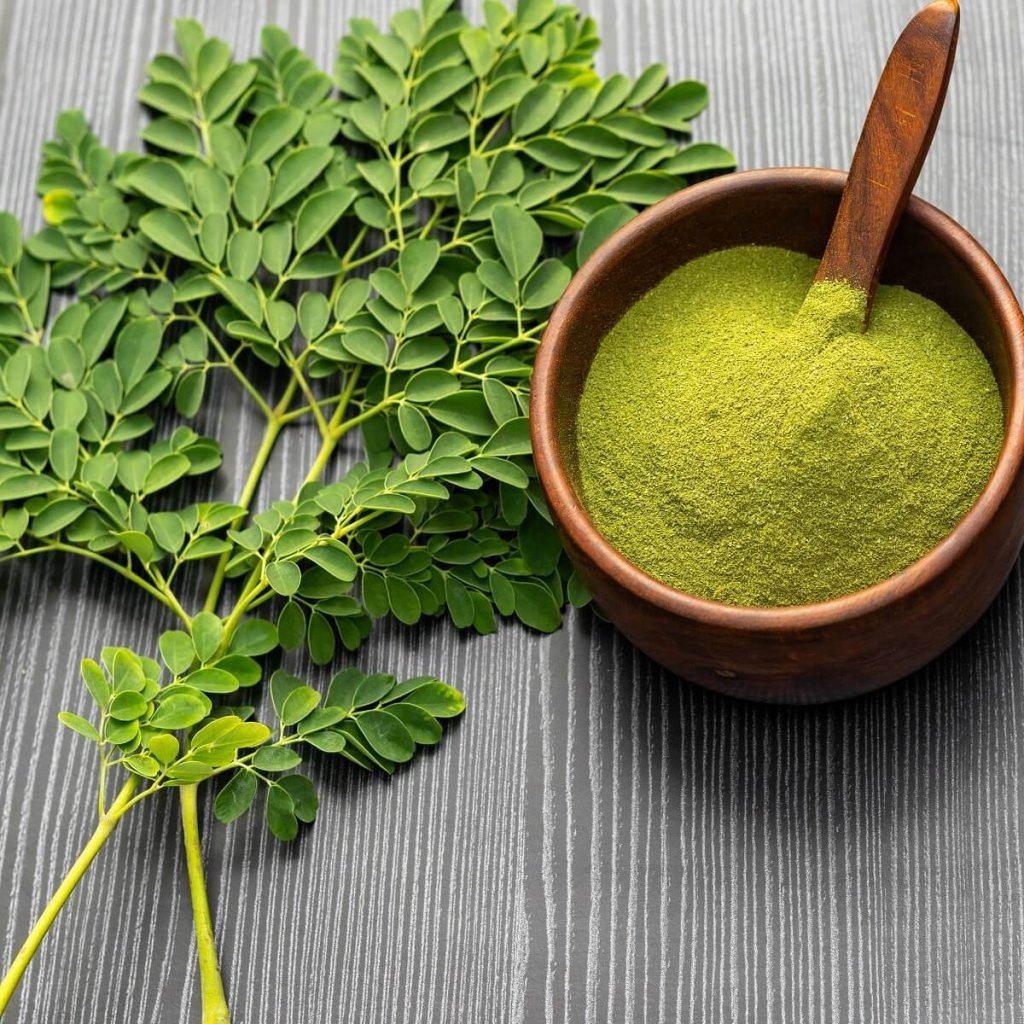
Moringa Tree Seeds
Moringa oleifera
Packet of 15 seeds, 25g (75 seeds), 100g (300 seeds)
Other names: Drumstick tree, horseradish tree, ben oil tree, benzolive tree
Moringa is a fast-growing, deciduous tree that can reach a height of 10–12 m and a trunk diameter of 45 cm. Moringa oleifera, commonly known as the "Drumstick Tree," is a fast-growing tropical tree native to the Himalayan foothills of India. This versatile plant has become increasingly popular in Australian gardens, particularly across warmer regions.
Culinary Uses
Edible Leaves: Young Moringa leaves have a mild, slightly peppery flavour and are used fresh in salads, soups, stir-fries, curries, and teas throughout South Asian, African, and Southeast Asian cuisine. Leaves can also be dried for later use.
Drumstick Pods: The long, slender seed pods (20-45cm) are a popular vegetable in Indian, Thai, and Filipino cooking. Young pods are harvested and cooked similarly to green beans, with a flavour reminiscent of asparagus.
Edible Flowers: The delicate white flowers are edible and commonly used in salads and cooked dishes across tropical regions.
Seeds & Oil: Mature seeds can be roasted and eaten or pressed to extract culinary oil used in cooking across Africa and Asia.
MORINGA SEED GERMINATION GUIDE - BY AUSTRALIAN CLIMATE ZONE
GENERAL REQUIREMENTS:
- Optimal soil temperature: 25-30°C (will germinate from 20°C but slowly). Several customers reported that keeping the heat mat at a constant 27°C until germination works.
- Germination time: 7-21 days (faster in warmer conditions)
- Soak seeds in warm water for 24 hours before planting
- Plant 1-2cm deep in a well-draining seed-raising mix
- Keep soil consistently moist but not waterlogged
- Requires warmth day AND night. Cold nights will prevent germination
COOL CLIMATE (Tasmania, Alpine VIC/NSW, Southern Highlands)
Challenge Level: Very Difficult
Best Months to Start: November-December (indoors only)
Method:
- MUST use seedling heat mat set to 25-28°C
- Start indoors - outdoor temperatures are never warm enough
- Unheated greenhouse NOT suitable (day warmth doesn't compensate for cold nights of 5-10°C)
- Only transplant outdoors in January-February when nights are 15°C+
- Consider growing in pots that can be moved indoors in cooler months
Reality Check: Moringa struggles long-term in cool climates, even with careful starting
TEMPERATE CLIMATE (Melbourne, Adelaide, Perth, Sydney, Canberra)
Challenge Level: Moderate to Difficult
Best Months to Start:
- Indoors with heat mat: September-October
- Direct sow outdoors: December-January
Method:
-
Sept-Nov: Start indoors with a heat mat (25-28°C) - essential for reliable germination
-
Unheated greenhouse: Only effective from December onwards when nights stay above 12-15°C. Before December, the day warmth (20-25°C) is negated by the night cold (5-10°C)
-
Direct outdoor sowing: Wait until December when the soil is consistently 20°C+ day and night
- Transplant seedlings outdoors in December-January when established
Tips:
- Melbourne/Adelaide: Heat mat essential until mid-November
- Perth: Can direct sow from November
- Sydney: Can direct sow from late November
ARID CLIMATE (Inland Australia, Alice Springs, Broken Hill, Much of WA Interior)
Challenge Level: Moderate
Best Months to Start: October-November
Method:
-
Challenge: Hot days (25-30°C+) but cold nights (5-12°C) in spring
-
Solution: Use a heat mat or start indoors to maintain consistent 24-hour warmth
-
Unheated greenhouse: Risky before November - gets hot during the day (30°C+) but drops to 8-12°C at night, shocking seeds
-
Best approach: Start indoors with a heat mat in October, transplant in November-December
-
Direct sow: December onwards when nights stay above 15°C
Tips: Extreme day/night temperature fluctuations are the main challenge - consistent warmth is key
SUBTROPICAL CLIMATE (Brisbane, Gold Coast, Northern NSW Coast, Bundaberg)
Challenge Level: Easy to Moderate
Best Months to Start:
- Indoors/heat mat: September-October
- Direct sow: November-March
Method:
-
Sept-Oct: Start indoors with a heat mat for an early crop (nights still 10-15°C)
-
November onwards: Can direct sow outdoors (soil 20°C+, nights 15-18°C+)
-
Unheated greenhouse: Effective from October onwards (day 22-28°C, night 15-18°C)
-
Peak season: November-February (warmest conditions)
Tips: Very reliable climate for Moringa - heat mat gives a head start, but not essential from November
TROPICAL CLIMATE (Darwin, Cairns, Townsville, Far North QLD, Broome)
Challenge Level: Very Easy
Best Months to Start: Year-round, but best September-March
Method:
-
Direct sow any time - soil temperatures consistently 22-30°C+
-
No heat mat needed - natural temperatures are perfect
-
Peak season: September-March (wet season approach and wet season)
-
Dry season (May-Aug): Still works but slower growth
- An unheated greenhouse is not necessary (already hot enough)
Tips: This is Moringa's natural climate - virtually foolproof. It can grow year-round as a perennial tree.
CRITICAL GREENHOUSE WARNING FOR ALL ZONES:
An unheated greenhouse is only beneficial when NIGHT temperatures inside stay above 15°C. Before this point:
-
Day: Greenhouse heats to 25-30°C (good)
-
Night: Greenhouse drops to 5-12°C (kills germination)
-
Result: Seeds experience temperature shock and fail
If using an unheated greenhouse in cool/temperate zones before December, you MUST bring seed trays indoors at night or use a heat mat inside the greenhouse.
SEEDLING HEAT MAT GUIDANCE:
When to use:
- Cool/Temperate zones: Essential Sept-November
- Arid zones: Recommended Oct-November
- Subtropical zones: Helpful Sept-October
- Tropical zones: Not needed
How to use:
- Set to 25-28°C
- Place seed trays on the mat
- Keep indoors or in a heated space
- Maintain 24-hour warmth until germination
- Continue heat until the seedlings are 10cm tall