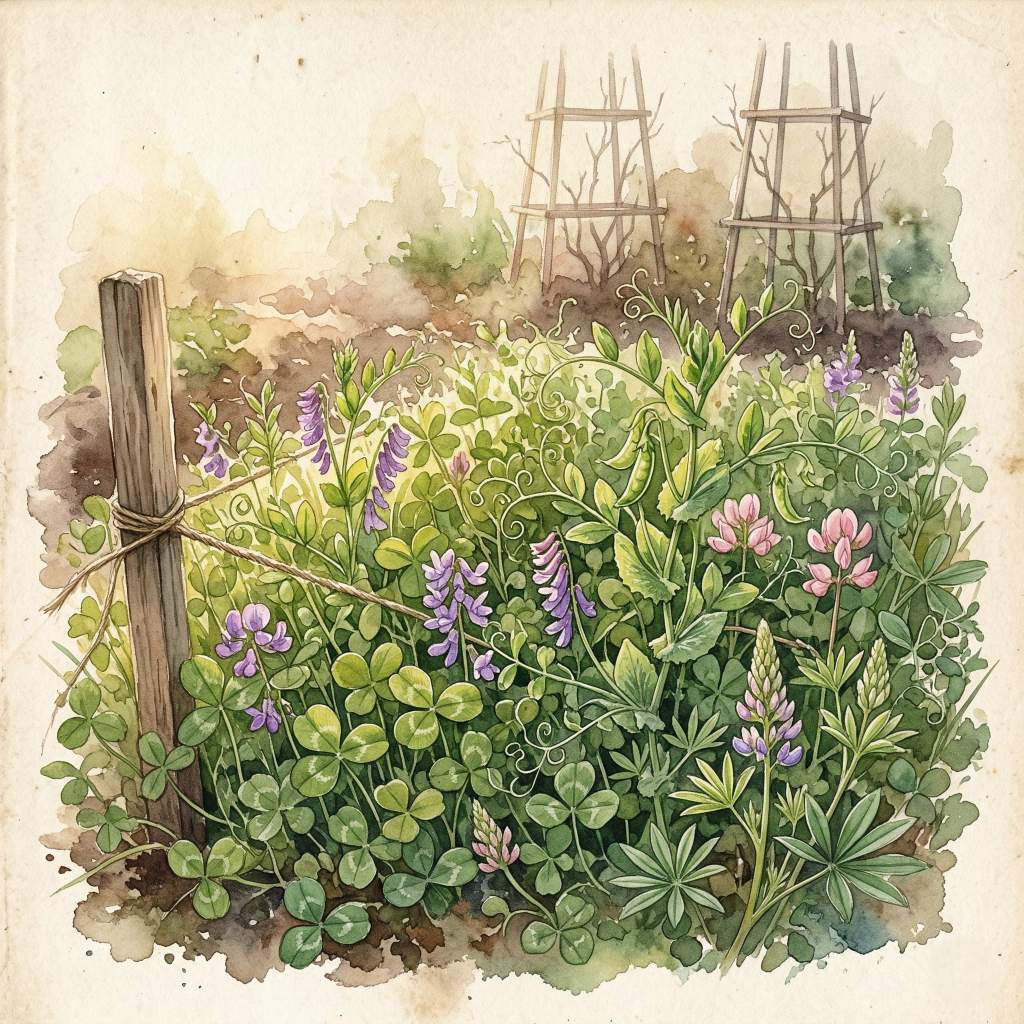
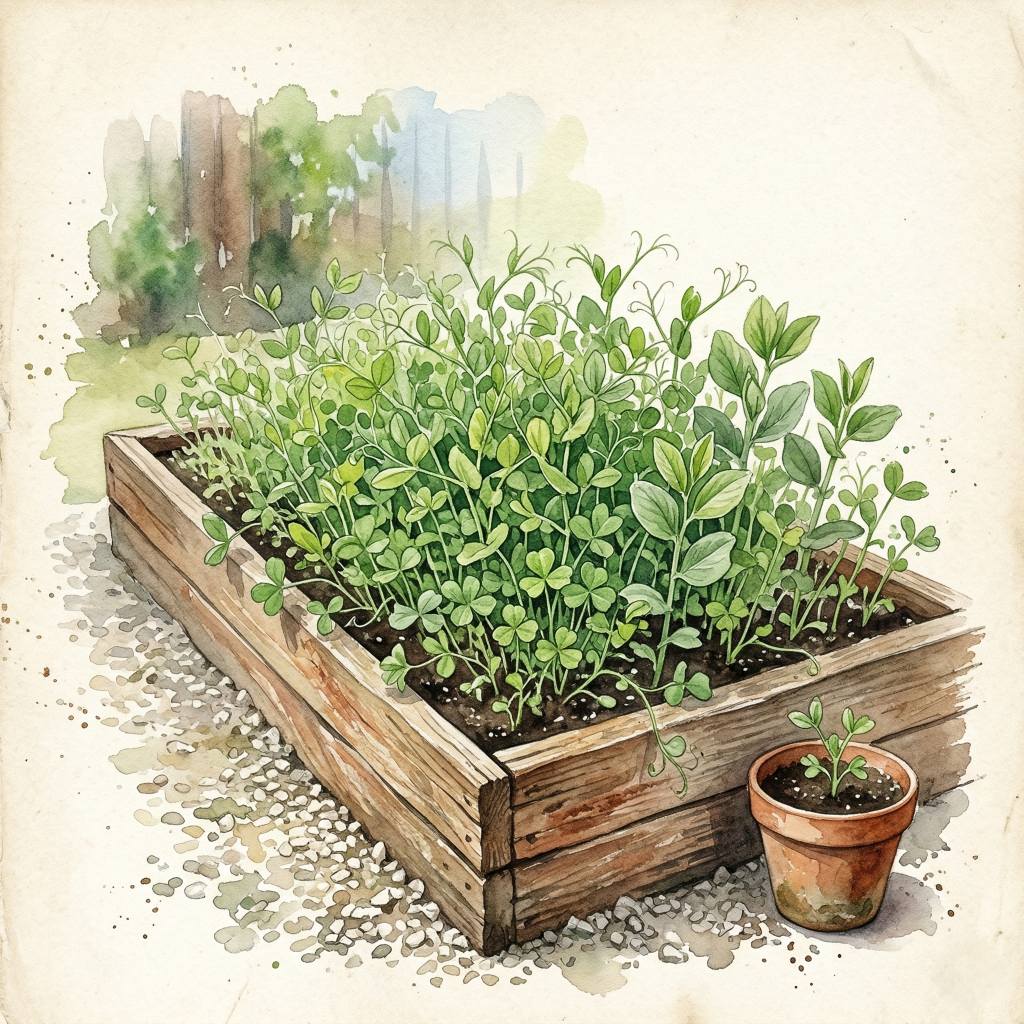
Nitrogen Powerhouse - 5 Legume Soil Fix Mix
NOT to WA & TAS
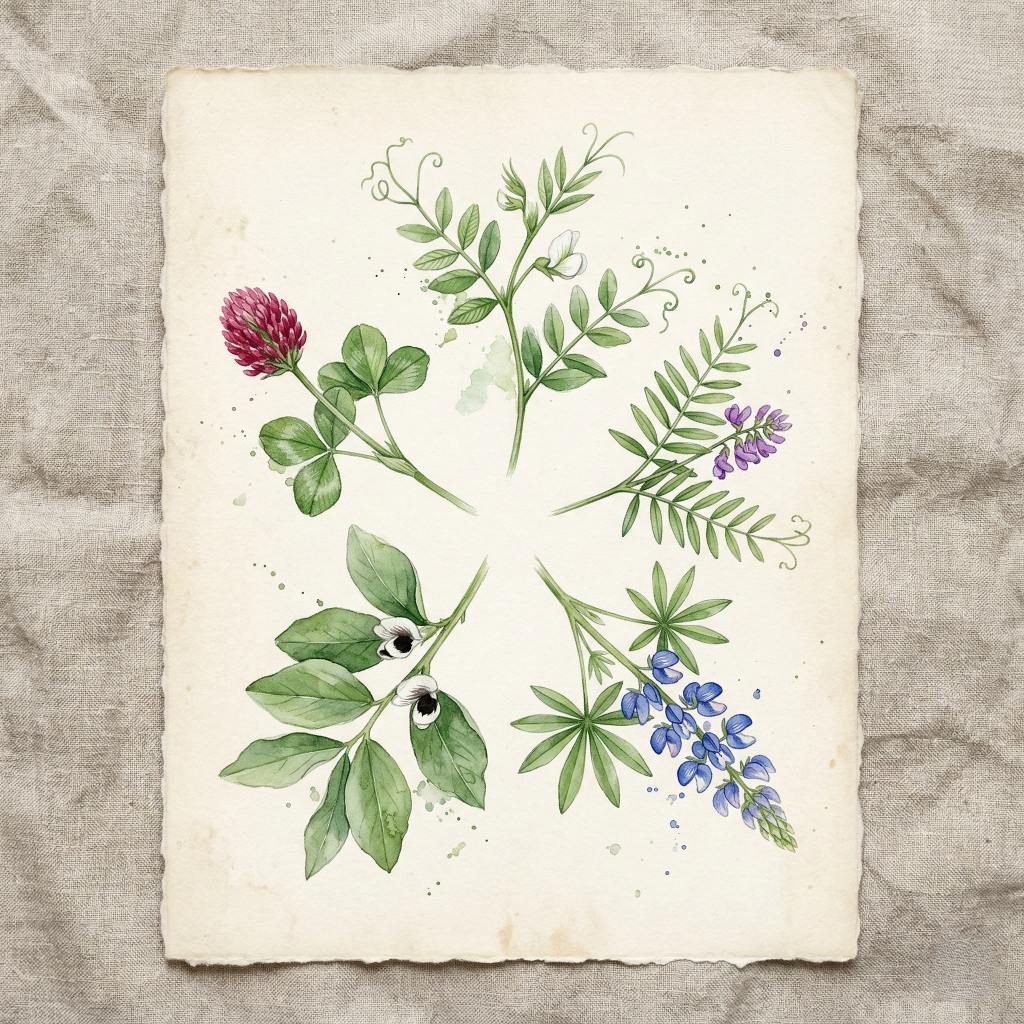
Pisum sativum, Trigonella foenum-graecum, Pisum sativum, Trifolium pratense, Medicago sativa
Suitable for: Home gardeners, veggie growers, orchardists, food forest builders, permaculture, no-dig gardeners, regenerative farmers, market gardeners
Sowing rate: Veggie garden beds: 40–60 g/sqm (1 kg covers 20–25 sqm). Orchard/food forest: 20–30 kg/ha. Garden borders/strips: 30–50 g/sqm (1 kg covers 25–35 sqm). Under fruit trees: 50g per tree in a 1m radius. Large pollinator strips: 20–30 kg/ha.
Season: Sep–Feb (temperate); Mar–May (tropical/subtropical). Peas, fenugreek, clover, and alfalfa prefer cool-to-temperate conditions (best Mar–May or Aug–Oct in southern Australia).
Contains: Brown Pea, Fenugreek, Blue Pea, Red Clover, Alfalfa.
Why pay for synthetic fertiliser when nature’s own nitrogen factories can do the job for free? Our Nitrogen Powerhouse Mix combines five of the most effective nitrogen-fixing legumes into one potent soil-building blend. A well-managed legume green manure can add 50–150 kg of plant-available nitrogen per hectare over a full growing season, with the longer-lived species (alfalfa, clover) contributing the most over successive seasons.
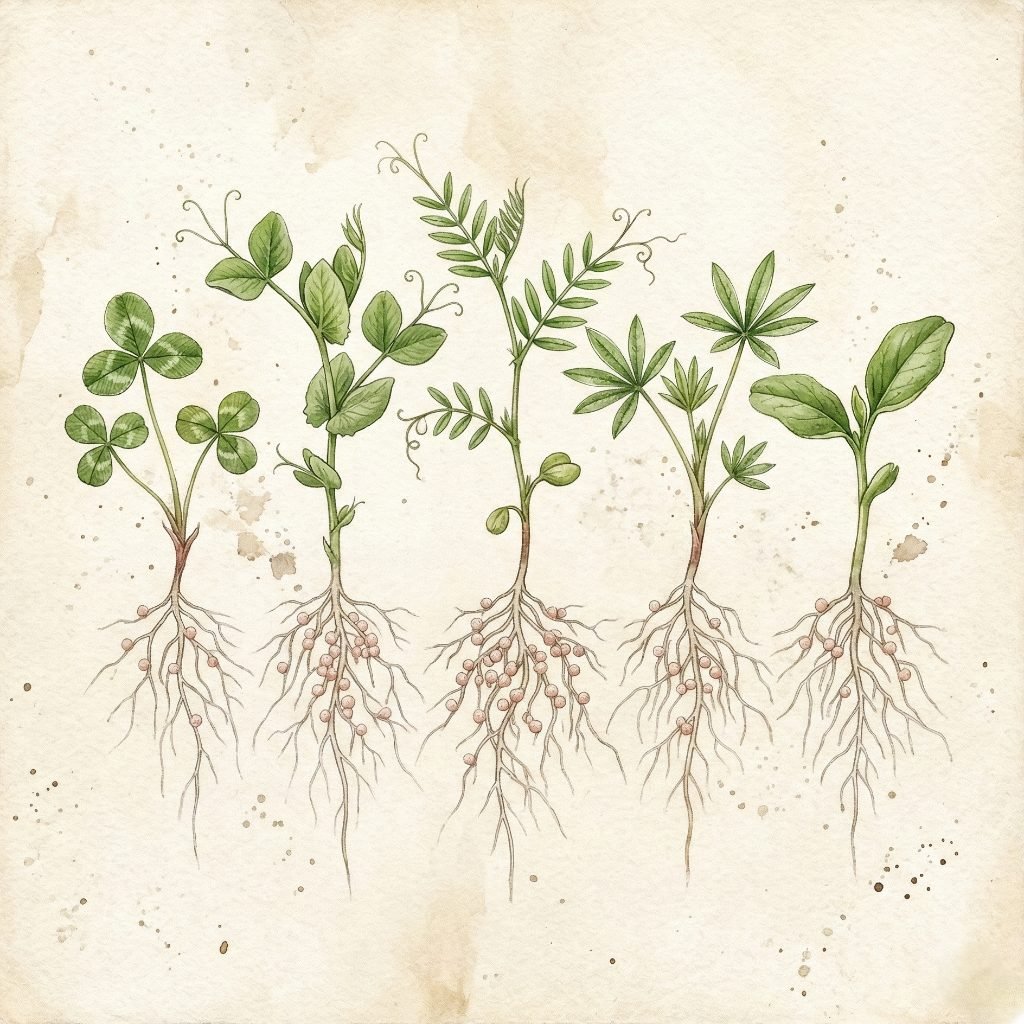
Each species hosts Rhizobium bacteria in its root nodules that capture atmospheric nitrogen and convert it to plant-available form - literally feeding your soil from thin air. Brown field peas and blue peas deliver fast, heavy biomass with large visible root nodules. Fenugreek is the speed champion - it completes its growth cycle in just 10 weeks, conditioning the soil with rapid biomass and contributing modest nitrogen while the deeper-rooted species build the real nitrogen bank. Red clover is a short-lived perennial (2–4 years) that keeps fixing nitrogen for multiple seasons without resowing. And alfalfa sends taproots down to depths of 2 metres, mining calcium, potassium, and trace minerals from the subsoil.
Sow before planting heavy-feeding crops like tomatoes, brassicas, corn, pumpkins, or potatoes. Grow for 8–16 weeks, then slash and incorporate into the soil. Your next crop will have access to a natural reserve of slow-release nitrogen - and the improved soil structure means better water infiltration and drainage.
Sowing Instructions
1. Prepare soil by removing weeds and loosening the top 5 cm. Do NOT add nitrogen fertiliser.
2. Broadcast seed evenly at 40–60 g/sqm. Peas are large seeds - ensure even coverage.
3. Rake in to 2–3 cm depth and water well. Keep moist for 10–14 days.
4. Peas and fenugreek emerge first (5–7 days), clover and alfalfa 10–14 days.
5. Allow to grow for 8–16 weeks. Fenugreek ready at 10 weeks; peas at 12 weeks.
6. Slash at early flowering stage when plants are lush and green, before seed set.
7. Incorporate slashed material into the top 10–15 cm of soil.
8. Wait 3–4 weeks after incorporation before planting your next crop.
9. Optional: leave red clover and alfalfa as permanent living mulch between fruit tree rows.