
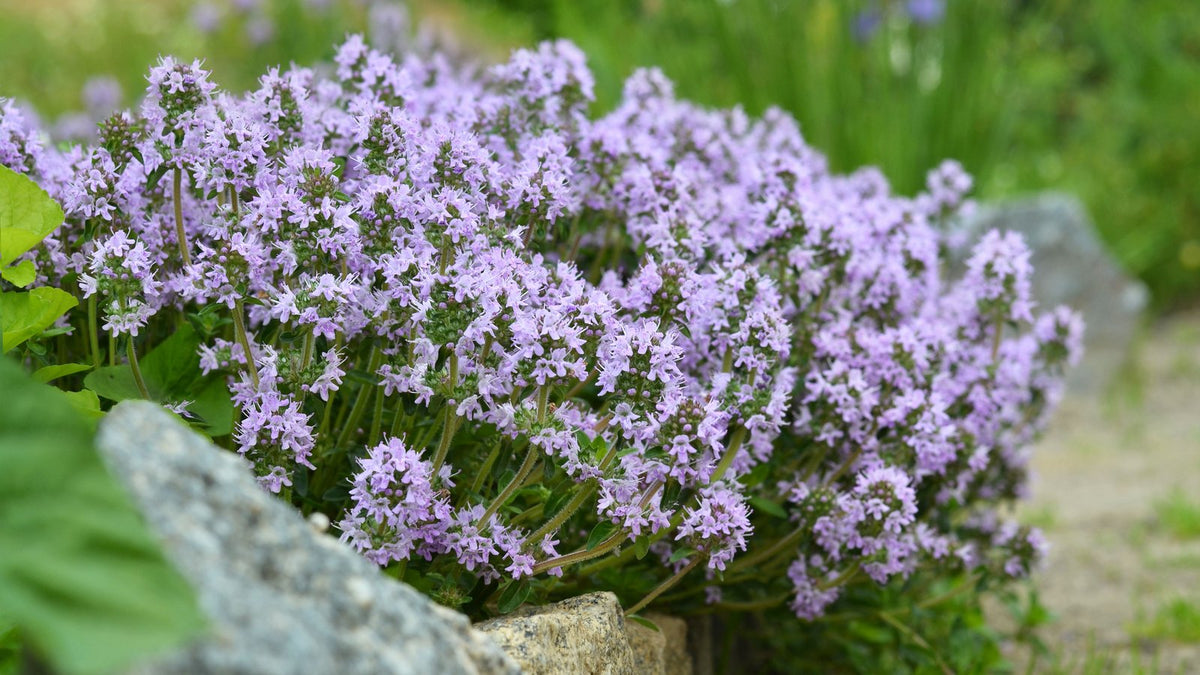

The short version: Oregano, thyme, sage, rosemary, chives, mint and lemon balm are the perennial herbs that come back every year in most Australian gardens. Lemongrass can live for years where there is no frost, and sweet basil in the frost-free tropics, but frost kills both in cold districts. Rosemary, thyme and sage like it dry and can struggle through a humid wet season. Coriander and dill are annuals that return only from dropped seed. Chives, oregano and lemon balm are easy from seed; rosemary and lavender are slow.
A rosemary bush by the back door can still be seasoning the Sunday roast years after the basil beside it gave up at the first cold snap. The difference is each plant's life cycle and, in Australia, the climate it lives in.
So the useful question is whether a herb will still be there next year in your patch.
Which herbs are perennials?
The reliable ones fall into two groups that behave differently in winter.
- Woody herbs: rosemary, sage and thyme. Sustainable Gardening Australia (SGA) says thyme in the right spot should keep going for years and years. Sage tires sooner: ABC Organic Gardener notes it often turns too woody in three or four years, time to layer a few branches into new plants.
- Clumps that die down in cooler districts and return: chives, mint, lemon balm and oregano. The Royal Horticultural Society (RHS) says chives die back in autumn. Gardening Australia says lemon balm may die down in late autumn in cold and temperate areas and reshoot in spring, and mint can die right down in cool weather too.
A bare patch in July is not a death notice. Mark the clumps so nobody plants over them.

Perennial in Brisbane, annual in Hobart: herbs that depend on your climate
Frost decides for lemongrass and basil. The RHS calls lemongrass (Cymbopogon citratus) a tender perennial that needs protection from frost. On Gardening Australia, Sophie Thomson lost in-ground lemongrass to minus five degree frosts in the Adelaide Hills, so she grows it in a pot. Sweet basil is a summer annual that dies back once the cold arrives, SGA says, but in frost-free tropical gardens a well-tended plant can keep going for years.
Wet weather decides for the woody herbs. Gardening Australia magazine suggests growing rosemary in a pot in the tropics and subtropics, moved under cover when it is wet, and says thyme and sage dislike being too wet as well. Sage in particular can be short-lived in humid districts.
Herbs that grow back every year from seed, not from the plant
Coriander and dill are annuals, and the RHS says coriander dies after setting seed. Leave a few plants to flower and both can sow themselves; ripe dill seed drops and comes up as new plants. The patch returns, the plant does not. Parsley is a biennial, SGA says, lasting a couple of years if conditions suit it.
Which perennial herbs are worth starting from seed?
Most come up within three weeks. Gardening Australia magazine gives 7 to 21 days for chives, 7 to 14 for oregano and lemon balm, and 14 to 21 for thyme.
- Chives: perennial and easy to grow, coming back each spring.
- Oregano: very fine seed, surface sown or barely covered, and a hardy perennial herb.
- Lemon Balm: a clump-forming perennial that self-seeds freely.
The slow pair are rosemary and lavender. Our Rosemary listing says to sow heavily because germination is poor, and some seeds take three months to appear. Utah State University Extension says English lavender seed is slow to germinate, so lavender is commonly grown from cuttings. Both strike from cuttings once you have one good plant; the rosemary growing guide shows how. Mint grows from seed, but a rooted piece copies a favourite exactly.
Perennial herbs that grow in shade
Try mint, lemon balm and chives in part shade. ABC Gardening Australia says mint prefers light shade and moist soil, the RHS calls lemon balm happy in sun or partial shade, and SGA says chives thrive in full sun to part shade. Rosemary, thyme and sage want full sun.

Keeping mint in its place
Mint spreads by shallow creeping underground runners, so plant it where it can be contained. Gardening Australia suggests a large container, or a deep barrier in the ground. Leave a sunken pot's rim above the soil, or stems root over it. Lemon balm escapes by seed as well: SGA advises pruning it before the flowers set seed.
Perennial herbs across Australia's climate zones
Each window below spans several herbs; the herb's own grow guide, such as the oregano growing guide, narrows it, and local weather has the final say.
- Tropical (Queensland's Cairns and Townsville, Darwin in the Northern Territory): sow rosemary, thyme, sage and oregano as the rains ease, roughly April to July, in pots that can shelter from the wet. Without frost, lemongrass and basil keep going.
- Subtropical (Brisbane and south-east Queensland, plus the north coast of New South Wales): sow the woody herbs around August to October, in raised beds or pots, so they settle before humid summer rain.
- Arid and semi-arid (Kalgoorlie in Western Australia, Mildura in Victoria, Broken Hill in New South Wales, Alice Springs in the Northern Territory): rosemary, sage and thyme are drought tolerant once established, SGA says. Raise winter sowings in trays under cover, clear of inland frost.
- Temperate (Melbourne in Victoria, Sydney and the coast of New South Wales): sow most perennial herbs roughly September to November, with trays under cover around Melbourne, where chives and lemon balm often die down for winter.
- Mediterranean (Adelaide in South Australia, Perth and the south of Western Australia): dry summers suit the woody herbs. Sow in spring and water through the first summer; potted mint wants afternoon shade and daily water in summer.
- Cool and alpine (Canberra and the ACT, Tasmania, Ballarat in Victoria, Armidale and Orange on the New South Wales tablelands, Stanthorpe in Queensland): plant out after the last frost. Chives, mint and lemon balm die down and reshoot in spring; keep lemongrass potted under cover.
The zones are broad groupings. Between two, go by your own first and last frost.

Frequently asked questions
Which herbs come back every year?
Rosemary, sage, thyme, oregano, chives, mint and lemon balm in most gardens; lemongrass where winters are frost free; sweet basil in the frost-free tropics.
Do perennial herbs grow back after winter?
Rosemary and thyme keep their leaves; in cooler climates sage can die back over winter and return in spring. Chives, mint and lemon balm can die right down in cold areas; cut the old stems at ground level and wait for spring shoots.
Is basil a perennial in Australia?
Sweet basil is grown as a summer annual and dies back with the cold. In frost-free tropical gardens, SGA says, a well-tended plant can last for years.
Will coriander come back next year?
Not the same plant: coriander dies after setting seed. Let a few flower and drop seed, and new ones may come up.
Sustainable Gardening Australia's guide to growing culinary herbs is a good next read. Plant the stayers once, give them the right spot for your climate, and let the annuals take turns around them.
Related growing guides
- Perennial vegetables for Australian gardens
- How plant life cycles work
- Growing herbs on a sunny windowsill
Browse our herb seeds collection for more perennial and annual herbs.