
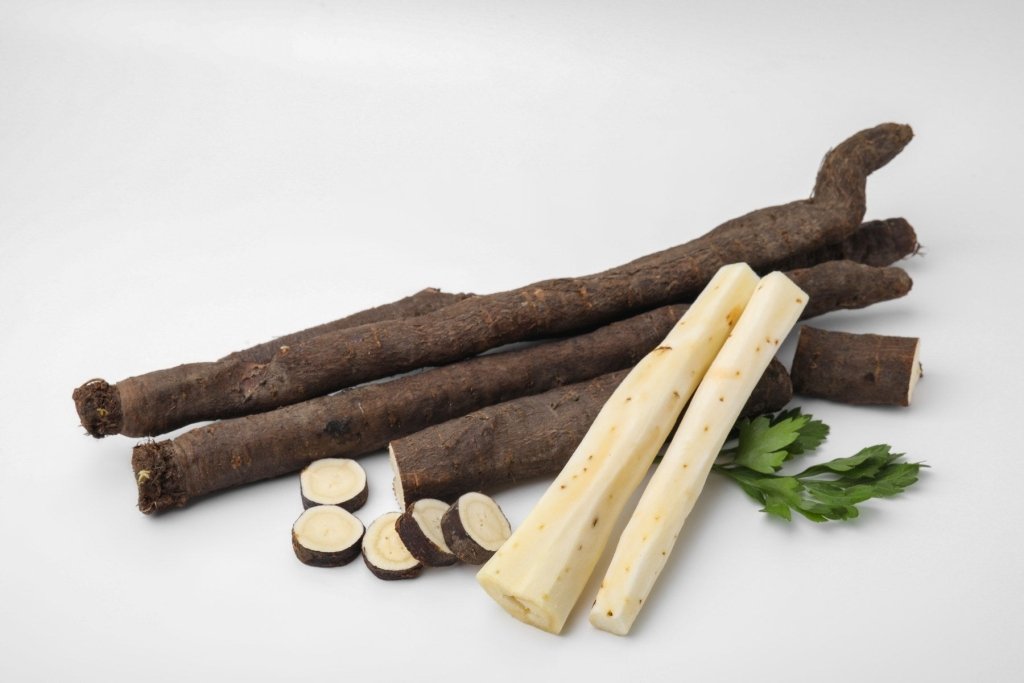
Salsify and most of its fellow unusual roots are no harder to grow than a good carrot, just rarely on the shelf, with a couple that simply ask for more patience. Sow them from seed into deep, loose soil, let them swell over a long cool season, then dig them as the cold sweetens the flavour. Salsify can naturalise into an environmental weed in parts of Australia, so grow it in a contained bed and lift the roots before it sets seed. The reward is flavour you cannot buy: oyster, nut and sweet parsley notes from a patch most people walk straight past.
There is a quiet belief that salsify is a chef's vegetable, the sort of thing that turns up on a degustation menu and nowhere near a backyard. It is a lovely idea, and almost entirely wrong. Salsify asks for the same things a parsnip does: deep soil, a long cool run, and a little patience at the fork. That is the whole trick.
What makes these roots unusual is not difficulty. It is that ordinary shops rarely carry the stranger ones, so they never quite crossed your mind. Here are six worth a row of the bed, what they actually are, and the one that needs a sensible boundary.

What is salsify, and why grow the oyster plant
Salsify (Tragopogon porrifolius) is a slim, cream-skinned root with a delicate flavour often compared to oysters, which is why it carries the old kitchen name vegetable oyster. It is a member of the daisy family, with grassy leaves and, if you let it run on, a striking purple flower that bees are drawn to.
The root is the prize. Steamed, roasted or simmered into a soup, it has a mild, faintly shellfish note that is hard to describe and harder to forget, the kind that makes a visitor put their fork down and ask what they are eating.
Salsify is a biennial, which matters for the gardener. It spends its first year building the root, then bolts to flower in its second spring. So grow it as an annual: sow in the cooler months, let it size up over a long season, and lift the roots through autumn and winter before it turns its mind to seed.

Because the root grows long and straight, the secret is deep, loose, stone-free soil. Forked roots almost always trace back to a shallow or lumpy bed, the same way a carrot splits when it hits a clod. Dig deep, break up any pan, and resist over-feeding, since rich soil grows leaf at the expense of root.
Grow it in a contained bed, and lift it before it seeds
Salsify can escape the garden and naturalise, so give it a contained spot and harvest the roots before it flowers and sets seed. This is the one genuine caveat on the list, and it is worth taking seriously.
In Australia it is regarded as an environmental weed in Victoria, South Australia, Tasmania, Western Australia and the ACT, and it has naturalised more widely as a weed of roadsides, drains and disturbed ground, including in New South Wales and southern Queensland. The Weeds of Australia profile for Tragopogon porrifolius shows where it has spread. None of this makes it a plant to fear in the kitchen; you simply grow it with the courtesy you would give any self-seeder.
In practice: a defined bed rather than a forgotten corner, a snip of any flower that sneaks up in the second spring, and a fork through the roots while the plant is still in leaf. Those fluffy dandelion-style seed heads travel on the wind, so one plant left to ripen can sow itself well beyond your fence. Lift, eat, and the problem never arises. As a general rule with any unusual edible, only eat roots you have grown yourself from trusted seed and can identify with confidence, rather than anything dug from a roadside or a wild patch. That matters most with the carrot-family roots below, since that family includes poisonous look-alikes such as hemlock.

Scorzonera, the black salsify that is not actually salsify
Scorzonera (Scorzonera hispanica) is usually sold as black salsify, but it is a different plant: black-brown skin, yellow flowers and a milder, nuttier flavour. The two get muddled constantly, so it pays to keep them straight.
True salsify has a pale root, purple flowers and a strict two-year life. Scorzonera has dark, almost charcoal skin over white flesh, daisy-yellow flowers, and the handy habit of being a perennial: you can leave a root in the ground a second year to fatten further rather than losing it to bolting. Both are daisies, both are cooked the same way, and both peel to pale flesh that browns the moment the air gets to it, so keep a bowl of water with a squeeze of lemon by the bench and drop the peeled roots straight in.
If you can only fit one, scorzonera is the more forgiving, simply because it does not punish you for harvesting a season late. Salsify is the one to grow if the oyster flavour is what you are after.

Skirret and Hamburg parsley, the sweet carrot-cousins
Skirret and Hamburg parsley are both in the carrot family and both reward you with sweeter, more aromatic roots than their oddness suggests. They are the gentlest way into this group for anyone who already grows carrots or parsnips.
Skirret (Sium sisarum) is a perennial that produces a cluster of slim, sweet white roots around a central crown. It was among the main root crops in European gardens before the potato arrived, prized for a sweetness that kept it at the table for centuries. The cluster habit makes the roots fiddly to clean, and older roots can carry a tough central core that slips out easily after cooking, a fair trade for how sweet and nutty they are roasted. Being perennial, a clump can be lifted, split and replanted, so one packet of seed keeps you in skirret for years.
Hamburg parsley (Petroselinum crispum var. tuberosum) is the same species as the curly parsley on the windowsill, bred instead for a fat, creamy root that looks like a pale parsnip. It brings a clean, sweet parsley flavour to soups and roasts, and you can pick the leafy tops along the way. Properly cold-hardy, it holds in the ground through a frosty winter and sweetens as it sits, a quiet hero of the cool-season patch.

A small honesty note on the carrot family: these roots take their time. Sown into cool soil they germinate at their own unhurried pace, and the bed can look like bare dirt for an unreasonable while. Mark the row, keep it damp, and do not give up on it. The plants are not lost, only thinking it over.
Celeriac and swede, the unusual roots you have probably met
Celeriac and swede are the two on this list you may already half-know, and both suit the cool half of the year. Swede is the confidence builder; celeriac is familiar in the kitchen but asks for a slower, steadier season. Either is a good place to start if salsify still feels like a leap.
Celeriac (Apium graveolens var. rapaceum) is grown for the knobbly, swollen base where stem meets root rather than a true root, with the clean flavour of celery in a form that stores and roasts beautifully. It is a slow starter from seed and likes a long, even cool season with steady moisture, and it rewards the patience with a globe that lifts a winter soup.
Swede (Brassica napus var. napobrassica) is the familiar one, a sweet, mild cabbage-family root that turns properly delicious after a cold snap. It is quicker and more forgiving than the others here, the sort of crop that builds confidence for the fussier roots. Sow it for autumn and winter, let a frost or two do the sweetening, and it earns its keep in a slow Sunday roast or a pot of soup.

Across the climate zones the timing shifts but the logic holds: give these roots a long, cool run and let the cold sweeten them.
- Temperate (Sydney, Melbourne, Canberra): classic autumn-into-winter roots.
- Cool and alpine (southern tablelands, Ballarat, Tasmanian highlands): the cold is your friend, and the sweetening is at its best.
- Mediterranean (Perth, southern WA, Adelaide): the mild wet winter is the ideal long growing window.
- Subtropical (Brisbane, Gold Coast, Coffs Harbour): sow as the humidity eases into the cooler months.
- Arid and semi-arid (Mildura, Broken Hill, Alice Springs): sow for the cool season and water steadily, since the long swelling period does not suit the heat.
- Tropical (Darwin, Cairns, Townsville): the long cool run is hard to find at sea level, so swede or celeriac are best tried in the cooler dry months or at elevation, and otherwise crops suited to the wet are the better bet.
You can find seed for the easier roots among the rest of the vegetable seeds, and since celeriac is celery's knobbly cousin, our guide to growing celery in your garden is a natural next read for the rest of the patch.

Frequently asked questions
What does salsify taste like?
Salsify has a mild, slightly sweet flavour often compared to oysters, which is why it is also called the oyster plant or vegetable oyster. The taste is delicate rather than strong, and it suits gentle cooking such as steaming, roasting or a simple soup.
Is salsify hard to grow?
Not really. Salsify wants the same conditions as a parsnip: deep, loose, stone-free soil, a long cool season and patience while the root swells. The usual disappointments come from shallow or lumpy soil, which forks the roots, and over-rich beds, which grow leaf instead of root.
When do you harvest salsify?
Lift the roots through autumn and winter of the first year, while the plant is still in leaf and before it flowers in its second spring. Harvesting early also matters because salsify can naturalise, so digging the roots before it sets seed keeps it from spreading.
What is the difference between salsify and scorzonera?
True salsify (Tragopogon porrifolius) has a pale root and purple flowers and is a biennial. Scorzonera (Scorzonera hispanica), sold as black salsify, has a dark skin, yellow flowers and a milder, nuttier flavour, and it is a perennial that can be left a second year. Both are daisies and both are cooked the same way.
Can I grow these unusual roots from seed in pots?
The long roots of salsify, scorzonera and skirret want real depth, so use the deepest tub you can manage, and expect straighter roots in a garden bed than in any pot. Celeriac and swede cope more happily in large containers. Use a loose, free-draining mix and keep the watering steady through the swelling season.
Are unusual root vegetables worth the effort?
For flavour and variety you cannot buy, yes. Most cost about the price of a packet of seed to try, ask little more than a carrot does, and give you oyster, nut and sweet parsley notes from your own bed. Slow germination and the odd fiddly clean are the only real prices of admission.
Related growing guides
- Unusual Vegetables You Can Grow from Seed in Australia
- Growing Witloof (Belgian Endive) and Chicory in the Australian Garden
- Growing Capsicum in Australia: From Seed to Harvest
Ready to plant? Browse our Vegetable Seeds.