
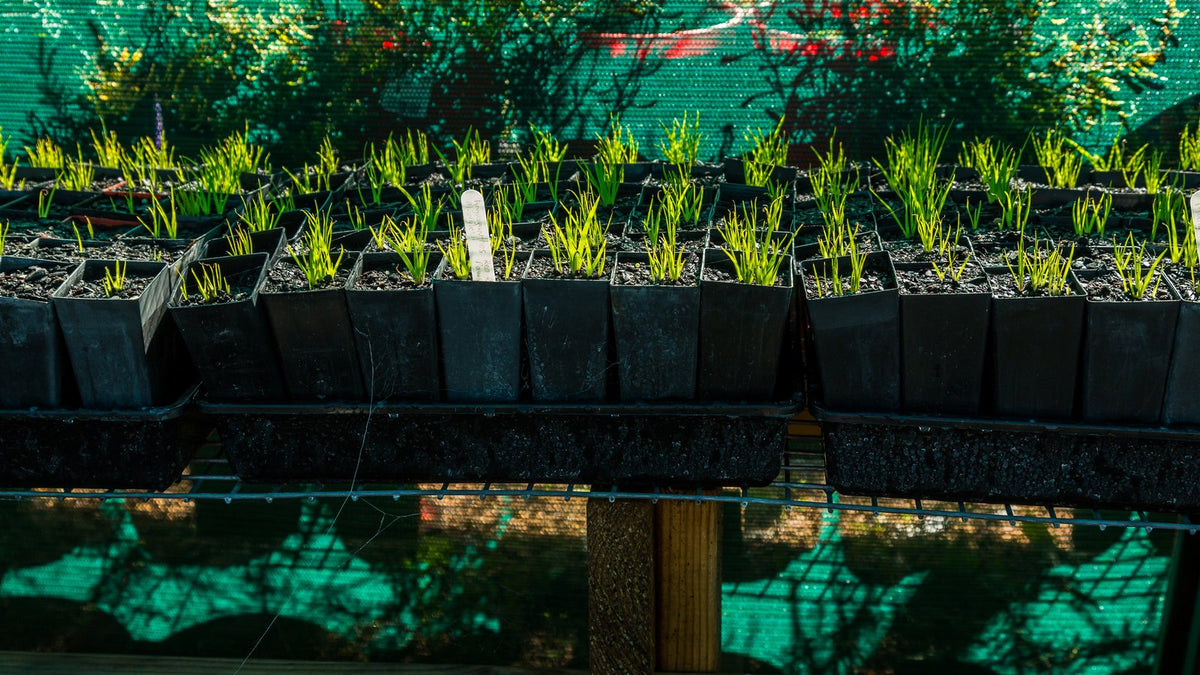

The short version: Many Australian native seeds wait for a bushfire before they germinate, and the signal they wait for is smoke. Kings Park researchers in Perth proved it in the 1990s and found the compound, karrikinolide. At home you give seed that signal with bought smoke water (diluted as the label says; Kings Park used one part to nine), smoke-infused discs or granules, or, as a last resort, a short burn over a pot within your local fire rules. Many natives do not need it, so read the packet first.
A tray of native seed that stays bare for weeks is a familiar disappointment. Often the seed is not dead. It is doing what it evolved to do: sitting tight until it gets word that the bush has burnt and the ground is open and sunlit.
That word arrives as smoke. Once you know that, the quiet tray becomes a delivery problem: the right smoke, in the right dose, to a punnet on the back step, without setting fire to anything you value.
Why smoke wakes native seed: the Kings Park discovery
A South African botanist found in 1990 that smoke germinated a rare Cape shrub that heat and ash could not. Kingsley Dixon at Kings Park and Botanic Garden in Perth tried it on Western Australian wildflower seed, and the early trials failed. In 1993, after a longer spell in the smoke house and a watering system that happened to break down, 25 species came up at once. In 2004 Gavin Flematti at the University of Western Australia isolated the first of the compounds responsible, a small butenolide later named karrikinolide, after karrik, the Noongar word for smoke; the family is called karrikins. It dissolves in water and works at about one part per billion. Dixon's figure is that 2 to 5 grams of the pure compound would wake a hectare of bushland. Your punnet needs a good deal less.
Which native seeds respond, and which do not
Many, but far from all. Dixon's published lists name genera that were close to impossible from seed until smoke came along: Geleznowia and Eriostemon in the boronia family, the guinea flowers (Hibbertia), Grevillea and Hakea in the protea family, Verticordia, the rice flowers (Pimelea) and the trigger plants (Stylidium). A second group germinated poorly without smoke and far better with it, led by the kangaroo paws (Anigozanthos) and their cousins the cottonheads (Conostylis). Dixon counts more than 400 responsive Australian species, possibly over 1,000. Flannel flower (Actinotus helianthi) responds to fire, but University of Sydney research for the Australian Flora Foundation found its fresh seed deeply dormant: it ripens in dry storage at about 21°C over two to twelve months and germinates best at 15 to 20°C.
Then there are the natives that do not want smoke. Most wattles and the other pea-family natives have a hard, waterproof coat and want near-boiling water instead, though a few wattles, brigalow among them, have soft seed that hot water kills. Most eucalypts, bottlebrushes and paperbarks need no treatment. Kings Park's early trials found Persoonia and the woody-fruited heaths unmoved by smoke, and the paper daisies Rhodanthe and Schoenia germinated worse after smoking; an Australian National Botanic Gardens trial found it did nothing significant for kangaroo grass. If the packet does not mention smoke, sow as it says and keep smoke water for a second try.

Smoke treatment at home, from easiest to riskiest
- Smoke water you buy. Choose one made from leafy material: Dixon warns that smoke water derived from wood can suppress germination. Follow the label's dilution and soak time; the Kings Park method, for its own brew, is one part smoke water to nine parts water and a 12 hour soak, the seed then sown straight away, or dried and sown later if the species tolerates drying.
- Smoke-infused discs or paper. Soak the seed for 24 hours in the label's volume of water with one disc in it, then sow.
- Smoke granules or smoked vermiculite. Made for seed trays: sow, spread the granules over the surface at the label's rate, and water gently so the compound washes down to the seed.
- Your own smoke. Nurseries smoulder fresh and dry leaves and twigs in a drum and pipe the smoke into a sealed tent over sown trays for an hour, or bubble it through water to make smoke water. Dixon's home version is a small smouldering fire of dry and green leafy material set apart from the trays, its smoke led into a cover over them for an hour, on a still day with someone watching throughout. A South Australian government fact sheet calls applying smoke yourself difficult and dangerous and points gardeners to smoke water instead, and it is a fire in the open, so the fire rules below apply. Burn leafy prunings and twigs, not timber: Dixon warns that wood smoke can be toxic to seed. Never burn oleander, whose smoke NSW WeedWise calls poisonous, or any plant with milky sap, such as euphorbias: Kings Park warns the smoke can be noxious. Go easy on oily gum and tea-tree leaves, which distil oil onto the trays.
- A burn over the pot, the last resort. Sow in a terracotta pot, lay dry leaf litter and twigs on top, let it burn for two to three minutes, and water once the ash is cold. The Australian Native Plants Society describes this for flannel flowers and calls it a last resort, because there is no control over the heat. Read the fire rules below first.
Dose, watering and patience: where it goes wrong
More smoke is not better. Dixon's trials found high doses of smoke water inhibit germination in many species, so stick to the dilution.
- Water a smoked tray lightly. For the first six to ten days after smoking a sown tray, water enough to carry the compound to the seed and not enough to flush it out the bottom. Seed soaked before sowing can be watered normally.
- Sow soaked seed promptly. Seed of some species breaks down in a long soak, so treat half a precious packet first.
- Give it weeks, not days. In the Kings Park trials smoked seed often emerged earlier and kept coming for weeks after untreated seed had stopped, so the gain shows late.
When to sow native seed across Australia's climate zones
Sowing time depends on the species, its germination temperature and your set-up, so these zone lines are starting points, and the packet settles it. Kings Park's advice for southern Australia is to smoke in summer or autumn so the compound washes down with the first rains, which favours autumn sowing of smoked seed wherever winter brings the rain; a South Australian government fact sheet puts most native sowing in spring.
- Tropical (Darwin and the Top End in the Northern Territory, with Cairns and Townsville in north Queensland): sow as the dry season begins, keep trays under cover, and favour local species over humidity-shy south-western wildflowers; smoke response in tropical species is little studied and varies, so test half a packet.
- Subtropical (Brisbane and south-east Queensland, the north coast of New South Wales): the cooler, drier months from autumn into winter.
- Arid and semi-arid (central Australia around Alice Springs, Broken Hill in far west New South Wales, Mildura in north-west Victoria, Kalgoorlie in the Western Australian goldfields): autumn or early spring, between the summer heat and the frosty midwinter nights.
- Temperate (Sydney and the coastal strip of New South Wales, Melbourne and southern Victoria): spring after the frosts for most seed, autumn for smoked seed in drier districts and for flannel flower, which germinates in the wild in autumn.
- Mediterranean (Perth and the south-west of Western Australia, Adelaide and the South Australian gulf country): sow in March to May, keep a smoked tray out of the rain for its first ten days, then let the winter rains water it in.
- Cool and alpine (Tasmania, Canberra and the Australian Capital Territory, Ballarat in the Victorian highlands, Orange and Armidale on the New South Wales tablelands, Stanthorpe on Queensland's Granite Belt): spring once the frosts ease.
These zones are broad groupings. If your garden sits between two, lean on local cues such as your first and last frost dates and the month your rain usually arrives.
Fire rules and seed collecting: the law comes first
A smouldering heap or a small fire over a pot is still a fire in the open. In New South Wales the Rural Fire Service requires a fire permit during the Bush Fire Danger Period, 1 October to 31 March in most districts and varying locally, and at all times in Fire and Rescue NSW districts; a permit holder tells the RFS and adjoining neighbours at least 24 hours before lighting and checks the EPA's No Burn days; a fire must not produce excessive smoke, councils can restrict backyard burning as well, and no fire may be lit in the open on a Total Fire Ban day, when every permit is suspended. The NSW Rural Fire Service fire permit page sets out that state's rules; every other state and territory has its own fire service, danger period and ban system. Check before you light anything, clear the ground around the pot, keep water within reach and stay until the ash is cold.
Seed from the bush is not free for the taking. In Western Australia all native flora, seed included, is protected, and taking it from Crown land needs a licence from the Department of Biodiversity, Conservation and Attractions (its flora licence page lists the types). In New South Wales the state environment department requires a licence to pick protected or threatened plants for sale; the hobby exemption covers protected plants grown in cultivation, not plants taken from the bush, and, licence or not, seed must come from licensed stock or with the landowner's permission; other states have their own rules. Buy from a supplier who collects under licence, and ask before taking a seed head from anyone's land.
Frequently asked questions
Can I just add ash to the tray instead of smoke?
No. The botanist who started this research tried heat and ash on his rare shrub and both failed; smoke alone germinated it.
How long after smoke treatment will the seed come up?
It varies by species. In the Kings Park field trials responsive species germinated six to eight weeks after smoking. Give a tray a full season.
Can I smoke seed and store it for later?
Sometimes. Directly smoked dry seed stores dry until you want it. Seed soaked in smoke water can be dried and sown later, but Dixon and Roche warn that soaking and drying can cost viability, so test a few seeds first. Label the packet.
Do everlasting daisies need smoke water?
Usually not. Everlasting daisies and billy buttons are sown on the surface of the mix without treatment, and the Kings Park work found smoking suppressed germination in some paper daisies, though smoke water helps a few dormant daisies. Follow the packet.
Give the seed the signal it has been waiting for, water with a light hand, and let the tray take its time: the bush has been doing this for thirty million years and is in no hurry.
Related growing guides
- Soaking, scarification and cold stratification for seed that needs help
- Everlasting daisies from seed
- What happens inside a seed when it germinates
- 21 reasons seeds fail to germinate, and the fixes
Ready to sow? Browse our native seeds and flower seeds.