
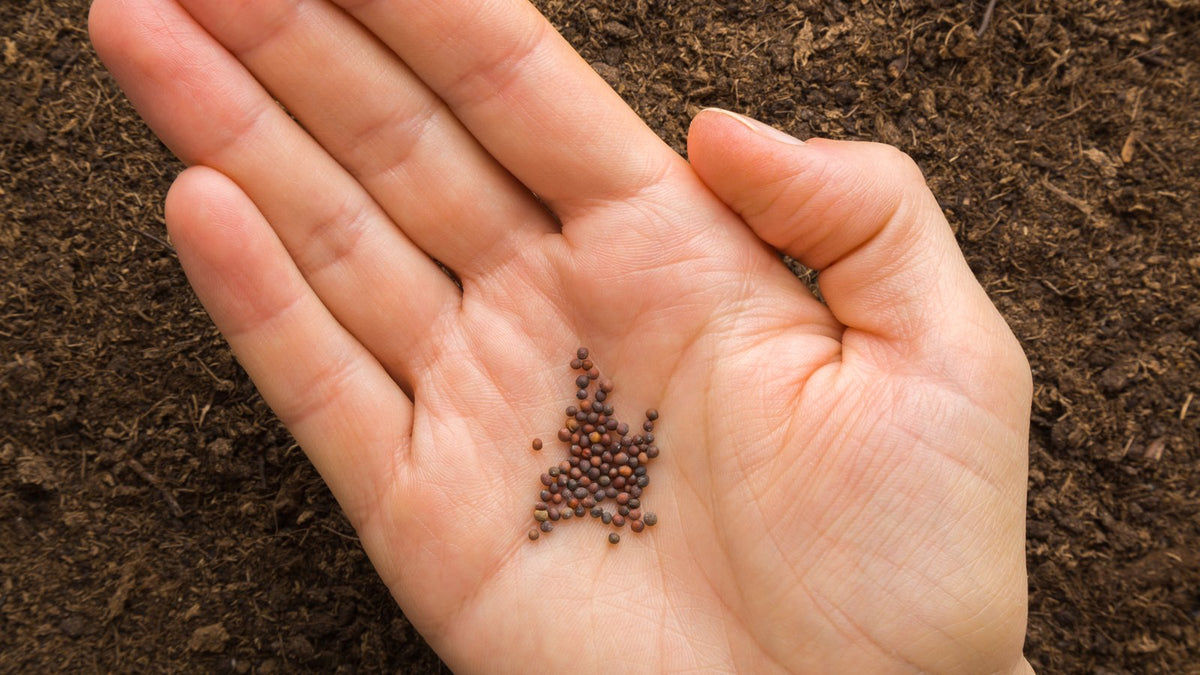

The short version: Hot water treatment soaks seed at a set temperature for a set time: 50 C for 15 to 25 minutes, depending on the crop, for brassicas, tomato, eggplant, spinach and carrot, 51.5 C for 30 minutes for capsicum and 48 C for 30 minutes for lettuce and celery. The heat reaches bacteria and some fungi inside the seed coat. It suits saved or swapped seed, not beans, peas, pumpkins or pelleted, primed or already treated seed. Try it on a test sample first.
Seed looks clean. A jar of saved cabbage or tomato seed gives no hint that it carries black rot or bacterial spot, and the first sign of black rot may be yellow, V-shaped patches on the leaf edges of young plants. A seed saver can hand a disease on from one season to the next without knowing it.
Growers have answered this with hot water for about a century, with a pot, a good thermometer and close attention. The catch is precision: the dose that harms the disease sits close to the dose that harms the seed.
What hot water can and cannot reach
The Queensland Government's Business Queensland guide to bacterial spot calls hot water more thorough than a chlorine dip because it can kill bacteria inside the seed as well as on the surface.
The targets are mostly bacterial: black rot of cabbage, broccoli and their relatives (Xanthomonas campestris pv. campestris), bacterial spot of tomato and capsicum, and bacterial speck and canker of tomato. The Pacific Northwest plant disease handbook from Oregon State University adds seed-borne fungi such as Alternaria, and black leg of brassicas.
Three limits matter.
- It reduces disease, it does not always eliminate it. In Agriculture Victoria research on infected cabbage seed, 50 C for 25 minutes cut black rot bacteria about ten thousandfold but did not remove them all.
- It treats only the seed. Disease waiting in soil, old crop residue or related weeds is untouched, so rotation and clean trays still matter.
- It is no substitute for clean seed. Seed from a supplier that tests its lots has less to gain.

When it is worth doing
Cornell's view is that hot water may well be worthwhile if you save your own seed or buy from a small producer. That means seed from your own brassicas, tomatoes or capsicums, above all from a bed that has had black rot or bacterial spot, and seed from a swap or market stall where nobody knows how the parent plants fared.
Bought seed is a different case. On this store a listing's Seed treatment line reads Untreated or Fungicide Treated. Treated seed carries a coating that protects it as it germinates, and it may be dyed a distinct colour. Leave it alone, as the Pacific Northwest handbook advises for any dealer-treated seed. Treating bought seed can also void a seed company's guarantee, Business Queensland and Cornell warn, and Cornell adds that a second heat treatment can lower germination, so check the terms and ask whether the seed was already treated.
Temperatures and times by crop
These figures are Cornell University's hot water protocols, compiled by plant pathologist Margaret Tuttle McGrath, with Cornell's own Celsius conversions. The Mid-Atlantic Commercial Vegetable Production Recommendations give the same times and round the capsicum figure to 51 C, and a 2022 guide to bacterial diseases of Australian vegetables, by five state and territory agriculture departments, agrees, with capsicum at 52 C. All three were written for commercial growers, so follow the figures exactly.
| Crop | Water | Time |
|---|---|---|
| Cabbage, Brussels sprouts | 50 C | 25 minutes |
| Broccoli, cauliflower, kale, kohlrabi, collards, turnip, swede | 50 C | 20 minutes |
| Mustard, cress, radish | 50 C | 15 minutes |
| Tomato, eggplant, spinach | 50 C | 25 minutes |
| Carrot | 50 C | 20 minutes |
| Capsicum (the table's "pepper") | 51.5 C | 30 minutes |
| Lettuce, celery, celeriac | 48 C | 30 minutes |
Leave these out: beans, peas, sweet corn, beetroot and the cucurbits (pumpkin, squash, zucchini, cucumber and melons). Cornell's table note says hot water can damage these or is not practical, and Utah State University warns that cucurbit seed can be severely damaged. Some hybrid cauliflowers may be damaged too. Pelleted, primed and old seed should not be treated, and Cornell warns that basil and rocket seed turn gelatinous and become very hard to sow.
This is not the wattle method, where water just off the boil softens a hard coat as it cools. Disease treatment is a long soak at a steady, much lower temperature.
What you need
- An accurate thermometer. Cornell recommends a precision laboratory immersion thermometer. Check it first in crushed ice and water, where it should read 0 C, and replace one that is out by more than its stated accuracy. In a Michigan State University comparison, sous vide cookers' own readouts were out by up to 1.5 C.
- Steady heat. A stovetop pot works if you watch it the whole time; a sous vide cooker or laboratory water bath holds temperature better, and Cornell prefers one.
- Two large containers of water, one for pre-warming and one for the treatment, a bowl of cold water for cooling, and a jug of room temperature water to pull the bath down if it creeps up.
- A porous bag of muslin, organza or a cone coffee filter, a small weight to keep it under, a label, and a slotted spoon or string to lift it out.
Step by step
- Test a sample. Treat 50 to 100 seeds and sow them beside the same number of untreated seeds from the same lot, as the University of Massachusetts suggests, and treat the rest only if the treated seed comes up as well. Our guide to checking whether seed will still grow shows a paper towel germination test.
- Fill each bag no more than half full so water reaches the middle of the clump, then add the weight and label.
- Pre-warm for 10 minutes at 38 C, so cold seed does not drag the treatment bath below its target.
- Move the bag into the treatment bath at the exact temperature for your crop and start timing. Keep it submerged, keep a stovetop pot stirred all the time and watch the thermometer. Too cool and the pathogens may survive; too hot or too long and the seed may be damaged.
- Stop the heat by lifting the bag straight into cold water for about 5 minutes.
- Dry the seed spread thinly on paper towel at room temperature.
- Sow it within 48 hours. Treated seed has taken up some water and is not meant for storing.

Safety: hot water scalds
Water at treatment temperature can burn. Victoria's Building and Plumbing Commission, the state's plumbing regulator, states that water at 50 C can cause a full thickness scald in five minutes, and at 68 C in as little as one second. A treatment runs 15 to 30 minutes, and a stovetop pot can creep past its target.
- Lift the bag with a slotted spoon or by its string, never with your fingers, and never test the water by hand.
- Use a stable back burner with the handle turned in, and keep children and pets out of the kitchen while the pot is on.
Frequently asked questions
Can I use water straight from the hot tap?
Not for the treatment. Tap water cools as it sits, and the method needs one temperature held steady for 15 to 30 minutes. Warm tap water checked with the thermometer is fine for the 38 C pre-warm.
Will hot water treatment stop damping off?
Not on its own. Damping off comes from fungi and water moulds in soil, mix and dirty trays, which treating the seed cannot reach. Clean containers, fresh mix and good airflow remain the defence.
Can I treat seed and keep it for next year?
Treat only what you will sow within 48 hours, as the Australian guide advises, because the seed takes up water during the soak. Oregon State trials found treated seed kept its germination for at least a year, but Cornell still advises against storing it.
Does a bleach soak do the same job?
No. Chlorine reaches only the seed surface, while some of these diseases sit inside the seed coat. Researchers have combined chlorine with hot water under laboratory conditions, but that is not a method to improvise at home.
Seed-borne disease is one of the few garden problems you can tackle before the season begins, and an hour with a thermometer is a small price for seedlings that start with fewer stowaways.
Related growing guides
- Which crops to start with when you save your own seed
- Soaking, chipping and chilling: dormancy treatments for stubborn seed
- Why seedlings collapse overnight, and how to prevent damping off
- Everyday garden hygiene that cuts down pests and disease
Starting from fresh seed instead? Browse our broccoli seeds or the full range of vegetable seeds.