

The short version: A cherry tomato is the same plant as a slicing tomato, bred for small fruit carried many to a truss. Colour comes from pigments: lycopene for red, other carotenoids for yellow and orange, a green flesh gene for the browns and "blacks", and anthocyanin for a blue skin blush. Smaller fruit tend to carry more sugar. Most are tall vines that need a stake. They split when rain follows a dry spell, so keep the soil evenly moist and pick colouring fruit before a storm.
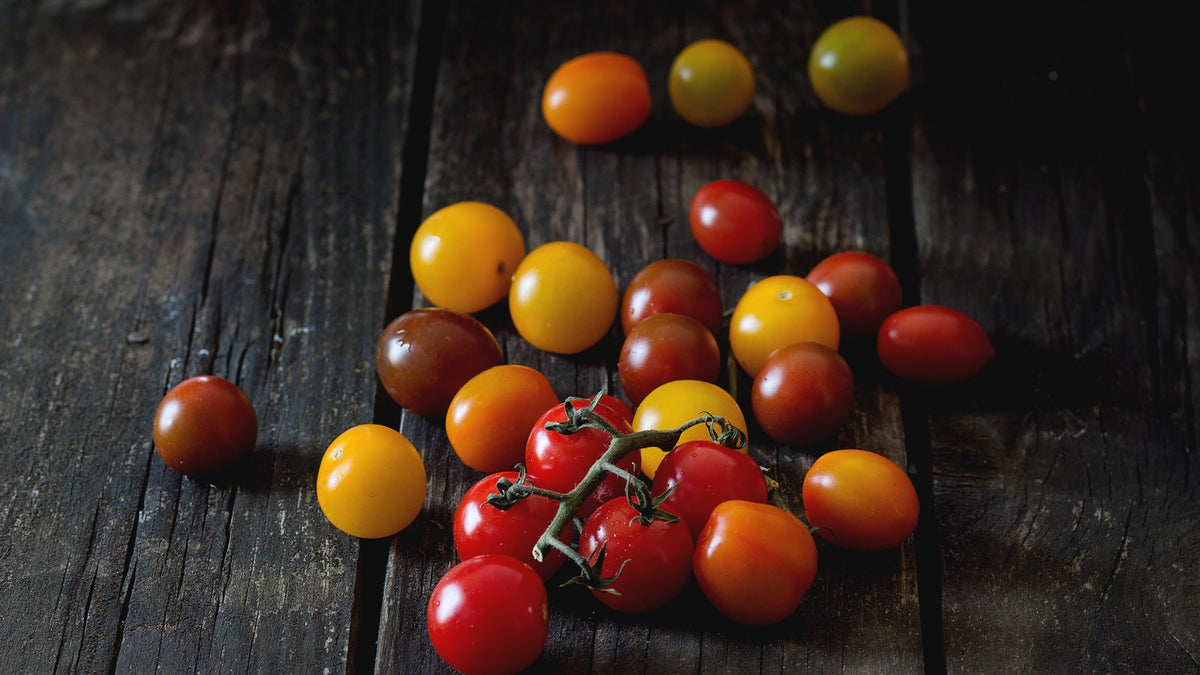
A punnet of mixed cherry tomatoes looks like a box of lollies: scarlet, gold, tangerine, mahogany and cream. Then the seed list adds pears, plums, grapes and a currant, and a pretty problem turns practical.
The differences follow a few plain rules, and so does the cracking after a summer storm.
What makes a tomato a cherry
Botanically, a cherry is no different from a beefsteak: both are Solanum lycopersicum, the name every cherry listing in the store gives. "Cherry" describes the fruit, which in the store's lines runs from about 2 cm to 5 cm across, usually in clusters. Yellow Currant (not sent to Western Australia) bears very small, almost translucent yellow fruit in trusses of six to eight, though the currant tomato of botany is a wild relative, Solanum pimpinellifolium.
What the colours mean
As Penny Woodward explains in ABC Organic Gardener, a tomato skin is either yellow or colourless, and the flesh carries the colour.
- Red: lycopene in the flesh under a yellow skin. Less lycopene forms once the air passes about 32°C, so reds can ripen paler in a heatwave.
- Yellow and gold: less lycopene, more of other carotenoids. Her yellow examples include Barry's Crazy Cherry and Yellow Pear.
- Orange: high in beta-carotene, or orange through a different form of lycopene, the route the store's Orange Cherry listing names: the "tangerine" gene, which builds up prolycopene.
- White: almost white flesh under a clear skin, pale yellow when fully ripe, and generally mild.
- Black, brown and purple: a green flesh gene stops chlorophyll breaking down, and the brown compound that forms mixes with red lycopene. Black Cherry is one of her examples.
- Blue blush: anthocyanin in the skin wherever sun reaches the fruit, and essentially tasteless.

Do the colours taste different?
Size is the better documented link. A 2017 study of 398 tomato lines in the journal Science found a strong negative correlation between fruit weight and sugar, one reason a cherry can taste like a treat beside a beefsteak.
A University of Wisconsin food preservation bulletin puts white, yellow and pink tomatoes, small ones included, in the same acidity range as reds, with sugar masking the tartness. Several store listings call yellow cherries low in acid, which is how they taste; for bottling, treat every colour alike: choose sound, vine-ripened fruit and use the acid a tested recipe gives.
The types, with examples to grow
Sizes and habits are as each store listing gives them. Nearly every cherry listing is indeterminate, a vine that fruits until the weather stops it and needs a stake; our guide to pruning and training tomatoes covers ties and pinching.
| Type | Fruit, from the listing | Habit | Examples |
|---|---|---|---|
| Red, round | 2.5 to 4 cm, in clusters | Indeterminate | Cherry Camp Joy, Sweetie |
| Yellow and gold | Golden globes or buttercup ovals | Gold Nugget determinate, 61 cm; the others indeterminate | Gold Nugget, Golden Cherry, Barry's Crazy Cherry |
| Orange | Cherry sized, or small golden-orange ovals | Indeterminate | Orange Cherry (not sent to Western Australia), Golden Eye |
| Black and brown | Mahogany, 3 to 5 cm; dark reddish-brown | Indeterminate | Black Cherry, Cherry Brown Berry |
| White and cream | Pale yellow; cream-yellow, 2 to 3 cm | Indeterminate | White Cherry, Ice |
| Pear | Yellow, about 25 g; red, about 4 cm | Indeterminate | Yellow Pear, Red Fig |
| Plum and grape | Small elongated plums; pointed 30 mm eggs | Indeterminate | Cherry Roma, Riesentraube |
| Cocktail | Red, 2.5 cm; yellow, 8 to 12 g, up to 100 to a cluster | Indeterminate | Cherry Cocktail, Yellow Cherry Cocktail |
| Bicolour | Gold with a blue blush; pink with yellow streaks | Indeterminate | Blue Gold Berries, Pink Bumblebee |
| Compact bush | About 2 cm on a dwarf bush | Determinate | Tiny Tim, and Gold Nugget above |
One shape trap: Big Pear's listing describes beefsteak-sized fruit for paste, so it sits with the cooking types in our guide to paste, beefsteak and heirloom tomatoes.
Why cherry tomatoes split, and what helps
Splitting is a response to growing conditions, not a disease. The Pacific Pests, Pathogens and Weeds fact sheet, from a University of Queensland project, says splits are most likely when sudden heavy rain follows a dry spell, as the inside swells faster than the skin or earlier cracks burst. Fruit near ripeness, with the most fragile skin, goes first.
- Keep moisture even. Water deeply through dry spells instead of letting the bed dry out and then soaking it.
- Mulch. The fact sheet suggests 5 to 8 cm of dried grass or leaves, and less nitrogen next time if splitting has been a problem.
- Pick ahead of rain. Bring in colouring fruit before a storm and let it finish indoors.
- Choose a variety that names it. Cherry Brown Berry, Brad's Atomic Grape, Golden Eye and Pink Bumblebee are listed as resistant to cracking or splitting, and Cherry Roma as mostly non-splitting.
Cracks let in the bacteria and fungi that rot fruit, so trim split cherries and use them promptly. Our guide to tomato fruit problems covers cracking beside blossom end rot.

When to pick
Pick when the fruit is fully coloured for its type and gives slightly to a gentle squeeze, the Cherry Roma listing's cue. The pale ones need a second look: Ice is ready once it turns yellow-white, and Napa Chardonnay is sweetest with a pinkish blush.
In hot districts, pick a little earlier. Sustainable Gardening Australia picks once the colour has changed but the fruit is still firm, because fruit left in the heat over-ripens and splits. Firm fruit with some colour keeps ripening, the Northern Territory Government notes.

Why cherries suit pots and hot zones
On ABC Gardening Australia, Jerry Coleby-Williams grows cherries in Brisbane because caterpillars attack them less than large-fruited tomatoes, and Josh Byrne chooses them for late plantings in Perth because they grow faster and resist disease better. The Northern Territory Government lists cherry among the varieties that grow well there.
One tall cherry in a pot wants 30 litres or more of mix and a stake, a compact one about 20 litres. Gold Nugget's listing calls it ideal for containers, and Tiny Tim's suggests pots and window boxes. See our guide to tomatoes in pots.
Fruit fly
Tomato is on Agriculture Victoria's Queensland fruit fly host list, and Western Australia's Department of Primary Industries and Regional Development lists over-ripe tomato as a Mediterranean fruit fly host. Agriculture Victoria calls insect netting the best protection: fine mesh over a frame after pollination, secured to the ground and kept off the fruit, or bags tied over set trusses with no gaps. Freeze stung fruit sealed in a bag for two days, until solid, then bin it, never in green waste. Its page on controlling Queensland fruit fly in home gardens has the full routine.
When to sow cherry tomatoes, zone by zone
Cherries keep the tomato calendar. These months gather regional advice into six zones, so treat them as starting points.
- Tropical (Darwin in the Northern Territory, Cairns and Townsville in Queensland, the Kimberley in Western Australia): plant from late April to July for dry season fruit from May to October, as the Northern Territory Government advises.
- Subtropical (Brisbane and south-east Queensland, northern New South Wales): sow from about August; Jerry Coleby-Williams also plants in autumn, so fruit forms in winter when fruit fly is less active.
- Arid and semi-arid (Alice Springs in the Northern Territory, Mildura in Victoria, Broken Hill in New South Wales, Kalgoorlie in Western Australia): Northern Territory advice for Alice Springs is to plant September to February, with part shade or shade cloth in summer.
- Temperate (Sydney and the central and southern New South Wales coast, Melbourne in Victoria): start seed under cover from about August; Sydney plants out from September, Melbourne from late October into early November, Cup Day being the traditional date.
- Mediterranean (Adelaide in South Australia, Perth and southern Western Australia): sow under cover from August and plant out from about September in Perth and October in Adelaide. Josh Byrne's late cherries in Perth, planted in February as well-grown seedlings, crop into May or even early June.
- Cool and alpine (Tasmania, Canberra in the ACT, Orange and Armidale in New South Wales, Ballarat in Victoria, Stanthorpe in Queensland): start seed in warmth from mid-August and plant out after the last frost, usually in November in Canberra, says the Canberra Organic Growers Society. Gold Nugget's listing says it sets easily in cool weather.
The zones are broad groupings, so between two of them, lean on your own first and last frost dates.
Frequently asked questions
Why do my cherry tomatoes split after rain?
Sudden water after a dry spell can swell the fruit faster than the skin stretches, and ripening fruit has the most fragile skin. Even watering, mulch and picking before a storm reduce it.
Are yellow cherry tomatoes low in acid?
They taste milder, but food preservation research puts yellow, white and pink tomatoes in the same acidity range as reds. Bottle sound, unsplit fruit as you would any tomato, with the acid a tested recipe gives.
Are black cherry tomatoes really black?
Mostly they are deep brown or purple: a green flesh gene keeps chlorophyll from breaking down, and the brown compound that forms mixes with red lycopene.
What should I do with split cherry tomatoes?
Trim off the cracked part and use them promptly, since cracks let in the bacteria and fungi that cause rot. Bin any that are soft, mouldy or deeply split and left wet.
Grow one reliable red and one oddity for the fun of it, and let the bowl on the bench choose next year's list.
Related growing guides
- Bush or vine: determinate and indeterminate tomatoes
- Cracked, rotting or missing fruit on tomatoes
- Tomatoes in pots and containers
- Keeping fruit fly out of the home garden
Find the cherry lines among our tomato seeds, or go straight to the indeterminate tomatoes if a stake is ready.