

The short version: October to December is the build-up, the hot, increasingly humid stretch between the Top End's dry season and the monsoon. Pick the last dry-season crops, pull spent plants roots and all, and save seed from the best. Put light shade over vegetable beds, water deeply early or late in the day, and build mounds rich in organic matter. Sow rosella, amaranth and purslane in October, start sweet potato slips, then plant sweet potato, snake beans and a cover crop as the rains settle in.
By October the tomatoes that cropped so well through the dry are looking tired, the lettuce has long since bolted, and the air feels thick by nine in the morning. Most afternoons the clouds pile up, and some days they even deliver. It is tempting to down tools until the wet arrives.
These three months are worth using, though. What you do in the build-up decides how well the garden handles the downpours that follow, and a handful of crops are made for exactly this weather.
What the build-up is, and how it differs across the north
The build-up is the transition from the dry season to the monsoon: the heat stays, humidity climbs and storms become more frequent. The Bureau of Meteorology's long-term averages for Darwin Airport show October at a 33.4°C maximum and a 25.0°C minimum, with 69.7 mm of rain. November has the same maximum and 146.5 mm, and December reaches 255.5 mm.
Cairns and Townsville run a little later, with less rain than Darwin in October and November. Cairns averages 47.2 mm in October and Townsville 23.2 mm, with October maximums near 30°C, and their big falls usually come from December. Treat October and November there as the late dry.
Close out the dry-season garden
Northern Territory Government advice treats tomatoes as a dry-season crop that fruits from May to October, and our grow guides give lettuce, brassicas, common beans and cucurbits the same dry-season pattern in the north. Pick what is left, then clear the bed.
- Pull spent plants, roots included. Old crops, weeds and self-sown volunteers can carry pests and disease across the gap between seasons, as our garden hygiene guide explains.
- Bin anything diseased rather than composting it, unless your heap reliably gets hot all the way through.
- Save seed from your best open-pollinated plants. Tomatoes, beans and lettuce are the easiest; our beginner's guide to seed saving shows how.
- Dry saved seed indoors, in front of a fan or over silica gel, then seal it in a jar in the fridge. Warm, humid air ages seed quickly.
Shade, water and working hours
Light shade helps sensitive crops through the build-up sun. A Gardening Australia segment filmed in a Darwin vegie patch uses 25 per cent shade cloth over the whole vegetable enclosure, because the sun hits the beds from early morning until evening.

Water less often but more deeply. The Northern Territory Government suggests watering for longer on fewer occasions, or at night when less is lost to evaporation, and digging a small hole to check how far the water has soaked in. Seedlings and newly planted slips are the exception: check them daily until they settle in.
The same advice on mulch: work well-rotted organic matter into the soil and water it thoroughly first, and keep the mulch moderate so rain can still get through. Our heatwave guide has more hot-day tactics.
What you can still sow in October
Our grow guides give a short list for tropical October sowing, and these suit the build-up:
- Rosella: the build-up is its main tropical window, October to December. Grow it in a raised bed against wet-season waterlogging and pick the red calyces into the early dry. See the rosella growing guide.
- Leaf amaranth: sow through November, then skip December and January.
- Purslane: a succulent green for the late dry, in raised, free-draining beds so downpours do not rot it.
- Basil: any month, in pots you can move under cover when the storms start.
- Sprouts and microgreens: indoors. As humidity rises, sow thinly and run a fan, because mould takes hold quickly. The NSW Food Authority warns that home-grown sprouts can carry harmful bacteria even in clean conditions, so cook sprouts thoroughly; people with lower immunity should avoid raw sprouts.
Our grow guides also list ginger, turmeric and galangal for the start of the build-up, but Happy Valley Seeds cannot send these rhizomes to the Northern Territory.

Get the beds ready for the wet
Finish the drainage work before the rain, not during it. Build beds into mounds or raise them so roots are not left in saturated soil; Northern Territory advice for snake beans says to mound wherever waterlogging is expected. A Northern Territory Government horticulture note describes organic matter in Top End soils as very low, so dig in plenty of compost, plus some well-rotted manure, as each mound goes up.
Beds you will not plant can grow a cover crop over the wet. The same note says Top End cover crops do best sown early in the wet, in November or December, since the wet is a poor season for most vegetables anyway. Millet or sorghum gives the most bulk and suits beds going back to vegetables. Legumes add nitrogen, but the note warns they do not suit rotation with most vegetables or with crops that nematodes attack. Keep lablab for a bed resting through the dry: common varieties flower in May or June in the Top End, which is when to slash it and dig it in. It suffers badly in waterlogged ground, so give it a mounded or sandy bed.
Sweet potato: start slips in October, plant as the rains arrive
The Northern Territory Government says sweet potato grows well all year in the NT from cuttings planted in raised beds, with tubers ready at around 18 to 22 weeks. Many northern gardeners plant as the wet begins, in November or early December, on mounds so the tubers are not sitting in waterlogged soil.
Slips take four to six weeks to sprout and root, so October is the month to start a tuber in a tray on a warm, bright verandah; our guide to sprouting sweet potato slips shows the method. Plant rooted slips about 30 cm apart along the mound. At harvest, clear every scrap of vine and tuber, because leftover residue lets sweet potato weevil build up.

Our sweet potato tubers can be sent to the Northern Territory and Queensland, but not to Western Australia, Tasmania or Kangaroo Island.
The wet-season line-up
Once storms have wet the soil through, usually from November in Darwin and later in north Queensland, the wet-season crops can go in:
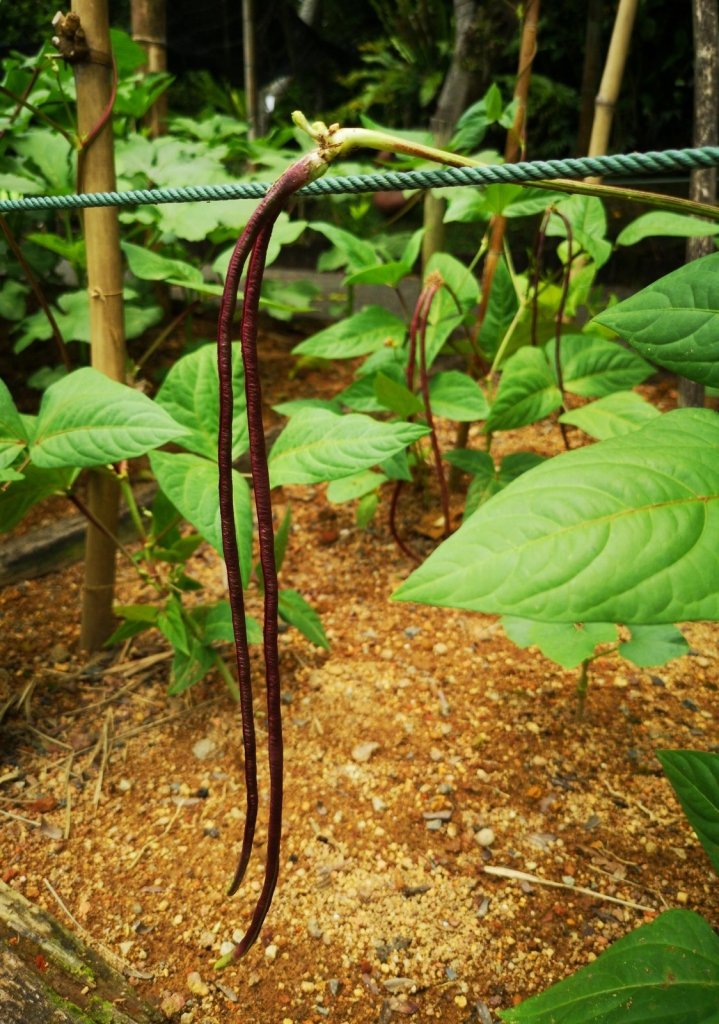
- Snake beans: Northern Territory advice says they grow through the wet if the soil drains. Sow one or two seeds per hole into slightly damp, warm soil, hold off watering until they come up in three to five days, and train them up a trellis. Pods are usually ready 8 to 10 weeks from sowing.
- Kang kong: in the wet, strike cuttings or raise seedlings under cover rather than sowing into pounding rain, and keep it contained and away from waterways.
Common beans, tomatoes, cucumbers, pumpkins and melons wait for the dry. Our wet-season crop guide covers the rest.
Gardening outside the tropics? October is a big sowing month everywhere else, so check our sowing guide for your own zone, which covers all six Australian climate zones.
Working safely in build-up heat
NT Health warns that extreme heat can occur in the Territory from October to March, and people who work or exercise outside are among those most at risk. Garden early, keep water close, and stop if you feel dizzy, sick or unusually tired, which can be signs of heat exhaustion. Move somewhere cool and sip cool water, and call 000 if someone becomes confused or faint or cannot drink. The NT Health heat stress page sets out the warning signs and first aid.
Frequently asked questions
Can I still grow tomatoes in the build-up?
In the north tomatoes are a dry-season crop. Heat stops fruit setting and wet-season humidity brings leaf disease, so pull them once they fade and plant again from late April.
When should I plant sweet potato in Darwin?
Many gardeners plant slips on mounds as the wet begins, in November or early December, so start a tuber sprouting in October.
What shade cloth should I use over vegetables in the Top End?
Light cloth, around 25 per cent, is what a Darwin vegie patch featured on Gardening Australia uses over its beds.
Is the build-up a good time to sow a cover crop?
Towards its end, yes. Northern Territory advice favours sowing early in the wet, in November or December. Choose millet or sorghum for a bed going back to vegetables.
Enjoy the storms when they finally break: by then your mounds are built, your slips are rooted and the garden is ready for the wet.
Related growing guides
- Wet-Season Gardening in the Tropics: Crops That Cope
- When to plant sweet potatoes in Australia, zone by zone
- Growing Bitter Melon, Okra and Snake Beans from Seed
- Cover Crops as a Summer Bridge
Ready for the wet? Browse our tropical vegetable seeds and sweet potato tubers.