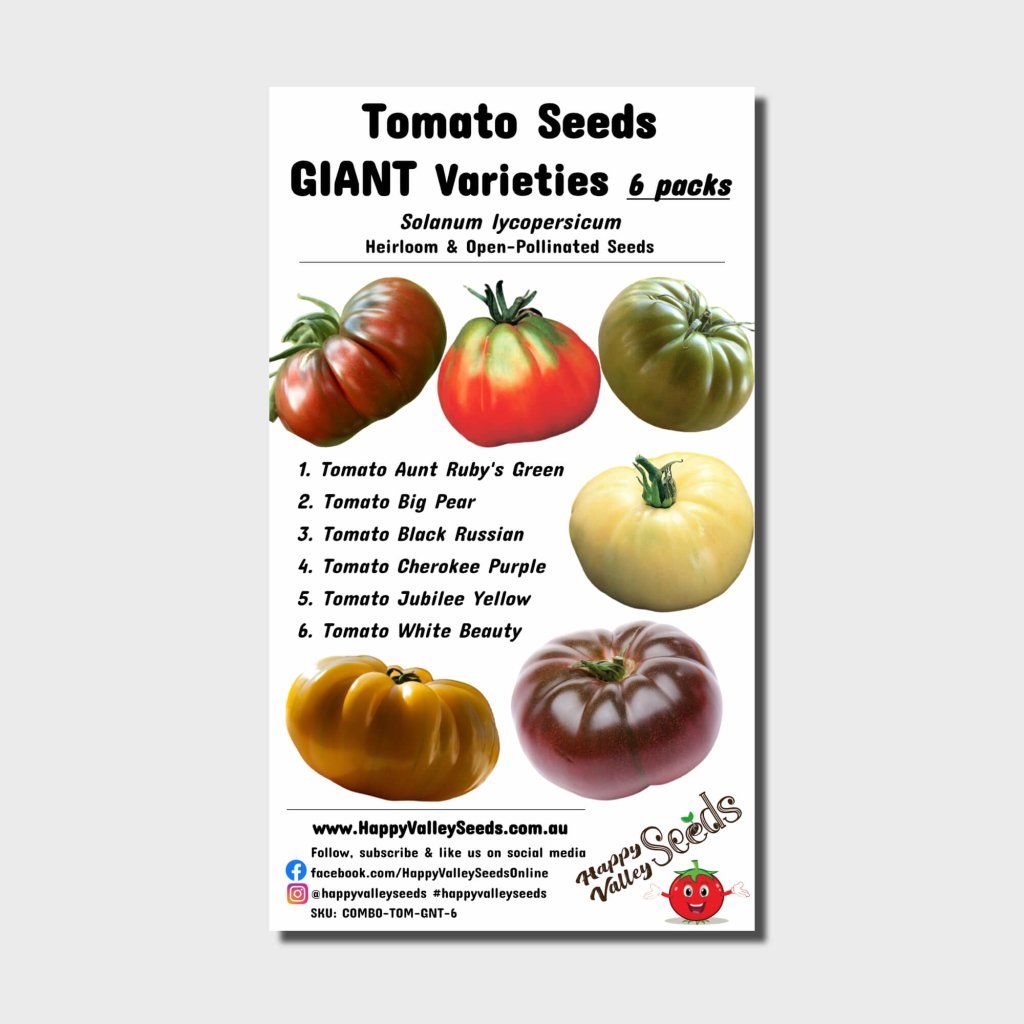
Tomato Giant seeds - Assorted 6 Packs
Solanum lycopersicum
Grow a showpiece crop. This combo brings six big heirloom slicers in one pack, perfect for Australian home gardens. You get rich colour and flavour across the season, from green and purple to yellow, red, and creamy white. Ideal for salads, burgers, sauces, and preserving.
Includes a curated mix from our large-fruited range, typically drawn from Aunt Ruby’s Green, Big Pear, Black Russian, Cherokee Purple, Jubilee Yellow, and White Beauty. Open-pollinated, untreated botanical seed for growing plants at home. Suitable for garden beds and large containers. Non-GMO.
Tomato, Aunt Ruby’s Green (15 seeds)
Large, lime to chartreuse beefsteaks with sweet, tangy flesh; indeterminate; stake or cage. Indeterminate.
Tomato, Big Pear (15 seeds)
Historic red, pear-shaped fruits ideal for sauces and bottling; indeterminate; needs firm staking or trellis. Also called Red Pear in many seed lists. Indeterminate.
Tomato, Black Russian (15 seeds)
Dusky mahogany-brown fruits with rich, complex flavour; indeterminate; benefits from tall stakes or cages. Sometimes listed as Black Russian Tomato. Indeterminate.
Tomato, Cherokee Purple (15 seeds)
Heirloom with rose-purple skin and deep, sweet flesh; indeterminate; strong staking or a cage required. Known widely by the same name. Indeterminate.
Tomato, Jubilee Yellow (15 seeds)
Sunny golden-orange fruits with a mild, low-acid taste; they are generally indeterminate in home gardens and should be supported with stakes or a cage. Also sold as Golden Jubilee. Indeterminate.
Tomato, White Beauty (15 seeds)
Creamy white to pale yellow beefsteaks with sweet, delicate flavour; indeterminate; support with tall stakes. Indeterminate.
Growth Habit
This is an indeterminate variety, which means the vines continue to grow and produce throughout the season. Strong support, such as stakes or cages, is essential, as the large fruits can weigh down the plant.
How to Grow
-
Starting indoors: In cooler climates, start seeds indoors 6–8 weeks before the last frost. Use a warm seed-raising mix (18–22 °C). Transplant outdoors once the soil is warm and frost risk has passed.
-
Sowing depth: 5–10 mm deep.
-
Plant spacing: 50–60 cm between plants.
-
Row spacing: 90–100 cm between rows.
-
Soil type: Rich, free-draining soil with plenty of compost or aged manure. A pH of 6.0–7.0 is ideal.
-
Watering: Water deeply and regularly. Keep soil evenly moist to reduce cracking. Avoid watering leaves to minimise fungal problems. Mulch helps retain moisture and regulate temperature.
-
Fertiliser: Use a balanced fertiliser at planting. Switch to a higher potassium and phosphorus level once flowers form to encourage strong fruit set. Avoid too much nitrogen, which encourages leaf growth at the expense of fruit.
-
Protection: Provide windbreaks in exposed areas. In very hot regions, light shade cloth during extreme heat helps protect fruit from sunscald.
Companion Planting
-
Good companions: Basil, parsley, marigolds, and carrots. These deter pests and improve growth.
-
Avoid: Potatoes and fennel, which can increase disease pressure.
Harvest
-
Harvest around 85–90 days from transplanting.
-
Pick when fruits are green with a golden blush and feel slightly soft to the touch.
-
Regular harvesting encourages more fruit production.
Common Problems and Organic Solutions
-
Early blight or leaf spot: Rotate crops, prune lower leaves, and water at the soil level. Organic copper sprays may help if the disease appears.
-
Powdery mildew: Improve airflow by spacing plants properly. Use a homemade milk spray or sulphur-based organic treatment if needed.
-
Aphids and whitefly: Knock them off with a strong spray of water or use neem oil. Encourage beneficial insects such as ladybirds.
-
Fruit cracking: Keep watering consistently and mulch well.
Uses in the Kitchen
-
Slice fresh for salads and sandwiches
-
Adds colour and tang to salsas and bruschetta
-
Excellent in fried green tomato recipes
-
Juicy and flavourful for sauces and relishes