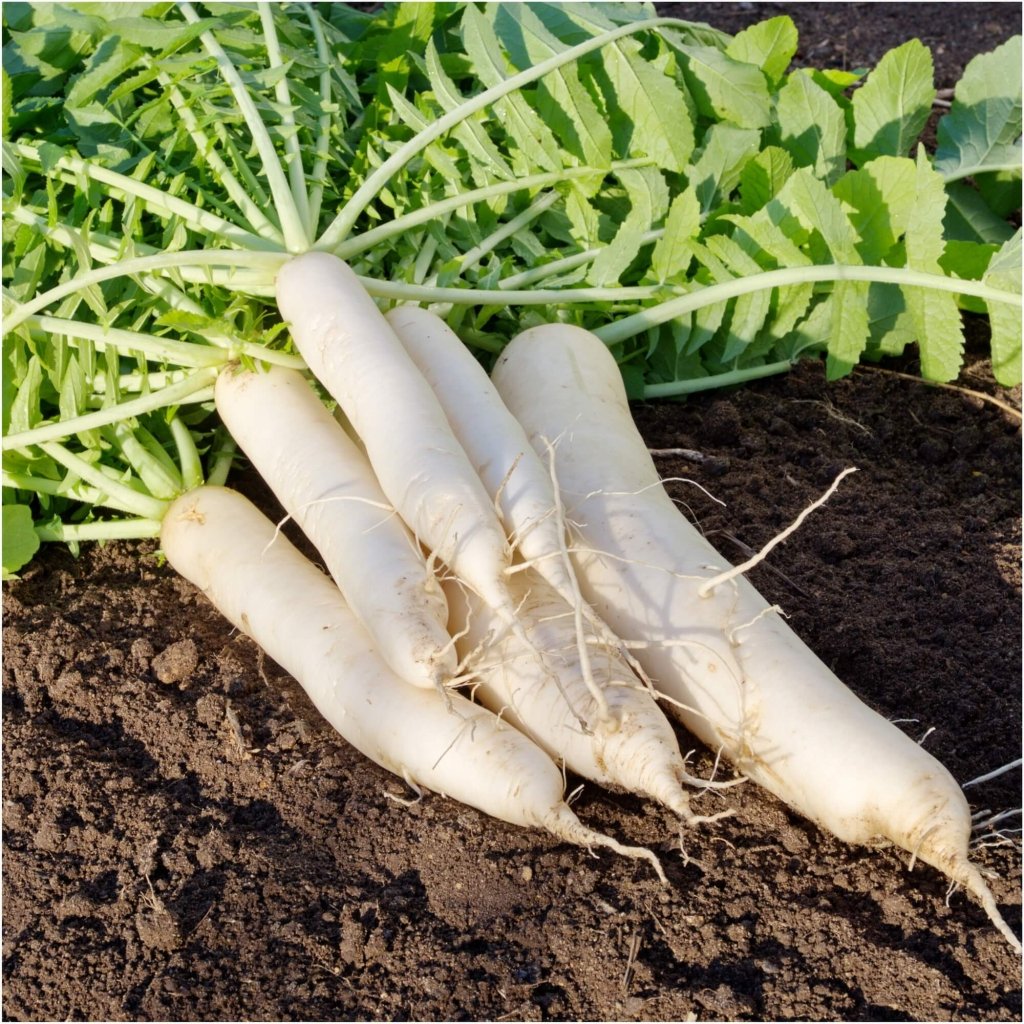
Radish Daikon - 50 seeds
Treated seeds
Traditional Japanese daikon roots can grow up to 35-40cm long. Young daikon radishes are often used shredded in sushi, but their light, slightly spicy flavour is a unique addition to many other dishes. Mature daikon is pickled or cooked; add to stir-fries or soups for crunch.
Daikon is a winter radish, requiring shortening day length and cool temperatures to form. Deep roots are also used as a cover crop to break up heavy soils. Stores well.
Growing Notes
Radishes can be grown all season, but they’re easiest during early autumn and spring. Avoid extreme hot weather days, though. Sow direct 12 mm deep and then thin seedlings to 2.5 - 5 cm apart. Keep the row short and sow small crops every 2 to 3 weeks for continual harvest over months. Keep the soil moist to avoid toughness.
Radish is usually eaten raw, harvested while young and tender. Radishes can be interplanted with other crops, such as carrots or beetroot, for a fast harvest.
Harvest promptly when radishes are the size of large marbles. Leaves and developing seedpods are also tasty.
Plant radishes near beans, beets, celeriac, chervil, cucumber, lettuce, mint, parsnip, peas, spinach, squash, and tomatoes. Avoid planting near agastache or potatoes. It is said that planting 3 or 4 icicle radishes around the mound where you plant squash, and allowing them to grow and bloom, will prevent most pests of squash and cucumber.
*Important Note
These seeds are treated with a fungicide (Thiram). DO NOT eat the seeds or feed them to animals. Keep them away from children and animals. Wear gloves and thoroughly wash your skin with water and soap after touching the seeds. Treated seeds do not affect your crops or harm insects such as bees. These treated seeds are strictly for propagation or growing in the garden only. THE RESULTANT CROP IS EDIBLE.
Fungicide seed treatment may be an AQIS (Biosecurity, Department of Agriculture, Water and the Environment, Government of Australia) requirement for certain seed varieties. Treated seeds may be dyed a distinct colour. Read the label on the seed packet before usage.