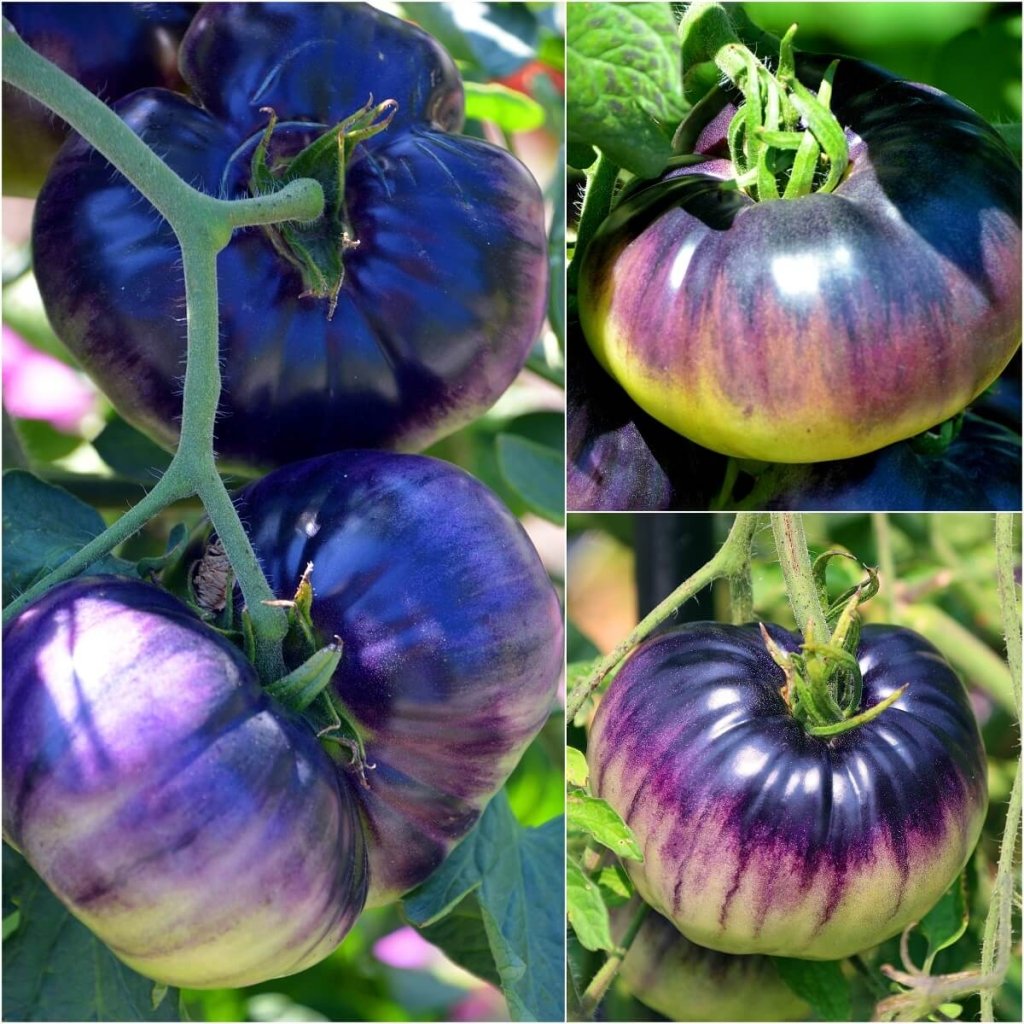
Tomato - Blue Beauty seeds
Solanum lycopersicum
Packet: 20 seeds
Tomato Blue Beauty is a striking heirloom variety known for its deep blue to purple shoulders that ripen into a rich red base. The unusual colouring comes from natural anthocyanins, which are powerful antioxidants. Beneath the skin, the fruit has a sweet, balanced flavour, making it as good for fresh eating as it is for sauces or salads.
Alternate Names
In some gardening circles, this variety is simply called Blue Beauty Tomato. In parts of Europe and the United States, it is also referred to as an Anthocyanin Tomato because of its distinctive pigment.
Growth Habit
-
Type: Indeterminate (keeps growing and producing over a long season)
-
Support: Requires staking or caging, as plants grow tall and fruit is heavy
-
Climate Protection: Prefers warm, steady conditions; in cooler zones, start seeds indoors and transplant after the risk of frost has passed
Sowing and Germination
-
Sowing Depth: 5 mm (about a quarter of an inch)
-
Plant Spacing: 50–60 cm between plants
-
Row Spacing: 75–90 cm between rows
-
Germination Time: 7–14 days
-
Optimal Germination Temperature: 20–27 °C
-
Indoor Sowing: In cooler climates, start seeds indoors 6–8 weeks before the last frost. Use seed trays with a light, free-draining seed mix. Keep soil consistently moist and warm. Harden off seedlings gradually before transplanting outside.
Soil and Water
-
Soil Type: Rich, well-drained soil with plenty of organic matter. A slightly acidic to neutral pH (6.0–7.0) is ideal.
-
Watering: Keep soil evenly moist but avoid waterlogging. Deep watering is best to encourage strong root development. Mulching helps maintain soil moisture and reduces weed competition.
Fertiliser Needs
-
Apply a balanced organic fertiliser or compost before planting.
-
Side-dress with potassium-rich feed once plants start flowering and fruiting.
-
Avoid excessive nitrogen, as it encourages leafy growth at the expense of fruit.
Harvest
Fruits are ready to pick about 80–85 days from transplanting. Harvest when the skin has a deep, glossy red with strong purple shoulders. Tomatoes will continue to ripen slightly off the vine if picked early.
Companion Planting
-
Good companions: basil, parsley, carrots, onions, and marigolds (help deter pests)
-
Avoid planting near potatoes and fennel, as they can attract diseases or inhibit growth
Common Diseases and Organic Control
-
Early Blight: Rotate crops yearly, prune lower leaves, and use copper-based sprays if needed.
-
Powdery Mildew: Improve airflow by spacing plants correctly, avoid overhead watering, and apply organic sulphur sprays.
-
Blossom End Rot: Prevent with consistent watering and adding calcium to the soil if required.
-
Aphids/Whitefly: Use neem oil or introduce beneficial insects like ladybirds.
Uses in the Kitchen
Tomato Blue Beauty shines both fresh and cooked. Slice into salads for a splash of colour, roast for a deeper flavour, or cook down into sauces and soups. The antioxidant-rich skin makes this variety both beautiful and nutritious.