
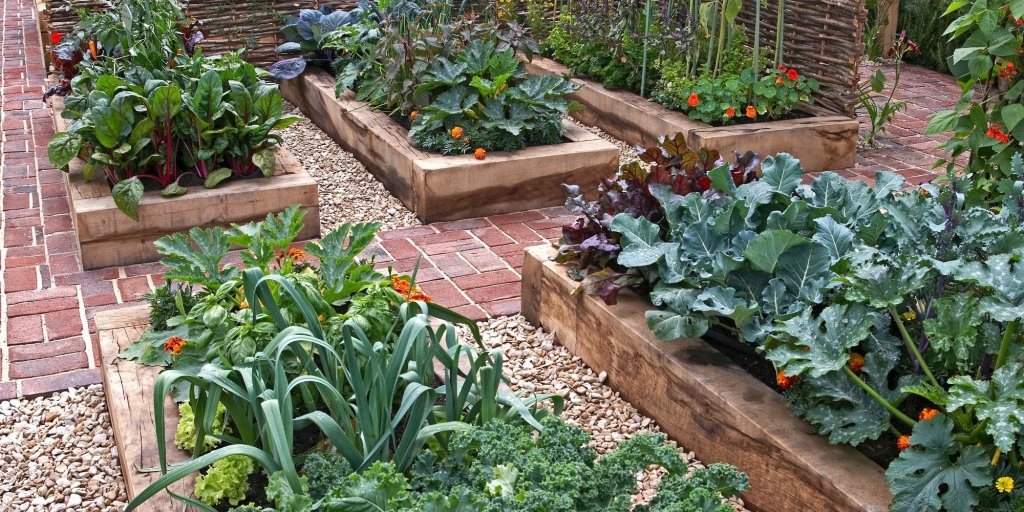
What companion planting is
Companion planting means growing different plants close together so that each one gains something from the other. In a home garden the gains are practical: flowers that feed the insects that eat your pests, a trap crop that takes the first hit, a tall plant that shelters a tender one, and better use of a small bed. A bed with something always in flower also keeps beneficial insects nearby rather than sending them next door.
The parts that hold up
Three mechanisms have reasonable support behind them, and they are worth building the patch around.
- Insectary flowers. Small open flowers such as alyssum, calendula, cosmos, dill and coriander feed hoverflies, ladybirds, lacewings and parasitic wasps. The adults live on nectar and pollen, and their young hunt aphids and caterpillars.
- Trap crops. Nasturtiums often take the first aphids and cabbage white butterflies, which draws pressure away from the vegetables beside them, as long as you deal with the pests on the trap plant.
- Shelter and support. Climbing beans can use a stand of corn for a frame, and a taller crop can shade lettuce through the worst of the summer heat.
Much of the rest is folklore carried across from northern hemisphere charts, and our guide to companion planting in Australia sorts through which claims hold up.
Marigolds show why care is needed. French marigolds can suppress root-knot nematodes, but only where they are grown thickly over much of a season and then dug in, and the result varies with the type of marigold and the nematode. A few plants among the tomatoes will not shift nematode numbers, although marigolds still earn their place by flowering for months and feeding beneficial insects.

Combinations worth trying
Asparagus
Asparagus holds its bed for years, so its neighbours should be plants you are not forever digging out. Tomatoes and parsley are the traditional partners. Repeated digging damages the crowns and shallow feeder roots, and hungry annuals compete for water and nutrients.
Artichoke
A globe artichoke is large and casts real shade, and in most gardens shade is a cost rather than a benefit. Plant one at the southern end of a bed or along a fence, where the shadow falls away from the crops, and beans, carrots and tomatoes will grow well nearby in full sun.
Beetroot
Beetroot needs little room and matures quickly, which makes it a good filler between slower crops. It grows happily beside onions, lettuce, brassicas and bush beans. Climbing beans are the traditional exception, a claim closer to folklore than evidence, although a bean frame does shade the row behind it. Sow beetroot in short runs every few weeks.
Carrots
Carrots suit gaps and edges, and grow near lettuce, radish, tomatoes and the onion family. Two old lines need correcting: "Carrots love tomatoes" comes from a 1975 book title rather than a trial, and planting onions among carrots to deter carrot fly is aimed at a pest that is not established in Australia. Leave one or two carrots to flower instead, because the flat heads feed hoverflies and small wasps.
Brussels sprouts
Brussels sprouts stand in the ground for months, so what the bed gets before and after them matters more than what sits beside them. Thyme and sage are the traditional neighbours. Clover and malting barley belong to broadacre farming rather than a home bed, so sow a cover crop mix while the bed is resting instead, then dig it in a few weeks before planting.
Kale
Kale is hardy rather than tender. It stands through frost, and the leaves often taste sweeter after a cold snap. It grows well beside beetroot, lettuce, onions and herbs. Planting kale beside cabbage and cauliflower is not companion planting, it is a brassica block, and it concentrates cabbage white caterpillars in one spot, so net the lot.
Garlic and the onion family
Garlic, onions, leeks and chives sit happily beside lettuce, beetroot, carrots and brassicas. The pairing most charts agree to avoid is the onion family with peas and beans, so keep the garlic bed well away from the pea frame.
Silverbeet (Swiss chard) and spinach
Both fill the space left by a finished crop quickly, grow well with brassicas, onions and lettuce, and neither minds a little shade in the warmer months.
Basil and tomatoes
Basil under tomatoes is a classic pairing, and basil does not change the flavour of a tomato, because plants do not take up flavour from their neighbours. It still makes sense: both want the same warm soil, full sun and steady water, basil covers bare ground under a staked tomato, and a few stems left to flower feed bees and hoverflies.

Seed for a mixed bed
How seed performs depends on sowing depth, soil, warmth and water, and if a packet does not come up as it should, our seed guarantee sets out what happens next.
Related growing guides
- Companion planting in Australia: what really helps, and what is folklore
- Trap Crops: Using Sacrificial Plants to Lure Pests Away
- Crop rotation made simple: a plan for the Australian home garden
Ready to plant? Browse our vegetable seeds.