
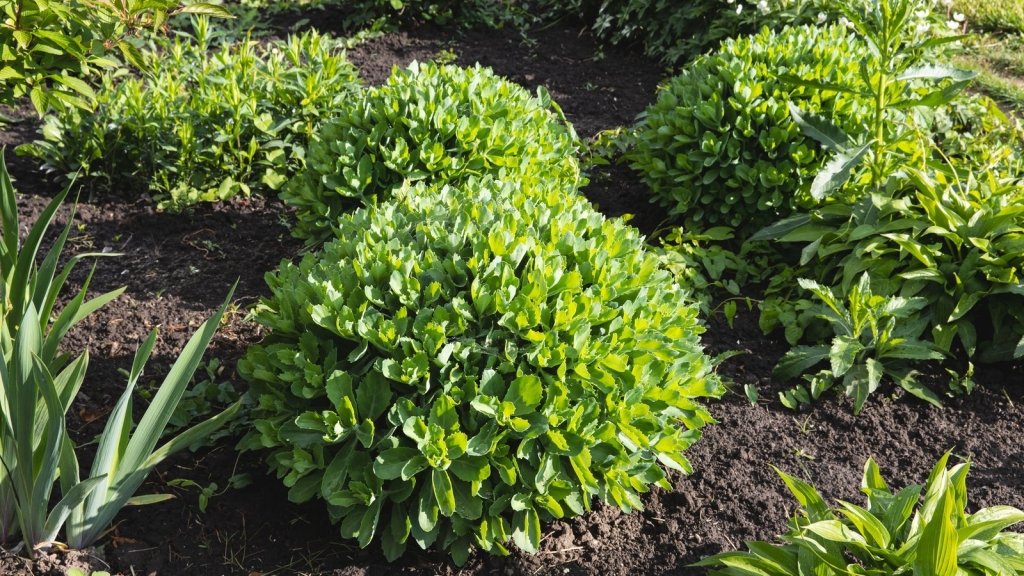

The short version: A plant that grows well and never flowers is usually telling you one of nine things: too much nitrogen, too little direct sun, a plant still too young, the wrong day length, heat or cold at the wrong moment, water stress, a badly timed prune, seed that has already set, or pests eating the buds. It can also be the wrong plant, or a spent pot. Nitrogen is the commonest in a fed garden and takes weeks to fix; a plant that is too young takes longest. Work through the checklist at the end.
There is a particular disappointment in a plant doing everything right except the thing you grew it for: thick foliage, sturdy stems, and not a bud on it.
It is not sick. It is busy doing something else, which narrows the list: feeding, light, timing, stress or damage.
Start with the feed and the sun
1. Too much nitrogen gives lush leaves and no buds
Dark green, soft growth, leaves bigger than the packet promised, and no buds. Lawn fertiliser is mostly nitrogen and travels with the water, so beds beside a fed lawn run leafy, and thick fresh manure does the same. Stop the nitrogen and switch to a potassium weighted feed such as sulphate of potash, or a flower and fruit liquid with a low first number. Fish based liquids will not do it: the fish and seaweed blends sold here run about 12 percent nitrogen to 7 percent potassium. Grevilleas, banksias, waratahs and hakeas are the exception: the Australian Native Plants Society warns that phosphorus in general fertilisers can be dangerous to the Protea family, so use a low phosphorus native food. Expect several weeks, not days. Our guide to what fertiliser does explains labels.

2. Not enough direct sun
Most sun loving annual flowers want about six hours of direct sun a day: sun on the leaves, not bright shade. A plant short of it has long bare gaps between leaf pairs, thin pale stems and a lean toward the brightest side. See garden microclimates and leggy seedlings.
Timing: the plant is not ready, or the day is wrong
3. It is too young, or a biennial, or a first year perennial
Biennials spend year one on roots and leaves, then flower in year two and die: silverbeet, carrots and wallflowers behave this way. Some perennials from seed take two or three seasons to reach flowering size. The tell is a plant that gets bigger every month and has never budded: check the packet, and our plant life cycles explainer.
4. The day length is wrong, so the plant is waiting
Many plants read the length of the night, not the calendar. Short day plants bud only as days shorten: chrysanthemums, poinsettias and zygocactus all flower here in autumn and winter. Long day plants need a threshold that varies by species, often thirteen to fourteen hours: lettuce, spinach and radish run to flower as spring days stretch. Onions are the trap: long days drive their bulbing, not their flowering, and an onion that bolts has met cold when it was already large. Day neutral plants go on age and size. So a short day plant sown in September makes leaves all spring and buds in autumn.
Stress: heat, cold and water make a plant drop its buds
5. Heat or cold at the wrong moment
Buds are expensive, and a stressed plant sheds them first. Past the mid thirties, many plants abort buds and drop flowers. In tomatoes, days above about 32°C, or a few hours near 40°C, damage the pollen in buds that open a week or two later, so failures show up after the hot spell. Look for buds that yellow at the base and fall closed. Shade cloth helps, and our heatwave guide has the rest. If you are out fixing it, work early or late and keep water with you. A late frost does the reverse, killing swelling buds outright.
6. Water stress, whether dry or waterlogged
A dry plant sheds buds before leaves. A waterlogged plant does the same for the opposite reason: roots in airless mud cannot draw water, so leaves read drought in soaking soil. Wilting that has not recovered by morning means dry; yellow lower leaves over dark, sour soil mean wet. Fix the first with deeper, less frequent watering, the second by improving drainage.
Your secateurs: pruning, pinching and deadheading
7. Pruning or pinching at the wrong time
Ask when your plant makes its buds. Camellias, rhododendrons and anything flowering on last season's wood carry buds formed a year earlier, so a winter tidy removes the display. Prune those straight after flowering. Roses and crepe myrtle flower on new wood, and pruning early in the growing season drives the flush, which here means late winter, just before growth starts. Pinching a tip releases the shoots below and gives more flowers on more stems, but delays flowering, so stop six weeks before you want blooms. Keep secateurs sharp and cut away from your hand.
8. The plant has set seed, so it has stopped
An annual grows in order to make seed, so once seed ripens bud production stops. The clue is spent flowers still on the plant, brown and fat at the base. Remove them before the seed ripens, cutting back to the next leaf or bud, and calendula, cosmos, zinnias and pansies keep going for weeks. Picking for the vase does the same.

Something ate the buds before they opened
9. Thrips, budworm and bud damage
Budworm caterpillars bore into developing buds, and in Australia that means native budworm (Helicoverpa punctigera) and corn earworm (Helicoverpa armigera). Business Queensland notes the larvae damage flowers and reach about 40 mm. Thrips feed inside the bud before it opens, so the flower comes out streaked and deformed, or not at all. Tap a bud over white paper and watch for moving specks: our thrips guide covers control. Damage leaves a hole, frass or a dry stub; a plant that never budded has clean tips.

Two more: the wrong plant, and a spent pot
The wrong plant for the climate. Some plants will never flower where you live. Chill dependent bulbs such as tulips, and many biennials, need a real winter, while a late annual in a short cool season runs out of warmth.
The pot that has run out. A plant left in the same container for years is often root bound: roots circling the mix, roots out the drainage holes, and a pot that feels tight when squeezed. The feed runs out too: a red tick premium mix carries a month or two of fertiliser, a black tick mix none. Repot one size larger into fresh mix, tease the roots loose and feed: see our guide to pot sizes.
Work through it in order
- High nitrogen feed, or a fed lawn nearby?
- Hours of direct sun. Under six?
- The packet: annual, biennial or perennial?
- Short day, long day or day neutral?
- Past six weeks: heat over the mid thirties, or frost?
- A finger 5 cm in: dry, or sour and wet?
- Last cut: when, and on old or new wood?
- Spent flowers left on, going to seed?
- A growing tip: holes, frass or moving specks?
- All clean? Question the plant and the pot.
Where each cause bites hardest, by climate zone
- Tropical (Darwin in the Northern Territory, Cairns and Townsville in Queensland): heat and humidity drive bud drop.
- Subtropical (Brisbane and the Sunshine Coast in Queensland, Coffs Harbour and the northern New South Wales coast): lawn fertiliser drift and humid heat.
- Arid and semi-arid (Alice Springs in the Northern Territory, Broken Hill in New South Wales, Kalgoorlie in Western Australia): water stress and extreme heat.
- Temperate (Sydney and the New South Wales coast, Melbourne in Victoria at the cold end of the zone): autumn shade over the bed, and badly timed pruning.
- Mediterranean (Perth and southern Western Australia, Adelaide in South Australia): dry summers and sandy soils, so water stress and hungry pots.
- Cool and alpine (Tasmania, Canberra and the ACT, Ballarat in Victoria, Orange in New South Wales, Stanthorpe in Queensland): late frost on swelling buds, and plants that run out of season.
These are broad groupings. Your own frost dates, aspect and soil matter more than the zone label.
Frequently asked questions
My plant is huge and green and has never flowered. Where do I start?
Start with nitrogen. Big, dark, soft growth with no buds points to a feed weighted toward leaves. Switch to a potassium feed and allow several weeks.
How long after I stop feeding nitrogen will it flower?
Longer than you would like: several weeks, because the plant must use up what it holds and then form buds.
Is six hours of direct sun really the minimum?
For most sun loving annual flowers, yes, and six to eight is better. Watch the spot morning, midday and afternoon.
Why did every bud fall off after a hot week?
Heat stress, and often from earlier than you think: the pollen is damaged in the bud a week or two before the flower opens. Shade cloth and a deep watering the evening before give the next flush its best chance.
I pruned in winter and got no flowers. What happened?
You most likely cut off buds already formed. Anything flowering on last season's wood, such as camellias, is pruned after flowering. Roses and crepe myrtle flower on new wood and are cut in late winter.
Something is eating my buds but I cannot see anything. What is it?
Look for a small round hole and dark grains of frass, which point to budworm, and tap a bud over white paper for thrips.
Nine causes sounds like a lot, but feeding and light are behind a large share of them, and both are fixable this season.
Related growing guides
If the answer is the plant rather than the gardener, start again with our flower seeds or perennial flowers.