
The short version: Lace bugs are tiny sap-sucking bugs with lacy, transparent wings that leave a distinctive pattern: fine silvery mottling on the upper leaf surface, and shiny black tar-like spots underneath. In Australian gardens they mainly attack ornamentals such as azaleas, and olives, rather than vegetables. The fix is to inspect and spray the leaf undersides, where they live, with horticultural oil or soap, keep the plant healthy, and repeat to catch the generations.
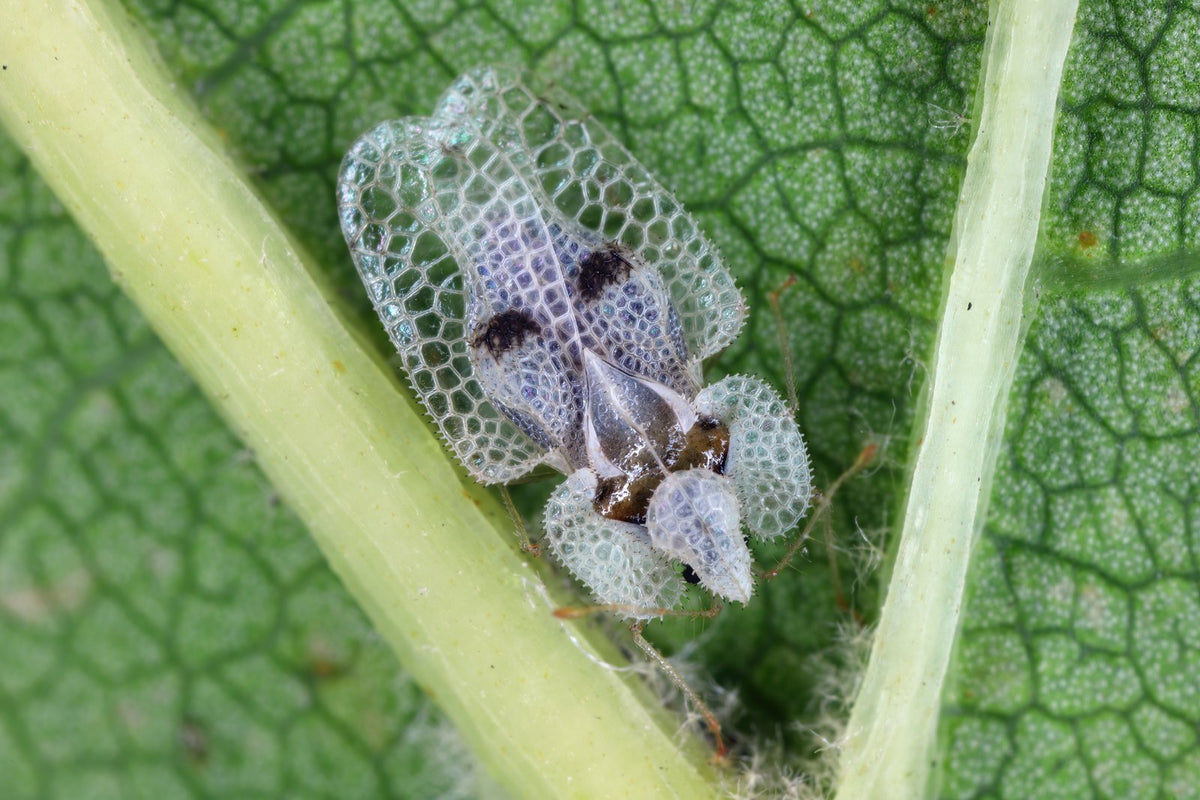
Lace bug damage has a signature look: a leaf that has gone pale and silvery-mottled on top, with a scatter of shiny black dots on the underside. Turn the leaf over and you may find the tiny insects themselves, wings like lace.
They are mostly a worry for ornamentals and a couple of fruiting trees rather than the veg patch, but if you grow azaleas or an olive, they are worth knowing.
How to spot lace bugs
Lace bugs are small sap-sucking bugs named for the lacy, transparent, net-like wings of the adults. The species that matter in Australian gardens include the azalea lace bug (Stephanitis pyrioides), an introduced pest of azaleas and rhododendrons, and the olive lace bug (Froggattia olivina), a native that is a real pest of olives. The adults are tiny, only about two to four millimetres, and flat, while the nymphs are smaller, darker, spiny and wingless.
The diagnostic sign is the combination of fine pale, silver or yellow stippling on the upper leaf surface, from sap-sucking beneath, together with shiny black, tar-like excrement spots and cast skins on the underside. Heavy attack bronzes and browns the leaves and can cause leaf drop. This tells lace bugs apart from thrips, which leave silvery stippling and fine black frass but no lacy insects or varnish spots underneath, and from mites, which leave fine bronzing and webbing.
Why they build up
Lace bugs insert their eggs into the leaf tissue on the underside, and the eggs can overwinter on the plant. The olive lace bug has two to four overlapping generations each season, hatching from late winter or spring. Pressure is worst from spring to autumn, in warm, dry, sunny conditions, and on stressed or sun-exposed plants.
Because they live and feed on the leaf undersides, they can go unnoticed until the tops of the leaves have already turned silvery, so it pays to check the undersides early in the season on susceptible plants.
How to control lace bugs organically
- Inspect the undersides early. Catching them before the population builds makes control far easier.
- Spray oil or soap onto the underside. A horticultural or white oil, or insecticidal soap, works when it directly coats the undersides where the bugs live, so thorough coverage there is essential. Repeat after about 10 to 14 days to catch the new generations, since the first spray does not kill the eggs.
- Hose off light infestations and prune out and dispose of heavily infested growth.
- Keep the plant healthy. Well-watered, unstressed plants fare better, and clearing leaf litter under azaleas over winter helps break the cycle.
Encourage the predators, including lacewings, ladybirds, predatory bugs and mites, assassin bugs, spiders and birds, and avoid broad-spectrum sprays. If you do use pyrethrum, apply it late in the afternoon to reduce harm to bees.
How to keep lace bugs down
- Check the undersides of azalea and olive leaves from late winter into spring, before damage shows on top.
- Keep susceptible plants well watered and out of unnecessary heat stress.
- Clear fallen leaves under affected plants over winter.
- Treat early and repeat, rather than waiting until the leaves have bronzed.
Lace bugs across Australia's climate zones
Lace bugs occur wherever their host plants grow, across all mainland states and Tasmania, and are worst in warm conditions.
- Tropical (far north Queensland, the Northern Territory Top End, the Kimberley in Western Australia): where host ornamentals grow.
- Subtropical (south-east Queensland, northern New South Wales): among the worse zones for them.
- Arid and semi-arid (inland South Australia, central Northern Territory, the interior of Western Australia, Queensland and New South Wales): where irrigated host plants grow.
- Warm temperate (coastal New South Wales, southern Western Australia): among the worse zones.
- Cool temperate (Victoria, Tasmania, the ACT, highland New South Wales): present on azaleas and olives.
- Mediterranean (Adelaide and South Australia, Perth and south-west Western Australia): olive lace bug is recorded across the olive-growing regions of South Australia, Victoria, New South Wales, Western Australia, southern Queensland and Tasmania.
Frequently asked questions
My leaves are silver or mottled with black spots underneath. What is it?
Very likely lace bug. Upper-surface stippling together with shiny black droppings and cast skins on the underside is the classic sign.
How do I tell lace bug from thrips or mites?
Lace bug leaves lacy insects and varnish-like spots underneath. Thrips leave silvery patches with fine black frass and slender fast insects, but no varnish spots. Mites leave fine bronzing with webbing.
Will it kill my azalea or olive?
It rarely kills outright, but heavy, repeated attack weakens the plant, bronzes and drops leaves, and can cut an olive crop for a season or two, so act early.
Why spray the underside?
The adults, nymphs and eggs all live and feed on the leaf underside, so oil or soap must coat there to work. Spraying only the top misses them.
When are they worst?
In the warm months, spring to autumn, especially in warm, dry, sunny spells and on stressed plants, as several generations build up.
Are they on my vegetables?
Mostly no. Australian lace bugs target ornamentals and a few trees, such as azalea, rhododendron and olive, rather than annual vegetables.
Look under the leaves early, treat the underside, and keep the plant unstressed, and lace bugs are far less likely to weaken your azalea or cut your olive crop.
Related growing guides
Ready to plant? Browse our flower seeds and vegetable seeds for the season ahead.