
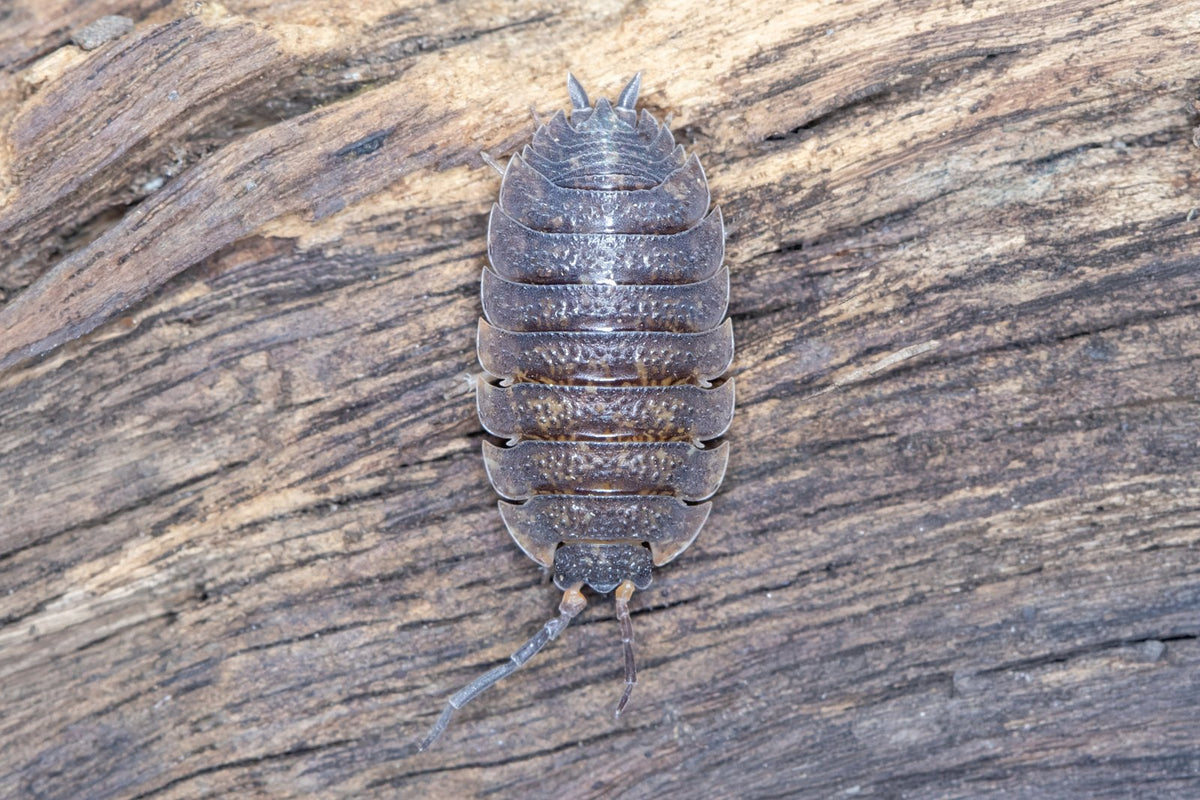
The short version: Slaters, also called woodlice or pill bugs, are small armoured crustaceans that are mostly beneficial, breaking down organic matter and feeding the soil. They only become a pest when numbers explode in rich, damp, heavily mulched beds and they start grazing soft seedlings and ripe fruit sitting on the soil. The answer is to protect seedlings with collars, pull mulch back, cut the damp, and trap the surplus, rather than trying to wipe them out.
Slaters have an unfair reputation. Lift a pot or a board in a moist garden and dozens scatter, and it is easy to assume they are eating everything in sight. In truth they are usually busy on the dead and decaying, not the living.
The honest picture is that they are helpers most of the time and a minor pest some of the time, so the aim is balance rather than eradication.
What slaters are
Slaters go by many names, including woodlice, butchy boys, sowbugs, and, for the ones that roll into a ball, pill bugs or roly-polies. They are land-living crustaceans, not insects, more closely related to crabs and prawns, which is why they always need damp conditions. The common garden species are mostly introduced, chiefly the rough slater (Porcellio scaber) and the pill bug (Armadillidium vulgare), though Australia also has a large native slater fauna.
They are grey to grey-brown, oval and segmented, with an armoured body, one pair of prominent antennae and seven pairs of legs, growing up to about 20 millimetres. Pill bugs roll into a tight ball when disturbed, while rough slaters cannot and instead scurry for cover. They shelter by day under pots, boards, bark and mulch, and are active at night and in damp weather.
Helper most of the time, pest sometimes
For the most part slaters are beneficial scavengers, feeding on decaying organic matter, recycling nutrients and building healthy soil and compost. They earn their place in most gardens. The trouble starts only when their numbers explode in rich, moist, heavily mulched beds and they turn to living tissue, grazing soft seedlings and new growth, rasping tender seedling stems, and eating strawberries and other soft or ripe fruit resting on the soil.
They thrive in damp, shaded, high-organic-matter sites, and die off if left exposed to dry, open conditions. Numbers peak in wet weather and through spring, right when seedlings are emerging, which is why that is when they occasionally cross the line from helper to nuisance.
How to manage slaters when they are a problem
Only step in when you can see slaters actually damaging seedlings or fruit, and aim to reduce the surplus rather than clear them out.
- Protect seedlings with collars. A bottomless pot or a cut-off bottle around each seedling keeps slaters off until the stem toughens.
- Cut the damp and the shelter. Pull heavy mulch back from stems, keep seed furrows clear, water in the morning so surfaces dry by night, and remove decaying matter near seedlings.
- Trap the surplus. A hollowed-out potato or a halved citrus placed cut-side down, a punnet of potato peelings, or damp rolled paper will gather them overnight, and you can then tip the catch out.
- Lift ripening fruit off the soil. Straw, a mat or a pot keeps strawberries and other soft fruit out of reach.
Encourage predators, and let poultry clear an empty bed between sowings. There is no need for harsh baits or sprays, which are unwarranted against a mostly beneficial creature, and even organic snail pellets harm other garden life. In compost and established beds, simply let them get on with their useful work.
How to keep the balance
- Keep mulch a little back from seedling stems while plants are small and soft.
- Water in the morning rather than the evening so beds are drier overnight.
- Raise soft fruit off the ground as it ripens.
- Value them in the compost heap, where their appetite for decaying matter is exactly what you want.
Slaters across Australia's climate zones
Slaters follow the moisture, so pressure tracks how damp and mulched a garden is.
- Cool and alpine (Tasmania, southern Victoria, alpine New South Wales): damp and cool, so high pressure, worst in spring.
- Temperate (much of New South Wales and Victoria, south-east South Australia): moderate to high, peaking in spring and autumn.
- Mediterranean (coastal and southern South Australia, south-west Western Australia): high in mulched, irrigated beds over the wet winter and spring, easing through the dry summer.
- Subtropical (coastal Queensland, northern New South Wales): high where beds stay moist and mulched, as humidity favours them.
- Tropical (far north Queensland, the Northern Territory Top End, the Kimberley in Western Australia): moisture-driven, high in the wet season and crashing in the dry.
- Arid and semi-arid (inland New South Wales, South Australia and Western Australia, and the Northern Territory interior): the lowest pressure, confined to irrigated, shaded, mulched spots.
Frequently asked questions
Are slaters good or bad for the garden?
Mostly good. They are decomposers that feed the soil, and they only become a pest when numbers get very high.
Are they eating my seedlings or just the decay?
Usually the decay. Suspect slaters only if you see rasped stems or grazed soft growth, and check after dark to confirm.
Why are there so many in my mulch?
Damp, plenty of organic matter and daytime shelter make heavy mulch ideal slater habitat.
How do I tell a slater from a millipede?
A slater is a flat, oval crustacean with seven pairs of legs. A millipede is long and round with many segments and two pairs of legs per segment.
How do I protect my strawberries?
Keep the fruit off the soil on straw, a mat or a pot, pull mulch back, and pick ripe fruit promptly.
Do slaters bite?
No. They are harmless to people and pets and cannot bite or sting.
Give the seedlings a collar, keep the beds a touch drier, and let the rest carry on composting, and slaters stay firmly on the helpful side of the ledger.
Related growing guides
Ready to plant? Browse our vegetable seeds and herb seeds for your next sowing.