
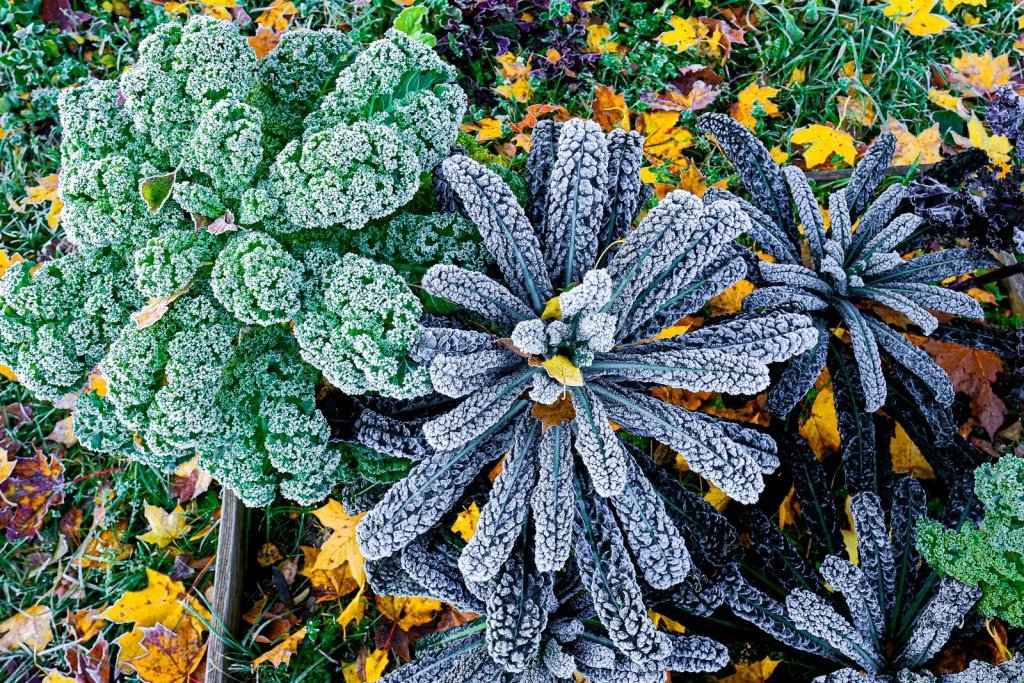
Autumn decides the winter garden
A winter vegetable patch is settled in autumn. Sow inside the autumn window, pick crops that genuinely grow in the cold, and give them enough shelter to keep moving, and you can pick something fresh most weeks from late autumn through to early spring. That is the whole purpose of this guide: when to sow in your part of Australia, how long each crop really takes once the days shorten, and which protection is worth the effort.
When to sow, zone by zone
Australia is far too large for a single sowing date, so it helps to work from six broad groupings. The months below are the autumn and winter sowing windows for vegetables.
- Tropical. Darwin, Cairns, Townsville, Mackay and Broome, the Top End and the far north of Queensland and Western Australia. Winter is the easy half of the year here, not the hard one. The dry season from April to August carries almost the full range, and June and July give the best salad weather of the year, with lettuce, Asian greens, spinach and even peas and snow peas in the coolest weeks. There is no frost to plan around. The wet season is the constraint, not the cold.
- Subtropical. Brisbane, the Gold and Sunshine coasts, Bundaberg, and the northern rivers of New South Wales around Lismore and Coffs Harbour. Autumn opens the better half of the year. From March to July you can sow broccoli, cabbage, cauliflower, carrot, beetroot, lettuce, silverbeet, radish and spring onion, with kale in March and April, leek from March to May, peas and snow peas from April, and broad beans in May and June. Frost is limited to the hinterland valleys.
- Arid and semi-arid. Alice Springs, Broken Hill, Kalgoorlie, Longreach, Mildura, Port Augusta and most of the inland. March and April are the big window, taking brassicas, carrot, beetroot, kale, lettuce, radish, rocket, silverbeet, turnip and onion, with garlic in April and May. From May the nights turn sharp and frost becomes the limit, along with water. June and July are carried by broad beans, peas, onion, spinach and radish.
- Temperate. Sydney, Melbourne, Geelong, Newcastle and most of coastal southern New South Wales and Victoria. February and March are two of the best sowing months of the year: brassicas, leek, carrot, beetroot, kohlrabi, lettuce, silverbeet, spinach, swede and turnip. April and May bring broad beans, peas and snow peas, onion, Asian greens and mustard greens, and garlic goes in from March to May. June and July still take peas, broad beans, onion, leek, winter lettuce, spinach and silverbeet.
- Mediterranean. Perth and the south west of Western Australia, Adelaide and the gulf country of South Australia. Follow the temperate months. The difference is the dry summer, so the autumn break can arrive late. Wait for the first soaking rain, or water the seedbed properly the day before you sow, rather than sowing to a calendar date.
- Cool and alpine. Hobart and most of Tasmania, Canberra, the Victorian and New South Wales tablelands and high country including Ballarat, Katoomba and Armidale, and the Adelaide Hills. Bring everything forward. January and February for broccoli, cabbage and kohlrabi, February and March for kale, Asian greens, silverbeet, spinach, lettuce, radish and turnip, late March through April for broad beans and onion, and garlic from March to May. From June, sowing narrows to broad beans and peas in the milder pockets, onion, and leek started undercover.
These are broad groupings, not lines on a map. If you garden between two of them, or in a frost pocket, a coastal strip or a valley that behaves nothing like the town down the road, work from your own first and last frost dates and treat the months above as a starting point.
Frost is not the enemy it is made out to be

The most common winter gardening mistake is assuming every crop needs saving from the cold. Most of the classic winter vegetables are properly frost hardy. Kale, silverbeet, leek, parsnip, carrot, swede, turnip, cabbage, Brussels sprouts, broad beans and spinach all take frost in their stride, and several of them improve for it. Parsnip, Brussels sprouts and kale convert stored starch to sugar as the temperature drops, which is why a parsnip lifted after a couple of frosts tastes sweeter than one pulled in autumn.
What does need cover is the tender end: lettuce hearts, coriander, celery, Asian greens in a hard frost, and any seedling of any crop in its first few weeks. Young plants have no reserves and little root, so protect them while they are small and then let the hardy ones get on with it.
Two things reliably kill winter crops, and neither is cold on its own. The first is waterlogging, which is why drainage and a bit of extra compost matter more in a wet winter than any cover. The second is a frost landing on a plant that went into the night dry.
How long each crop really takes
Days to maturity on a seed packet are usually measured in the growing season. In winter, with short days and cool soil, most crops take at least half as long again, and some take twice as long. Plan in three buckets.
Four to eight weeks
Radish is the quickest thing in the patch, about four weeks in warm soil and closer to six to eight in the middle of winter. Rocket, mustard greens, bok choy and the other Asian greens, and baby leaf lettuce and spinach all sit in this bucket if you pick them young. Sow a short row every two or three weeks rather than one long row, and you will have leaves the whole way through.
Two to four months
Silverbeet takes about seven to eight weeks to the first picking and then keeps going for months. Turnip runs six to ten weeks, beetroot eight to twelve, kale eight to twelve for full sized leaves and spring onion about ten. Carrot sits at the long end in winter, commonly twelve to sixteen weeks, and both carrot and parsnip germinate slowly and patchily in cold soil, so sow them while there is still some warmth in the ground. Chicory and endive belong here too, at roughly 80 to 100 days, rather than in the quick bucket where they are often listed. Broccoli and cauliflower head up in about three to four months and cabbage in three to five.
Four months and more
Leek needs four to six months, not two. Parsnip takes four to five, Brussels sprouts four to six, and broad beans about four to five months to the first pods. Collards sit near the cabbage end. These are the crops to sow at the front of the autumn window, because sown late they simply sit and wait for spring.
Garlic and onions run on their own timetable
Garlic is not grown from seed. It goes in as individual cloves from March to May across most of the country, sits through winter, and comes out in late spring or early summer, which is six to eight months in the ground. Onions from seed are a similarly long job at six to eight months, and they respond to day length: they build leaves through the short days and only start forming a bulb as the days lengthen, so an onion sown in autumn is harvested in late spring or summer. Check whether a variety is an early, mid or late season type and match it to your latitude, because a late season onion sown in the far north will make leaves and never bulb properly.
Protecting the patch
Protection is a set of choices, not a shopping list. Start with the cheapest thing that solves the problem you actually have.
Mulch

Leaves, straw, sugar cane or pine needles spread 50mm to 100mm deep will hold moisture, keep weeds down and stop winter rain smashing the soil surface. Leave a gap around the stems so crowns do not rot, and do not press or compact the soil first, because the air spaces in soil are where roots and soil life live.
One thing is worth knowing. Mulch insulates in both directions. On a frosty night, bare, firm, moist soil absorbs heat during the day and releases it back around the plants overnight, while a thick organic mulch blocks that heat and can leave the plant canopy a degree or two colder. In a frost prone spot it is worth pulling the mulch back from the row through the coldest weeks, and watering the soil in the afternoon before a clear cold night so it has moisture to hold the heat of the day. Dark plastic sheeting warms soil in the same way, but it also sheds rain and cooks soil life, so it is a poor swap for mulch in a home bed.
Cold frame

A cold frame is a low box with a clear lid, usually sloped to the north to catch the winter sun. It is the simplest way to lift the temperature a few degrees, harden off seedlings and keep salad going through the worst of it. Frames that sit over an existing bed are generally more useful than ones with their own built in planter, because you can move them to wherever the sowing is. Prop the lid open on mild days or the plants cook and damp off, since a closed frame on a sunny afternoon gets surprisingly hot.
Hoop tunnel
A hoop tunnel is the middle option between a row cover and a greenhouse: hoops of poly pipe or bent wire pushed into the ground and covered with clear plastic or heavy frost cloth. It covers a whole bed, costs very little, and comes down in spring. Leave the ends open or roll one side up on warm days for airflow, and weigh the edges down with timber or soil so the wind does not take it.
Unheated greenhouse

An unheated greenhouse holds a few degrees over the outside and keeps the rain off, which is often all that is needed. When a hard frost is forecast, a row cover or a sheet of frost cloth laid over the plants inside adds another layer at no running cost. A heated greenhouse will handle almost anything, but it uses a great deal of energy for a home vegetable patch, and choosing hardier crops usually does the same job.
Hot bed
The traditional hot bed uses no power at all. A pit or frame is packed 400mm to 600mm deep with fresh manure and straw, topped with 150mm to 200mm of soil or compost, and covered with a cold frame lid. As the manure breaks down it gives off steady, gentle bottom heat for six to eight weeks, which is enough to raise early seedlings in a cold district. Let it settle for a week or so before planting into it, and once it cools it becomes an unusually good bed for the crop that follows.
Row cover and frost cloth

Row cover is light non-woven fabric laid straight over the plants or over low hoops. It lifts the temperature a little, cuts wind, and keeps cabbage white butterflies off brassicas. The same fabric in a heavier weight is frost cloth, and a light one doubles as shade cloth in summer. Handle it gently and it will last several seasons.

If you are covering plants only on cold nights, put the cover on late in the afternoon while there is still warmth in the soil, and take it off in the morning. Cloth left on all day cuts the light the plants need, and in a wet week it holds moisture against the leaves.
Watering in winter
Winter plants grow slowly, the days are short and the soil holds moisture far longer, so most gardens need a fraction of the summer watering. The common mistake is watering out of habit. Push a finger into the soil to the second knuckle, and if it is damp, leave it.
When you do water, water in the morning on a mild day so the leaves dry before dark and the soil takes the warmth. If a frost is forecast and the soil is dry, water the soil around the plants during the day, because moist soil stores more heat and releases it overnight. Whatever the forecast, keep water off the leaves late in the day, since wet foliage overnight invites mildew and rots. Plants under cover are the exception in the other direction: rain cannot reach them and winter sun through glass or plastic dries a pot out quickly, so check anything in a greenhouse or cold frame every few days.
Six jobs worth doing before the cold sets in
Sow into trays, one variety per tray

Raising seedlings in trays gives you control over warmth and moisture, and keeping one variety per tray means you can move the slow ones somewhere sheltered without disturbing the rest. Plant them out when they have two or three true leaves and the roots hold the mix together.
Get the beds up out of the wet

If your garden sits wet through winter, raising the beds even 200mm makes more difference than any cover. Roots sitting in waterlogged soil rot, and a plant that has drowned looks very much like a plant that has frozen.
Plant the windbreak now
Cold wind does more damage to winter crops than still cold air does. Shrubs and native plants make a good permanent windbreak, and autumn is the standard planting season for them across southern Australia: they go in while the soil is still warm, settle their roots through the winter rain, and are established before the first hot summer. In the tropics and subtropics, plant at the start of the wet instead.
Put a cover crop in the beds you are resting
Any bed you are not sowing is worth planting to a cover crop rather than leaving bare. Legumes such as field peas, vetch and faba beans fix nitrogen from the air, while cereals such as oats and cereal rye scavenge leftover nitrogen and add a lot of root and leaf bulk, so a mix does both jobs. Our cover crop and soil builder seeds cover the autumn and winter window, and the Soil Regenerator 10 Species Cover Crop Blend is a good all rounder. Slash it or dig it in before it sets seed, a few weeks ahead of your spring sowing. Quarantine rules mean the blend cannot be sent to Western Australia or Tasmania, so gardeners there should choose a single-species cover crop that ships to their state.
Feed the soil, not the plants
Summer crops leave a bed tired. Compost and well aged manure are the base, blood and bone adds nitrogen slowly, and sulphate of potash helps root crops firm up. Seaweed preparations are worth using, but they are a biostimulant rather than a fertiliser: they supply trace elements and plant hormones and can help with root growth and stress, not the nitrogen a hungry brassica needs. Use them alongside compost, not instead of it.
Keep on top of the weeds
Weeds grow more slowly in winter, which makes it the easiest time of year to get ahead of them. Walk the beds every week or so and pull the small ones while they still lift cleanly. Under cover, where it is warmer and wetter, they grow faster than you expect, so check inside the frame and the tunnel too.
Late winter, and the start of the next season
From late July in the temperate and cool zones, and a little earlier further north, the winter garden starts doubling as a nursery. Tomato, capsicum, chilli and eggplant can be started undercover with warmth six to eight weeks before your last frost, so they are ready to plant out when the soil warms. They need a heat mat or a warm windowsill to germinate and they must stay under cover, because they are frost tender and have no place in an open winter bed outside the tropics. Seed potatoes can be set out somewhere bright and frost free to sprout at the same time.

In short
Sow inside the autumn window for your zone, choose crops that suit the cold rather than fighting for ones that do not, allow a good deal longer than the packet says, and protect the tender things and the seedlings rather than everything. A winter bed of kale, silverbeet, leek and a rolling row of radish and salad leaves takes very little work once it is in, and it can keep the kitchen going until spring sowing starts again.
Related growing guides
- Growing Autumn-Winter Vegetables in Your Garden
- Ten Vegetables Worth a Winter Bed in Australia
- Beating the cold: frost protection and stretching your growing season
Ready to plant? Browse our autumn and winter seeds.
4 comments
Vikram Singh
Great tips for winter gardening preparation! Getting your garden ready for the colder months is key to a healthy and productive spring. At Green Hobart Gardener, we help Hobart locals prepare their gardens for winter with practical advice tailored to Tasmania’s climate. If you’re in Hobart and want expert help to keep your garden thriving through winter, give us a call on +61 470 283 345 — we’re always happy to assist!
Astrid Boulton
Great information.
I’m growing the following outdoors: cabbages, cauliflowers, broccoli and white pickling onions from H.V. seeds and doing well. They are all seedlings ATOR. (Arid climate, Victoria).
Odelle
Great information
Willem Eekelschot
Enjoy reading and using your articles.