
How to Grow Alfalfa Sprouts in Australia
Alfalfa sprouts are ready 5 to 8 days after the soak starts. Soak 3 tablespoons (about 30 g) of seed sold for sprouting in a 1 L jar for 6 to 12 hours. Rinse and drain two to three times a day. Green them in bright, indirect light, never direct sun. Float off the hulls, dry them and refrigerate at 5°C or colder. People at higher risk eat them cooked.

| Seed | 3 tablespoons, about 30 g, per 1 L jar |
|---|---|
| Soak | 6 to 12 hours, overnight, in drinking water |
| Rinse | Two to three times a day, drain hard |
| Light | Indirect light, never direct sun |
| Temperature | Best near 20 to 22°C, range 15 to 29°C |
| Harvest | Days 5 to 8 |
| Yield | About 7 times the dry seed weight |
| Storage | Dried, sealed, 5°C or colder, 4 to 5 days |
| Use | Salads, sandwiches and wraps, or cooked in soup |
Alfalfa (Medicago sativa) is a legume in the pea family, Fabaceae, grown on Australian farms as lucerne. Its seed is sprouted in a jar, and the sprouts are usually eaten raw. They are fine, crisp and mild, with a faintly nutty taste, and ready 5 to 8 days after soaking. Most jars that fail were left too wet.
Three mistakes that matter
- Leaving water in the jar. Water left sitting lets bacteria breed and sours the seed, and the smaller the seed, the more thorough the draining must be. Shake out the last drops after every rinse and prop the jar mouth down.
- Using too much seed. Three tablespoons of dry seed, about 30 g, swell to fill a litre jar, and an overcrowded jar stays wet and airless at its centre. Keep to the amounts in What you need.
- Packing the sprouts away wet. Wet sprouts keep poorly in a sealed container. Dry the surface first, as Harvesting and Storing describes.
When to sprout
Alfalfa sprouts indoors in any month, and a room near 20 to 22°C suits it best. The seed germinates across roughly 15 to 29°C. A cold room slows the jar, and above 30°C it can sour or grow mould before the leaves open.
| Zone | Example cities | Sow | Harvest | Notes |
|---|---|---|---|---|
| Tropical | Darwin NT; Cairns, Townsville QLD; Broome WA | Jan-Dec | Year round | Warm all year and steamy in the wet season: rinse three times a day with the coldest tap water. |
| Subtropical | Brisbane, Gold Coast QLD; Coffs Harbour, Lismore NSW | Jan-Dec | Year round | Sticky summers favour mould, so drain hard and keep air moving. The mild, dry winter suits the bench. |
| Arid and semi-arid | Alice Springs NT; Broken Hill NSW; Mildura VIC; Kalgoorlie WA | Jan-Dec | Year round | Hot, dry summer air can dry the seed between rinses. Frosty winter nights call for a warmer room. |
| Temperate | Sydney, Newcastle NSW; Melbourne, Geelong VIC | Jan-Dec | Year round | Kitchens sit near the ideal for much of the year. Add a rinse in heatwaves; Melbourne winters slow the jar. |
| Mediterranean | Perth, Bunbury WA; Adelaide SA | Jan-Dec | Year round | Summer heat arrives dry and early: keep the jar off sunny sills and away from the oven. |
| Cool and alpine | Hobart, Launceston TAS; Canberra ACT; Ballarat VIC; Armidale NSW | Jan-Dec | Year round | Cold kitchens from April to October slow sprouting. Use the warmest room, clear of draughts, and allow more time. |
Some food safety extension services advise against summer sprouting unless the room stays near 21°C. In a Darwin build-up or a Perth heatwave, use the coolest room in the house or wait for a milder week.
Food safety
The warm, damp jar that grows a sprout also suits bacteria, and bacteria carried inside a contaminated seed cannot be rinsed away.
- Use seed sold for sprouting. Seed sold for sowing or pasture can be treated with fungicide or insecticide, and which seeds to sprout explains the difference.
- Wash your hands before handling seed or sprouts. Wash the jar, lid, mesh and bowl in hot water and detergent and rinse them. Before the first batch and between batches, sanitise them in a dishwasher that can sanitise, usually on its longest, hottest setting. Without one, soak them in very hot water (77°C for 30 seconds). Or use plain unscented household bleach at 25 mL to 10 L of cold water for 30 seconds, made up fresh each day. Let them air-dry.
- Soak and rinse only in water fit to drink, and keep the jar away from raw meat, pets and the chopping bench.
- Keep the fridge at 5°C or colder. Eat freshly harvested raw sprouts within 4 to 5 days. Sprouts cooked for anyone at higher risk are eaten straight away. Leftovers are cooled, kept in the fridge, used within a day of cooking and reheated until steaming hot.
- Harmful bacteria can be present while sprouts look, smell and taste normal, so none of those is a test of safety.
- Throw out any jar that smells sour or musty, feels slimy or darkens. More signs are in sprout problems and safety.
What you need
Use a wide-mouth glass jar with a fine mesh sprouting lid, or a square of muslin under a rubber band. A bowl or dish rack holds the jar mouth down. Start with alfalfa sprouting seed, and a sprouting jar or mesh lids for mason jars if you need them.
| Vessel | Dry seed | Approximate yield |
|---|---|---|
| 500 mL jar | 1.5 tablespoons, about 15 g | About 105 g of sprouts |
| 1 L jar | 3 tablespoons, about 30 g, and no more | About 210 g, enough to fill the jar |
| Sprouting tray, per tier | One even, uncrowded layer | About 7 times the dry seed weight |
The tablespoons are 20 mL Australian spoons, each holding about 10 g of seed. A 2,000-seed packet holds about 4 g, enough for a small trial jar. A 10,000-seed packet holds about 20 to 23 g, enough for one 500 mL jar with some to spare.
A tiered sprouting tray also works. Spread the soaked seed in a thin, even layer and rinse it under the tap two to three times a day. Tip out the drip tray daily.
Soaking and Rinsing
Start the soak after dinner and the first rinse falls at breakfast.
- Measure the seed. If you choose to treat it, soak it in plain supermarket vinegar, undiluted, for 15 minutes, then rinse it under the tap for 1 minute. This lowers the risk but does not remove it.
- Tip the seed into the jar and cover it with water. Skim off any floating seed, broken hulls and debris, which research has tied to most contamination, then pour the water off.
- Cover the seed with two to three times its volume of cool drinking water, about 21 to 27°C. Soak for 6 to 12 hours, out of the sun.
- Drain, rinse once more and drain hard. Seed left sitting in water much longer can ferment and spoil.
- Roll the seed around the glass so it spreads out, then prop the jar mouth down at an angle in the bowl.

From then on, rinse with cool drinking water two to three times a day, roughly every 8 to 12 hours. Never soak the seed again. Tipping the jar drains the water and draws air back in through the mesh.
Day by day
Air and drainage matter most, and ordinary room light suits the first few days.
| Day | What to do | What to look for |
|---|---|---|
| Day 0, evening, soak starts | Rinse, skim, soak 6 to 12 hours | Seed swells with water |
| Day 1 | Drain hard, rinse two to three times | White root tips on the first few seeds |
| Day 2 to 3 | Keep rinsing; roll the seed along the glass after each rinse | White tails on most seeds; fine root hairs before a rinse |
| Day 3 to 4 | Loosen any clump with clean fingers or a fork | Tiny pale yellow leaves at the tips |
| Day 4 to 5 | Move the jar into bright, indirect light and keep rinsing | Leaves open and start to turn green |
| Day 5 to 8 | Final rinse, float off the hulls, dry and chill | Most leaves open and green |
Keep the jar out of direct sun while it greens, because sun through glass can cook the sprouts. Leaves buried in the clump may stay yellow, which is normal.

Harvesting and Storing
Alfalfa sprouts are ready when most leaves have opened and turned green. The thin seed coats, called hulls, shorten storage life, and they float off easily.
- Tip the sprouts into a large bowl of cool drinking water.
- Tease the tangle apart with clean fingers so the hulls rise.
- Skim the floating hulls off with a spoon or small strainer; the sprouts sink.
- Lift the sprouts out, and repeat once if many hulls remain.
Spin the sprouts in a salad spinner, or spread them on clean kitchen paper, until the surface feels dry. Pack them loosely into a clean, sealed container and refrigerate them at once. Rinse each serve under cool running water just before eating. They usually go raw into salads, sandwiches and wraps, or are cooked through soup. For anyone named in Food safety, they are cooked until steaming hot.


Common problems
White fuzz on the roots. Root hairs grow as an even white fuzz along the root only, and they collapse when rinsed. Mould can be white too, but it grows in cobwebby patches on seeds and empty hulls, stays after a rinse and smells musty. A mouldy jar goes in the bin.
Sour smell or slime. Any spoilage sign in Food safety means the jar is finished, and rinsing will not rescue it. Throw it out, wash everything and restart with the drainage in Three mistakes that matter.
Seeds that do not sprout. A few unsprouted seeds are normal, and they rinse out with the hulls. Many at once point to old seed, seed stored warm or damp, or a jar kept too wet or too dry.
Bitter or tough sprouts. Too much light or a jar left growing too long makes alfalfa tough and bitter. Keep it out of strong light until the leaves show, and harvest once most are green.
Tips
- Start a small jar every few days for a steady supply.
- Swap to a coarser mesh lid for the last rinses, so loose hulls wash out.
- Store dry seed sealed in a cool, dark, dry cupboard, where it can keep for several years.
Questions
Is the white fuzz on my alfalfa sprouts mould?
Usually not. Healthy roots grow fine, even root hairs that collapse as soon as you rinse. Mould can also be white, but it sits in cobwebby patches on seeds and hulls, stays after a rinse and smells musty. If the fuzz stays or smells, throw the jar out.
How long do home-grown alfalfa sprouts last in the fridge?
Plan on 4 to 5 days for freshly harvested raw sprouts. Float off the hulls, dry the surface, and seal the sprouts in a clean container in a fridge running at 5°C or colder. Throw them out sooner if they smell sour or musty, feel slimy or darken.
Should alfalfa sprouts go in full sun to turn green?
No. Bright, indirect light greens the leaves over the last day or two, while direct sun through glass heats the jar and can cook the sprouts. A spot near a window but out of the sun works well.
Can I sprout lucerne seed bought for pasture or the garden?
It is safer not to. Seed sold for sowing is not sold as food, and some is treated with fungicide or insecticide. Buy seed sold for sprouting, which is untreated and meant to be eaten.
Are home-grown alfalfa sprouts safer than shop-bought ones?
Not necessarily. Most sprout outbreaks start with contaminated seed, and even very clean home conditions cannot make sprouts free of bacteria. Anyone in a higher risk group should eat them cooked.
Why are some of my alfalfa sprouts still yellow?
Leaves in the middle of the jar get little light, so they stay yellow while the outer ones green. That is normal. Loosening the clump on day 3 or 4 lets more leaves reach the light.
Grow it


More sprout guides
All sprouts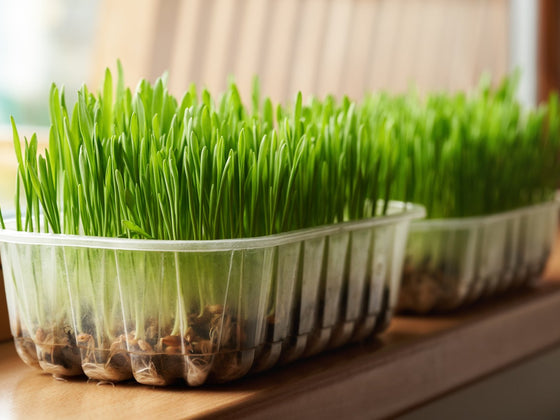
Barley Grass
Grow barley grass on a tray in Australia: soaking, sowing, watering from below, when to cut, storing, food safety, and how it differs from wheatgrass.
| Position | Bright indirect light |
|---|---|
| First pick | 6 to 10 days |

Black Sunflower Shoots
Grow black sunflower shoots on a tray in Australia: soaking, sowing under a weight, light, watering, knocking off the shells, cutting, storing and food safety.
| Position | Bright, indirect light |
|---|---|
| First pick | 8 to 14 days |

Broccoli Sprouts
Grow broccoli sprouts in a jar in Australia: seed amounts, soaking, rinsing, greening, drying, storage, food safety, and how to tell root hairs from mould.
| Position | Indirect light, never direct sun |
|---|---|
| First pick | 4 to 6 days |

Buckwheat Greens
Grow buckwheat greens on a tray in Australia: why the whole seed is not a jar sprout, soaking, sowing, clearing the hulls, cutting, storing and food safety.
| Position | Bright light once uncovered |
|---|---|
| First pick | 8 to 12 days |