
How to Grow Daikon Radish Sprouts in Australia
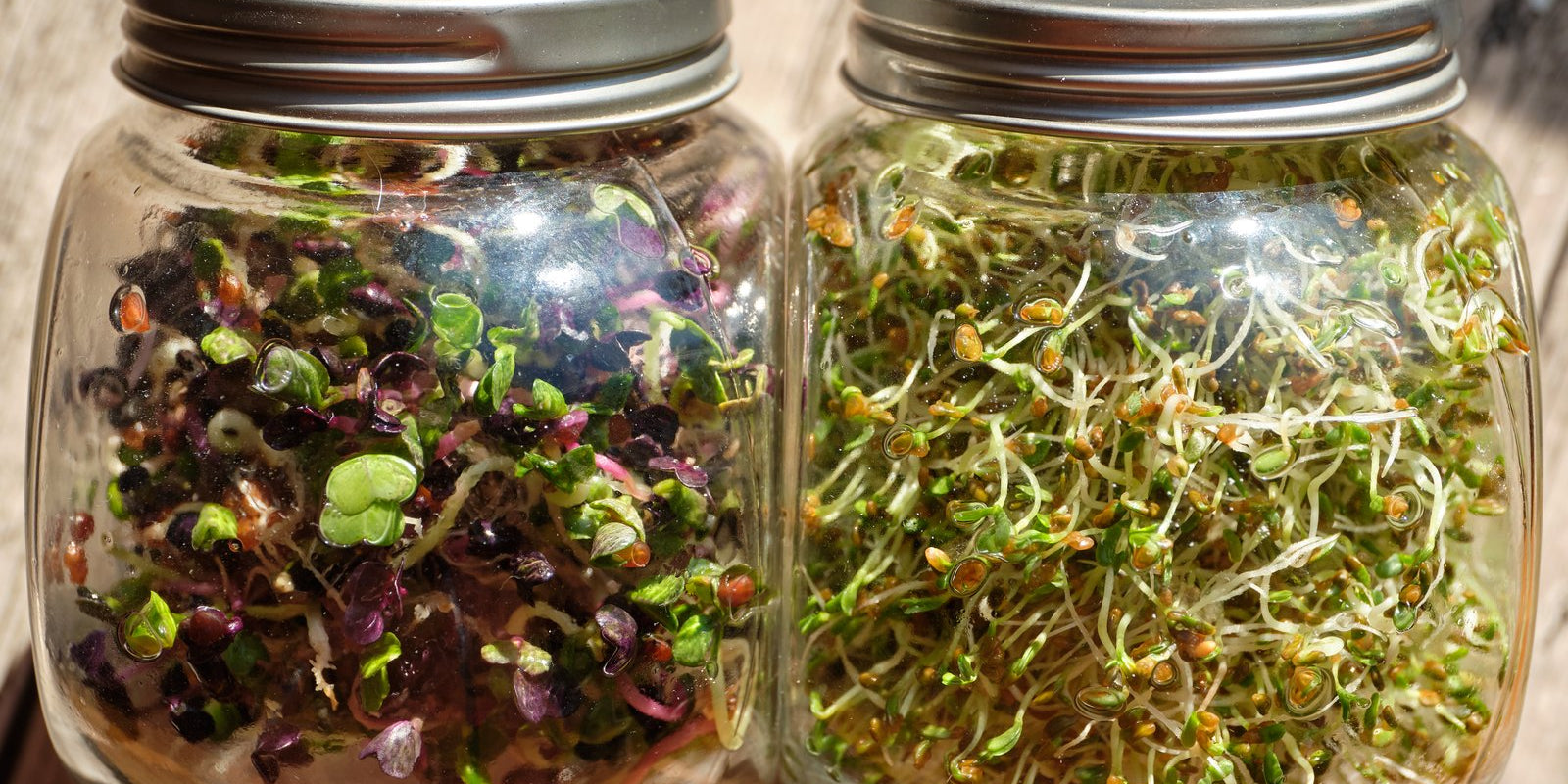
Daikon radish sprouts grow on the kitchen bench in 4 to 6 days. Soak about 20 g of seed sold for sprouting in a 1 L jar for 4 to 12 hours. Then rinse and drain two to three times a day. Green them in indirect light, rinse off the hulls, dry them and refrigerate at 5°C or colder. Anyone at higher risk eats them cooked.
| Seed | About 20 g per 1 L jar |
|---|---|
| Soak | 4 to 12 hours in cool drinking water |
| Rinse | Two to three times a day, drain hard |
| Light | Indirect light, never direct sun |
| Temperature | Best near 21°C, range 15 to 29°C |
| Harvest | 4 to 6 days |
| Yield | About 5 times the dry seed weight |
| Storage | Dried, sealed, 5°C or colder, 4 days |
| Use | Salads and sandwiches, or cooked in omelettes |
Daikon radish (Raphanus sativus), of the cabbage family Brassicaceae, is also grown as a sprout: soaked, rinsed in a jar and usually eaten raw. The sprouts carry a sharp, peppery radish bite, and a jar is usually ready 4 to 6 days after the soak begins. Poor drainage ruins more jars than anything else, because seed left in water sours.
Three mistakes that matter
- Leaving water in the jar. A puddle in the bottom turns the seed sour and slimy. After every rinse, shake the water out, then stand the jar mouth down on a tilt in a bowl.
- Overfilling the jar. Radish seed swells many times over, and a crowded jar traps water and warmth in the middle. The amounts in What you need leave a third of the jar clear for air.
- Soaking for too long. Radish seed left in water too long can ferment and spoil instead of sprouting. Drain it within the time in Soaking and Rinsing, and never soak it twice.
When to sprout
A jar can be started in any month. Radish seed sprouts best near 21°C and germinates across about 15 to 29°C. Cold slows the jar, while a room above 30°C invites souring and mould before the leaves have opened.
| Zone | Example cities | Sow | Harvest | Notes |
|---|---|---|---|---|
| Tropical | Darwin NT; Cairns, Townsville QLD; Broome WA | Jan-Dec | Year round | Warm all year, so jars run fast. Through the wet season build-up, rinse three times daily with the coldest water. |
| Subtropical | Brisbane, Gold Coast QLD; Coffs Harbour, Lismore NSW | Jan-Dec | Year round | Humid summers favour mould, so rinse three times a day and drain hard. Winter jars grow steadily on the bench. |
| Arid and semi-arid | Alice Springs NT; Broken Hill NSW; Mildura VIC; Kalgoorlie WA | Jan-Dec | Year round | Summer rooms can pass 30°C, so sprout in the coolest room. Cold winter nights slow the jar. |
| Temperate | Sydney, Newcastle NSW; Melbourne, Geelong VIC | Jan-Dec | Year round | Check the room against When to sprout. Rinse three times in heatwaves; Melbourne winters slow sprouting. |
| Mediterranean | Perth, Bunbury WA; Adelaide SA | Jan-Dec | Year round | Long, dry summers heat the house early. Keep the jar off sunny sills and rinse three times on hot days. |
| Cool and alpine | Hobart, Launceston TAS; Canberra ACT; Ballarat VIC; Armidale NSW | Jan-Dec | Year round | Cold kitchens from April to October slow the jar. Sprout in the warmest room, away from cold draughts. |
Food safety
The warm, damp jar that sprouts a seed also suits bacteria, and bacteria carried inside a contaminated seed cannot be rinsed away.
- Buy seed packed for sprouting. Seed sold for the garden may be treated with fungicide or insecticide, and which seeds to sprout covers the difference.
- Wash and rinse the jar, lid and bowl, then sanitise them before the first batch and between batches. Use a dishwasher that can sanitise, usually on its longest, hottest setting. Otherwise, soak them in very hot water (77°C for 30 seconds). Or soak them for 30 seconds in plain unscented household bleach at 25 mL to 10 L of cold water. Make it up fresh each day and use it as its label directs. Let them air-dry.
- Wash your hands before handling seed or sprouts, use only drinking water, and keep the jar clear of raw meat and pets.
- Store sprouts in a fridge running at 5°C or colder, and eat them within 4 days of harvest. When you cook sprouts for someone at higher risk, serve them straight away. Any leftovers are cooled, kept in the fridge, used within a day of cooking and reheated until steaming hot.
- Sprouts can carry harmful bacteria while looking, smelling and tasting normal, so none of those is a test of safety. Throw out any jar that smells sour or musty, feels slimy or darkens, and see sprout problems and safety for more signs.
What you need
Use a wide-mouth glass jar with a mesh lid or muslin under a rubber band, and a bowl or rack to drain it into. Add daikon radish sprouting seed, and a sprouting jar or mesh lids for mason jars if you have none.
| Jar size | Dry seed | Approximate yield |
|---|---|---|
| 500 mL | 1 level tablespoon (20 mL), about 10 g | About 50 g of sprouts |
| 1 L | 2 level tablespoons (40 mL), about 20 g | About 100 g of sprouts |
A tiered sprouting tray with a slotted base also works. Spread the soaked seed thinly on each tier and loosen it at each rinse so the roots do not mat. Rinse under the tap two to three times a day and empty the drip tray daily.
Soaking and Rinsing
In a hot kitchen, a soak of 4 to 6 hours is enough; in a cool one, soak from dinner to breakfast.
- Spoon out the seed for your jar and remove any cracked or discoloured seeds.
- Tip it into the jar, add water, swirl, and pour the water off through the lid.
- Pour in two to three times as much cool drinking water as seed, at about 21 to 27°C.
- Soak for 4 to 12 hours, out of direct sun.
- Pour off the soak water, rinse, and drain thoroughly.
- Roll the seed around the inside of the jar, then prop the jar mouth down at an angle in the bowl.

After that, rinse two to three times a day with cool drinking water and drain hard. The tilt lets water out and air in through the mesh, so the seed stays moist, never wet.
Day by day
Light matters little until the leaves open, but air does, so keep the jar on the open bench, not in a cupboard.
| Day | What to do | What to look for |
|---|---|---|
| Day 0 | Rinse the seed, then soak 4 to 12 hours | Seed swells as it takes up water |
| Day 1 | Drain hard; rinse two to three times, three in a hot kitchen | Coats crack and short white roots appear |
| Day 2 | Rinse as before; roll the seed loose after each rinse | Tails lengthen and coats loosen |
| Day 3 | Shift the jar to bright, indirect light; keep rinsing | Fuzzy roots just before a rinse; pale leaves opening |
| Day 4 to 6 | Last rinse, remove the hulls, dry and refrigerate | Most leaves open and green on white stems |
Sun through glass can cook the sprouts, so green them near a bright window, out of its direct rays.

Growing as microgreens
Scattered over damp potting mix or a growing mat in good light, the same seed gives radish microgreens. Potting mix can carry Legionella bacteria, so wet it first, wear gloves and a mask, and wash your hands afterwards. Snip above the mix with clean scissors once the first true leaves appear, usually 8 to 12 days after sowing, and compost the spent mix. The method is in how to grow microgreens.
Harvesting and Storing
Daikon sprouts are ready when most leaves have opened and turned green. The brown seed coats, called hulls, come away as the leaves open, and the sprouts keep longer without them.
- Fill a large bowl with cool drinking water and tip the sprouts in.
- Swish them gently with your fingers to loosen the tangled roots.
- Scoop off the floating hulls.
- Lift the sprouts out with a slotted spoon or freshly washed hands, leaving sunken hulls and unsprouted seeds behind.
- Do it again once or twice, until only a few hulls are left.
Dry them on a clean tea towel for 5 to 10 minutes, or in a salad spinner. Seal them, loosely packed, in a clean container and refrigerate them at once. Rinse each portion under the cold tap just before serving. The sprouts go raw into salads and sandwiches, or cooked into an omelette or stir-fry.


Common problems
White fuzz on the roots. Radish grows a thick halo of root hairs from about day 3. They show best just before a rinse and can return in the fridge. Root hairs are even, white and on the root only, and lie flat when wet. Mould can be white too, but it grows in cobwebby patches on seeds and hulls, survives a rinse and smells musty. Bin that jar.
Sour smell or slime. Either means the jar has spoiled, and rinsing will not save it. Throw it out and sanitise the jar as Food safety describes.
Seeds that do not sprout. Old seed, or seed stored warm or damp, may not wake. A cold room, or a jar kept too wet or too dry, slows it too. Try fresh seed kept cool and dry, in a room near 21°C.
A clump of knotted roots. Radish roots mat together when the seed settles in one mass, and the clump keeps poorly. At rinse time, fill the jar, take off the lid and ease the clump apart with a clean fork.
Tough or bitter sprouts. Too much light while they grow, or a jar left too long before harvest, makes them chewy and bitter. Keep the jar out of bright light until day 3 and harvest while the stems are crisp.
Tips
- For a steady supply, start a fresh jar each time one moves into the light.
- Keep dry seed sealed in a cool, dry cupboard, or in the fridge to hold its germination longer.
- For daikon roots grown in the garden, see how to grow radishes.
Questions
Is the white fuzz on my radish sprouts mould?
Usually not. Look at the jar just before a rinse and again straight after. Root hairs flatten against the root when wet and reappear as the jar dries. Mould does not flatten, and it grows on seeds and hulls rather than along the root. Common problems says when to throw the jar out.
How long do daikon sprouts keep in the fridge?
Up to about 4 days, in a fridge at 5°C or colder. They keep best when the hulls are rinsed off and the surface is dried before they go in. Root hairs may reappear in storage, which is normal, but sprouts that smell sour or feel slimy are thrown out.
Can I sprout daikon seed from a garden seed packet?
It is safer not to. Seed sold for the garden is not packed as food, and some is coated with fungicide or insecticide. Use daikon seed sold for sprouting, which is untreated and meant to be eaten.
Why are my radish sprouts so hot?
A sharp, peppery bite is the nature of radish sprouts. Cooking them through in a stir-fry or an omelette softens the heat. Sprouts that are tough or bitter as well as hot may have had too much light or too long in the jar.
Do daikon sprouts need light to grow?
Not for the first few days. Room light or a dim corner is enough while the roots form, as long as air reaches the jar. From day 3, as the leaves begin to open, bright, indirect light turns them green before harvest.
Grow it


More sprout guides
All sprouts
Alfalfa Sprouts
Grow alfalfa sprouts in a jar in Australia: how much seed, soaking, rinsing, greening, floating off hulls, storing, food safety, and root hairs versus mould.
| Position | Indirect light, never direct sun |
|---|---|
| First pick | Days 5 to 8 |
Barley Grass
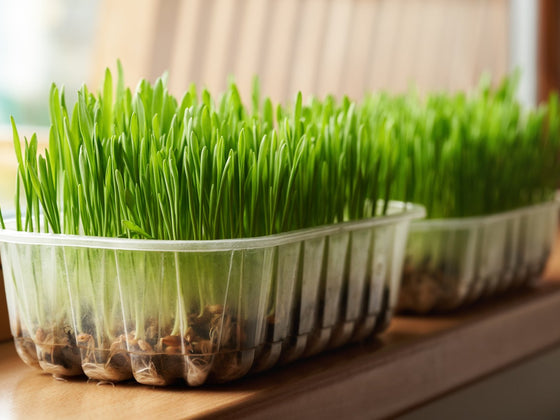
Grow barley grass on a tray in Australia: soaking, sowing, watering from below, when to cut, storing, food safety, and how it differs from wheatgrass.
| Position | Bright indirect light |
|---|---|
| First pick | 6 to 10 days |

Black Sunflower Shoots
Grow black sunflower shoots on a tray in Australia: soaking, sowing under a weight, light, watering, knocking off the shells, cutting, storing and food safety.
| Position | Bright, indirect light |
|---|---|
| First pick | 8 to 14 days |
Blue Pea Sprouts
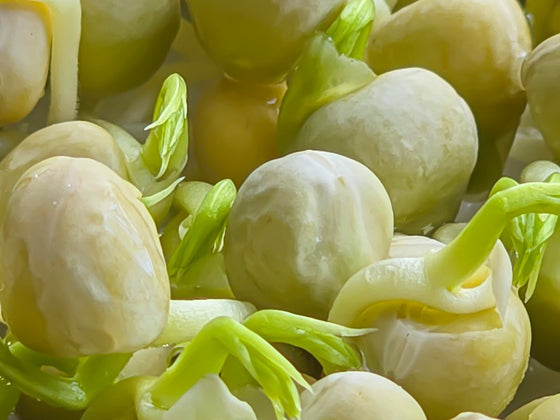
Grow firm, crunchy blue pea sprouts in a jar in Australia: how many peas to use, soaking, rinsing, when to harvest, storing, food safety and common problems.
| Position | Low light, out of sun |
|---|---|
| First pick | 2 to 4 days |