
How to Grow Grey Sunflower Shoots in Australia
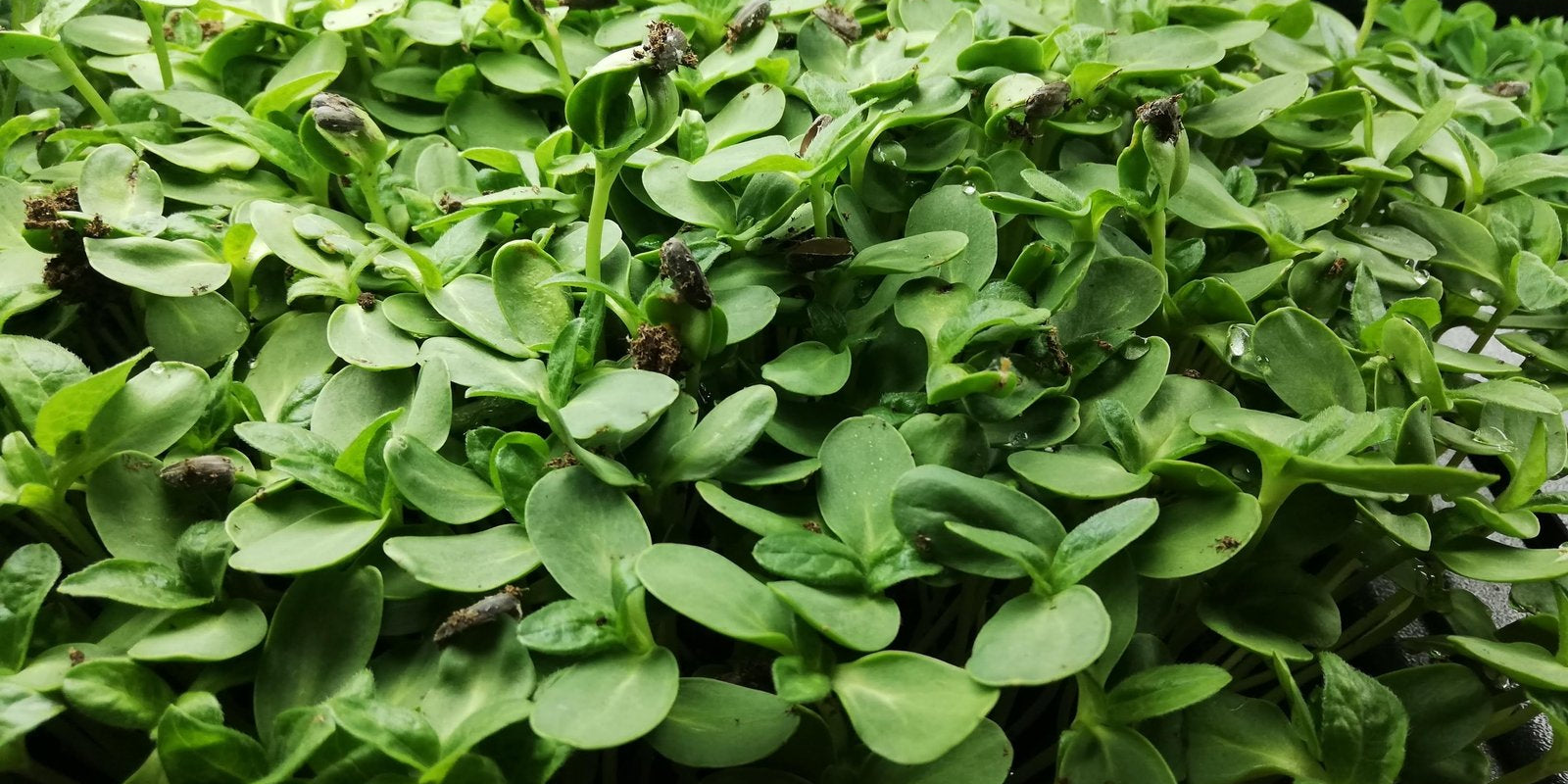
Grey sunflower shoots grow on a kitchen bench in any month. Soak whole seed sold for sprouting for 8 to 12 hours, held under water, then rinse until root tips show. Sow one layer on damp mix, cover and weight it for 3 to 4 days, then give it bright light and water from below. Cut at 8 to 15 cm, usually 8 to 14 days from the soak.
| Seed | 50 to 60 g, 25 cm square tray |
|---|---|
| Soak | 8 to 12 hours, held under water |
| Rinse | Every 8 to 12 hours until roots show |
| Light | Dark first, then bright |
| Temperature | About 18 to 24°C |
| Harvest | 8 to 14 days |
| Yield | Roughly five times the dry seed weight |
| Storage | Dry, sealed, 5°C or colder, 5 to 6 days |
| Use | Commonly raw in salads and sandwiches, or cooked |
Grey sunflower (Helianthus annuus, family Asteraceae) is the big, grey striped seed. It is grown on a tray of mix and cut as a shoot, usually eaten raw, 8 to 14 days from the soak. The shoots have a juicy, nutty crunch, and the thick-shelled seed needs a full soak before sowing.
Three mistakes that matter
- A half-done soak. Sunflower seed floats and soaks unevenly, and the thick grey shell slows it further. Hold every seed under for the full soak, and sow only once root tips show.
- Seed piled on seed. Heaped seed traps water and still air at the base, where rot and mould begin. Grey seed is roughly twice the size of black oil seed, so weigh it and spread one layer.
- Cutting too late. Once true leaves appear (the second pair, from between the first two), the shoots turn bitter. Cut while only the first pair is open.
When to sprout
Sunflower shoots grow indoors, so any month suits them. Aim for about 18 to 24°C. Warmer air dries the mix faster and, with poor airflow, invites mould. A cold room slows germination and delays the cut.
| Zone | Example cities | Sow | Harvest | Notes |
|---|---|---|---|---|
| Tropical | Darwin NT; Cairns, Townsville QLD; Broome WA | Jan-Dec | Year round | Wet season humidity, about November to April, favours mould under the cover. Sow a lighter layer and run a fan. |
| Subtropical | Brisbane, Gold Coast QLD; Coffs Harbour, Lismore NSW | Jan-Dec | Year round | Muggy summers slow drying: check daily, watering from below as the surface starts to dry. Winters suit trays well. |
| Arid and semi-arid | Alice Springs NT; Broken Hill NSW; Mildura VIC; Kalgoorlie WA | Jan-Dec | Year round | Dry summer heat empties a shallow tray fast; check it morning and evening. Cold winter nights slow germination. |
| Temperate | Sydney, Newcastle NSW; Melbourne, Geelong VIC | Jan-Dec | Year round | Indoor warmth suits shoots for much of the year. A cold Melbourne winter can add days before cutting. |
| Mediterranean | Perth, Bunbury WA; Adelaide SA | Jan-Dec | Year round | Long, dry summers pull moisture from a tray on a sunny sill; shade it at midday. Damp winters need airflow. |
| Cool and alpine | Hobart, Launceston TAS; Canberra ACT; Ballarat VIC; Armidale NSW | Jan-Dec | Year round | Cold kitchens from April to October slow the soak and the tray. Keep both in the warmest room. |
Food safety
The warm, damp tray that sprouts the seed also suits bacteria, and bacteria carried inside a contaminated seed cannot be washed out.
- Use seed sold for sprouting: sowing seed can be treated with fungicide or insecticide, and bird seed is not food. See which seeds to sprout.
- Wash your hands first. Wash and rinse the tray, jar and tools, then sanitise them before the first batch and between batches. Use a dishwasher that can sanitise, usually its longest, hottest setting. Otherwise, soak them in very hot water (77°C for 30 seconds). Or use plain unscented household bleach at 25 mL to 10 L of cold water for 30 seconds, made up fresh each day. Let them air-dry.
- Soak and rinse the seed only in water fit to drink.
- Potting mix can carry Legionella bacteria. Follow the bag's warning: wet the mix down, wear gloves and a P2 mask, and wash your hands afterwards.
- Keep trays and shoots away from raw meat, poultry and seafood, and store shoots above them in a fridge at 5°C or colder. Cooked shoots for anyone at higher risk are eaten straight away. Leftovers are cooled, kept in the fridge, used within a day of cooking and reheated until steaming hot.
- Mould, slimy brown patches or a sour smell end a tray: compost it and wash the tray. Shoots can carry harmful bacteria while looking, smelling and tasting normal, so none of those is a test of safety. More in sprout problems and safety.
What you need
Grow in a shallow tray with drainage holes, sitting in a solid tray that catches water. An upturned tray with a few air holes is the cover, weighted with a jug of water. Add 2 to 4 cm of seed raising mix or coir, a spray bottle, scissors and untreated grey sunflower seed. For the soak and rinses, use a sprouting jar, a jar with a mesh lid, or a colander over a bowl.
| Tray | Dry seed | Approximate yield |
|---|---|---|
| About 13 x 13 cm | About 15 g | About 75 g of cut shoots |
| About 25 x 25 cm | About 50 to 60 g | About 250 to 300 g of cut shoots |
| About 25 x 50 cm | About 100 to 120 g | About 500 to 600 g of cut shoots |
Grey striped seed grows taller shoots than black oil seed. This packet is whole seed in the shell. Raw shelled kernels sold for sprouting are a jar crop instead. Soak them 30 minutes to 2 hours, then rinse and drain every 8 to 12 hours. Use them within a day or two, before a root shows. Snack kernels will not do.
Soaking and Sowing
Start the soak in the evening; the seed is usually ready to sow a day or two later.
- Weigh the seed for your tray and rinse it.
- Cover it with cool drinking water and hold the floating seed under with a mesh lid or plate. Soak for 8 to 12 hours.
- Drain, rinse and drain again, and never soak it a second time. Leave the jar upside down over a bowl, or the colander on one, to drain with air.
- Rinse and drain every 8 to 12 hours, usually two or three times, until most seeds show a root tip 3 to 6 mm long.
- Wet the mix through and let it drain. Spread the seed in one layer, seeds touching, and press it lightly in.
- Mist, put the cover on with the weight on top, and leave the tray in the dark for 3 to 4 days.

Under the cover, mist once or twice a day until the roots grip, then water the mix instead. The weight keeps seed pressed to the mix and helps shoots slip their shells.
Day by day
| Day | What to do | What to look for |
|---|---|---|
| Day 0, evening | Soak 8 to 12 hours, seed held under water | Seeds take up water and swell |
| Day 1 to 2 | Rinse and drain every 8 to 12 hours, then sow | Root tips 3 to 6 mm on most seeds |
| Day 2 to 5 | Keep covered, weighted and dark; mist once or twice a day | Roots grip the mix; pale stems lift the cover |
| Day 4 to 6 | Uncover and move into bright light | Pale yellow shoots about 2.5 cm tall start to green |
| Day 6 to 12 | Check daily; water from below as the surface starts to dry; brush off loose shells | Upright stems and opening seed leaves |
| Day 8 to 14 | Cut just above the mix | Shoots 8 to 15 cm, first pair of leaves open, no true leaves |
To water from below, fill the solid tray, wait until the mix surface looks damp, then tip out the rest. A bright window suits the shoots; direct sun dries the tray faster. A fan on low or an open window keeps humid air moving.

Cutting and Storing
Shoots are ready when the first pair of leaves has opened, most shells have dropped and stems stand 8 to 15 cm. Grey shells take more clearing than black oil shells, so clear them first.
- Tilt the tray and brush a hand across the tops to knock off loose shells.
- Mist stubborn shells to soften them, then lift them off gently. Peel any that still grip after cutting, or discard that shoot.
- Cut with clean scissors just above the mix, so no roots, spent seed or mix reach the bowl.
- Pick out stray shells among the cut shoots.

For shoots to store, water only the mix for the last 8 to 12 hours, so the leaves are dry. Seal them in a clean container and refrigerate them as Food safety describes; they generally keep 5 to 6 days. Rinse them under cool running water just before use. They commonly go raw into salads, sandwiches and wraps; for anyone Food safety names, stir them through soup or a stir-fry until steaming hot.

Common problems
White fuzz on the roots. Root hairs are an even, bright white fuzz on the roots only, often during the dark days, and they collapse when misted. Mould can be white too, but it spreads unevenly over mix, seeds and stems like cobweb or cotton, stays when wet and smells musty. A mouldy tray ends as Food safety describes.
Brown, rotting patches at the base. Shoots collapsing at mix level lacked air. Compost the tray and sow a lighter layer, with more airflow in a humid Queensland summer.
Sour smell or slime before sowing. Seed left in undrained water ferments, fastest in a warm kitchen. Tip the jar right over after each rinse, and bin sour or slimy seed.
Patchy germination. Seed that dried out under the cover, or old seed, leaves gaps. Mist until the roots take hold, and store dry seed as Tips describes.
Wilting. The mix has dried out. Water from below, and check twice a day in hot weather.
Tips
- Start a small tray every few days for a steady supply.
- Treat each tray as a single cut. Regrowth is thinner and prone to fungus, so compost the roots and spent mix and resow in fresh mix.
- Store dry seed sealed in a cool, dark, dry place, where it can keep about two years.
Questions
Can I eat the shells on sunflower shoots?
No. The shells are tough and unpleasant to eat. Brush the loose ones off the tray before cutting, peel any that cling, and pick out stragglers from the cut shoots. A weight on the cover during the dark days helps the shoots push free of their shells.
Is the white fuzz on my sunflower shoot roots mould?
Usually not. Root hairs are an even, bright white fuzz on the roots only, and they collapse when misted. Mould spreads unevenly over mix, seeds and stems, stays when wet and smells musty. A mouldy tray goes in the compost, and the tray is washed before the next sowing.
Can I grow shoots from supermarket or bird seed sunflower seeds?
It is safer not to. Shelled snack kernels are often roasted or salted and are not meant for sprouting, and bird seed is not sold as food. Use whole, untreated seed sold for sprouting.
Why are my sunflower shoots bitter?
Usually because they were cut too late. Once true leaves appear between the first pair, sunflower shoots turn bitter. Cut when the first pair of leaves is open and before anything grows from between them.
How long do sunflower shoots keep in the fridge?
About 5 to 6 days. Water only the mix for the last 8 to 12 hours so the leaves are dry. Seal the shoots in a clean container and keep the fridge at 5°C or colder. Rinse them just before use.
Is grey or black sunflower seed better for shoots?
Both grow good shoots. Grey striped seed is larger and grows taller, more substantial shoots, but its tougher shell needs a thorough soak and takes more work to clear. Black oil seed is smaller, with a thinner shell that comes away more easily.
Grow it


More sprouts to sow in September
All sprouts
Alfalfa Sprouts
Grow alfalfa sprouts in a jar in Australia: how much seed, soaking, rinsing, greening, floating off hulls, storing, food safety, and root hairs versus mould.
| Position | Indirect light, never direct sun |
|---|---|
| First pick | Days 5 to 8 |
Barley Grass
Grow barley grass on a tray in Australia: soaking, sowing, watering from below, when to cut, storing, food safety, and how it differs from wheatgrass.
| Position | Bright indirect light |
|---|---|
| First pick | 6 to 10 days |

Black Sunflower Shoots
Grow black sunflower shoots on a tray in Australia: soaking, sowing under a weight, light, watering, knocking off the shells, cutting, storing and food safety.
| Position | Bright, indirect light |
|---|---|
| First pick | 8 to 14 days |
Blue Pea Sprouts
Grow firm, crunchy blue pea sprouts in a jar in Australia: how many peas to use, soaking, rinsing, when to harvest, storing, food safety and common problems.
| Position | Low light, out of sun |
|---|---|
| First pick | 2 to 4 days |