
How to Grow Fenugreek Sprouts in Australia
Fenugreek sprouts are ready 2 to 6 days after the soak starts, best while the tails are short. Soak 2 tablespoons (about 28 g) of seed sold for sprouting in a 1 L jar for 6 to 10 hours. Rinse and drain two to three times a day, out of direct sun. Dry, seal and refrigerate at 5°C or colder. People at higher risk eat them cooked.

| Seed | 2 tablespoons, about 28 g, per 1 L jar |
|---|---|
| Soak | 6 to 10 hours in cool drinking water |
| Rinse | Two to three times a day, drain hard |
| Light | Dark or shade, never sun |
| Temperature | Best at 18 to 25°C, below 30°C |
| Harvest | Days 2 to 6 |
| Yield | About 2.5 to 5 times the dry weight |
| Storage | Dried, sealed, 5°C or colder, 3 to 5 days |
| Use | Salads and sandwiches, or cooked through curries |
Fenugreek (Trigonella foenum-graecum) is a curry spice from the pea family, Fabaceae, and its golden seed is sprouted in a jar and usually eaten raw. The sprouts are crunchy, aromatic and gently bitter, and ready 2 to 6 days from the start of the soak. The one thing to watch is harvest time, because left too long they can turn bitter.
Three mistakes that matter
- Growing them too long. Fenugreek left too long in the jar can turn bitter and chewy. Harvest while the tails are short, and at the latest when the first leaves appear.
- Leaving the jar wet. Water pooled around the seed lets bacteria breed and can turn the jar sour. Shake out the last drops after every rinse and prop the jar mouth down at an angle.
- Crowding the jar. Swollen seed packed too tightly stays damp and airless in the middle, where spoilage starts. Keep to the amounts in What you need, and leave at least a third of the jar empty.
When to sprout
Fenugreek sprouts on the kitchen bench in any month. The seed germinates best at 18 to 25°C, and near 21°C is ideal. A colder room slows the tails down, while a jar kept above 30°C can sour or grow mould.
| Zone | Example cities | Sow | Harvest | Notes |
|---|---|---|---|---|
| Tropical | Darwin NT; Cairns, Townsville QLD; Broome WA | Jan-Dec | Year round | Wet season heat and humidity speed the jar: rinse every 8 hours in the coldest water and check tails daily. |
| Subtropical | Brisbane, Sunshine Coast QLD; Coffs Harbour, Lismore NSW | Jan-Dec | Year round | Summer humidity lingers in a jar, so shake out every drop. Mild, dry winters sit close to the ideal range. |
| Arid and semi-arid | Alice Springs NT; Dubbo NSW; Mildura VIC; Kalgoorlie WA | Jan-Dec | Year round | Dry summer air suits drainage but heat does not. On frosty winter nights, bring the jar into a heated room. |
| Temperate | Sydney, Wollongong NSW; Melbourne, Geelong VIC | Jan-Dec | Year round | Spring and autumn kitchens usually suit the jar; check the room against When to sprout. Melbourne winters slow the tails. |
| Mediterranean | Perth, Bunbury WA; Adelaide SA | Jan-Dec | Year round | Summer heat arrives early and dry: keep the jar off sunny sills and well away from the oven. |
| Cool and alpine | Hobart, Launceston TAS; Canberra ACT; Ballarat VIC; Orange NSW | Jan-Dec | Year round | Frost months, about April to October, chill benches. Sprout in the warmest room, away from draughty windows. |
Heat is the summer risk, because a warm jar sours faster. In a Darwin build-up or an Adelaide heatwave, sprout in the coolest room in the house, or an air-conditioned one.
Food safety
The warm, damp jar that grows a sprout also suits bacteria, and bacteria carried inside a contaminated seed cannot be rinsed away.
- Use seed sold for sprouting. Garden seed can be treated with fungicide or insecticide, and which seeds to sprout explains the difference.
- Wash and rinse the jar, lid and tools, then sanitise them before the first batch and between batches. Use a dishwasher that can sanitise, usually on its longest, hottest setting. Otherwise, soak them in very hot water (77°C for 30 seconds). Or soak them for 30 seconds in plain unscented household bleach at 25 mL to 10 L of cold water. Make the bleach up fresh each day, use it as its label directs, and never mix it with vinegar. Let everything air-dry.
- Wash your hands before handling seed or sprouts. Soak and rinse only in water fit to drink, and keep the jar away from raw meat, pets and the chopping board.
- Keep the fridge at 5°C or colder, and keep harvested sprouts no more than 3 to 5 days. Sprouts cooked for anyone at higher risk are eaten straight away. Leftovers are cooled, kept in the fridge, used within a day of cooking and reheated until steaming hot.
- Harmful bacteria can be present while sprouts look, smell and taste normal, so none of those is a test of safety.
- Throw out any jar that smells sour or musty, stays slimy after a rinse or darkens. More warning signs are in sprout problems and safety.
What you need
A wide-mouth glass jar does the job, topped with a mesh sprouting lid or a square of muslin held by a rubber band. A bowl or dish rack holds it mouth down to drain. Start with fenugreek sprouting seed, plus a sprouting jar or mesh lids for mason jars if you need them.
| Vessel | Dry seed | Approximate yield |
|---|---|---|
| 500 mL jar | 1 tablespoon, about 14 g | About 35 to 70 g of sprouts |
| 1 L jar | 2 tablespoons, about 28 g | About 70 to 140 g of sprouts |
The tablespoons are 20 mL Australian spoons. A 100 g pack holds enough for about seven 500 mL jars. For the general routine shared by most seeds, see how to grow sprouts in a jar.
Soaking and Rinsing
Start the soak in the evening and the first rinse falls at breakfast.
- Measure the seed. If you choose to treat it, soak it in undiluted plain vinegar for 15 minutes, then rinse it under the tap for 1 minute. This lowers the risk but does not remove it.
- Tip the seed into the jar, cover it with water and skim off any floating seed, broken coats and debris. Pour that water away.
- Add two to three times the seed's volume of cool drinking water, about 16 to 21°C. Soak for 6 to 10 hours, out of the sun.
- Drain, rinse once more and drain hard. Seed left soaking much longer can ferment and spoil.
- Roll the seed along the glass so it spreads out, then prop the jar mouth down at an angle in the bowl.

From then on, rinse two to three times a day, roughly every 8 to 12 hours. Fill the jar with cool drinking water, swirl it, pour it out and drain hard. The seed is never soaked again. Tipping the jar lets the water run out and draws fresh air in through the mesh.
Day by day
Good drainage and moving air decide the jar. Fenugreek needs no light to sprout, so a dark cupboard or a shaded bench suits it, never direct sun.
| Day | What to do | What to look for |
|---|---|---|
| Day 0, soak starts | Skim, then soak 6 to 10 hours; drain hard | Seed swells and softens |
| Day 1 | Rinse and drain two to three times | White root tips on many seeds |
| Day 2 to 3 | Keep rinsing; loosen any clump with a clean fork | Short white tails on most seeds |
| Day 3 to 4 | Harvest while most tails are still short | Longer tails, fine root hairs before a rinse |
| Day 4 to 6 | Harvest at the latest now | First tiny leaves open; bitterness builds |

Harvesting and Storing
Fenugreek sprouts are ready when most seeds carry a short white tail and before the first leaves open. Give them a final rinse in cool drinking water and pick out any seeds that did not sprout. Dry the surface on clean kitchen paper or in a salad spinner. Pack them loosely into a clean, sealed container, refrigerate them at once, and rinse each serve under running water just before use.
Fenugreek sprouts usually go raw into salads and sandwiches, or are cooked through a curry or stir-fry. For anyone named in Food safety, they are cooked until steaming hot. Fenugreek can cause allergic reactions, some of them serious, and people allergic to peanut can react to it. Reactions to both fenugreek and chickpea have also been reported, so anyone with a legume allergy checks with their doctor first.


Common problems
White fuzz on the tails. Root hairs form an even white fuzz along the tail only, and they collapse when rinsed. Mould can be white too, but it grows in cobwebby patches on seeds and empty coats, survives a rinse and smells musty. A mouldy jar goes in the bin.
Sour smell or slime. Soaked fenugreek seed wears a natural slippery gel (mucilage), so give it a long rinse. Slime that stays after a hard rinse, or comes with a sour or musty smell, means the jar has spoiled. Throw it out, sanitise everything as Food safety describes, and restart with the draining in Three mistakes that matter.
Seeds that do not sprout. A few come out at harvest, as Harvesting and Storing describes. Many at once point to old seed, seed stored warm or damp, an overfilled jar, or a jar kept too wet or too dry.
Bitter even with short tails. Too much light makes fenugreek bitter, while sprouts grown in the dark are sweeter. Move the jar to a dark cupboard or a shaded corner, and harvest a little sooner next time.
Tips
- Start a small jar every few days rather than one big batch, for a steady supply of fresh sprouts.
- Write the soak start time on a strip of tape on the jar, so the day count stays clear.
- Store dry seed sealed in a cool, dark, dry cupboard, where it can keep for several years.
- For a milder, leafier sprout on the same routine, try alfalfa sprouts or broccoli sprouts.
Questions
Can I sprout fenugreek seeds from the spice aisle?
It is safer not to. Food safety advice is to buy seed sold expressly for sprouting, and that is the seed to use. Garden seed can also be treated with fungicide or insecticide.
Why do my fenugreek sprouts smell like maple syrup?
That sweet, maple-like scent belongs to the seed itself, and it often grows stronger as the seed sprouts. It is a different thing from a sour or musty smell, which means the jar has spoiled and goes in the bin.
Are home-grown fenugreek sprouts safer than shop-bought ones?
Not necessarily. Most sprout outbreaks start with contaminated seed, and even very clean home conditions cannot make sprouts bacteria free. A clear test result on a seed lot is not proof it is clean either. Anyone in a higher risk group eats them cooked.
Are fenugreek sprouts the same as methi leaves?
No. Methi is another name for fenugreek, and methi leaves are the young plant grown in soil and cut as a herb. Fenugreek sprouts are the germinated seed with its short white tail, grown in a jar in a few days and eaten seed and all.
Grow it


More sprout guides
All sprouts
Alfalfa Sprouts
Grow alfalfa sprouts in a jar in Australia: how much seed, soaking, rinsing, greening, floating off hulls, storing, food safety, and root hairs versus mould.
| Position | Indirect light, never direct sun |
|---|---|
| First pick | Days 5 to 8 |
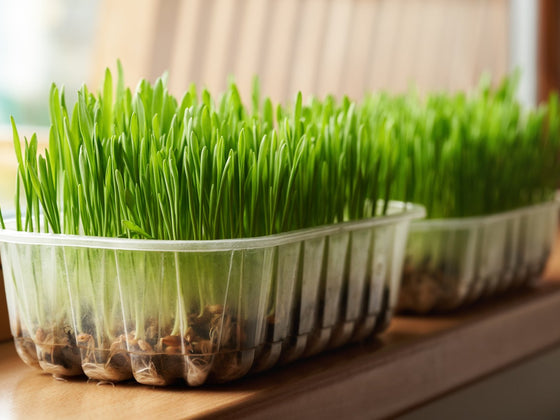
Barley Grass
Grow barley grass on a tray in Australia: soaking, sowing, watering from below, when to cut, storing, food safety, and how it differs from wheatgrass.
| Position | Bright indirect light |
|---|---|
| First pick | 6 to 10 days |

Black Sunflower Shoots
Grow black sunflower shoots on a tray in Australia: soaking, sowing under a weight, light, watering, knocking off the shells, cutting, storing and food safety.
| Position | Bright, indirect light |
|---|---|
| First pick | 8 to 14 days |

Broccoli Sprouts
Grow broccoli sprouts in a jar in Australia: seed amounts, soaking, rinsing, greening, drying, storage, food safety, and how to tell root hairs from mould.
| Position | Indirect light, never direct sun |
|---|---|
| First pick | 4 to 6 days |