
How to Grow Pea Shoots in Australia
Pea shoots grow on a kitchen bench in any month. Soak 'Kaspa' pea seed sold for sprouting for 6 to 12 hours in cool water. Rinse every 8 to 12 hours until root tips show. Sow one layer on damp mix, cover, weight and keep it dark for 2 to 4 days. Then give bright light and water from below, and cut at 8 to 15 cm.

| Seed | About 60 g, 25 cm square tray |
|---|---|
| Soak | 6 to 12 hours in cool water |
| Rinse | Every 8 to 12 hours until roots show |
| Light | Dark, then bright indirect |
| Temperature | About 15 to 25°C |
| Harvest | 10 to 16 days |
| Yield | Roughly twice the dry seed weight |
| Storage | Dry, sealed, 5°C or colder, 5 to 6 days |
| Use | Commonly raw in salads, or stir-fried |
Pea shoots are the young stems and tendrils of the field pea (Pisum sativum, family Fabaceae), grown on a tray and commonly eaten raw. This seed is 'Kaspa', a dun field pea, not a snow pea. The shoots taste of fresh garden peas and are usually ready 10 to 16 days from the soak; an overlong soak can rot them first.
Three mistakes that matter
- Soaking too long. Soaks much past 12 hours, especially in warm water, raise the risk of the seed rotting instead of sprouting. Soak 6 to 12 hours in cool water, then drain it well.
- Heaping the seed. Seed piled two deep holds water between the layers, where mould starts. Weigh the dry seed for your tray and spread one layer only.
- Cutting too late. Left to grow on, pea shoots turn fibrous and chewy. Cut them at the stage Cutting and Storing describes.
When to sprout
Pea shoots grow indoors in any month, best at about 15 to 25°C. Warmer rooms push up water use and trap humidity in the dense tray. Above about 25°C, soak and grow in the coolest room, away from the stove and sunny sills. Below 15°C, the pre-sprout and the tray both slow down.
| Zone | Example cities | Sow | Harvest | Notes |
|---|---|---|---|---|
| Tropical | Darwin NT; Cairns, Townsville QLD; Broome WA | Jan-Dec | Year round | Wet season heat and humidity, about November to April, push kitchens past the pea's range. Soak cool; run a fan. |
| Subtropical | Brisbane, Gold Coast, Bundaberg QLD; Coffs Harbour, Lismore NSW | Jan-Dec | Year round | Humid summers keep a covered tray wet, so mist only when the surface is dry. Winters suit peas. |
| Arid and semi-arid | Alice Springs NT; Broken Hill, Dubbo NSW; Mildura VIC; Kalgoorlie WA | Jan-Dec | Year round | Dry heat drains a tray fast; check it morning and evening. Cold winter nights slow the pre-sprout. |
| Temperate | Sydney, Newcastle, Wollongong NSW; Melbourne, Geelong VIC | Jan-Dec | Year round | Spring and autumn kitchens often sit within the pea's range. In a Sydney summer, keep air moving around the tray. |
| Mediterranean | Perth, Bunbury WA; Adelaide SA | Jan-Dec | Year round | Hot, dry summers pull water from the mix; keep trays off sunny sills. Mild, wet winters suit them. |
| Cool and alpine | Hobart, Launceston TAS; Canberra ACT; Ballarat VIC; Armidale NSW | Jan-Dec | Year round | Frost from about April to October means cold kitchens and slow trays. Soak and grow in the warmest room. |
Food safety
The warm, damp tray that grows the seed also suits bacteria, and bacteria carried inside a contaminated seed cannot be washed out.
- Use seed sold for sprouting. Sowing seed can be treated with fungicide or insecticide, and flowering sweet pea (Lathyrus odoratus) seed is toxic, not food. See which seeds to sprout.
- Wash your hands first. Wash and rinse the tray, jar and tools, then sanitise them before the first batch and between batches. Use a dishwasher that can sanitise, usually on its longest, hottest setting. Otherwise, soak them in very hot water (77°C for 30 seconds). Or soak them for 30 seconds in plain unscented household bleach at 25 mL to 10 L of cold water. Make the bleach up fresh each day and use it as its label directs. Let them air-dry.
- Soak, rinse, mist and water only with water fit to drink.
- Potting mix can carry Legionella bacteria. Follow the bag's warning: wet the mix down, wear gloves and a P2 mask, and wash your hands afterwards.
- Store cut shoots in a fridge at 5°C or colder, away from raw meat and poultry. Cooked shoots for anyone at higher risk are eaten straight away. Leftovers are cooled, kept in the fridge, used within a day of cooking and reheated until steaming hot.
- Mould, slime or a sour smell ends a batch: compost it and wash the tray. Shoots can carry harmful bacteria while looking, smelling and tasting normal, so none of those is a test of safety. More in sprout problems and safety.
What you need
Grow in a shallow tray with drainage holes, set inside a solid tray that holds water. A second tray of the same size rests directly on the seed as the cover. On top goes about 1 to 2 kg, such as a jug of water. Add 2 to 3 cm of seed raising mix or coir, a spray bottle, clean scissors and untreated 'Kaspa' pea seed. Soak and pre-sprout in a sprouting jar, a jar with a mesh lid, or a colander over a bowl.
| Tray | Dry seed | Approximate yield |
|---|---|---|
| About 15 x 20 cm | About 30 g | About 50 to 60 g of cut shoots |
| About 25 x 25 cm | About 60 g | About 100 to 120 g of cut shoots |
| About 30 x 35 cm | About 100 g | About 170 to 200 g of cut shoots |
Soaking and Sowing
Start the soak in the evening; the seed usually shows roots a day or two later.
- Weigh the seed for your tray, rinse it, and tip it into a bowl or jar with room to swell.
- Cover it with about four times its volume of cool drinking water. Soak 6 to 12 hours, usually overnight.
- Drain, rinse and drain again. Leave the jar upside down on an angle, or the colander over a bowl, so water runs off and air reaches the seed.
- Rinse and drain every 8 to 12 hours until most seeds show a short white root tip.
- Wet the mix through and let it drain. Spread the seed one layer deep, seeds touching, and press it lightly in.
- Mist, set the cover tray directly on the seed with the weight on top, and leave the tray somewhere dark.

Drain completely after every rinse, because seed left sitting in water ferments and spoils. Due to quarantine restrictions and our shipping policy, we cannot send 'Kaspa' pea seed to Tasmania.
Thick pea roots tend to push the seed upward, and pressure keeps them growing down into the mix. Once the roots grip, lift off the weight and turn the cover tray upside down, so it shades the shoots without touching them. A wet, covered tray can go mouldy, so in a hot, humid kitchen mist less and air the tray daily.
Day by day
Green pea shoots drink hard, yet a tray left standing in water rots from the base.
| Day | What to do | What to look for |
|---|---|---|
| Day 0, evening | Soak 6 to 12 hours in cool drinking water | Seeds swell to nearly twice their size |
| Day 1 to 2 | Rinse and drain every 8 to 12 hours, then sow | A short white root tip on most seeds |
| Day 1 to 6 | Keep dark for 2 to 4 days: cover and weight on the seed for the first half, then the cover upturned; mist only if the surface looks dry | Roots grip the mix; pale shoots 2.5 to 5 cm lift the cover |
| Day 3 to 6 | Uncover and move to bright, indirect light with moving air | Pale shoots turn green within a day or two |
| Day 4 to 16 | Check daily; water from below when the mix surface starts to dry | Stems thicken and tendrils begin to form |
| Day 10 to 16 | Cut above the lowest leaf or two | Shoots 8 to 15 cm, first tendrils curling, stems still tender |
To water from below, pour water into the solid tray and let the mix drink. Tip out whatever is left after an hour. A fan on low keeps air moving through the dense stems.

Cutting and Storing
Pea shoots are ready at 8 to 15 cm, when the first tendrils curl at the tips. As a semi-leafless field pea, 'Kaspa' is bred with tendrils in place of most leaflets, so expect more curl than leaf. Cut with clean scissors about 2.5 cm above the mix, above the lowest leaf or two, so no roots, seed or mix reach the bowl.

Keep the cut tray watered in bright light, and a second, smaller cut often follows about a week later. Some stems will not regrow, and the regrowth is usually tougher and suits cooking. After that, compost the roots and spent mix, then wash and sanitise the tray.
Cut shoots for storing while the leaves are dry, and leave them unwashed. Seal them in a clean container and refrigerate them as Food safety describes; they generally keep 5 to 6 days. Rinse them under cool running water just before use. They are commonly eaten raw in salads, sandwiches and wraps; for anyone Food safety names, toss them through a stir-fry or soup until steaming hot.

Common problems
White fuzz at the base. Root hairs are a fine, even fuzz on the roots only, and they vanish when misted. Mould spreads over stems, seeds and mix like cobweb, stays after misting and smells musty. A mouldy tray ends as Food safety describes.
Mushy seed or a sour, rotten smell. The seed is rotting: throw it out. Check the soak in Three mistakes that matter, and the watering in Day by day.
Seeds lifted out of the mix. The weight was too light or came off early. Press the seeds back, mist to settle the mix, and add weight next time.
Slow or patchy sprouting. Old seed, a skipped soak or a room below about 15°C can each leave gaps. Start with fresh seed and the full soak.
Tips
- Sow a new tray every couple of weeks for a steady supply.
- Cut in the morning, when shoots are crisp, and take only what you need.
- To grow peas on to pods in the vegie patch, see the garden peas guide.
Questions
Are 'Kaspa' pea shoots the same as snow pea shoots?
Not quite. Both are Pisum sativum. Snow peas are a garden pea grown for their edible pods, while 'Kaspa' is a dun field pea, a type grown mostly for grain. As shoots, both taste of fresh peas. 'Kaspa' is semi-leafless, so its shoots carry more tendril than leaf.
Can I grow peas in a jar instead of a tray?
Yes, as short pea sprouts rather than shoots. Soak them 6 to 12 hours, as for the tray, then rinse and drain every 8 to 12 hours. They are usually ready in 4 to 6 days. Leafy shoots with tendrils take longer and grow best on a tray of mix in light.
Will pea shoots grow back after cutting?
Often, once. Leave the lowest leaf or two on each stem, because new growth comes from there, and keep the tray watered in bright light. The second cut is usually smaller and tougher, so it suits cooking. Stems cut too low may not regrow at all.
Do pea shoots need a grow light?
Not usually. A bright window is enough in most kitchens, and pea shoots can grow on as little as an hour or two of sun a day. In a dim spot they stretch tall and pale, so move the tray closer to the glass.
How long do homegrown pea shoots keep in the fridge?
Generally 5 to 6 days. Cut them dry, seal them in a clean container, and keep the fridge at 5°C or colder. Rinse them just before use, and throw out any that turn slimy or smell sour.
Grow it
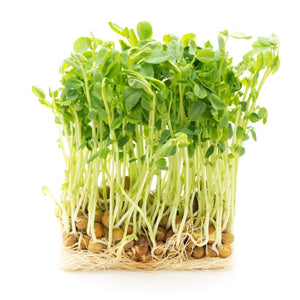


More sprout guides
All sprouts
Alfalfa Sprouts
Grow alfalfa sprouts in a jar in Australia: how much seed, soaking, rinsing, greening, floating off hulls, storing, food safety, and root hairs versus mould.
| Position | Indirect light, never direct sun |
|---|---|
| First pick | Days 5 to 8 |
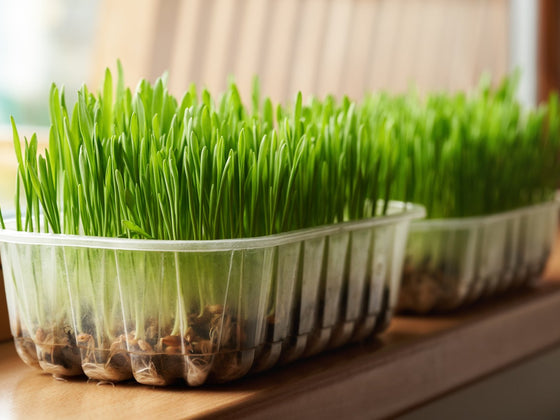
Barley Grass
Grow barley grass on a tray in Australia: soaking, sowing, watering from below, when to cut, storing, food safety, and how it differs from wheatgrass.
| Position | Bright indirect light |
|---|---|
| First pick | 6 to 10 days |

Black Sunflower Shoots
Grow black sunflower shoots on a tray in Australia: soaking, sowing under a weight, light, watering, knocking off the shells, cutting, storing and food safety.
| Position | Bright, indirect light |
|---|---|
| First pick | 8 to 14 days |

Broccoli Sprouts
Grow broccoli sprouts in a jar in Australia: seed amounts, soaking, rinsing, greening, drying, storage, food safety, and how to tell root hairs from mould.
| Position | Indirect light, never direct sun |
|---|---|
| First pick | 4 to 6 days |