
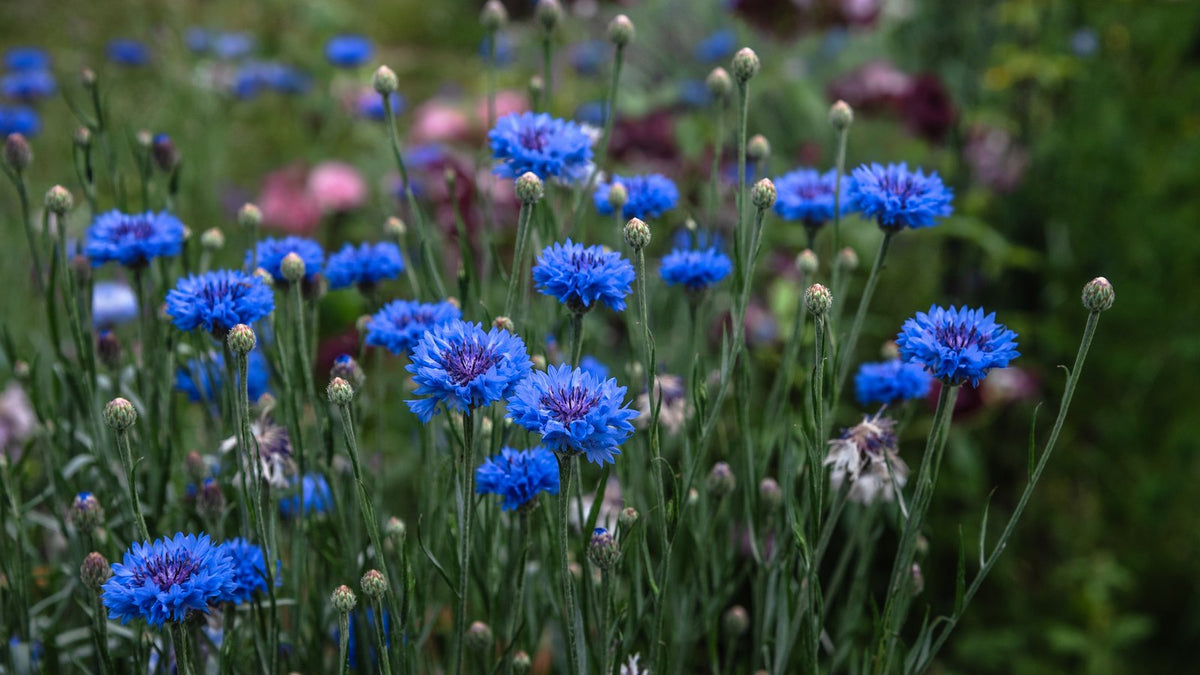

The short version: Most of the popular annuals here flower 8 to 14 weeks after sowing. Alyssum and calendula are among the quickest at about 8 to 10 weeks, zinnias take 10 to 13, sweet peas 13 to 14, pansies about 16 and Shirley poppies about 20 from an autumn sowing. The rest are good-weather figures. Cool-season annuals sown in autumn, such as cornflowers and sweet peas, grow slowly through winter and usually flower in late winter and spring. Summer annuals sown in spring open from about November or December.
A seed packet that says "flowers in 70 days" reads like a promise. Sow cornflowers in April, count ten weeks along the calendar, and you might expect blue flowers by late June. In a temperate garden the first ones usually open from about August, and nothing has gone wrong.
The packet number is measured in kind weather. Cold winter days stretch it and warmth shortens it. Here are the usual weeks to first flower for 15 favourite annuals, the months they tend to bloom, and what moves those dates where you live.
Weeks from sowing to first flower, at a glance
Weeks run from sowing to the first open flower. Most figures come from our seed listings; those for marigold and snapdragon come from planting guides. The months are a guide for a temperate garden sown in the usual window.
Summer flowers, sown in spring and early summer
| Flower | Weeks to first flower | Usually in flower (temperate) |
|---|---|---|
| Sunflower | 8 to 12; dwarfs from about 7 | Nov to Apr |
| Marigold | About 8 to 12 | Nov to May |
| Nasturtium | 10 to 11 | Nov to Jun |
| Zinnia | 10 to 13 | Dec to Apr |
| Cosmos | 10 to 12 for tall types; some compact mixes sooner | Dec to Apr |
Cool-season flowers, sown mostly in autumn
| Flower | Weeks to first flower | Usually in flower (temperate) |
|---|---|---|
| Alyssum | About 8 to 9 | Apr to Jan |
| Calendula | 8 to 10 | Apr to Jan |
| Cornflower | About 10; longer from an autumn sowing | Aug to Jan |
| Stock | 10 to 11 for dwarf types; about 20 for tall giants | May to Nov |
| Everlasting daisy (strawflower) | 10 to 14 from a spring sowing; autumn sowings wait for spring | Sep to Mar |
| Nigella | 12 to 14 | Aug to Jan |
| Sweet pea | 13 to 14; longer from an autumn sowing | Aug to Dec |
| Pansy and viola | About 16 for pansies; some violas about 9 | May to Nov |
| Snapdragon | About 4 months | Jul to Dec |
| Shirley poppy | About 20 from an autumn sowing | Aug to Nov |
One sowing fills part of each span, not all of it. Alyssum and calendula run from April to January because they have an autumn and a spring sowing, joined end to end.

Why your flowers may not match the packet
A packet figure is usually a fair-weather number. A handful of things move it, and between them they explain most of the waiting.
Warmth speeds things up
Our listing for the tall sunflower 'Tall Timber' gives about 75 days from a summer sowing and closer to 90 from a cool-weather one: a two-week gap in the same variety. Research on bedding plants at Michigan State University finds the average temperature across day and night sets the pace, though past a point extra heat slows a plant again.
Day length changes through the year
The Bureau of Meteorology puts Hobart at around 9 hours of daylight at midwinter and 15 at midsummer, while Darwin's days barely move, from about 11.5 to 12.5 hours. Many annuals, snapdragons and pansies among them, tend to flower sooner as days lengthen, while cosmos and some zinnias lean the other way; varieties differ. In southern gardens that is part of why an autumn sowing holds back until the days stretch out.
Many autumn sowings wait for spring
This is the big one for cool-season annuals. Gardening Australia, describing the autumn resowing of a Melbourne flower meadow with cornflowers in the mix, says the seeds sit through winter and then take off again in spring. The Botanic Gardens of Sydney says autumn-sown Rhodanthe and Schoenia paper daisies grow slowly over winter, building a strong root system, then flower in spring, usually from September to November. Gardening Australia gives the same pattern for sweet peas and poppies: sown in autumn, they flower in spring. The packet's ten or fourteen weeks becomes four to six months, so mark the calendar for spring.

Summer heat ends the cool-season show
The flowers that wait out winter tend to fade once real heat arrives. Snapdragons may stop blooming for a spell in very hot weather, pansies and violas slow down in summer heat, and stock stops flowering well as spring temperatures climb. The warmer your district, the earlier these finish.
The variety on the packet
Varieties of one flower can sit weeks apart. Dwarf ten-week stock is listed at 70 to 80 days and the giant stocks at 140, and the sunflower 'Dwarf Sunsation' at 50 days against 85 for 'Giant Single'. Go by the figure for your variety.
How bloom season shifts across the six climate zones
The tables give temperate months. In the other zones the weeks stretch or shrink with the warmth, and the flowers start and finish at different times of year. The months below are worked out from the usual sowing windows, so treat them as a guide.
- Tropical, Darwin and the Top End of the Northern Territory, Townsville and Cairns in north Queensland, Broome in Western Australia: flowering is mostly a dry-season affair. Calendula, cornflowers and pansies sown from about April to June tend to flower from about June or July to October, and zinnias and sunflowers sown in the same months run on to about November.
- Subtropical, Brisbane, the Gold and Sunshine Coasts, and the far north coast of New South Wales: cool-season flowers bloom through the mild winter, roughly June to October for cornflowers and pansies. Zinnias and sunflowers sown from August can flower from about October or November through to about June.
- Arid and semi-arid, from Alice Springs in the Northern Territory and Kalgoorlie in Western Australia to Broken Hill in New South Wales and Mildura in Victoria: sown once the heat breaks, calendula can flower from about May and cornflowers from about July into spring. Summer annuals wait for the spring frosts to pass and flower from about November or December.
- Temperate, the coastal strip of New South Wales around Sydney, and Melbourne in Victoria: the months in the tables. Melbourne, at the cooler end, tends to sow its summer flowers a little later than Sydney, so they open later too.
- Mediterranean, Perth and the south-west of Western Australia, and Adelaide in South Australia: close to the temperate months, but dry heat comes early and often ends the cool-season show sooner, sweet peas around November and pansies around October.
- Cool and alpine, from Tasmania and Canberra in the ACT to Ballarat in Victoria, the tablelands around Armidale and Orange in New South Wales, and Stanthorpe in Queensland: everything runs later. Zinnias and cosmos go out after the last frost and flower from about January. Cornflowers, sweet peas and snapdragons sown in autumn flower from about September or October, spring sowings from late spring into summer; where winters are severe, sow snapdragons in spring.
Treat the six zones as broad groupings. If your garden sits between two, or up high, go by your own first and last frosts.
Getting flowers when you want them
- Count back from the date. For a spring or summer sowing, take the weeks in the table back from when you want flowers. For an autumn sowing, check the table: early-sown calendula, alyssum, stock and pansies can flower from late autumn, most others from late winter or spring.
- Sow again a few weeks later. A second small batch spreads the flowering.
- Keep picking. Cornflowers and calendula flower for longer if spent flowers are removed regularly.
If the usual season comes and goes with no buds, work through the nine common reasons plants do not flower. And for a feel of how far the days stretch at your latitude, the Bureau of Meteorology's guide to solstices and the seasons explains why it varies so much between Hobart and Darwin.
Frequently asked questions
When do cornflowers bloom in Australia?
Sown in autumn, the usual time in most zones, cornflowers sit through winter and usually open from late winter into spring, about August in temperate gardens, carrying on into early summer if you remove spent flowers. A spring sowing flowers sooner, nearer the packet's 70 days.
When do snapdragons flower?
Allow about four months from seed. Sown in autumn, they usually flower from midwinter through spring into early summer in temperate gardens, and can stop for a spell in very hot weather.
What is the quickest flower to grow from seed?
Of the flowers here, the sunflower 'Dwarf Sunsation' is listed at 50 days, with alyssum and calendula close behind at about 8 to 10 weeks. Zinnias follow at 10 to 13 weeks in warm soil.
My autumn sowing is past the packet date. Is something wrong?
Probably not. Cool, short winter days slow cool-season annuals well past the packet figure, and most autumn sowings are meant to flower in late winter or spring.
Can I sow cool-season flowers in spring instead?
Yes, in many gardens: cornflowers, calendula and alyssum all have a spring window in temperate and cool districts. In hot districts, spring sowings of pansies, snapdragons and stock may open just as the heat arrives, and tend to fade in it.
A packet of seed and a date circled a few months ahead is a small act of faith that most annuals repay.
Related growing guides
- Starting out with annual flowers from seed
- March sowings for a spring of flowers
- October sowings for summer vases and bees
- Cut flowers worth growing on a budget
The full range is in our flower seeds, and cornflower seeds are a good place to begin for a spring of blue.