
How to Grow Hippeastrums in Australia
Plant hippeastrum bulbs from late winter into spring, once frost has passed, with the neck and top third above the soil. Space them 10 to 30 cm apart in sun or dappled shade and free-draining soil. Water weekly at the soil, never over the bulb. Flowers follow in 5 to 8 weeks. Keep the leaves after flowering, and use pots where winters bring frost.
| Sun | Full sun or dappled shade |
|---|---|
| Water | Weekly in growth; drier while dormant |
| Soil | Free-draining, rich in organic matter, any pH |
| Feed | Bone meal at planting; potash at flowering |
| Spacing | 10 to 30 cm |
| Depth | Top third above soil |
| Germination | Bulbs, not seed: flowers in 5 to 8 weeks |
| Harvest | 5 to 8 weeks |
| Container | One bulb per 15 to 20 cm pot |
| Frost | Tender; lift or shelter where frosts occur |
| Use | Cut flowers, pots and garden clumps |
Hippeastrum (Hippeastrum hybrids) is a bulb of the amaryllis family (Amaryllidaceae), grown for huge trumpet flowers on hollow stems from late spring into summer. Shops often sell it as amaryllis, but the belladonna lily (Amaryllis belladonna) is a different South African plant. Hippeastrums come from tropical Mexico, South America and the Caribbean, so they suit warm gardens and pots almost anywhere. The usual mistake is burying the bulb, when its neck belongs above the soil.
Three mistakes that matter
- Burying the bulb. Planted like a tulip, with the neck under the soil, a hippeastrum sits wet at its most rot-prone point. Set each bulb so the neck and roughly the top third stand above the soil, in the ground and in pots.
- Watering often, and over the bulb. Hippeastrums are drought-hardy, and too much water causes stem rot and red marks on the leaves. Water once at planting, then weekly at the soil once the flower stem grows, never onto its nose (the tip).
- Cutting off the leaves after flowering. The leaves rebuild the bulb for next year's flowers, so a bulb stripped early often returns with leaves only. Cut only the spent flower stem, and keep watering and feeding the leaves until they die back.
When to plant
Frost sets the timing. Plant dormant bulbs from late winter into spring, once frost has passed, and earlier in frost-free gardens. A bulb planted in full sun usually flowers 5 to 8 weeks later, so the planting date sets the flowering date. In frost-free gardens, established clumps stay in the ground and come back each year.
| Zone | Example cities | Plant | Flowering | Notes |
|---|---|---|---|---|
| Tropical | Darwin NT; Cairns, Townsville QLD; Broome WA | May-Jul | Jul-Sep | Grow in pots through the dry season, and keep them out of wet season rain, which rots bulbs. |
| Subtropical | Brisbane, Sunshine Coast, Bundaberg QLD; Coffs Harbour, Lismore NSW | Jun-Sep | Sep-Dec | Clumps stay in the ground all year. Let them dry out a little in July and August. |
| Arid and semi-arid | Alice Springs NT; Broken Hill, Dubbo NSW; Mildura VIC; Kalgoorlie WA | Aug-Oct | Oct-Jan | Plant after the last frost, beside a sheltering wall. Water weekly while in leaf. |
| Temperate | Sydney, Newcastle, Wollongong NSW; Melbourne, Geelong VIC | Aug-Oct | Oct-Jan | Coastal clumps can stay in the ground. In frosty inland and Melbourne gardens, use pots or lift bulbs in autumn. |
| Mediterranean | Perth, Bunbury WA; Adelaide and the SA coast | Aug-Oct | Oct-Jan | Water weekly through the dry summer while leaves grow, then let bulbs rest drier in winter. |
| Cool and alpine | Hobart, Launceston TAS; Canberra ACT; Ballarat VIC; Orange NSW | Sep-Nov | Nov-Feb | Grow large-flowered types in pots and move them under cover before frost. One supplier rates Sonatini types tougher. |
To hold bulbs for a Christmas display, keep them in the fridge crisper, never frozen, and pot them up in mid-November. Label them and keep them apart from food.
Site, soil and setup
Sun and drainage matter most. Hippeastrums grow in dappled shade but do not flower in real shade.
| Need | What to do |
|---|---|
| Light | Full sun or dappled shade, ideally beside a wall or fence that shelters the tall stems from strong wind. |
| Soil | Most garden soils that drain well. Very sandy soil needs extra organic matter and more regular water. |
| pH | Not fussy: acid, neutral and alkaline soils all suit, so there is no need to lime. |
| Drainage | Avoid low spots where water lies after rain. On heavy clay, plant on a low mound or in a raised bed. |
| Bed preparation | Four to six weeks before planting, dig in a 5 to 10 cm layer of well-rotted cow or horse manure. |
| Rotation | Not needed for healthy clumps, which stay put for years. Where bulbs have rotted, plant fresh ones in a new spot. |
The garden hybrids are not a declared weed in any state or territory. One wild species, Hippeastrum puniceum, is recorded as naturalised in New South Wales and on Lord Howe Island, so keep spare bulbs out of bushland.
| State or territory | What its weed lists say |
|---|---|
| New South Wales | Not listed on NSW WeedWise. The wild Hippeastrum puniceum is recorded as naturalised. |
| Queensland | Not a prohibited or restricted invasive plant. |
| Victoria | Not a declared noxious weed. |
| Tasmania | Not a declared weed. |
| South Australia | Not a declared plant and not banned from sale. |
| Western Australia | Listed as a permitted organism, not a declared pest. |
| Northern Territory | Not on the territory's list of weeds, declared or otherwise. |
| Australian Capital Territory | Not a declared pest. |
Container growing
Hippeastrums flower well in pots, one large bulb to a pot 15 to 20 cm wide, which holds up to about 4.5 L. Use good-quality potting mix and a pot with drainage holes. The compact Sonatini types need less room, and a pot 10 to 14 cm wide, about 1.5 L, suits one bulb.
| Variety | Type | Flowers | Height |
|---|---|---|---|
| 'Apple Blossom' | Large-flowered | Pale pink with white striping, usually about four to a stem | Stems 40 to 50 cm |
| 'Samba' | Large-flowered | Red and white stripes, usually about four to a stem | Stems 40 to 50 cm |
| Sonatini 'Balentino' | Compact; two or three stems once established | Red with a white centre, up to four or five a stem, 6 to 12 cm across | 30 to 45 cm |
| Sonatini 'Swan Lake' | Compact; two or three stems once established | White with a chartreuse throat, up to four or five a stem, 6 to 12 cm across | 30 to 45 cm |
- Watering. Water once to settle the mix, then keep it on the dry side until the flower stem grows strongly. Water generously from then until flowering ends.
- Feeding. Mix a controlled release fertiliser for containers into the potting mix at planting. Add fish and seaweed blend at 25 mL per 9 L every fortnight once shoots appear.
- Position. Full sun outdoors. Turn the pot regularly so the stem grows straight, and tie a tall stem to a thin bamboo stake.
- After flowering. Repot into fresh mix every two or three years, when the bulbs crowd the pot. In cool districts, move the pot to a dry spot once the leaves die back.
Planting Bulbs
Hippeastrums start from bulbs sold dormant and ready to grow, so plant them soon after they arrive.
When bulbs arrive
Plant firm bulbs, and set aside any that are soft or show red spots on the neck. That is where the red blotch fungus survives (see Pests and diseases).
Planting in the ground
- Set each bulb pointed end up and plant it high, as Three mistakes that matter describes.
- Space bulbs 10 to 30 cm apart, using the closer spacing for the compact Sonatini types.
- Firm the soil around the bulb and water once to settle it.
- Expect the flower stem first, often before the leaves.
Care by growth stage
Hippeastrums are hungry and thirsty while in leaf, and want to stay drier while dormant.
| Stage | Water | Feed | Watch for |
|---|---|---|---|
| Planting to flowering, about 5 to 8 weeks | Once at planting, then a good soak weekly at the soil once the flower stem is growing, never over the bulb's nose | Bone meal at 100 g per square metre under the bulbs at planting, then fish and seaweed blend at 25 mL per 9 L every fortnight once shoots appear | Soft, rotting bulbs in wet soil; snails on the rising stem after rain |
| Flowering, two to three weeks | Weekly, kept steady right through flowering | Sulphate of potash at 30 to 50 g per square metre, once as the first flowers open, watered in | Egg masses and caterpillars under the leaves; red spots on stems |
| After flowering, while the leaves stay green | Weekly in dry spells | Fish and seaweed blend at 25 mL per 9 L every fortnight | Red blotch on leaves; caterpillars boring into the neck |
| Dormant, once the leaves die back | Little or none; let the soil dry a little | None | Frost, or wet-season rain in the tropics: lift bulbs or move pots under cover |
If growth is weak in poor soil, a light dose of all-purpose controlled release granular (NPK around 14-5-10), scratched in at planting, can help.
Offsets (small bulbs that form beside the mother bulb) crowd a clump or burst a pot within a few years. Ease them away with their roots, replant them with their tops standing above the soil, and water in. See dividing perennials for the method.
Companion planting
Good company for hippeastrums is low, happy with weekly water, and leaves the bulb necks in the sun.
Grows well with
- Petunias around a potted bulb, which fill the pot with colour before the stem rises.
- Dusty miller and ornamental chilli as pot underplanting, which hold interest until the flowers open.
- Daffodils in a mixed bed, because hippeastrums take over the display as the daffodils fade.
Keep apart
- Crinum, clivia and spider lily, which feed the same lily caterpillar.
- Lawns and beds on frequent sprinklers, which keep bulbs wet and prone to rot.
- Onions and other edible bulbs, because the onion-like hippeastrum bulb is poisonous.
Harvesting Blooms
Cut stems for the vase when the buds show colour but have not yet opened.
- Wear gloves, because the sap can irritate skin.
- Cut the stem near its base with a sharp knife and put it straight into water.
- Slide a thin cane or a straw up the hollow stem to carry the weight of the flowers.
- Change the vase water every couple of days.
- Leave the leaves on the bulb (see Three mistakes that matter).
On the plant, each flower stem lasts about two to three weeks, and cutting the flowers can help the bulb bloom again. In frosty gardens, lift large-flowered bulbs in April or May as the leaves die back. Cut the leaves close to the bulb, store it somewhere warm and dry, and replant in spring once frosts have passed.
Common problems
Leaves but no flowers. Real shade, small bulbs and leaves cut too early are the usual causes (see Three mistakes that matter). Move the clump into sun and feed its leaves.
Leaning or toppling stems. Potted stems lean towards the light and heavy flowers tip them over (see Container growing for turning and staking).
Soft, rotting bulbs. Bulbs rot when they sit in wet, boggy soil, so bin a rotten bulb at once and replant elsewhere. Read more
Pests and diseases
The main threats are a caterpillar, snails, two fungal diseases and a virus.
Lily caterpillar (Spodoptera picta). Striped caterpillars up to about 5 cm long feed in groups on the leaves, then bore down into the neck. They can kill the bulb, and are recorded in Queensland, New South Wales and the Northern Territory. Pick off leaves carrying egg masses, which are covered in pale brown hairs, and remove the caterpillars by hand.
Common garden snail (Cornu aspersum). Snails chew rising flower stems, buds and leaves, most often after rain. Hand-pick them at dusk, and check under nearby pots and mulch. Read more
Red blotch (Peyronellaea curtisii). This fungus, also called leaf scorch, marks leaves and flower stems with red spots or blotches. Badly infected stems bend or dry up without flowering. It survives on the bulb neck and spreads in moist, humid weather. Remove spotted leaves, keep water off the foliage and destroy badly affected bulbs.
Grey mould (Botrytis cinerea). A thick grey mould grows on ageing flowers first, then on stems and leaves, most often in cool weather with heavy dew. Remove spent flowers and affected parts, and give plants room for air to move.
Hippeastrum mosaic virus (a potyvirus). Light and dark green mottling or pale streaks run along the leaves and flower stems, and flowers come up stunted. Aphids spread it and there is no cure, so dig out and bin an infected bulb rather than dividing it.
Prevention first
- Keep new bulbs well away from old plants with streaked, mottled leaves.
- Sterilise the knife between plants when cutting flowers or dividing clumps.
- Check under the leaves weekly in warm months for caterpillar eggs.
- Cut away spent flowers and dead leaves, and bin them rather than composting them.
Tips
- Plant a few bulbs in dappled shade as well as in full sun, because shade delays flowering and spreads the display.
- Bring a potted hippeastrum indoors while it flowers, then return it outside so the leaves can finish refilling the bulb.
- Choose the biggest bulbs on offer, because a bigger bulb carries more flowers.
Due to quarantine restrictions and our shipping policy, we cannot send hippeastrum bulbs to Western Australia or Tasmania.
Questions
Is a hippeastrum the same as an amaryllis?
Not quite. Hippeastrums are sold as amaryllis, and both belong to the amaryllis family. The true amaryllis, the belladonna lily (Amaryllis belladonna), comes from South Africa and flowers in late summer and autumn. Hippeastrums come from tropical America and flower in spring and summer, on hollow stems.
How deep do you plant hippeastrum bulbs?
Plant them high. Set each bulb pointed end up with the neck and roughly the top third above the soil, in the garden and in pots. Space garden bulbs 10 to 30 cm apart. In a pot, plant one large bulb to a pot 15 to 20 cm wide.
Are hippeastrums poisonous to dogs and cats?
Yes. Hippeastrums contain lycorine and other alkaloids, and the bulb is the most poisonous part. Eating it can cause vomiting and diarrhoea, and the sap can irritate skin. Keep bulbs away from pets and children. For a person, call the Poisons Information Centre on 13 11 26; for a pet, call your vet.
What do I do with my hippeastrum after it flowers?
Cut the spent flower stem close to the bulb but keep every leaf. Keep watering weekly in dry spells and feed every fortnight, because the leaves are refilling the bulb for next year. A potted bulb can go into the garden or a larger pot. Let it rest drier in winter.
Why is my hippeastrum not flowering?
Real shade, a small bulb, a buried neck or leaves cut off too early are the usual causes. Move it into sun, plant it with the top third above the soil, and feed and water the leaves after flowering.
Can hippeastrums stay in the ground over winter?
In frost-free gardens, yes, and clumps come back each year. Large-flowered types are frost tender. In frosty districts, grow them in pots that can move under cover, or lift the bulbs in April or May. Store them somewhere warm and dry, and replant in spring once frosts have passed.
More bulbs and tubers to sow in October
All bulbs and tubersCalla Lily
Grow coloured calla lilies from tubers: planting depth and timing for six zones, water and feeding, lifting and storing, pests, toxicity and the arum lily weed.
| Position | Full sun, hot-afternoon shade |
|---|---|
| Depth | 10 cm, rough side up |
| Spacing | 20 to 30 cm |
| First pick | 7 to 12 weeks from planting |
Canna Lily
Grow dwarf canna lilies from rhizomes: planting depth and timing for six zones, feeding for flowers, cutting back, dividing, pests, and the weed lists by state.
| Position | Full sun |
|---|---|
| Depth | 5 to 10 cm, eyes up |
| Spacing | 50 to 70 cm |
| First pick | 6 to 8 weeks from shooting |
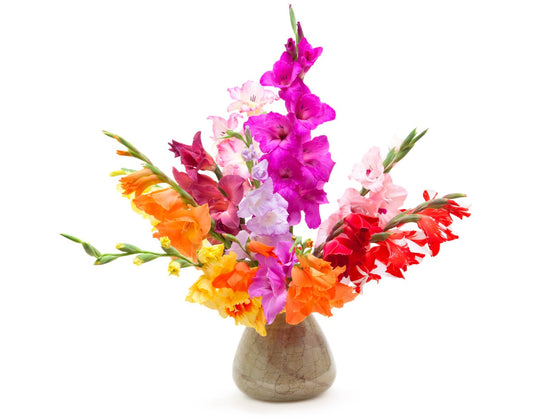
Gladioli
Grow gladioli from corms in Australia: planting depth and timing for six zones, staking, feeding, cutting, lifting and storing, pests and the wild weed species.
| Position | Full sun, sheltered from wind |
|---|---|
| Depth | 10 to 15 cm, flat side down |
| Spacing | 10 to 15 cm |
| First pick | 13 to 17 weeks from planting |
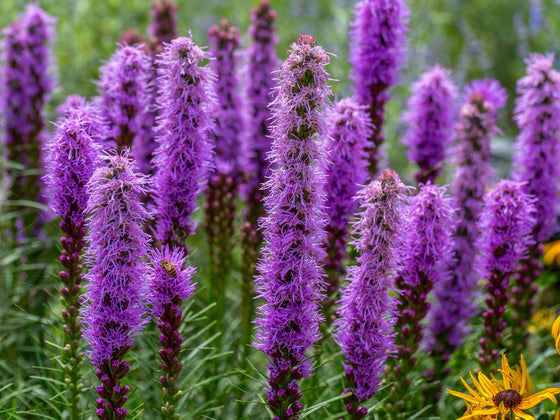
Liatris
Grow liatris corms in Australia: planting depth and months for six zones, free-draining soil, pots, cutting and drying the spikes, pests and state weed lists.
| Position | Full sun |
|---|---|
| Depth | 5 to 10 cm deep |
| Spacing | 15 to 30 cm apart |
| First pick | About 10 to 13 weeks |