
How to Grow Liatris in Australia
Plant liatris corms flat side down, 5 to 10 cm deep and 15 to 30 cm apart, from late winter into spring. Choose full sun and free-draining soil, because wet ground rots the corms. Keep the soil moist while the spikes grow and dry while the plant is dormant. Cut spikes for the vase when the top 5 cm of flowers are open.
| Sun | Full sun |
|---|---|
| Water | Moist while growing; dry while dormant |
| Soil | Free-draining, moderately fertile, never boggy |
| Feed | Light: compost, bone meal, then seaweed |
| Spacing | 15 to 30 cm apart |
| Depth | 5 to 10 cm deep |
| Germination | Grown from corms; shoots appear as soil warms |
| Harvest | About 10 to 13 weeks |
| Container | Good in a pot 30 cm across |
| Frost | Frost hardy; dies down in winter |
| Use | Cut and dried flowers; bees and butterflies |
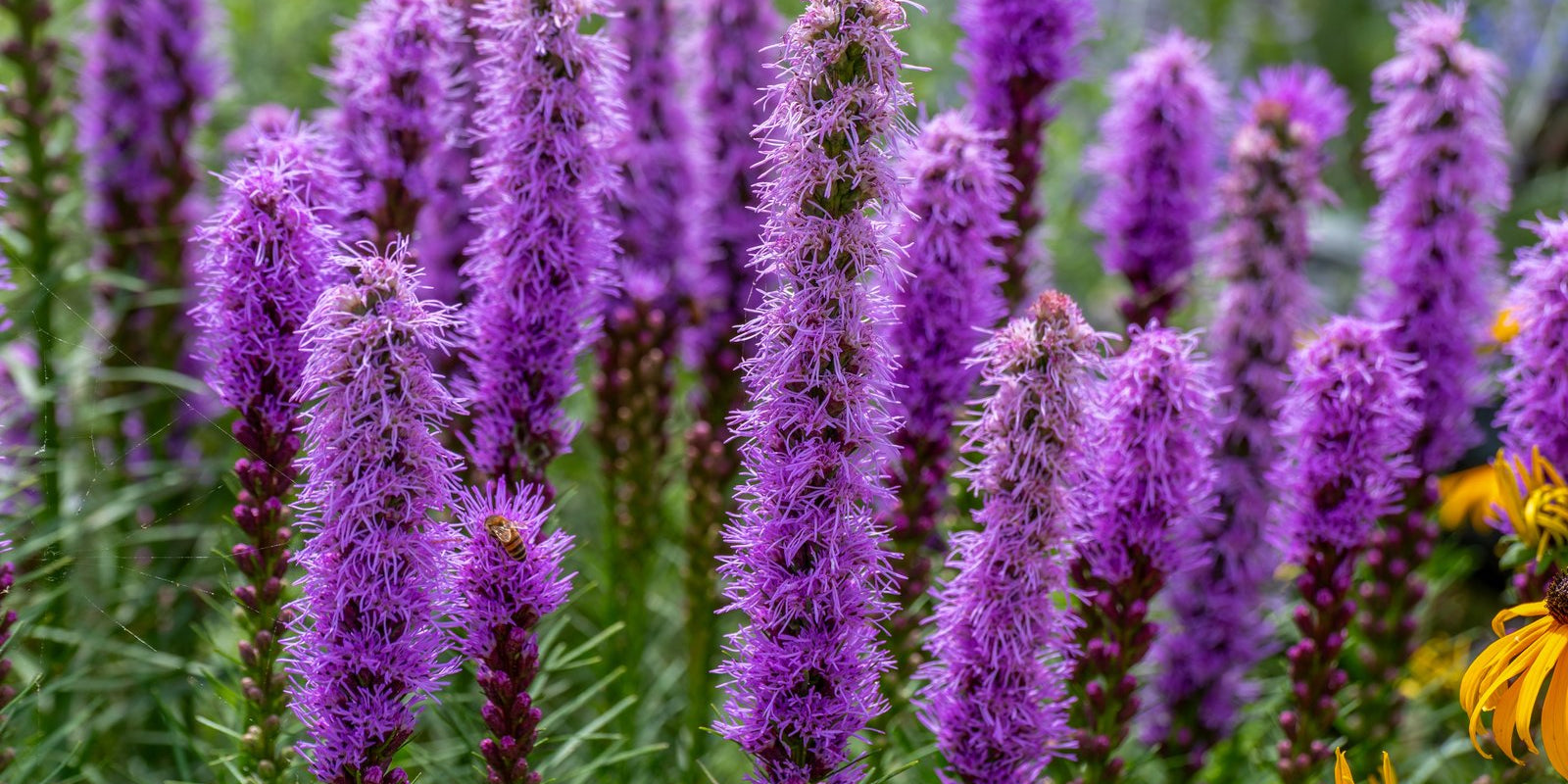
Liatris (Liatris spicata), also called blazing star or gayfeather, is a summer-flowering perennial in the daisy family (Asteraceae). It is native to the prairies and meadows of eastern North America. Its tall purple spikes open from the top down, last well in a vase, dry for winter arrangements and draw bees and butterflies. It copes with cold winters and hot summers everywhere outside the tropics. Wet soil around the dormant corms (swollen underground stem bases that store food) can rot them.
Three mistakes that matter
- Planting into wet ground. Boggy soil rots the corms, most often over a cold, wet winter while the plant is dormant. Choose free-draining soil or a raised bed, and never plant where water lies after rain.
- Letting the soil dry out while spikes grow. Liatris has shallow roots that can die if the soil dries during the growing season. Keep the soil evenly moist from the first shoots until flowering ends.
- Cutting stems to the ground. The leaves on the lower stem feed the corm for next summer. When cutting for the vase, leave at least 10 cm of stem and its leaves standing.
When to plant
Plant dormant corms from late winter into spring, as the soil starts to warm and the worst frosts pass. The corms themselves are frost hardy, and shoots appear once the soil warms. One planting flowers year after year, so there is no need to plant in succession.
| Zone | Example cities | Plant | Flowering | Notes |
|---|---|---|---|---|
| Tropical | Darwin NT; Cairns, Townsville QLD; Broome WA | Not recommended | Not recommended | Winters are too warm to rest the corms, and wet-season downpours rot them in the ground. |
| Subtropical | Brisbane, Sunshine Coast, Bundaberg QLD; Coffs Harbour, Lismore NSW | Jul-Sep | Dec-Feb | Plant in a raised bed or mound so summer storms drain away from the corms. |
| Arid and semi-arid | Alice Springs NT; Broken Hill, Dubbo NSW; Mildura VIC; Kalgoorlie WA | Aug-Sep | Dec-Feb | Plant once the hardest inland frosts ease. Mulch, and water deeply while spikes grow in the heat. |
| Temperate | Sydney, Newcastle, Wollongong NSW; Melbourne, Geelong VIC | Aug-Oct | Dec-Mar | Sydney gardens can plant from late winter. In Melbourne, plant as the soil warms in spring. |
| Mediterranean | Perth, Bunbury WA; Adelaide and the SA coast | Aug-Oct | Dec-Feb | Water through the long dry summer while flowering, then let the corms dry off as leaves brown. |
| Cool and alpine | Hobart, Launceston TAS; Canberra ACT; Ballarat VIC; Orange NSW | Sep-Nov | Jan-Mar | Corms are frost hardy in the ground. Plant as the soil warms after the hardest frosts. |
Corms usually flower the same summer they go in, often 10 to 13 weeks after planting, and later where the soil is still cold.
Site, soil and setup
Liatris evolved in harsh prairie conditions, so lean, well-drained soil in full sun suits it better than a rich, damp bed.
| Need | What to do |
|---|---|
| Light | Full sun. Light shade is tolerated, but stems grow taller and weaker and may need staking. |
| Soil | Moderately fertile and free-draining. Very rich soil makes stems soft and floppy. |
| Drainage | Good drainage matters most over winter. On heavy clay, plant in a raised bed or a mound. |
| pH | Slightly acid to neutral. On strongly acid soil, dig in garden lime at 100 to 200 g per square metre 4 weeks before planting. |
| Room to grow | Spikes usually reach 50 cm to 1 m tall, and a clump spreads 20 to 30 cm, so set it mid-border. |
| Bed preparation | Loosen the soil and dig in a 5 cm layer of compost. Rake in bone meal at 100 g per square metre at planting. |
Crop rotation does not apply to a perennial that stays put for years, so divide the clump instead, as described under Tips.
What the state weed lists say
No state or territory outside Western Australia lists liatris as a declared or noxious weed. Western Australia keeps one register for every organism, so check the species' entry there.
| State or territory | What the weed lists say about Liatris spicata |
|---|---|
| Western Australia | Named in the Western Australian Organism List, which records permitted as well as declared organisms. Check its entry there for its current status. |
| South Australia | Not on the list of declared plants. |
| Victoria | Not on the declared noxious weeds list. |
| New South Wales | No profile in the state weed database. |
| Tasmania | Not on the declared weeds index. |
| Queensland | Not on the prohibited or restricted invasive plant lists. |
| Northern Territory | Not on the list of declared weeds. |
| Australian Capital Territory | Not on the declared pest plant list. |
Container growing
Liatris grows well in a large pot, which also solves the drainage problem on heavy clay. For three corms, use a pot at least 30 cm across, about 12 to 15 L, with several large drainage holes. Fill it with premium potting mix. Tall spikes catch the wind, so choose a heavy pot that will not tip. Compact varieties, such as purple 'Kobold' and white 'Alba', suit smaller pots.
- Position. Full sun, out of the strongest wind.
- Watering. Water once at planting, then again when shoots appear. Potting mix dries out faster than garden soil, so check it every few days in summer.
- Feeding. Give seaweed solution at 30 mL per 9 L every fortnight from the first shoots until the first flowers.
- Winter. Move the pot under cover in a wet winter so the dormant corms stay on the dry side.
Planting Corms
Liatris starts from a corm, sold as tubers, planted flat side down in late winter or spring.
Before planting
Plant only firm corms, and discard any that are soft or mouldy. Until planting, store them in a cool, dry, airy spot.
Planting in the ground
- Set each corm flat side down.
- Plant 5 to 10 cm deep.
- Space corms 15 to 30 cm apart, closer for a fuller look the first summer.
- Plant in groups of three or more, which look better than single spikes.
- Water in once so the soil is moist but not saturated.
- Water again once shoots appear, or sooner in a long dry spell.
Care by growth stage
Water decides the result: moist soil while the plant is in leaf and flower, and dry soil while it rests in winter. Liatris is not a heavy feeder, and rich feeding gives soft, leaning stems.
| Stage | Water | Feed | Watch for |
|---|---|---|---|
| Planted corms, about weeks 0 to 4 | Hold off after watering in until shoots show | Nothing beyond the compost and bone meal | Soft, rotting corms in waterlogged soil |
| Grassy leaves, about weeks 4 to 8 | Water deeply in dry spells | Seaweed solution at 30 mL per 9 L every fortnight | Aphids on soft new growth |
| Spikes lengthen, about weeks 8 to 10 | Keep evenly moist; never let the soil dry out | Sulphate of potash at 30 to 50 g per square metre, once | Leaves and tips scorched by hot, dry wind |
| Flowering, about weeks 10 to 16 | Keep watering right through flowering | None needed | Thrips on the flowers; powdery mildew in humid weather |
| Autumn and winter dormancy | Taper off as leaves turn bronze; none while dormant | None | Water lying over the corms after winter rain |
Week ranges count from planting and stretch in cool districts. If growth stalls in poor soil, scratch a light dose of all-purpose controlled release granular (NPK around 14-5-10) into the soil as shoots appear.
Companion planting
Liatris adds a vertical line to a sunny border and mixes well with plants that like the same lean, well-drained soil.
Grows well with
- Coreopsis and cosmos, whose yellow and open flowers contrast with the purple spikes in full sun.
- Echinacea, another prairie plant that flowers alongside it and feeds the same bees and butterflies.
- Lamb's ear and ornamental grasses, low growers that leave the spikes in sun and suit dry soil.
Keep apart
- Thirsty plants on daily watering, because constantly wet soil rots the corms.
- Trees and tall shrubs that shade the bed, because shade makes stems stretch and flop.
Harvesting Blooms
Cut spikes for the vase when the top 5 cm of flowers are fully open. Spikes cut earlier do not keep opening downwards in water.
- Leave at least 10 cm of stem, with its leaves, on the plant.
- Stand cut stems in a bucket of water straight away.
- Change the vase water every few days.
- On plants left in the garden, snip off each spike once it fades.
Cut stems can last up to 2 weeks indoors when the water is changed regularly. To dry spikes, cut them when half to two thirds of the flowers are open. Hang them upside down in a dry, shaded, airy spot for about 3 weeks. Drying them in silica gel or sand holds more colour.
Common problems
Floppy stems. Soil that is too rich or a spot that is too shady makes stems shoot up soft and lean. Move the clump to full sun when you next divide it, and prop tall stems with a thin stake meanwhile.
Soft, rotten corms. Waterlogged soil is the cause, as described in Three mistakes that matter. Read more
Scorched leaves and flower tips. Hot, dry wind while the spikes are lengthening, such as a summer northerly, can wilt plants beyond recovery. Water deeply before hot days and plant out of the worst wind.
A dead centre in an old clump. Older clumps can die out in the middle, and dividing them, as described under Tips, keeps them vigorous. Read more
Pests and diseases
Liatris is generally trouble free. These four are the ones to watch for.
Thrips (order Thysanoptera). These tiny insects, 1 to 2 mm long, suck sap and leave mottled or silvery-brown speckling on leaves and flowers, mostly during flowering. Rinse plants, including leaf undersides, and spray insecticidal soap weekly for four to six weeks. Read more
Aphids (family Aphididae). Small sap-sucking insects cluster on soft new growth and leave sticky honeydew. Hose off light infestations, and spray horticultural oil or soapy water on heavy ones, but never in hot weather. Read more
Powdery mildew (Golovinomyces species). A white powdery film covers the leaves, often in hot, humid weather when plants go into the night wet. Spray 1 part full-cream milk to 10 parts water on the leaves, and remove badly affected ones. Read more
Grey mould (Botrytis species). A fuzzy grey rot can attack the flowers in wet weather, or corms in storage. Snip off affected spikes, and plant only firm, clean corms.
Prevention first
- Keep the spacing given under Planting Corms, so sun and air reach every plant.
- Water the soil in the morning rather than the leaves at night.
- Spare ladybirds and lacewings, which eat thrips and aphids, by spraying only where pests are.
- Clear spent spikes and dead leaves as part of everyday garden hygiene.
Tips
- Push a label in beside each clump at planting, because nothing shows above ground through winter.
- Leave a few bronzed stems standing over winter for structure, then cut everything to the ground in early spring before new shoots appear.
- Lift and divide clumps every three years or so, in late autumn or winter while they are dormant. Cut the tuberous roots with a sharp knife, keeping at least one bud on each piece, and replant straight away.
Due to quarantine restrictions and our shipping policy, we cannot send liatris corms to Western Australia or Tasmania.
Questions
Which way up do you plant liatris corms?
Flat side down. Set each corm 5 to 10 cm deep and 15 to 30 cm apart, in a group of three or more. Water in once, then wait for shoots before watering again unless the weather stays dry.
Why does liatris flower from the top down?
That is how a liatris spike develops: the top flower heads open first and the flowering works down the stem. It is unusual among spike flowers, most of which open from the bottom up. It also tells you when to cut, once the top 5 cm is open.
Does liatris come back every year?
Yes. It is a perennial that turns bronze in autumn, dies down over winter and shoots again in spring. The corms can stay in the ground for years, as long as the soil drains well. Divide crowded clumps every three years or so.
Can you grow liatris in a pot?
Yes. Use a heavy pot at least 30 cm across, about 12 to 15 L, with good drainage holes, for three corms. Fill it with premium potting mix, keep it in full sun and keep the mix moist while the plants are in leaf.
How do you dry liatris flowers?
Cut the spikes when half to two thirds of the flowers are open. Hang them upside down in a dry, shaded, airy place for about 3 weeks. Drying them in silica gel or sand keeps more of the purple colour.
Is liatris a weed in Australia?
It is not a declared or noxious weed in South Australia, Victoria, New South Wales, Tasmania, Queensland, the Northern Territory or the ACT. Western Australia names it in its organism register, so check that entry before planting there.
More bulbs and tubers to sow in October
All bulbs and tubersCalla Lily
Grow coloured calla lilies from tubers: planting depth and timing for six zones, water and feeding, lifting and storing, pests, toxicity and the arum lily weed.
| Position | Full sun, hot-afternoon shade |
|---|---|
| Depth | 10 cm, rough side up |
| Spacing | 20 to 30 cm |
| First pick | 7 to 12 weeks from planting |
Canna Lily
Grow dwarf canna lilies from rhizomes: planting depth and timing for six zones, feeding for flowers, cutting back, dividing, pests, and the weed lists by state.
| Position | Full sun |
|---|---|
| Depth | 5 to 10 cm, eyes up |
| Spacing | 50 to 70 cm |
| First pick | 6 to 8 weeks from shooting |
Gladioli
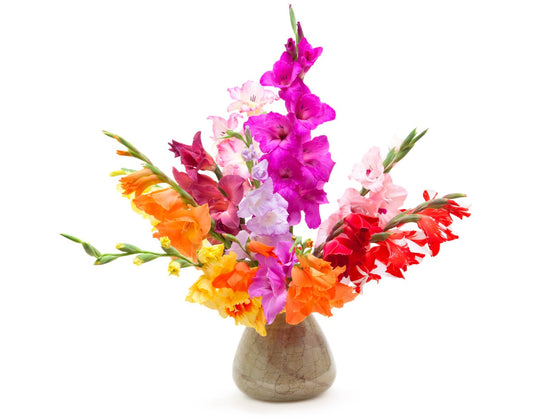
Grow gladioli from corms in Australia: planting depth and timing for six zones, staking, feeding, cutting, lifting and storing, pests and the wild weed species.
| Position | Full sun, sheltered from wind |
|---|---|
| Depth | 10 to 15 cm, flat side down |
| Spacing | 10 to 15 cm |
| First pick | 13 to 17 weeks from planting |
Hippeastrum
Grow hippeastrums in any Australian zone: when to plant bulbs, why the neck sits above the soil, pots, feeding, frost, pests, toxicity and state weed status.
| Position | Full sun or dappled shade |
|---|---|
| Depth | Top third above soil |
| Spacing | 10 to 30 cm |
| First pick | 5 to 8 weeks |