
How to Grow Grape Hyacinths in Australia
Plant grape hyacinth bulbs in autumn, from about March to May, 5 to 10 cm deep and 5 to 10 cm apart. Choose sun or part shade and free-draining soil. In subtropical gardens, chill bulbs in the fridge for 6 to 8 weeks first. Leaves appear in autumn and flowers follow from late winter. Snap off spent spikes, because the bulb self-sows and has escaped into bushland.
| Sun | Full sun or part shade |
|---|---|
| Water | Moist in growth; dry summer rest |
| Soil | Any free-draining soil; acid to alkaline |
| Feed | Bone meal at planting; potash at flowering |
| Spacing | 5 to 10 cm |
| Depth | 5 to 10 cm deep |
| Germination | Grown from bulbs; chill first in warm zones |
| Harvest | Jul to Oct, by zone |
| Container | Yes; 10 to 15 bulbs per 20 cm pot |
| Frost | Frost hardy; flowers best after cool winters |
| Use | Drifts, edging, pots and small posies |
Grape hyacinth (Muscari armeniacum), in the asparagus family Asparagaceae, is a spring bulb grown for its spikes of blue bells, like upturned bunches of grapes. It flowers from late winter and spreads into drifts by offsets and seed. It suits dappled shade under deciduous trees and grows well in small pots. The mistake to avoid is letting it seed freely: it has escaped gardens in four states and the ACT.
Three mistakes that matter
- Letting it seed near bushland. Grape hyacinth self-sows freely and escapes through seed and dumped garden waste. Snap off spent spikes before the pods ripen, and never tip bulbs or clippings into bush or over the back fence.
- Cutting the leaves off early. The leaves keep feeding the bulb for several weeks after flowering, so cutting them while green means fewer spikes next spring. Leave them until they yellow and wither, then trim at ground level.
- Skipping the chill in a warm garden. Grape hyacinths need a cool winter to flower well. Where winters are mild, as in Brisbane, chill the bulbs in the fridge for 6 to 8 weeks first, as under Planting Bulbs.
When to plant
Plant in autumn once the summer heat has left the soil, from about March to May, with Anzac Day near the middle of the window. In warmer districts, wait until April or plant chilled bulbs straight from the fridge in May or June. One planting keeps flowering for years, because the clumps return and thicken.
| Zone | Example cities | Plant | Flowering | Notes |
|---|---|---|---|---|
| Tropical | Darwin NT; Cairns, Townsville QLD; Broome WA | Not recommended | Not recommended | No cool winter for flowering, and dormant bulbs rot in the wet season. Choose a warm-climate bulb instead. |
| Subtropical | Brisbane, Gold Coast, Bundaberg QLD; Coffs Harbour, Lismore NSW | May-Jun | Aug-Sep | Chill bulbs 6 to 8 weeks first. Warm winters may cut repeat flowering, so many grow them as annuals. |
| Arid and semi-arid | Alice Springs NT; Broken Hill, Dubbo NSW; Mildura VIC; Kalgoorlie WA | Apr-May | Aug-Sep | Cold winter nights suit them. Plant in part shade, mulch, and water through dry winters while in leaf. |
| Temperate | Sydney, Newcastle, Wollongong NSW; Melbourne, Geelong VIC | Mar-May | Jul-Sep | Plant once autumn soil cools; Melbourne clumps spread readily. Keep seed heads away from bushland. |
| Mediterranean | Perth, Bunbury WA; Adelaide and the SA coast | Apr-May | Jul-Oct | Dry summers give the rest bulbs need. Already wild in south-eastern SA and Perth bushland, so deadhead. |
| Cool and alpine | Hobart, Launceston TAS; Canberra ACT; Ballarat VIC; Orange NSW | Mar-May | Aug-Oct | Cold winters suit them, no chilling needed. Naturalised around Canberra and Ballarat, so deadhead near bush. |
Leaves appear within weeks of planting, months before the flowers, and that is normal. Bulbs bought early can wait in a paper bag somewhere cool and dry until the soil cools.
Site, soil and setup
Grape hyacinth grows in almost any soil that drains, from sand to clay.
| Need | What to do |
|---|---|
| Light | Full sun gives the most vigour, and flowers last longer in part shade. Under deciduous trees, bulbs get winter sun and rest in summer shade. Avoid the deep shade of evergreens, where they seldom flower. |
| Soil | Moderately fertile and free-draining. Bulbs rot in soil that stays wet. |
| pH | Acid, neutral or alkaline soil all suit, so no lime is needed. |
| Drainage | On heavy or wet ground, plant in a raised bed or a pot. |
| Bed preparation | Dig a 5 cm layer of compost into the top 20 cm. At planting, rake in bone meal at 100 g per square metre. Never use fresh chook manure, which can burn bulbs. |
Clumps stay in one spot for years, so crop rotation does not apply. Dig in fresh compost each time you divide them.
Weed status, state by state
| State or territory | What the weed lists say |
|---|---|
| Victoria | Not a declared noxious weed. Rated a medium risk on the state's advisory list of environmental weeds. |
| New South Wales | Not listed in NSW WeedWise. |
| Queensland | Not a prohibited or restricted invasive plant. |
| South Australia | Not on the list of declared plants. |
| Western Australia | Listed as permitted (section 11) on the Western Australian Organism List. |
| Tasmania | Not on the declared weeds index. |
| Northern Territory | Not on the list of weeds in the NT. |
| Australian Capital Territory | Not a declared pest plant. Included on the government's advisory list of naturalised alien plants. |
No state bans it, but it has naturalised in south-eastern South Australia, New South Wales, the ACT, Victoria and Tasmania. Wild records include Ballarat, Daylesford and Geelong, the Cooma district and old garden sites across Tasmania. It has also turned up in bushland near central Perth, probably from dumped garden waste. Dig out unwanted plants with every bulb and offset, and put them in the general waste bin, not the compost, where bulbs can survive.
Container growing
A pot keeps this spreading bulb in check and suits warm zones, where it can be moved out of summer rain. Use a pot with drainage holes, at least 20 cm wide and 20 cm deep (about 5 L), and a premium, free-draining potting mix. Crowd 10 to 15 bulbs in close together, not touching, at the same depth as in a bed. Grape hyacinths, 'Heavenly Blue' among them, stand 10 to 20 cm tall, which suits pots.
- Watering. Water in after planting, then whenever the top 2 cm of mix feels dry. Stop once the leaves yellow.
- Feeding. Water in fish and seaweed blend at 25 mL per 9 L as the buds form and again as the flowers fade.
- Position. Full sun or light shade in winter and spring. Move the pot somewhere dry and shaded for the summer rest.
Planting Bulbs
Grape hyacinths start from small dormant bulbs, 15 to 30 mm across, planted pointed end up in autumn.
Chilling
In the Subtropical zone and other mild-winter gardens, chill the bulbs for 6 to 8 weeks before planting. Put them in a paper bag in the fridge crisper. Keep them away from apples and other ripening fruit, whose ethylene gas harms the flowers. Plant them straight from the fridge. Cool and alpine, Mediterranean and most Temperate gardens get enough winter cold without it.
Wear gloves when handling bulbs, and store them where children and pets cannot reach. They are ornamental bulbs, not food, and eating them can cause nausea and vomiting.
The two store varieties
'Heavenly Blue' is the standard blue grape hyacinth, with cobalt blue bells tipped white from July to September on spikes 10 to 20 cm tall. It suits drifts, edging and pots. 'Magic Carpet' is grown the same way.
Planting a drift
- Prepare the bed as under Site, soil and setup.
- Plant in groups of ten or more, because single bulbs are lost in the garden.
- Set each bulb pointed end up, 5 to 10 cm deep, about three times its own height.
- Space bulbs 5 to 10 cm apart for a dense show, or up to 15 cm apart to leave room to spread.
- Water in well, then water again only if the soil dries out.
- Mark the spot, so a spade does not find the bulbs in summer.
After flowering
Snapping off spent spikes, as under Three mistakes, also gives larger spikes next spring. Seedlings that do come up take up to four years to flower. Every four to five years, lift congested clumps while they are dormant in summer, split off the offsets and replant them.
Care by growth stage
Moisture while the leaves are green and a dry summer rest decide how well grape hyacinths flower. Feed lightly: bone meal at planting, then a liquid feed as the buds form and again as the flowers fade.
| Stage | Water | Feed | Watch for |
|---|---|---|---|
| Planted, roots and leaves forming, autumn | Water in well, then only if the soil dries out | Bone meal at 100 g per square metre raked in at planting; seaweed solution at 30 mL per 9 L to settle the bulbs | Dogs digging; water lying over the bulbs |
| Leaves growing, winter | Rain is often enough; water when the top few centimetres dry out | Fish and seaweed blend at 25 mL per 9 L, once, as the buds form | Snails on young leaves and buds |
| Flowering, late winter to spring | Keep the soil steadily moist; dry soil now cuts the display short | Sulphate of potash at 30 to 50 g per square metre, once, as the first bells open | Spent spikes forming seed pods |
| After flowering, leaves still green, several weeks | Keep watering in dry spells until the leaves yellow | Fish and seaweed blend at 25 mL per 9 L, once, as the flowers fade | Yellowing leaves, which are normal; leave them on |
| Dormant, summer | None; the bulbs need a dry rest. In the Subtropical zone, wet summers can rot bulbs left in the ground, so many gardeners grow them in pots or as annuals | None | Self-sown seedlings where they are not wanted |
If growth stalls in poor soil, a light dose of all-purpose controlled release granular (NPK around 14-5-10) scratched in as the leaves appear can help.
Companion planting
Grape hyacinths make a low blue carpet beneath taller spring bulbs and early perennials.
Grows well with
- Daffodils, which flower alongside and go in at the same autumn planting.
- Pansies, low company for grape hyacinths in a pot.
- Hellebores, which flower at the same time and hide the bulbs' fading leaves.
Keep apart
- Bush and reserve edges, where seed and dumped bulbs escape into native vegetation.
- Fine lawns, which grape hyacinth seeds itself into.
- Small rock-garden plants that a spreading clump can crowd out.
Harvesting Blooms
Cut a spike when its lowest bells have opened and the top ones are still tight, because each spike opens from the bottom up.
- Cut in the cool of the morning.
- Cut the stem at its base and leave every leaf on the plant.
- Stand the stems straight in water.
- Pick from the back of a clump so the display stays full.
In the garden a spike stays in flower for about two weeks. Bulbs lifted for dividing can go straight back in, or wait in a paper bag somewhere cool, dry and airy until autumn. Use the cut stems in posies and small vases, where their scent and colour carry well.
Common problems
Plenty of leaves, few flowers. Crowded clumps and deep shade both reduce flowering; divide clumps when dormant and move them into more light. For warm-winter gardens, see Three mistakes.
Untidy leaves in autumn and winter. Long, floppy leaves before and after flowering are normal for this species; plant among low perennials that hide them.
Soft, rotting bulbs. Bulbs rot when planted too deep or in a wet site; replant firm bulbs at 5 to 10 cm in free-draining soil or a pot.
Bulbs dug up. The smell of bone meal and other organic fertilisers draws dogs to dig. Fence the bed, or feed with the controlled release granular under Care by growth stage in place of bone meal.
Pests and diseases
Grape hyacinth is generally free of pests and diseases, so watch mainly for snails in damp weather.
Garden snail (Cornu aspersum). Widespread in Australian gardens, snails and slugs feed on the soft leaves and flowers of spring bulbs in damp weather. Hand-pick on damp evenings, or scatter an iron-based bait thinly by its label, never in heaps, where dogs cannot reach the pellets or packet. Read more
Prevention first
- Buy and plant only firm, plump bulbs, and discard any that are soft or mouldy.
- Plant in free-draining soil, so bulbs do not sit wet.
- Check new leaves and buds on damp winter evenings for snails.
- Clear the withered leaves once they have fully died down.
Tips
- For a river of blue, plant a long, winding drift under deciduous trees, like the famous Blue River planting at Keukenhof in the Netherlands.
- The leaves show in autumn, so they mark where clumps sit when you plant other bulbs around them.
- If you cannot tell which end is up, plant the bulb on its side and the shoot finds its own way.
Due to quarantine restrictions and our shipping policy, we cannot send grape hyacinth bulbs to Western Australia or Tasmania.
Questions
When do you plant grape hyacinth bulbs in Australia?
Plant in autumn, from about March to May, once the summer heat has left the soil. Warmer districts plant from April, and subtropical gardens plant chilled bulbs in May or June. Flowers usually follow from late winter into spring.
Do grape hyacinth bulbs need to go in the fridge?
Only where winters are mild, such as Brisbane and the subtropical coast. Chill them in a paper bag in the crisper for 6 to 8 weeks, away from apples and other fruit. Plant them straight from the fridge. Cool and alpine, Mediterranean and most temperate gardens need no chilling.
Why do grape hyacinth leaves come up in autumn?
That is how this species grows. Its leaves appear in autumn, months before the flowers, and stay through winter. Leave them alone, because they feed the bulb. Cut them back only after flowering, once they have yellowed and withered.
Are grape hyacinths a weed in Australia?
No state or territory declares them, but they have naturalised in four states and the ACT, and Victoria rates them a medium environmental weed risk. Snap off spent spikes before seed ripens, and never dump bulbs or garden waste in bushland.
Are grape hyacinths poisonous to dogs and cats?
The ASPCA lists grape hyacinth as non-toxic to dogs and cats. The bulbs are still ornamental, not food, so store them out of reach. If a pet eats bulbs, call a vet or the Animal Poisons Helpline on 1300 869 738.
Can you grow grape hyacinths in pots?
Yes. A pot contains the bulbs, but seed can still spread, so snap off spent spikes before it ripens. Crowd 10 to 15 bulbs into a pot at least 20 cm wide and deep, in free-draining potting mix. Water while in leaf, then keep the pot dry and shaded over summer.
More bulbs and tubers to sow in October
All bulbs and tubersCalla Lily
Grow coloured calla lilies from tubers: planting depth and timing for six zones, water and feeding, lifting and storing, pests, toxicity and the arum lily weed.
| Position | Full sun, hot-afternoon shade |
|---|---|
| Depth | 10 cm, rough side up |
| Spacing | 20 to 30 cm |
| First pick | 7 to 12 weeks from planting |
Canna Lily
Grow dwarf canna lilies from rhizomes: planting depth and timing for six zones, feeding for flowers, cutting back, dividing, pests, and the weed lists by state.
| Position | Full sun |
|---|---|
| Depth | 5 to 10 cm, eyes up |
| Spacing | 50 to 70 cm |
| First pick | 6 to 8 weeks from shooting |
Crinum
Grow crinum lilies in Australia: plant bulbs with the neck above the soil, where to site them, care through flowering, lily caterpillar control and toxicity.
| Position | Full sun to part shade |
|---|---|
| Depth | Neck just above soil |
| Spacing | 40 to 60 cm |
| First pick | Nov to Apr flowers |
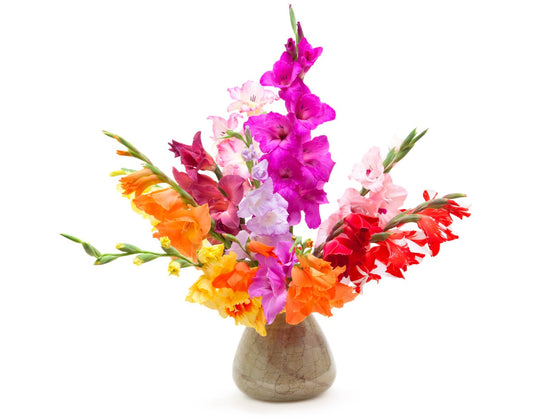
Gladioli
Grow gladioli from corms in Australia: planting depth and timing for six zones, staking, feeding, cutting, lifting and storing, pests and the wild weed species.
| Position | Full sun, sheltered from wind |
|---|---|
| Depth | 10 to 15 cm, flat side down |
| Spacing | 10 to 15 cm |
| First pick | 13 to 17 weeks from planting |