
How to Grow Nerines in Australia
Nerines are South African bulbs that flower pink in autumn on bare stems. Plant dormant bulbs in summer, 5 to 10 cm apart, with the neck just above the soil, in full sun and gritty, free-draining soil. Water while the leaves are green, keep a leafless clump dry, and leave clumps undisturbed for years. Every part is toxic if eaten.
| Sun | Full sun or morning sun |
|---|---|
| Water | Water while in leaf; dry once leaves yellow |
| Soil | Gritty, free-draining; neutral to slightly acid |
| Feed | Sulphate of potash as flower stems appear |
| Spacing | 5 to 10 cm |
| Depth | Neck at or above soil |
| Germination | Grown from bulbs; flower stems appear late summer |
| Harvest | Autumn, as first flowers open |
| Container | Suits pots; 15 to 20 cm wide |
| Frost | Hardy to moderate frost |
| Use | Autumn beds, rockeries, pots and cut flowers |
Nerine (Nerine bowdenii), in the family Amaryllidaceae, is a South African bulb grown for its heads of crinkled pink flowers in autumn. The flowers open on bare stems 40 to 60 cm tall as most of the garden winds down, and last well in a vase. The usual mistake is burying the bulb, when it flowers best with its neck sitting above the soil.
Three mistakes that matter
- Planting the bulb too deep. A bulb buried deep, like a daffodil, often sulks and flowers poorly. Set it with the top of the neck just above the soil, or level with it in frosty districts.
- Watering by the calendar, not the leaves. Heavy watering, or soil that stays wet, can rot the base of the bulb, above all while it rests leafless. Water whenever the leaves are green, summer included, and let the soil dry once they yellow.
- Lifting and dividing too often. Nerines have perennial roots that resent disturbance, and they flower best as a crowded mass. Leave a clump alone for four or five years, and divide only when flowering falls away.
When to plant
Plant dormant bulbs in summer, from about December to February, so the roots settle before the flower buds push up. The buds appear in late summer, as the days shorten noticeably.
| Zone | Example cities | Plant | Flowering | Notes |
|---|---|---|---|---|
| Tropical | Darwin NT; Cairns, Townsville QLD; Broome WA | Not recommended | Not recommended | No cool winter, and hot, wet summers rot the bulbs. Nerines prefer cool to temperate climates. |
| Subtropical | Brisbane, Gold Coast, Bundaberg QLD; Coffs Harbour, Lismore NSW | Jan-Feb | Apr-May | Plant before buds rise. Try pots or raised, gritty beds that shed summer storms; flowering can be patchy. |
| Arid and semi-arid | Alice Springs NT; Broken Hill, Dubbo NSW; Mildura VIC; Kalgoorlie WA | Not recommended | Not recommended | Very hot, dry positions cut flowering. Keen growers can try pots with morning sun and afternoon shade. |
| Temperate | Sydney, Newcastle NSW; Melbourne, Geelong VIC | Dec-Feb | Mar-May | Plant before the buds rise in late summer. Give afternoon shade on hot inland sites. |
| Mediterranean | Perth, Bunbury WA; Adelaide and the SA coast | Dec-Feb | Mar-May | Plant before buds rise. Water through dry summers while in leaf; sharp drainage gives the dry winter rest. |
| Cool and alpine | Hobart, Launceston TAS; Canberra ACT; Ballarat VIC; Orange NSW | Dec-Feb | Apr-May | Plant before buds rise. Where soil freezes, use pots; elsewhere set necks at soil level, mulched dry in winter. |
A potted nerine in bud or flower can go in the ground at any time, at the depth it sat in its pot. Newly planted bulbs sometimes skip a year or two of flowering while they settle.
Site, soil and setup
Sun and sharp drainage decide how well nerines flower.
| Need | What to do |
|---|---|
| Light | Full sun for the best flowering. On hot inland sites, morning sun with afternoon shade suits them better, because very hot, dry positions cut flowering. |
| Soil | Light, gritty, well-drained loam. Lighten heavy soil by mixing in washed river sand, decayed manure and leaf mould. |
| pH | Neutral or slightly acid. On very acid soil, dig in dolomite lime at 100 to 200 g per square metre four weeks before planting. |
| Drainage | Never waterlogged. Raised beds, rockeries and sloping banks shed summer storms quickly. |
| Bed preparation | Dig a 5 cm layer of compost through the bed before planting. Put no fertiliser in the planting hole or against the bulb. |
| Position | The foot of a north-facing wall gathers warmth, but it also blocks rain, so water there in dry spells while the leaves are green. |
A clump stays in one place for years, so crop rotation does not apply.
Weed status, state by state
Nerine is not a declared weed anywhere in Australia, and no state or territory weed list names Nerine bowdenii as a pest.
| State or territory | What the weed lists say |
|---|---|
| Victoria | Not on the declared noxious weeds list. |
| New South Wales | Not listed in NSW WeedWise. |
| Queensland | Not a prohibited or restricted invasive plant. |
| South Australia | Not on the list of declared plants. |
| Western Australia | Listed as permitted (section 11) on the Western Australian Organism List, not a declared pest. |
| Tasmania | Not on the declared weeds index. |
| Northern Territory | Not on the list of weeds in the NT. |
| Australian Capital Territory | Not a declared pest plant. |
Container growing
Nerines do very well in pots and like a snug fit. A pack of two bulbs fits a pot 15 to 20 cm across, about 2 to 4 L, with drainage holes. Set the bulbs close together but not touching, necks just showing. Use a premium potting mix with about a third coarse sand or grit, and grow both store lines the same way.
- Watering. Water as the flower stems appear, then whenever the surface dries while the leaves are green. Stop once the leaves yellow. See watering pots in summer.
- Feeding. Water in liquid potash at the label rate every fortnight from the first flower stems while the leaves are green.
- Position. Full sun outdoors. Bring a pot inside only while it flowers, because the bulbs need the late summer drop in temperature to set flowers.
- Repotting. Refresh the mix every two to five years while the bulbs are dormant, usually in the same size pot.
Planting Bulbs
Nerines start from a dormant bulb: rounded, with a long, prominent neck and a flat base where the roots grow.
What the store sells
The store sells two lines, 'Pink Jewel' and 'Rosea', each a pack of two bulbs listed as Nerine bowdenii, both with rose-pink, reflexed, wavy petals. Plant and grow both lines the same way.
Planting a bulb
- Prepare the bed as under Site, soil and setup.
- Space bulbs 5 to 10 cm apart: they are gregarious and flower better close together.
- Dig a hole just deep enough to hold the bulb upright.
- Set the top of the neck just above the soil in warm and temperate gardens.
- In frosty districts, set the neck level with the soil or up to 3 cm below it.
- Firm the soil and water in once with seaweed solution at 30 mL per 9 L.
Dividing a crowded clump
Divide only when a clump is so congested that flowering declines. Lift it in early summer, separate the bulbs while keeping as many roots as possible, and replant straight away. Offsets often flower the following autumn. See dividing perennials for the method.
Care by growth stage
Nerine bowdenii usually holds its leaves from spring into late summer, then rests leafless through winter, though in some gardens the leaves follow the flowers. Water while the leaves are green, whatever the month, because a bone-dry spell as buds form in mid to late summer can cost flowers.
| Stage | Water | Feed | Watch for |
|---|---|---|---|
| Planting dry bulbs, Dec to Feb | Water in once, then leave until growth shows; one deep drink in a long, hot, dry spell | Seaweed solution at 30 mL per 9 L at planting only | Wet soil around the necks, which leads to rot |
| Flower stems, late summer to autumn | Resume light watering as the stems emerge; keep the soil lightly moist through flowering | Sulphate of potash at 30 to 50 g per square metre, scattered around the clump and watered in | Snails on the buds and flowers |
| Leafless rest, often winter | None; keep the soil on the dry side | None | Cold, wet soil around the bulbs; in frosty districts, a dry mulch over the clump |
| In leaf, often spring to late summer | Water when the topsoil dries, with a weekly soak in dry weather, summer included; stop once the leaves yellow | Seaweed solution at 30 mL per 9 L each fortnight | Striped or mottled leaves; mealybug at the leaf bases in pots; yellowing leaves in late summer, which are normal |
Cut spent flower stems at the base, and pull away the leaves once they have died. If growth stalls in poor soil, scratch in a light dose of all-purpose controlled release granular (NPK around 14-5-10) in spring. Keep it off the necks.
Companion planting
Nerines do best planted in their own clumps, not crowded among other perennials, so choose companions that share sun and sharp drainage.
Grows well with
- Saffron crocus, another autumn bulb that wants full sun and well-drained soil.
- Daffodils and jonquils, which flower soon after the autumn bulbs fade.
- Belladonna lily (Amaryllis belladonna), a close relative that also flowers on bare stems in autumn.
Keep apart
- Vigorous perennials and spreading groundcovers, which smother the clump and shade the necks.
- Thirsty plants that keep the soil wet, because constantly wet soil can rot the bulbs.
- Vegie beds and children's play areas, because every part of the plant is toxic if eaten.
Harvesting Blooms
Cut stems in autumn, when the first flowers in the head have opened and the rest are coloured buds.
- Cut in the cool of the morning, with clean secateurs.
- Cut each stem low, close to the bulb, and stand it straight in clean water.
- Leave the leaves on the plant, because they feed the bulb for future flowers.
- Take few or no stems while a newly planted clump settles.
Cut stems last well indoors, often a week to 10 days in cool water out of direct sun. The petals carry a glittering sheen, from cells shaped like tiny lenses that catch the light. Use them in vases and bouquets.
Common problems
No flowers in the first year or two. New bulbs often take a season or two to adjust before flowering; check the planting depth under Three mistakes that matter, then wait.
Flowering falls away in an old clump. A clump packed tight for many years can flower less; divide it as under Planting Bulbs.
Soft, rotting bulbs. Basal rot follows soil that stays wet, as under Three mistakes that matter; replant firm bulbs in a raised, gritty bed.
Pests and diseases
Pests and diseases rarely bother nerines in the garden, though pots kept in sheltered spots invite mealybug.
Garden snail (Cornu aspersum). Widespread in Australian suburbs, it chews the leaves and damages the flowers on damp nights. Hand-pick by torchlight after rain, and use an iron-based bait if needed. Read more
Lily bulb mealybug (Vryburgia amaryllidis). A sap-feeder recorded on nerines and in Queensland and South Australia, it lives on the bulbs and leaf bases, mostly in pots and enclosed spaces. Lift and discard badly infested bulbs, and give pots open air. Read more
Lily caterpillar (Spodoptera picta). A pest of amaryllis family bulbs in Sydney gardens, it is also found in Queensland and the Northern Territory. The caterpillars feed in groups on the leaves, then bore into the bulb and kill it. Pick off egg masses under the leaves and the caterpillars, and dig out and bin any bulb gone soft.
Virus diseases. Spread by mealybug and snails, viruses can cause striped, mottled or distorted leaves and flowers. Dig out and bin an affected plant so the virus cannot spread. Read more
Prevention first
- Buy firm bulbs and plant them into well-drained soil.
- Check pots for white, waxy mealybug at the leaf bases.
- Control mealybug, which spreads virus from plant to plant.
- Search for snails on damp nights as the flower stems rise.
Tips
- Push a label in beside each clump, because nothing shows above ground through the leafless rest.
- Plant where low autumn sun falls on the flowers, so the glittering petals catch the light.
- Sow any fleshy seed on the surface of a gritty mix as soon as it ripens; seedlings take three to five years to flower.
Due to quarantine restrictions and our shipping policy, we cannot send Nerine bulbs to Western Australia or Tasmania.
Questions
Are nerines poisonous to dogs and cats?
Yes. All parts contain lycorine and related alkaloids, which can cause vomiting, drooling, stomach pain and diarrhoea if eaten. Keep bulbs away from pets and children, and wear gloves when handling them. If a person swallows any, call the Poisons Information Centre on 13 11 26; for a pet, call your vet.
When do you plant nerine bulbs in Australia?
Plant dormant bulbs in summer, from about December to February, before the flower stems rise in late summer. Potted nerines in bud or flower can go in at any time. Newly planted bulbs may take a year or two to flower.
How deep do you plant nerine bulbs?
Barely at all. Set the top of the neck just above the soil in warm and temperate gardens. In frosty districts, set it level with the soil or up to 3 cm below. A deeply buried bulb often flowers poorly.
Why is my nerine not flowering?
New bulbs often skip a year or two. Other causes are deep planting, too much shade and recent division. A very hot, dry late summer can also stop the buds forming inside the bulb. Pots kept indoors all year also miss the cool change that sets flowers.
Should I water nerines in summer?
Yes, while the leaves are green. Nerine bowdenii usually holds its leaves into late summer, when flower buds form inside the bulb, so a bone-dry spell can cost flowers. Let the soil dry once the leaves yellow, and keep a leafless clump on the dry side.
Is nerine a weed in Australia?
No. Nerine bowdenii is not a declared weed in any state or territory, and Western Australia lists it as a permitted plant. Clumps spread slowly by offsets.
More bulbs and tubers to sow in October
All bulbs and tubersCalla Lily
Grow coloured calla lilies from tubers: planting depth and timing for six zones, water and feeding, lifting and storing, pests, toxicity and the arum lily weed.
| Position | Full sun, hot-afternoon shade |
|---|---|
| Depth | 10 cm, rough side up |
| Spacing | 20 to 30 cm |
| First pick | 7 to 12 weeks from planting |
Canna Lily
Grow dwarf canna lilies from rhizomes: planting depth and timing for six zones, feeding for flowers, cutting back, dividing, pests, and the weed lists by state.
| Position | Full sun |
|---|---|
| Depth | 5 to 10 cm, eyes up |
| Spacing | 50 to 70 cm |
| First pick | 6 to 8 weeks from shooting |
Crinum
Grow crinum lilies in Australia: plant bulbs with the neck above the soil, where to site them, care through flowering, lily caterpillar control and toxicity.
| Position | Full sun to part shade |
|---|---|
| Depth | Neck just above soil |
| Spacing | 40 to 60 cm |
| First pick | Nov to Apr flowers |
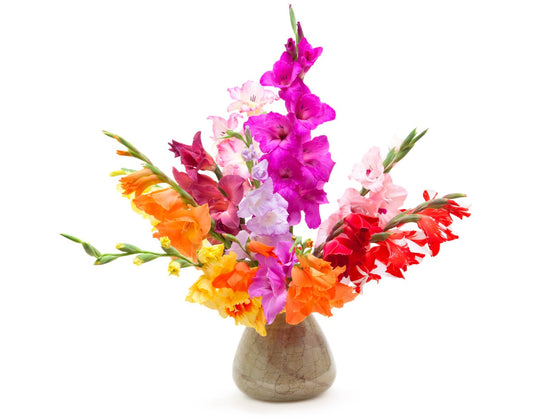
Gladioli
Grow gladioli from corms in Australia: planting depth and timing for six zones, staking, feeding, cutting, lifting and storing, pests and the wild weed species.
| Position | Full sun, sheltered from wind |
|---|---|
| Depth | 10 to 15 cm, flat side down |
| Spacing | 10 to 15 cm |
| First pick | 13 to 17 weeks from planting |