
How to Grow Liliums in Australia
Plant lily bulbs from late autumn through winter, as soon as they arrive. Set them 10 to 15 cm deep and 20 to 30 cm apart in free-draining soil. Give the flowers sun and the roots cool, moist soil. Shoots appear in one to two weeks, and most lilies flower from late spring into late summer. Every part of a lily, pollen included, can kill a cat.
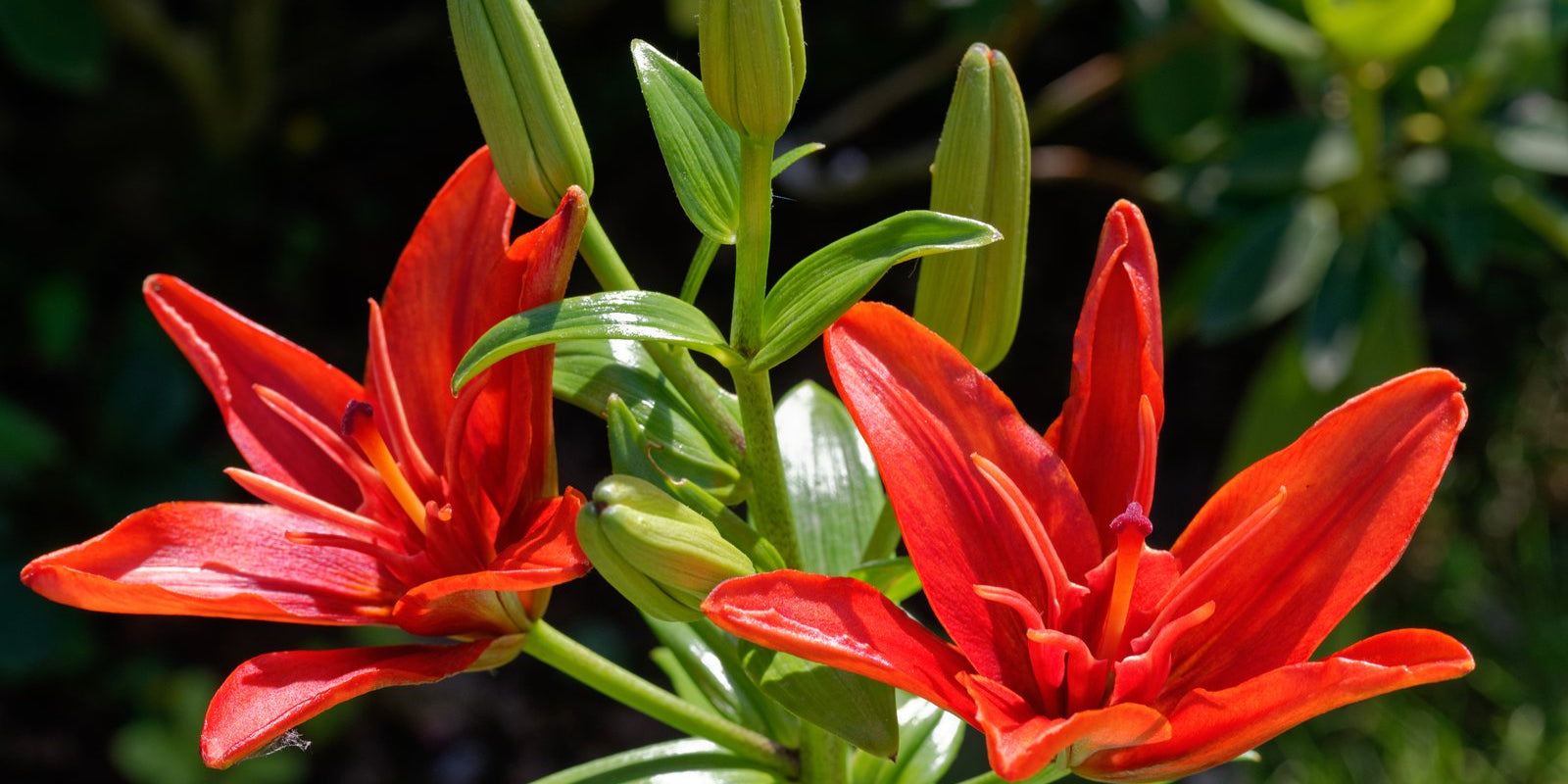
| Sun | Sun, with hot-afternoon shade |
|---|---|
| Water | Evenly moist from shoots to die-back |
| Soil | Free-draining, humus-rich, pH about 5.5 to 6.5 |
| Feed | Bone meal at planting, potash once buds form |
| Spacing | 20 to 30 cm |
| Depth | 10 to 15 cm |
| Germination | Shoots in one to two weeks |
| Harvest | Late spring to late summer |
| Container | Yes, deep pot of 20 L or more |
| Frost | Bulbs hardy; shield new shoots from late frost |
| Support | Stake tall types at planting |
| Use | Summer beds, pots and cut flowers |
Lilies (Lilium species and hybrids) are the true lilies, bulbs in the lily family (Liliaceae) grown for tall stems of large, often scented summer flowers. Daylilies, calla, canna, pineapple and belladonna lilies and lily of the valley are different plants. Lilies grow in every Australian climate from cool to tropical, and most failures start with a bulb left to dry out before planting. Every part of the plant, pollen included, can kill a cat.
Three mistakes that matter
- Letting bulbs dry out before planting. Lily bulbs have no thick outer skin and no true dormant stage, so a bulb left on a bench dries and weakens. Plant on the day the bulbs arrive, or hold them cool in barely damp coir or shredded paper.
- Planting into heavy, wet soil. Water lingering around the bulb invites basal rot, a fungal rot of the bulb base that strikes hardest in warm, wet ground. Choose free-draining soil, or plant on a mound, slope or raised bed wherever puddles form after rain.
- Cutting the whole stem after flowering. The leaves rebuild the bulb for next summer. A stem cut to the ground, or a bloom picked with all its leaves, means fewer flowers the following year. Leave half to two thirds of each stem standing until it yellows.
When to plant
Plant bulbs from late autumn through winter. Shoots usually appear in one to two weeks. Bulbs planted in late winter or early spring flower about 10 to 17 weeks later, depending on the type. Those planted in late autumn grow slowly through the cold, so most lilies flower from late spring into late summer.
| Zone | Example cities | Plant | Flowering | Notes |
|---|---|---|---|---|
| Tropical | Darwin NT; Cairns, Townsville QLD; Broome WA | Jun-Jul | Sep-Oct | Marginal. Plant chilled bulbs early in the dry season, in pots with afternoon shade, to flower before the build-up. |
| Subtropical | Brisbane, Gold Coast, Sunshine Coast QLD; Coffs Harbour, Lismore NSW | May-Jul | Oct-Dec | Give afternoon shade and mulch. Bulbs left in warm ground can flower poorly, so lift and chill them. |
| Arid and semi-arid | Alice Springs NT; Broken Hill, Dubbo NSW; Mildura VIC; Kalgoorlie WA | Jun-Aug | Oct-Jan | Cover new shoots on frosty nights. Mulch deeply, shade afternoons and water steadily once stems rise. |
| Temperate | Sydney, Newcastle, Wollongong NSW; Melbourne, Geelong VIC | May-Aug | Nov-Feb | Mulch before summer to keep roots cool and moist. |
| Mediterranean | Perth, Bunbury WA; Adelaide and the SA coast | May-Aug | Nov-Feb | Wet winters suit planting in free-draining soil. Water deeply and mulch through the long, dry summer. |
| Cool and alpine | Hobart, Launceston TAS; Canberra ACT; Ballarat VIC; Orange NSW; Stanthorpe QLD | Jun-Sep | Dec-Mar | Bulbs are frost hardy, but cover new shoots when a late frost is forecast. |
Bulbs bought late can still go in until early spring. In warm-winter gardens, read Chilling under Planting Bulbs before replanting bulbs from last year.
Site, soil and setup
Lilies want their flowers in the sun and their roots in cool, moist, free-draining soil. Orientals are the fussiest group: they prefer slightly acid soil and a sheltered spot out of hot afternoon sun and wind.
| Need | What to do |
|---|---|
| Sun | Full sun to part shade, with at least three hours of direct sun. In hot districts, afternoon shade helps the flowers last longer. |
| Soil | Deep, rich in organic matter and free-draining. Where water pools after rain, raise the bed or plant on a mound. |
| pH | About 5.5 to 6.5 suits most lilies. Asiatic and trumpet types also take neutral to slightly alkaline soil. Below 5.5, dig in dolomite lime at 100 to 200 g per square metre four weeks before planting. To bring alkaline soil down for Orientals, apply elemental sulphur at 25 to 50 g per square metre at least three months ahead. |
| Bed preparation | Dig in a 5 cm layer of compost or well-rotted cow manure four to six weeks before planting. Rake in bone meal at 100 g per square metre at planting. |
| Shelter | Protect from strong wind, which snaps tall stems and damages flowers. |
A clump can stay in one place for years, so rotation does not apply. After basal rot, plant lilies in a different bed for at least five years.
Which lily is which
| Group | In the range | Scent | What changes for the grower |
|---|---|---|---|
| Asiatic and LA hybrids | 'Red Twin', 'Black Charm', 'Bourbon Street', 'Eyeliner', LA Hybrid Mixed, LA and Asiatic Lilies Mixed | None in Asiatics, light in LA hybrids | Upward-facing flowers about 10 to 15 weeks after planting. LA stems reach about 90 cm. Tolerant of neutral soil. |
| Oriental | 'Muscadet', 'Sorbonne', Oriental Lilies Mixed | Strong | The last group to flower, in mid to late summer. 'Muscadet' stays compact. |
| OT and AOA hybrids | OT Mixed, 'Viva La Vida' | Scented to subtle | OT hybrids grow tall and need staking in open sites. AOA crosses carry Asiatic colour with a light scent. |
| Trumpet (Christmas lily) | 'White Heaven' (Lilium longiflorum) | Strong | Large white trumpets on tall stems about 13 weeks after planting. Called the Christmas lily in cool climates and the November lily in warm ones, after when it flowers. Stake in windy gardens. |
| Tiger lilies | Double Tiger Lily (Lilium lancifolium), 'Tiger Babies' (an Asiatic hybrid bred from it) | None to slight | Sturdy stems need no staking. Less fussy about soil than the other groups. 'Tiger Babies' reaches about 90 to 120 cm. |
Lilies and the state weed lists
No lily in the range is a declared weed in any state or territory. The lily that worries weed officers is Taiwan lily (Lilium formosanum), a white trumpet lily flushed purple outside. It has naturalised along roadsides and in bushland in south-east Queensland, coastal New South Wales and southern Victoria.
| State or territory | What the weed lists say |
|---|---|
| Western Australia | Taiwan lily is prohibited. Any lily brought into the state must meet its import requirements, so check the Western Australian Organism List first. |
| South Australia | No lily is on the declared plant list. |
| Victoria | No lily is on the noxious weeds list. Taiwan lily is regarded as an environmental weed. |
| New South Wales | Taiwan lily falls under the general biosecurity duty that applies to all pest plants. |
| Tasmania | No lily is on the declared weeds index. |
| Queensland | No lily is on the prohibited or restricted invasive plant lists. Taiwan lily is regarded as an environmental weed. |
| Northern Territory | No lily is on the list of weeds. |
| Australian Capital Territory | No lily is on the declared pest plant list. |
Lily seed and bulbs spread in dumped garden waste, so bin spare bulbs and seed pods rather than tipping them over the back fence.
Container growing
Use a pot of at least 20 L with drainage holes: a 40 cm pot holds about 27 L and takes three to five bulbs. Fill it with a quality potting mix made for bulbs. Compact 'Muscadet', OT Mixed and Double Tiger Lily all suit containers.
- Depth. Plant as under Planting Bulbs, keeping at least 5 cm of mix over the tip so roots can form on the stem.
- Watering. Keep the mix evenly moist from the first shoot until the stems yellow, as pots dry faster than beds. See watering pots through summer.
- Feeding. Mix a controlled release granular for containers into the mix at planting. Add fish and seaweed blend at 25 mL per 9 L every fortnight through summer.
- Position. Sun on the leaves and a shaded pot on hot afternoons, which keeps the roots cool.
- After flowering. Stand the pot where it is watered with the garden while the stems die down. In early winter, top-dress with fresh mix and stir in a controlled release granular for containers at the label rate.

Planting Bulbs
Each lily grows from one fresh, scaly bulb, planted straight into the bed or a pot.
Chilling
Lilies need a cold spell called vernalisation (a period of chill that triggers flowering). Bulbs from a supplier have been cold-stored already and need no extra chill. In tropical and subtropical gardens, lift Asiatic and Oriental bulbs once the stems have died down. Pack them in barely damp coir in a bag and chill them in the fridge at 2 to 8°C for six to eight weeks. Keep them away from apples and other ripening fruit, then replant.
Planting in the garden
- Choose firm bulbs and discard any that are soft or mouldy.
- Dig each hole about twice as deep as the bulb is tall, usually 10 to 15 cm.
- Set the bulb with its pointed tip up and roots down, 20 to 30 cm apart, in groups of three or more.
- Push a stake in beside tall varieties at planting, before roots spread.
- Water in well, then keep the soil moist but not wet until shoots appear in one to two weeks.
Care by growth stage
Steady moisture and cool roots decide how well lilies flower. Feed at least twice: once as buds form, which keeps the lower leaves green, and again after flowering, as the bulb rebuilds.
| Stage | Water | Feed | Watch for |
|---|---|---|---|
| Planting to shoots, weeks 0 to 2 | Water in, then keep barely moist | Bone meal from bed preparation, or a controlled release all-purpose granular (NPK around 14-5-10) mixed in at planting | Snails on emerging tips; rot in wet soil |
| Stem growth, weeks 2 to 8 | Keep evenly moist; water when the top 5 cm is dry | Fish and seaweed blend at 25 mL per 9 L every fortnight, or an all-purpose soluble powder (NPK around 23-4-18) every fortnight | Aphids on shoot tips; wind rocking tall stems |
| Buds forming, weeks 8 to 12 | Water deeply, weekly in dry spells | Liquid potash at the label rate every fortnight, or a fruiting and flowering soluble (NPK around 15-4-26) every fortnight | Lower leaves yellowing; stems needing ties |
| Flowering, weeks 10 to 17 | Keep moist through flowering and picking; water weekly if rain is light | Sulphate of potash at 30 to 50 g per square metre, watered in once, or keep up the flowering soluble | Pollen within reach of cats; flowers scorching in hot sun |
| After flowering to die-back | Keep watering while leaves are green, easing off as they yellow | Pelletised chicken manure at 100 g per square metre once as flowers fade, or a fruiting and flowering soluble (NPK around 15-4-26) at the label rate every fortnight until leaves yellow | Stems cut too early; cut to the ground only once brown |
Week ranges run from a spring planting; autumn plantings reach each stage later. Mulch with lucerne or pea straw before summer to keep roots cool, and top-dress established clumps with compost each late winter as shoots appear.
Orientals, OT hybrids and Christmas lilies often need support in open, windy gardens, while tiger lilies stand on their own.
- Use a stake roughly as tall as the variety grows.
- Tie stems loosely to the stake with soft ties as they lengthen.
- In pots, lean three bulbs slightly inward around one central stake so the stems support each other.
- Lift and divide crowded clumps every three to four years in late autumn, replanting without delay. See dividing perennials.

Companion planting
Low plants that shade the soil keep lily roots cool while the stems rise clear above them.
Grows well with
- Alyssum, a low carpet that shades the soil over the bulbs.
- Violas, shallow-rooted winter colour that covers bare soil until the lily shoots rise.
- Azaleas and camellias, which share the cool, slightly acid soil that Orientals prefer.
Keep away anything that shares lily viruses or draws cats into the bed.
Keep apart
- Tulips, which carry tulip breaking virus, a virus that also infects lilies.
- Tiger lilies (Lilium lancifolium), which often carry lily mosaic virus without showing it. Aphids then spread it to Asiatic and Oriental lilies.
- Catnip and catmint, which attract cats into the bed.
Harvesting Blooms
Cut lilies for the vase once the first bud shows colour and is starting to open.
- Cut no more than half the stem, leaving the lower leaves to feed the bulb.
- Strip off any leaves that would sit below the water.
- Stand stems in a bucket of clean water for a few hours, then recut them at an angle.
- Pull the anthers off onto a tissue as each flower opens, so pollen cannot stain petals, cloth or a cat's fur.
- Snap off fading garden flowers so the bulb spends nothing on seed.
Lilies are long-lasting cut flowers. Treat every part of the plant as inedible.
Common problems
Leaves but no flowers. A small or young bulb, deep shade, stems cut too hard the year before or a warm winter without chill is usually to blame. Give more sun and see Chilling under Planting Bulbs.
Bulbs that never came up. A bulb that dried out before planting or sat in wet soil has usually rotted, as in Three mistakes that matter. Read more
Lower leaves yellowing before flowering. Plants left unfed as buds form often yellow from the base up, so give the bud-stage feed under Care by growth stage.
Stems leaning or snapping. Wind and heavy flower heads topple tall types in open sites, so stake them and shelter the bed.
Pests and diseases
Lilies have few pests, and snails, aphids and basal rot cause most losses in Australian gardens.
Garden snail (Cornu aspersum). Snails and slugs chew lily shoots just as they break through the soil, mostly at night. Collect them by torchlight after rain while the shoots are young. Read more
Aphids (family Aphididae). These small sap-suckers cluster on shoot tips and buds, leave sticky honeydew and can spread lily mosaic virus, which has no cure. Hose small colonies off. Read more
Lily leaf blight (Botrytis elliptica). This fungus, recorded in Australia, makes oval brown spots that spread until most of the leaf dies, and it needs wet weather to infect. Pick off and bin spotted leaves at once, since the fungus survives in dead leaves in the soil.
Basal rot (Fusarium oxysporum). This soil fungus enters through the base of the bulb, worst in warm, wet ground; leaves yellow early and the bulb shows brown, rotted scales. Lift and bin affected bulbs, as the fungus lingers in soil for at least three years.
Prevention first
- Buy firm, healthy bulbs, since basal rot arrives on infected bulbs.
- Plant in free-draining soil, and never leave pots standing in water.
- Water at soil level, and bin any plant with streaked, twisted leaves.
Tips
- For lilies in flower on a set date, plant a few bulbs each week across the window, since weather shifts the timing.
- Plant a few extra bulbs just for cutting, so the garden clumps keep their stems and leaves.
- Pair early Asiatic and LA types with later Orientals to spread the flowers across summer.
- Pollen-free doubles such as 'Red Twin' spare the tablecloth, but they are just as toxic to cats as any other lily.
Due to quarantine restrictions and our shipping policy, we cannot send lily bulbs to Western Australia or Tasmania.
Questions
Are lilies poisonous to cats?
Yes, extremely. Every part of a true lily is toxic to cats, including the pollen and the water in a vase. A small amount can cause kidney failure within 12 to 72 hours. If a cat may have touched a lily, see a vet at once or call the Animal Poisons Helpline on 1300 869 738.
When do you plant lilium bulbs in Australia?
Plant from late autumn through winter, as soon as the bulbs arrive, and up to early spring for late bulbs. Spring plantings flower about 10 to 17 weeks later, and most lilies flower from late spring into late summer.
How deep do you plant lily bulbs?
Plant each bulb about twice as deep as it is tall, usually 10 to 15 cm, with the pointed tip up. Space bulbs 20 to 30 cm apart in groups of three or more. In pots, keep at least 5 cm of mix over the tip.
Do lilies come back every year?
Yes. Lilies are perennial bulbs that can stay in the ground for several years. Leave half to two thirds of each stem after flowering so the leaves can rebuild the bulb. Divide crowded clumps every three to four years in late autumn.
Do lily bulbs need chilling in a warm climate?
Fresh bulbs from a supplier are already cold-stored, so plant them straight away. In tropical and subtropical gardens, lift bulbs after the stems die down. Chill them in barely damp coir in the fridge for six to eight weeks, then replant.
Why is my lily not flowering?
The usual causes are a young bulb, too much shade or stems cut too hard the previous year. In warm zones, a winter without enough chill can also stop flowering. Give the clump more sun, leave the leaves after flowering and feed with potash once buds form.
More bulbs and tubers to sow in October
All bulbs and tubersCalla Lily
Grow coloured calla lilies from tubers: planting depth and timing for six zones, water and feeding, lifting and storing, pests, toxicity and the arum lily weed.
| Position | Full sun, hot-afternoon shade |
|---|---|
| Depth | 10 cm, rough side up |
| Spacing | 20 to 30 cm |
| First pick | 7 to 12 weeks from planting |
Canna Lily
Grow dwarf canna lilies from rhizomes: planting depth and timing for six zones, feeding for flowers, cutting back, dividing, pests, and the weed lists by state.
| Position | Full sun |
|---|---|
| Depth | 5 to 10 cm, eyes up |
| Spacing | 50 to 70 cm |
| First pick | 6 to 8 weeks from shooting |
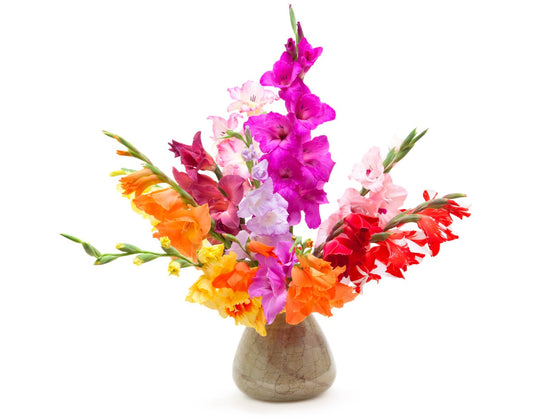
Gladioli
Grow gladioli from corms in Australia: planting depth and timing for six zones, staking, feeding, cutting, lifting and storing, pests and the wild weed species.
| Position | Full sun, sheltered from wind |
|---|---|
| Depth | 10 to 15 cm, flat side down |
| Spacing | 10 to 15 cm |
| First pick | 13 to 17 weeks from planting |
Hippeastrum
Grow hippeastrums in any Australian zone: when to plant bulbs, why the neck sits above the soil, pots, feeding, frost, pests, toxicity and state weed status.
| Position | Full sun or dappled shade |
|---|---|
| Depth | Top third above soil |
| Spacing | 10 to 30 cm |
| First pick | 5 to 8 weeks |