
How to Grow Daffodils in Australia
Plant daffodil bulbs in autumn, March to May in most districts. Set them 10 to 15 cm deep and apart in free-draining soil, in full sun or part shade. In the tropics and subtropics, chill bulbs in the fridge for 6 to 8 weeks first. After flowering, leave the leaves for about six weeks until they yellow, so the bulb can flower again.
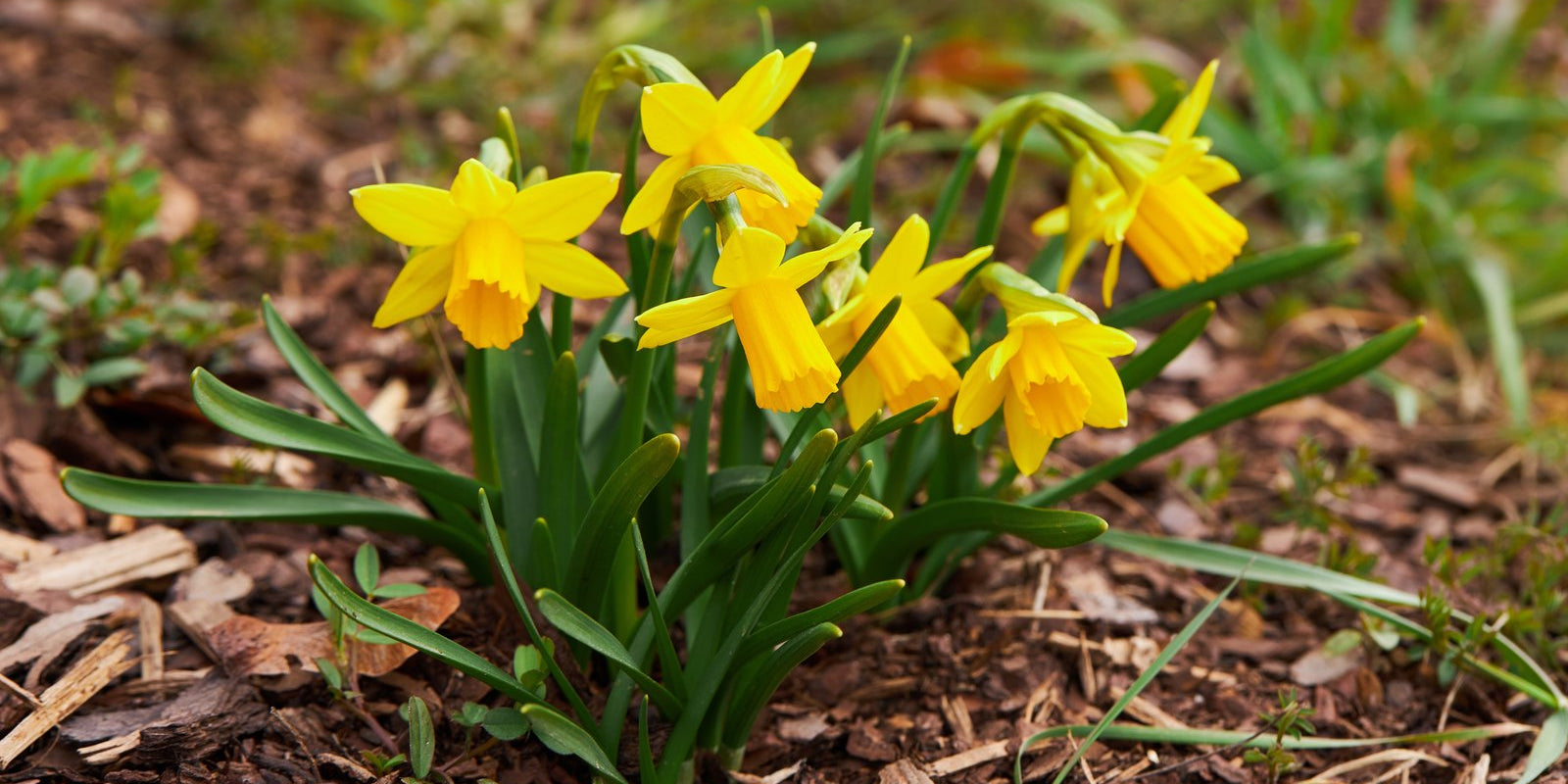
| Sun | Full sun or part shade |
|---|---|
| Water | Moist in growth; less once leaves yellow |
| Soil | Free-draining, pH 6.0 to 7.0 |
| Feed | Bone meal at planting, potash at flowering |
| Spacing | 10 to 15 cm apart |
| Depth | 10 to 15 cm deep |
| Germination | About 10 days in pots; longer in the ground |
| Harvest | Late winter to spring; about 2 months in tropics |
| Container | Wide, squat pot, 30 cm across, 20 cm deep |
| Frost | Hardy to moderate frost |
| Use | Spring beds, pots and cut flowers |
Daffodils (Narcissus species and hybrids) are spring bulbs in the amaryllis family (Amaryllidaceae), grown for trumpet, large-cupped and double flowers in beds, pots and vases. In cool southern districts clumps return for years, but many gardeners cut the leaves off straight after flowering and starve next year's flower. Jonquils, the clustered and strongly scented kinds, have a guide of their own, but the jonquilla 'Pimpernel' sold with these daffodils is covered here.
Three mistakes that matter
- Removing the leaves too soon. After flowering, the leaves feed the bulb and build next year's flower bud. Cutting, mowing or knotting them early can leave a clump of leaves with no flowers. Leave them at least six weeks, until they yellow.
- Skipping the chill in a warm district. Daffodils are bred for cold winters. In the tropics and subtropics, unchilled bulbs often flower poorly or not at all. Chill them in the fridge for 6 to 8 weeks before planting, as described under Planting Bulbs.
- Planting into wet ground. Bulbs sitting in waterlogged soil rot, and warm, wet soil favours basal rot. Plant in free-draining soil, a raised bed or a pot, and never let a pot stand in a full saucer.
When to plant
Plant as the soil cools in autumn, from March to May in most districts, with Anzac Day near the middle of the window. In warmer districts, wait until April. In cold-winter gardens, plant once and the bulbs flower again each spring.
| Zone | Example cities | Plant | Flowering | Notes |
|---|---|---|---|---|
| Tropical | Darwin NT; Cairns, Townsville QLD; Kununurra WA | May-Jun | Jul-Aug | Chill 6 to 8 weeks, then grow in pots as a dry-season annual; bulbs rot in the wet. |
| Subtropical | Brisbane, Sunshine Coast, Bundaberg QLD; Coffs Harbour, Lismore NSW | Apr-May | Jul-Sep | Pre-chill 6 to 8 weeks and plant in the coolest, sunniest spot; lift and replant yearly as an annual. |
| Arid and semi-arid | Alice Springs NT; Broken Hill NSW; Mildura VIC; Kalgoorlie WA | Mar-May | Aug-Sep | Plant once the heat breaks; cold inland nights help. Mulch, water in dry spells; jonquilla types cope best. |
| Temperate | Sydney, Newcastle, Wollongong NSW; Melbourne, Geelong VIC | Mar-May | Aug-Sep | Reliable in Melbourne and on the NSW coast. In warmer spots, wait until April and choose the coolest position. |
| Mediterranean | Perth, Bunbury WA; Adelaide and the SA coast | Mar-May | Aug-Sep | Plant with the first autumn rains; dry summers suit resting bulbs. Choose the coolest, best-drained spot available. |
| Cool and alpine | Hobart, Launceston TAS; Canberra ACT; Ballarat VIC; Orange NSW | Mar-Jun | Aug-Oct | No chilling needed, and frost does not harm them. Firm bulbs can still go in as late as June. |
Keep bulbs cool, dry and airy until planting. In cold districts, firm bulbs can still go in as late as June.
Site, soil and setup
Full sun or part shade suits daffodils, and they do well under deciduous trees, which let winter sun through. In dense shade they grow leaves but rarely flower.
| Need | What to do |
|---|---|
| Soil | Any well-drained soil. Large-cupped daffodils do well in a fairly heavy loam, as long as water drains away. |
| pH | 6.0 to 7.0. Below 6.0, dig in garden lime at 100 to 200 g per square metre 4 weeks before planting. |
| Drainage | On heavy clay or where puddles linger, plant in a raised bed or grow in pots. |
| Bed preparation | Dig in a 5 cm layer of compost, then rake in bone meal at 100 g per square metre just before planting. |
| Avoid | Fresh chook manure, which can burn bulbs, and high-nitrogen feeds, which raise the risk of basal rot. |
Daffodils stay put for years, so rotation matters only after disease. Where basal rot or stem and bulb nematode has struck, replant in a fresh spot.
Container growing
Daffodils have small roots, so choose a wide, squat pot about 30 cm across and 20 cm deep, filled with good quality potting mix. Pack bulbs in so they almost touch: half a dozen suit a wide pot. Cover them with mix to twice the bulb's height. Compact lines suit pots best: the jonquilla 'Pimpernel' at 25 to 35 cm, 'Accent' at 35 to 45 cm, or a miniature such as 'Tête-à-tête'.
- Watering. Water deeply after planting, then keep the mix just moist, not wet, until the leaves die down. Empty the saucer after rain.
- Feeding. From the first flowers, give liquid potash at the label rate every fortnight until the leaves yellow.
- Position. Full sun or part shade. In the tropics, mulch the pot to keep the bulbs cool and keep it out of heavy rain.
- After flowering. Once the leaves die down, plant the bulbs into the garden at full depth, or lift and store them.
Planting Bulbs
In warm districts, chill bulbs before they go in.
Chilling
Chilling stands in for the cold winter that triggers flowering. Put bulbs in a paper bag in the fridge crisper at about 4 to 7°C for 6 to 8 weeks. Stop at 12 weeks, because over-chilled bulbs suffer. Keep them away from apples, pears and other ripening fruit: the ethylene gas they give off can ruin the flower bud. Plant straight from the fridge. Gardeners in cool and alpine districts can skip this step.
Planting in the ground
- Check each bulb and throw out any that are soft, mouldy or light for their size.
- Dig holes or a wide trench 10 to 15 cm deep, about two to three times the bulb's height.
- Set each bulb pointed tip up, 10 to 15 cm apart, in groups rather than single rows.
- Backfill and water in deeply.
- Potted bulbs in a cool district can be up in just over 10 days; deeper bulbs in the ground can take longer. Keep the soil just moist, not wet.
Depth and chill by type
Daffodils are grouped into divisions by flower shape, and the groups differ in bulb size and in how much cold they need.
| Type | Examples | Depth and spacing | Climate notes |
|---|---|---|---|
| Large-cupped (Division 2), one flower per stem | 'Accent', 'Cool Flame', 'High Society', 'Bright Eyes' | 10 to 15 cm deep and apart; 12 to 15 cm for 'Cool Flame' and 'High Society' | Best in cool and temperate gardens. Chill them in the subtropics and tropics. |
| Trumpet (Division 1), trumpet as long as the petals | 'King Alfred' | Two to three times the bulb's height, 10 to 15 cm apart | At its best in colder areas; 'Golden Lion' is a similar trumpet for warmer gardens. |
| Double (Division 4), doubled petals or cup | Many named doubles | Two to three times the bulb's height, 10 to 15 cm apart | Grow as for large-cupped types. |
| Jonquilla (Division 7), one to five small scented flowers per stem | 'Pimpernel' | 8 to 10 cm deep and apart | Copes with drier soil and summer warmth; needs less chill, 4 to 6 weeks in the warmest areas. |
Care by growth stage
What the bulb stores after flowering decides next year's display. Keep the soil moist while leaves are green, and let it dry once they die back.
| Stage | Water | Feed | Watch for |
|---|---|---|---|
| Planting to shoots, weeks 0 to 4 | Soak at planting, then only in dry spells | Nothing more; the bone meal raked in at planting carries them | Puddles over the bed; soft, rotting bulbs |
| Leaf growth, weeks 4 to 12 | Keep moist in dry spells | Seaweed solution at 30 mL per 9 L every fortnight | Snails on new shoots; yellow-striped or twisted leaves |
| Flowering, late winter to spring | Keep watering steady | Sulphate of potash at 30 to 50 g per square metre once, as the flowers open | Chewed petals; aphids on stems and buds |
| After flowering, about 6 weeks | Water thoroughly in dry weather until leaves yellow | Liquid potash at the label rate every fortnight | Seed pods forming; leaves dying back early |
| Dormant, summer | Reduce watering and let bulbs rest; never keep them wet | None | Soft or rotting bulbs when lifting |
If growth is weak in poor soil, a light dose of all-purpose controlled release granular (NPK around 14-5-10), scratched in at planting, can help.
Every four or five years, crowded clumps flower less. Once the leaves have died down, fork up the clump, shake off the soil and pull it apart into smaller groups. Store the bulbs in a cool, airy spot until autumn, then replant the groups at the usual depth and spacing. In the subtropics, treat daffodils as an annual flower: lift them once the leaves yellow, then chill and replant each autumn.
Companion planting
Good companions flower alongside daffodils or hide their leaves while they die down.
Grows well with
- Deciduous trees such as flowering cherries, which stand bare while the bulbs grow and flower.
- Hellebores, which flower at the same time and give a foliage backdrop.
- Later perennials, which grow up through the bulbs and mask the yellowing leaves.
- Pansies and violas planted over bulbs in pots, for colour before the daffodils open.
Keep apart
- Onion, shallot and garlic beds, because poisonous daffodil bulbs are easily mistaken for onions.
Harvesting Blooms
Pick daffodils for the vase at the gooseneck stage, when the bud bends sideways and shows colour.
- Pick early in the morning.
- Take the flower stem only and leave every leaf on the plant.
- Wear gloves, because the sap can irritate skin and eyes.
- Stand fresh daffodils in their own vase for at least an hour before adding other flowers.
- Pinch off faded garden flowers before seed pods form.
Their sap blocks water uptake in other cut flowers, which is why they are conditioned alone first. In a vase, many varieties last 7 to 10 days. Florists hold dry-wrapped buds for up to two weeks in cold storage at 0 to 2°C. Once conditioned, 'Accent' and 'Cool Flame' suit mixed spring bouquets.
Common problems
Leaves but no flowers. Leaves cut too soon (see Three mistakes that matter), shallow planting, crowded clumps, dense shade or a missed chill can all leave bulbs blind.
Fewer flowers each year. Crowded clumps flower less, so lift and divide them as described under Care by growth stage. Read more
Soft bulbs and gaps in the clump. Bulbs rot in soil that stays wet (see Three mistakes that matter), so dig out soft ones. Read more
Leaves dying back early. In dry springs, leaves can wither before the bulb refills, so water deeply after flowering until they yellow.
Weak shoots that never reach the surface. Bulbs planted far too deep can exhaust themselves before they emerge, so keep to two to three times the bulb's height.
Pests and diseases
Daffodils have few pests above ground, but bulb diseases spread quietly from clump to clump.
Common garden snail (Cornu aspersum). Snails and slugs eat the leaves and flowers, leaving ragged petals. Hand-pick them at dusk. Read more
Narcissus yellow stripe virus (Potyvirus narcissus). Light green to yellow stripes run along the upper leaves, and flowers come small and streaked. Aphids (Aphididae) spread it, and it has been found in Australian daffodils. There is no cure, so dig out and bin affected plants. Read more
Basal rot (Fusarium oxysporum f. sp. narcissi). A chocolate-brown rot spreads up from the base, often with pinkish-white fungus between the scales. Planted bulbs yellow early and may not flower. Bin soft bulbs and replant healthy stock elsewhere.
Stem and bulb nematode (Ditylenchus dipsaci). These microscopic worms cause stunted, twisted, yellowish leaves with small pale swellings you can feel. A cut bulb shows brown rings. Once the nematode is confirmed, dig out and bin affected plants and any host plants within a metre. Keep the bed free of host plants and host weeds, bulbs and onions included, for three years.
Prevention first
- Plant only firm bulbs, checked as in step 1 of Planting in the ground.
- Plant new bulbs in their own bed for a season, away from established clumps.
- Wipe knives and secateurs between clumps, because virus spreads on hands and tools.
- Watch buds and stems for aphids from the first shoots and control them, because they carry the virus.
Tips
- Mark each planting with a stake, so a spade does not slice into dormant bulbs in summer.
- Store lifted bulbs in old stockings hung in a dry shed, out of reach of rodents.
- To naturalise daffodils in grass, choose a patch you can leave unmown for six weeks after flowering.
Due to quarantine restrictions and our shipping policy, we cannot send daffodil bulbs to Western Australia or Tasmania.
Questions
Do daffodil bulbs need to go in the fridge before planting?
Only in warm districts. In the tropics and subtropics, chill bulbs in a paper bag in the crisper at about 4 to 7°C for 6 to 8 weeks. Keep them away from ripening fruit. In cool and alpine gardens, and usually in Melbourne, winter does the job without help.
How deep do you plant daffodil bulbs?
Plant large-cupped and trumpet daffodils 10 to 15 cm deep, about two to three times the bulb's height. Set them pointed tip up, 10 to 15 cm apart. Smaller jonquilla types such as 'Pimpernel' go 8 to 10 cm deep. Shallow bulbs tend to split into small bulbs that do not flower.
Why are my daffodils not flowering?
The usual causes are leaves cut or mown too soon after flowering, crowded clumps, shallow planting, dense shade or, in warm districts, no winter chill. Leave leaves at least six weeks, divide clumps every four or five years, and chill bulbs in warm climates.
When can I cut back daffodil leaves after flowering?
Wait until the leaves turn yellow, usually about six weeks after the flowers finish. Until then the leaves feed the bulb for next spring. Do not knot or plait them, and pinch off faded flowers so the plant does not spend energy on seed.
Are daffodils poisonous to dogs and cats?
Yes. All parts contain lycorine and are toxic if eaten by people, dogs, cats and livestock, and the bulb carries the most. Store bulbs away from pets and food, and seek veterinary or medical advice if any part is eaten.
Can you grow daffodils in Brisbane?
Yes, as an annual. Chill bulbs for 6 to 8 weeks, plant in April or May in the coolest, sunniest spot, and expect flowers from late winter. Once the leaves yellow, lift the bulbs, then chill and replant them the next autumn.
Grow it
Tap Add beside a size to put it in your cart. You stay on this page.
- Daffodil Cool Flame (Pack of 3 Bulbs)From $13.19
- Daffodil Accent (Pack of 3 Bulbs)From $13.19
- Daffodil High Society (Pack of 2 Bulbs)From $14.29
- Daffodil Pimpernel (Pack of 3 Bulbs)Out of stock


More bulbs and tubers to sow in October
All bulbs and tubersCalla Lily
Grow coloured calla lilies from tubers: planting depth and timing for six zones, water and feeding, lifting and storing, pests, toxicity and the arum lily weed.
| Position | Full sun, hot-afternoon shade |
|---|---|
| Depth | 10 cm, rough side up |
| Spacing | 20 to 30 cm |
| First pick | 7 to 12 weeks from planting |
Canna Lily
Grow dwarf canna lilies from rhizomes: planting depth and timing for six zones, feeding for flowers, cutting back, dividing, pests, and the weed lists by state.
| Position | Full sun |
|---|---|
| Depth | 5 to 10 cm, eyes up |
| Spacing | 50 to 70 cm |
| First pick | 6 to 8 weeks from shooting |
Gladioli
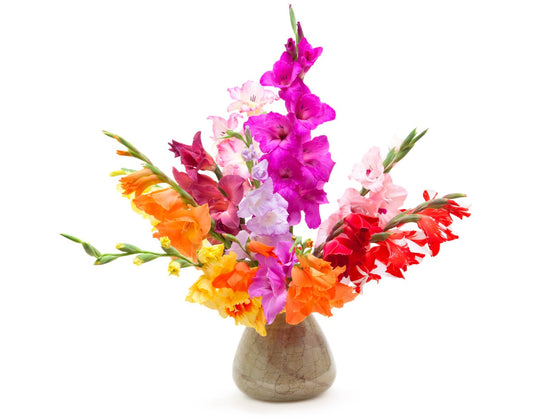
Grow gladioli from corms in Australia: planting depth and timing for six zones, staking, feeding, cutting, lifting and storing, pests and the wild weed species.
| Position | Full sun, sheltered from wind |
|---|---|
| Depth | 10 to 15 cm, flat side down |
| Spacing | 10 to 15 cm |
| First pick | 13 to 17 weeks from planting |
Hippeastrum
Grow hippeastrums in any Australian zone: when to plant bulbs, why the neck sits above the soil, pots, feeding, frost, pests, toxicity and state weed status.
| Position | Full sun or dappled shade |
|---|---|
| Depth | Top third above soil |
| Spacing | 10 to 30 cm |
| First pick | 5 to 8 weeks |