
How to Grow Freesias in Australia
Plant freesia corms in autumn, from March to May, pointed end up. Set them 5 to 7 cm deep and 5 to 10 cm apart, in full sun and free-draining soil. Keep the soil lightly moist while the leaves grow, then let the corms rest dry over summer. In the subtropics, chill corms first. Snap off spent stems, because wild freesias are an environmental weed in southern Australia.
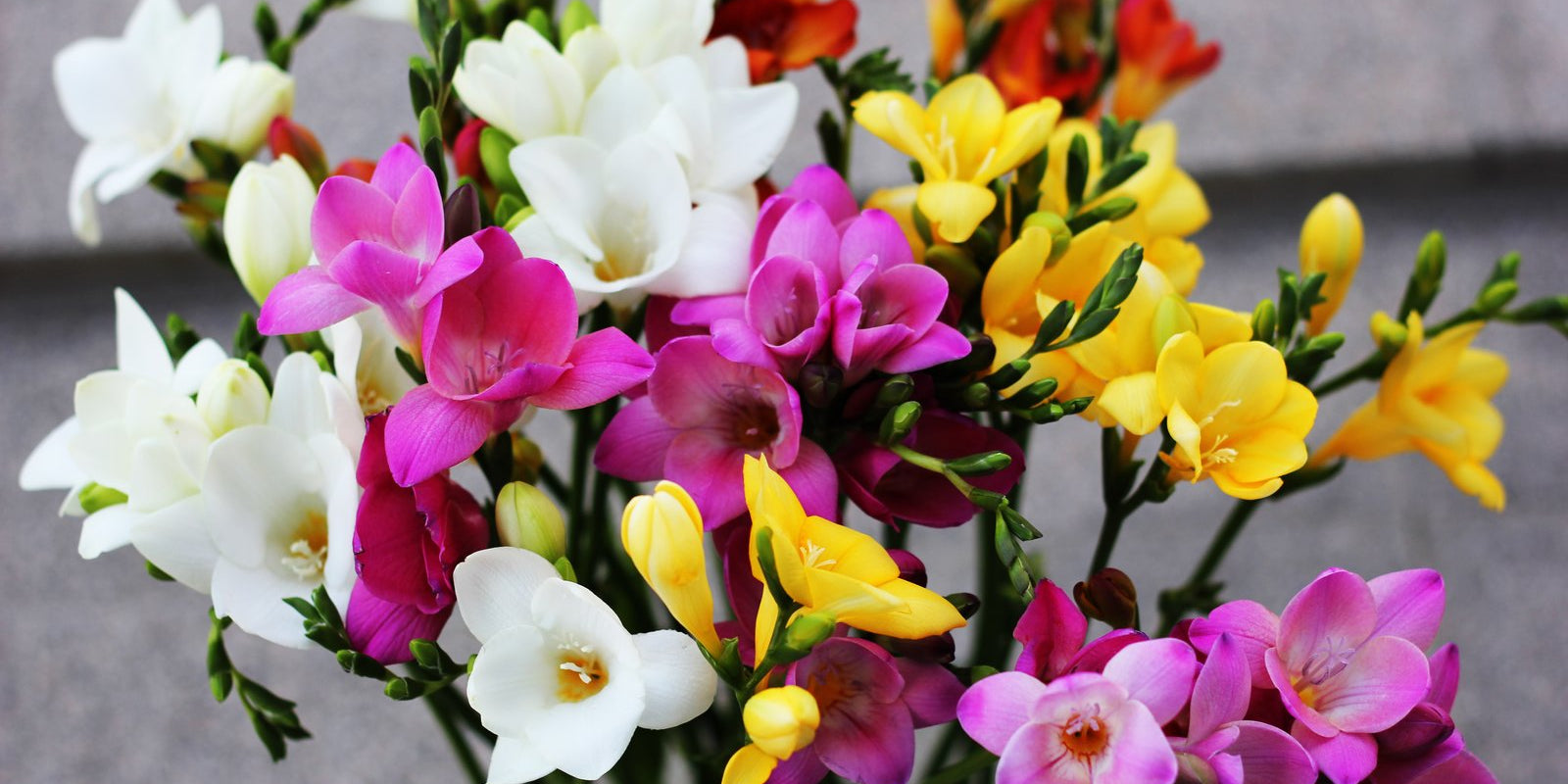
| Sun | Full sun or light shade |
|---|---|
| Water | Moist in growth; dry summer rest |
| Soil | Light, free-draining and near neutral |
| Feed | Bone meal at planting; potash from first buds |
| Spacing | 5 to 10 cm |
| Depth | 5 to 7 cm deep |
| Germination | Grown from corms, planted pointed end up |
| Harvest | Jul to Nov, by variety |
| Container | Yes; six to eight corms per 5 L pot |
| Frost | Survives light frost only; mulch in cold districts |
| Use | Scented beds, pots and cut flowers |
Freesias (Freesia hybrids) are South African corms in the iris family Iridaceae, grown for sweetly scented spring flowers in beds, pots and the vase. They suit the wet winters and dry summers of southern Australia so well that the old cream freesia has escaped into bushland across the south. The most common failure is soil kept wet, in summer above all, which rots the resting corms.
Three mistakes that matter
- Watering through summer. Freesias rest dry once their leaves die down, and corms in wet or waterlogged soil rot. Plant in free-draining soil or a pot, and stop watering when the leaves turn yellow.
- Cutting the leaves off early. The green leaves feed the corm for next year, so tidying them away gives fewer flowers the following spring. Leave them for at least six weeks after flowering, until they are yellow and dry.
- Letting freesias seed near bushland. One plant can set hundreds of seeds, and corms in dumped garden waste start new colonies in reserves. Snap off spent stems and bin spare corms, as under Keeping freesias out of the bush.
When to plant
Plant corms in autumn, from March to May, around the first autumn rains. Anzac Day is a handy marker for the middle of that window. Freesias grow and flower best in cool weather, with nights of about 4 to 13°C and days of 16 to 21°C. The cue is the end of summer heat. One planting flowers once each year, from late winter into spring.
| Zone | Example cities | Plant | Flowering | Notes |
|---|---|---|---|---|
| Tropical | Darwin NT; Cairns, Townsville QLD; Broome WA | Not recommended | Not recommended | Winters are too warm for freesias to flower, and resting corms rot in the wet season. |
| Subtropical | Brisbane, Gold Coast, Bundaberg QLD; Coffs Harbour, Lismore NSW | Apr-May | Aug-Sep | Chill corms 4 to 6 weeks first. Give afternoon shade and sharp drainage, and lift corms over summer. |
| Arid and semi-arid | Alice Springs NT; Broken Hill, Dubbo NSW; Mildura VIC; Kalgoorlie WA | Mar-May | Aug-Oct | Cold winter nights suit freesias. Water in dry winters, shelter from hot spring winds and keep summers dry. |
| Temperate | Sydney, Newcastle, Wollongong NSW; Melbourne, Geelong VIC | Mar-May | Aug-Oct | Corms can stay in the ground and return each spring. Use raised beds where summer storms keep soil wet. |
| Mediterranean | Perth, Bunbury WA; Adelaide and the SA coast | Mar-May | Jul-Oct | An ideal climate, so freesias spread readily. Deadhead every stem and keep corms well away from bushland. |
| Cool and alpine | Hobart, Launceston TAS; Canberra ACT; Ballarat VIC; Orange NSW | Mar-Apr | Sep-Nov | Plant in a warm, sunny, sheltered spot, and mulch over the bed against hard frost. |
In the subtropics, chill corms in a paper bag in the fridge crisper for 4 to 6 weeks before planting. Corms that arrive before the heat breaks can wait somewhere dry and airy.
Site, soil and setup
Freesias come from a winter-rainfall climate, so the right bed is wet enough in winter and dry in summer.
| Need | What to do |
|---|---|
| Light | Full sun, or light shade for part of the day. In deeper shade the stems stretch and flop. |
| Shelter | A spot out of strong wind, which flattens tall and double flower stems. |
| Soil | Light, free-draining soil rich in organic matter. Loosen it to 20 cm deep. |
| pH | Near neutral. On acid soil, rake in garden lime at 100 to 200 g per square metre four weeks before planting. |
| Drainage | On clay or wet ground, plant in a raised bed or a pot, or work in coarse sand and compost. |
| Bed preparation | Dig a 5 cm layer of compost into the top 20 cm. At planting, rake in bone meal at 100 g per square metre. |
| Summer | Choose a bed that is not watered in summer, so the resting corms stay dry. |
Keeping freesias out of the bush
Freesias set plenty of seed and also form tiny corms in the lower leaf joints. Birds, water, mud and dumped garden waste carry them into bushland, where they crowd out native orchids, grasses and wildflowers. Up to 1,500 corms per square metre have been counted in invaded bushland. The cream old-fashioned freesia, long sold as Freesia refracta, is the type most often found wild.
- Snap off each flower stem as it fades, before the seed pods ripen.
- Pull out any freesia that comes up beyond the bed, corm and all.
- Put spare corms and lifted plants in the general waste bin, never over the fence or on a verge.
- Clean soil off boots and tools before walking into bushland.
- Grow freesias in pots where a garden backs onto bush or a creek.
Weed status, state by state
| State or territory | What the weed lists say |
|---|---|
| Victoria | Not on the declared noxious weeds list. An environmental weed of roadsides and reserves, including the Brisbane Ranges National Park. |
| New South Wales | Not listed in NSW WeedWise. An environmental weed, naturalised in coastal districts of central and northern New South Wales. |
| Queensland | Not a prohibited or restricted invasive plant. Naturalised in south-eastern Queensland. |
| South Australia | Not on the list of declared plants. A significant environmental weed, common around Adelaide and in reserves such as Onkaparinga River National Park. |
| Western Australia | Garden freesias are permitted (section 11) on the Western Australian Organism List, but rank as a high priority environmental weed from Gingin to Israelite Bay. Two wild species the store does not sell, Freesia caryophyllacea and Freesia sparrmannii, are declared prohibited. |
| Tasmania | Not on the declared weeds index. An environmental weed, and widely naturalised. |
| Northern Territory | Not on the list of weeds in the NT. |
| Australian Capital Territory | Not among the declared pest plants. |
No state or territory declares garden freesias. Weed priorities can also be set regionally or by a council, so check your council's list before planting near bushland. The environmental weed ratings describe harm to bushland, and the steps above keep garden plants where they belong.
Container growing
Pots suit freesias in every zone where they grow, and a pot can be moved out of summer rain. Use a pot with drainage holes at least 20 cm wide and 20 cm deep (about 5 L), because freesias grow a long root. Fill it with free-draining potting mix with a little perlite or coarse sand, and plant six to eight corms. The massing types and Grandma's Favourites stay shortest, at 20 to 30 cm.
- Watering. Keep the mix lightly moist while the leaves grow, and soak it once a week once buds form. Never leave the pot standing in a saucer of water.
- Feeding. Water in seaweed solution at 30 mL per 9 L every fortnight from the first shoots. From the first buds, switch to liquid potash at the label rate every fortnight.
- Position. Full sun while in growth. Once the leaves die down, move the pot somewhere dry until autumn.
Planting Corms
Freesias start from dormant corms, small and egg-shaped in a netted skin, planted pointed end up.
What the store sells
| Group | Store varieties | Height | Flowers | What it changes |
|---|---|---|---|---|
| Massing | 'Bridal Lace', Hadeco Massing Mixed | 20 to 30 cm | Aug to Nov | Smaller corms bred for drifts; plant them 3 to 5 cm apart for a dense carpet |
| Single mixed | Hadeco Mixed | 25 to 40 cm | Sep to Nov | General beds and pots at standard spacing |
| Parigo Giant | 'Blue Sky', 'Pink Devotion', 'Santorini', Parigo Giant Mixed | 25 to 40 cm | Aug to Oct | Larger flowers on stronger stems; the best for cutting, given full sun |
| Double | 'Red Beauty', 'Sunset', Double Mixed | 25 to 50 cm | Aug to Nov | Heavier heads; give shelter and support in windy spots |
| Old-fashioned | Grandma's Favourites, Refracta Alba and Refracta Mixed grab bags | 25 to 30 cm (Grandma's Favourites); 25 to 40 cm (grab bags) | Jul to Oct | The strongest scent and the earliest flowers; the type that spreads most |
The groups flower at slightly different times, so planting two or three of them stretches the display.
Planting a bed of corms
- Prepare the bed as under Site, soil and setup.
- Set each corm pointed end up, 5 to 7 cm deep.
- Space corms 5 to 10 cm apart, or 3 to 5 cm for the massing types.
- Plant in generous clusters rather than single rows, for colour and scent.
- Water in well, then water again only if the soil dries out.
- Mark the spot, so a spade does not find the corms before the shoots appear.
After flowering: keep, lift or divide
Once the leaves have yellowed (see Three mistakes), stop watering and let the corms rest dry through summer. Each year the old corm is used up and a new one forms on top, with small offsets beside it. Lift and divide crowded clumps every two to three years once the leaves have died. Replant them, or store them dry and airy until autumn.
| Zone | Over summer |
|---|---|
| Tropical | Not grown; see the calendar. |
| Subtropical | Lift once the leaves die, store dry through the humid summer, and chill again before replanting. |
| Arid and semi-arid | Leave in a bed that stays dry; lift corms from any bed that is irrigated in summer. |
| Temperate | Leave in the ground, where the corms return each spring. |
| Mediterranean | Leave in the ground. Freesias spread most readily in this climate; see Keeping freesias out of the bush. |
| Cool and alpine | Leave in the ground, and spread mulch over the bed through the coldest months against hard frost. |
Care by growth stage
Cool weather, steady moisture while the leaves are green and a dry summer rest decide how well freesias flower. Feed lightly at planting, then switch to potassium as the buds form.
| Stage | Water | Feed | Watch for |
|---|---|---|---|
| Planted, roots forming, autumn | Water in once, then only if the soil dries out | Bone meal at 100 g per square metre raked in at planting | Water lying over the bed after heavy rain |
| Leaves growing, late autumn to winter | Keep the soil lightly moist | Seaweed solution at 30 mL per 9 L every fortnight | Snails on new shoots; aphids on young leaves |
| Buds and flowering, late winter to spring | Soak once a week without rain; water at soil level | Liquid potash at the label rate every fortnight from the first buds, or sulphate of potash at 30 to 50 g per square metre once | Stems leaning in wind; pale mottled leaves; flowers fading fast in heat |
| After flowering, leaves still green, at least six weeks | Keep watering in dry spells until the leaves yellow | Liquid potash at the label rate every fortnight | Seed pods forming; snap off spent stems |
| Leaves yellow, summer rest | Stop watering; the corms need a dry summer | None | Yellow, dying leaves, which are normal |
Giant and double types carry heavier heads on stems up to 50 cm, and they lean or flop after heavy rain. Push twiggy sticks or small stakes in around each clump as the leaves grow, or set a wire ring over it before the buds open. If growth stalls in poor soil, a light dose of all-purpose controlled release granular (NPK around 14-5-10) scratched in as the shoots appear can help.
Companion planting
Low spring flowers cover the bare soil between freesias and hide their leaves as they die down.
Grows well with
- Alyssum, a low carpet that fills the gaps and flowers at the same time.
- Pansies and violas, winter edging that hides the base of the clumps.
- Forget-me-nots, blue spring flowers that thread between the stems.
- Daffodils and Dutch iris, other autumn-planted bulbs that want the same dry summer rest.
Keep apart
- Gladioli, which carry aphid-spread viruses such as bean yellow mosaic virus that also infect freesias.
- Clover and other pasture legumes, which can host the same viruses.
Harvesting Blooms
Cut freesias when the first one or two flowers on a stem have opened and the buds above show colour.
- Use clean secateurs or scissors, and stand the stems in water straight away.
- Cut the flower stem low and leave the leaves standing.
- Pick off each flower as it fades, and the buds above keep opening.
- Grow a few clumps just for cutting, so picking does not thin the display.

Cut stems often last a week or more in a vase. Keep the vase away from ripening fruit, whose ethylene gas shortens freesia vase life. A single stem of the old cream freesia can scent a whole room.
Common problems
Leaves but no flowers. A warm winter without cool nights often stops corms flowering, as can leaves cut off early the spring before (see Three mistakes). Chill corms before planting in the subtropics.
Tall, floppy stems. Too much shade stretches the stems, and wind or heavy rain flattens the taller types. Move clumps into sun and support them as under Care by growth stage.
Flowers fade within days. Warm weather shortens the display and makes stems spindly; give afternoon shade in warmer districts and keep the soil moist while in flower.
Grey, collapsed leaves after a cold night. Frost turns the leaves grey and see-through before they collapse; mulch the bed in cold districts and move pots under cover on frosty nights.
Freesias coming up in the lawn. Seed and tiny leaf-joint corms spread beyond the bed; see Keeping freesias out of the bush. For rotting corms, see Three mistakes.
Pests and diseases
Most freesia trouble arrives on the soft new growth of late winter.
Green peach aphid (Myzus persicae). Widespread in Australia and feeding on many garden plants, it carries freesia mosaic virus from plant to plant. Rub off colonies or spray with insecticidal soap. Read more
Freesia mosaic virus (FreMV). Reported on freesias in Australia, it causes pale mottling on the leaves, and brown dead patches when a second infection joins it. Viruses cannot be cured, so pull out and bin affected plants and their corms. Read more
Gladiolus thrips (Thrips simplex). Present in Australia and a pest of freesias, it leaves foliage and petals spotted, bleached and withered, and badly damaged buds fail to open. Bin badly damaged flowers and plants, and keep gladioli, its main host, in another bed. Read more
Grey mould (Botrytis cinerea). Listed among freesia diseases, it rots ageing flowers under a thick grey mould, most often in cool weather with heavy dew. Pick off affected flowers, and water at soil level to keep flowers and leaves dry.
Garden snail (Cornu aspersum). Widespread in Australian gardens, snails and slugs chew young shoots and leaves. Hand-pick on damp evenings, or scatter bait thinly by its label, never in heaps, where dogs cannot reach the pellets or packet. Read more
Prevention first
- Plant only firm, clean corms, and bin any that are soft, mouldy or blemished, because rots, viruses and thrips travel on corms.
- Buy corms from virus-tested stock where it is offered, since a healthy-looking plant can still carry freesia mosaic virus.
- Check new shoots on damp evenings in late winter for snails and aphids.
- Do not replant corms where freesias or gladioli have rotted, because corm rot fungi persist in the soil.
Tips
- Plant a few corms every fortnight through autumn to spread the flowering over a longer season.
- Plant freesias beside a path, door or open window, where the scent carries.
- Store lifted corms in an old stocking hung in the shed, which keeps rodents away from them.
- Label each clump, so the corms are not dug up while they rest unseen over summer.
Due to quarantine restrictions and our shipping policy, we cannot send freesia corms to Western Australia or Tasmania.
Questions
When do you plant freesia bulbs in Australia?
Plant the corms in autumn, from March to May, around the first autumn rains. In the subtropics, chill them in the fridge crisper for 4 to 6 weeks first and plant in April or May. Flowers usually follow from late winter into spring.
How deep do you plant freesia corms?
Plant them 5 to 7 cm deep with the pointed end up, 5 to 10 cm apart. The small massing corms can go 3 to 5 cm apart for a dense drift. Water them in once, then again only if the soil dries out.
Are freesias a weed in Australia?
The old cream freesia has escaped into bushland and is an environmental weed in Western Australia, South Australia, Victoria, New South Wales and Tasmania. No state declares it, though councils can set their own weed priorities. Snap off spent stems before seed forms and bin spare corms rather than dumping them.
Do freesias come back every year?
Yes, where summers are dry. Leave the corms in the ground, let the leaves yellow naturally and stop watering over summer. In the subtropics, lift the corms once the leaves die, store them dry and chill them again before replanting. Divide crowded clumps every two to three years.
Why are my freesias not flowering?
Usually the winter was too warm, the leaves were cut off early the year before, or the corms rotted in wet soil. Chill corms before planting in warm districts, keep the leaves until they yellow, and plant in free-draining soil that stays dry in summer.
Do freesias need staking?
The giant and double types often do, because their heavy heads lean or flop after rain. Push twiggy sticks or small stakes in around each clump as the leaves grow, or set a wire ring over it before the buds open.
More bulbs and tubers to sow in October
All bulbs and tubersCalla Lily
Grow coloured calla lilies from tubers: planting depth and timing for six zones, water and feeding, lifting and storing, pests, toxicity and the arum lily weed.
| Position | Full sun, hot-afternoon shade |
|---|---|
| Depth | 10 cm, rough side up |
| Spacing | 20 to 30 cm |
| First pick | 7 to 12 weeks from planting |
Canna Lily
Grow dwarf canna lilies from rhizomes: planting depth and timing for six zones, feeding for flowers, cutting back, dividing, pests, and the weed lists by state.
| Position | Full sun |
|---|---|
| Depth | 5 to 10 cm, eyes up |
| Spacing | 50 to 70 cm |
| First pick | 6 to 8 weeks from shooting |
Crinum
Grow crinum lilies in Australia: plant bulbs with the neck above the soil, where to site them, care through flowering, lily caterpillar control and toxicity.
| Position | Full sun to part shade |
|---|---|
| Depth | Neck just above soil |
| Spacing | 40 to 60 cm |
| First pick | Nov to Apr flowers |
Gladioli
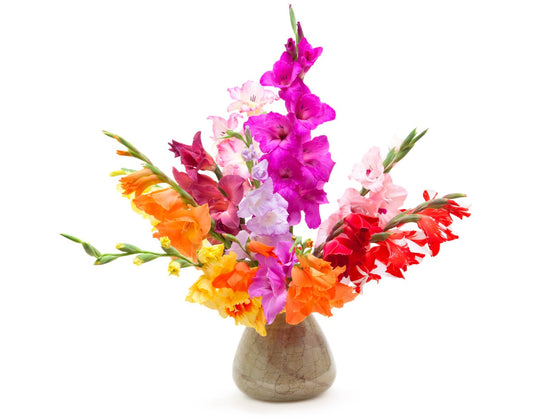
Grow gladioli from corms in Australia: planting depth and timing for six zones, staking, feeding, cutting, lifting and storing, pests and the wild weed species.
| Position | Full sun, sheltered from wind |
|---|---|
| Depth | 10 to 15 cm, flat side down |
| Spacing | 10 to 15 cm |
| First pick | 13 to 17 weeks from planting |