
How to Grow Chincherinchee in Australia
Plant chincherinchee bulbs in autumn, March to May, 8 cm deep and 10 to 15 cm apart, in full sun and free-draining soil. Spikes of white flowers follow from October to December and last around two weeks in a vase. Every part is poisonous, and it is an environmental weed in three states, so cut spikes before they seed.
| Sun | Full sun to light shade |
|---|---|
| Water | Moist while in leaf; dry summer rest |
| Soil | Well drained, average soil, any pH |
| Feed | Bone meal at planting; potash at flowering |
| Spacing | 10 to 15 cm apart |
| Depth | 8 cm, pointed end up |
| Germination | Grown from bulbs; shoots within a few weeks |
| Harvest | October to December from autumn planting |
| Container | Good: a 25 cm pot holds five bulbs |
| Frost | Takes light frost; shelter from hard frost |
| Use | Long-lasting white cut flowers and sunny borders |
Chincherinchee (Ornithogalum thyrsoides) is a South African bulb in the asparagus family (Asparagaceae). It is grown for tall spikes of white, cup-shaped flowers that last for weeks in a vase. It sits beside tulips in the store but is not a tulip, nor the spring star; each has its own guide. Planted in autumn, it flowers from October to December. The mistake that matters most is letting spent spikes set seed, because that is how it escapes into pasture and bushland.
Three mistakes that matter
- Letting it go to seed. One plant can shed around 500 tiny black seeds, which wash and walk into bushland and paddocks, where the plant poisons stock. Seed sets from about October to November, so cut every spike before its pods ripen. Bag spent stems for the household rubbish bin, never the green bin.
- Planting in wet ground. The bulbs rest underground through summer, and soil that stays wet while they are dormant rots them. Choose a free-draining bed, a raised bed or a pot.
- Cutting the leaves off early. The leaves feed next year's bulb. Leave them until they yellow and wither on their own, often while the spike is still in flower, then clear them away.
When to plant
Plant in autumn, from March to May, timed just before autumn rain, so the bulbs root while the soil cools. Anzac Day sits in the middle of that window across the south. One planting lasts for years, because the bulbs multiply where they grow.
| Zone | Example cities | Plant | Flowering | Notes |
|---|---|---|---|---|
| Tropical | Darwin NT; Cairns, Townsville QLD; Broome WA | Not recommended | Not recommended | Winters are too warm for reliable flowering, and the wet season rots dormant bulbs. |
| Subtropical | Brisbane, Sunshine Coast, Bundaberg QLD; Coffs Harbour NSW | Apr-May | Sep-Nov | Plant in a raised bed or pot with winter sun, and keep bulbs dry through the wet summer. |
| Arid and semi-arid | Alice Springs NT; Broken Hill NSW; Mildura VIC; Kalgoorlie WA | Not recommended | Not recommended | Does not establish or flower well in consistently hot, dry conditions; it needs steady winter moisture. |
| Temperate | Sydney, Newcastle, Wollongong NSW; Melbourne, Geelong VIC | Mar-May | Oct-Dec | Reliable in a sunny, well-drained bed, with winter rain doing most of the watering. |
| Mediterranean | Perth, Bunbury WA; Adelaide and the SA coast | Mar-May | Oct-Dec | Naturalised near Perth and in the Adelaide Hills. South Australian authorities ask gardeners not to plant it. |
| Cool and alpine | Canberra ACT; Orange, Bathurst NSW; Ballarat VIC; Hobart TAS | Mar-Apr | Nov-Dec | Choose a warm, sheltered bed or pots, as hard frost can burn the winter leaves. |
Bulbs that arrive late can still go in during June, though they may flower later. Until planting, keep them in a paper bag somewhere cool, dry and airy.
Site, soil and setup
| Need | What to do |
|---|---|
| Light | Full sun to light shade. |
| Soil | Well-drained, average to humus-rich soil. |
| pH | Acid, neutral or alkaline soil all suit, so it rarely needs correcting. |
| Drainage | On heavy clay, plant on a slope, in a raised bed or in pots. |
| Bed preparation | Dig in a 5 cm layer of compost and clear weeds. Rake in bone meal at 100 g per square metre. Do not use fresh chook manure, which can burn bulbs. |
| Position | Well away from paddocks, horse yards and bushland edges, where seed and bulbs can escape. |
Rotation does not apply to a bulb left in place for years.
Weed status by state
Chincherinchee has naturalised in New South Wales, South Australia and Western Australia, and it is regarded as an environmental weed in all three. It is on no state or territory's current declared weed list, but South Australian weed authorities ask gardeners not to plant it.
| State or territory | What the weed lists say |
|---|---|
| Queensland | Not on the prohibited or restricted invasive plant lists, and not recorded as naturalised. |
| New South Wales | Naturalised on the central tablelands and regarded as an environmental weed. Not among the weeds in NSW WeedWise. |
| Victoria | Not a declared noxious weed. Recorded in the state, though the national plant census lists it only as doubtfully naturalised. |
| Tasmania | Not on the declared weeds index. |
| South Australia | Not declared under the Landscape South Australia Act 2019, though older references call it a noxious weed there. Green Adelaide calls it a new and emerging environmental weed, already found in Adelaide Hills conservation parks. Landscapes Hills and Fleurieu asks gardeners not to plant it. |
| Western Australia | Permitted (section 11) on the Western Australian Organism List and present in the state. Naturalised in the Darling Range near Perth and spreading between Kojonup and Albany, where it has poisoned livestock. |
| Northern Territory | Not on the list of weeds in the Northern Territory. |
| Australian Capital Territory | Not a declared pest. |
In South Australia, do not plant it, even in a pot, because even cut flowers can set seed. Around the Perth hills and on the NSW tablelands, where it has escaped, grow it only in pots and cut every spike before it seeds. Never dump surplus bulbs.
Container growing
A pot keeps the bulbs dry over summer, but its spikes still need cutting before they seed. A pot at least 25 cm wide, about 8.5 L, holds a pack of five bulbs. A wide, squat pot suits, because the roots are not deep. Fill it with premium potting mix that drains freely.
- Watering. Water once at planting, then whenever the top few centimetres of mix dry out while the plants are in leaf.
- Feeding. Give liquid potash at the label rate every fortnight from the first flower buds.
- Position. Full sun through winter and spring, under the eaves if a wet spell sets in.
- Summer rest. Once the leaves wither, move the pot out of the rain and keep it dry until autumn.
Planting Bulbs
Start chincherinchee from dormant bulbs, such as the Chincherinchee Elite pack of five, a selection grown for straight, even stems.
Planting in the ground
- Wear gloves, because the sap can irritate skin (see the caution under Harvesting Blooms).
- Plant each bulb 8 cm deep, pointed end up and roots down.
- Space bulbs 10 to 15 cm apart, in a group rather than a single row.
- Water in well, then keep the soil just moist until shoots appear.
- Shoots often appear within a few weeks.
- Mark the spot with a label, because nothing shows above ground at first.
Lifting and dividing
Clumps thicken as each bulb forms offsets and small bulbils on its roots. When flowering thins in a crowded clump, lift it after the leaves have withered. Replant the largest bulbs straight away, or store them dry until autumn where summers are wet. Bin any you do not need as in Three mistakes that matter.
Care by growth stage
Winter moisture and a dry summer decide how well chincherinchee flowers. Keep them fed and watered while in leaf, because bulbs starved of water and food give smaller flowers.
| Stage | Water | Feed | Watch for |
|---|---|---|---|
| Planting to shoots, weeks 0 to 4 | Water in well, then keep just moist | Bone meal at 100 g per square metre, raked in at planting | Rot in waterlogged soil; snails on the first shoots |
| Leaf growth, weeks 4 to 20 | Deep soak in dry spells, letting the top 5 cm dry between waterings | Seaweed solution at 30 mL per 9 L every fortnight | Aphids on new leaves; grey mould in cool, showery weather |
| Flower spikes rising, weeks 20 to 26 | Water at soil level, not over the leaves | Sulphate of potash at 30 g per square metre as spikes appear | Leaves yellowing early, which is normal |
| Flowering and cutting, weeks 26 to 34 | Keep watering steady while you cut, then taper off as leaves wither | Fish and seaweed blend at 25 mL per 9 L every fortnight until leaves yellow | Seed pods forming on spikes left in the garden |
Week ranges run from planting and shift with the season. Once the leaves wither, stop watering and let the bed stay dry until autumn. Where summers are wet, lift the bulbs once the leaves wither and store them dry until autumn. Pots moved under cover do the same job. In hot districts, a mulch over the bed shields the dormant bulbs. If growth is weak in poor sandy soil, a light dose of all-purpose controlled release granular (NPK around 14-5-10), scratched in at planting, can help.
Companion planting
Pair chincherinchee with plants that share its sunny, dry summer, and keep it clear of anything that needs summer water.
Grows well with
- Lavender, which likes the same sun and free drainage and hides the bulb leaves as they die.
- Gypsophila, a sun-loving filler that sits well beside the white spikes in a vase.
- Statice, another long-lasting cut flower for a dry, sunny bed.
Keep apart
- Vegetable and herb beds, where a toxic bulb could be dug up with food.
- Vigorous groundcovers, which compete with the bulbs and smother flowering.
- Native grasses and bushland plantings, which it can invade.
Harvesting Blooms
A spike is ready to cut when its lowest flowers have opened and most of it is still in bud. The buds keep opening in water.
- Cut early in the morning, taking the stem as long as possible.
- Strip any leaves that would sit under water, and stand the stems in clean water straight away.
- Recut the base on a slant before arranging, so it takes up water.
- Snap off each flower as it fades.
- Bag the stems for the rubbish bin when the vase is done, because even cut flowers can set seed.
A vase of chincherinchee often lasts around two weeks. Keep it away from the fruit bowl, because ripening fruit gives off ethylene, a gas that shortens the life of bulb flowers. Use the spikes alone in tall vases or as long-lasting white stems in mixed arrangements.
Common problems
Leaves dying as it flowers. The leaves often yellow and wither while the spike is in bloom, which is the plant's normal habit, not a sign of trouble.
Leaves but no flowers. Small bulbs grow leaves for a season or two before they flower. Crowded clumps, shade and leaves cut too soon also stop flowering (see Three mistakes that matter).
Spikes bending sideways. The flowers turn towards the sun, so plants in part shade lean, and cut stems in a vase bend towards a window.
Seedlings popping up nearby. Self-sown seedlings mean a spike was left to ripen. Dig them out with their small bulbs and any bulbils on the roots, and bin them as in Three mistakes that matter. Check the spot each year until no more come up.
Soft, smelly bulbs. Wet soil or a wet summer rest rots dormant bulbs. Replant firm bulbs in a raised bed or pot. Read more
Pests and diseases
Chincherinchee has few serious pests in gardens, but four problems turn up.
Aphids (family Aphididae). Small green, black or brown sap-sucking insects cluster on new leaves and buds and can spread viruses. Hose them off or spray horticultural oil or insecticidal soap, avoiding hot days. Read more
Ornithogalum mosaic virus (a potyvirus). Leaves show a mottled mosaic of light and dark green, and aphids spread it between plants. There is no cure, so lift and bin affected bulbs. Read more
Grey mould (Botrytis cinerea). Fuzzy grey mould rots flowers and leaves in cool, damp, still weather. Remove affected parts and keep water off the foliage.
Common garden snail (Cornu aspersum). Snails and slugs chew holes in young leaves and flowers, most in cool, moist weather. Pick them off after dark or after rain. Read more
Prevention first
- Plant firm, healthy bulbs in free-draining soil.
- Water at soil level in the morning, so leaves dry before night.
- Check new leaves and buds weekly for aphids from winter into spring.
- Clear dead leaves and plant debris, where grey mould survives and snails shelter.
Tips
- Stand freshly cut stems in water tinted with food dye, and the white flowers take on its colour.
- A single snapped-off flower lasts well on its own, so use spare flowers in small posies or table decorations.
- Pinch about 3 mm off the tip of a cut spike to keep it straight in the vase.
Due to quarantine restrictions and our shipping policy, we cannot send chincherinchee bulbs to Western Australia or Tasmania.
Questions
Is chincherinchee poisonous to dogs, cats and horses?
Yes. Every part is toxic if eaten, the bulb most, and it is poisonous to people, dogs, cats, horses and livestock. Dried stems and leaves stay toxic, so keep them out of hay and stock feed. Wear gloves when handling bulbs, and call a vet or the Poisons Information Centre on 13 11 26 if any is eaten.
Is chincherinchee a weed in Australia?
It has naturalised in New South Wales, South Australia and Western Australia and is regarded as an environmental weed there. No state currently declares it. South Australian weed authorities ask gardeners not to plant it. Wherever you grow it, cut spikes before they seed and never dump bulbs or green-bin them.
When do you plant chincherinchee bulbs?
Plant in autumn, from March to May in most of southern Australia, and by June at the latest. Set bulbs 8 cm deep and 10 to 15 cm apart in a sunny, well-drained spot. Flowers usually follow from October to December.
How long do chincherinchee flowers last in a vase?
Often around two weeks. Cut spikes while most of the buds are still closed, strip leaves below the waterline and stand them in clean water. Snap off faded flowers as the buds above open, and keep the vase away from ripening fruit.
Is chincherinchee the same as star of Bethlehem?
Not quite. Chincherinchee, Ornithogalum thyrsoides, is sometimes sold as star of Bethlehem, but that name more often means Ornithogalum umbellatum, a shorter relative. Both are bulbs of the same genus, and both can spread from gardens.
Do chincherinchee bulbs need to be lifted each year?
No. They can stay in the ground for several years and multiply. Lift and divide only when a clump grows crowded and flowers thin, after the leaves have withered. In wet-summer districts, lifting dormant bulbs or growing them in pots keeps them from rotting.
Grow it
Tap Add beside a size to put it in your cart. You stay on this page.
- Chincherinchee Elite (Pack of 5 Bulbs)Out of stock

More bulbs and tubers to sow in October
All bulbs and tubersCalla Lily
Grow coloured calla lilies from tubers: planting depth and timing for six zones, water and feeding, lifting and storing, pests, toxicity and the arum lily weed.
| Position | Full sun, hot-afternoon shade |
|---|---|
| Depth | 10 cm, rough side up |
| Spacing | 20 to 30 cm |
| First pick | 7 to 12 weeks from planting |
Canna Lily
Grow dwarf canna lilies from rhizomes: planting depth and timing for six zones, feeding for flowers, cutting back, dividing, pests, and the weed lists by state.
| Position | Full sun |
|---|---|
| Depth | 5 to 10 cm, eyes up |
| Spacing | 50 to 70 cm |
| First pick | 6 to 8 weeks from shooting |
Crinum
Grow crinum lilies in Australia: plant bulbs with the neck above the soil, where to site them, care through flowering, lily caterpillar control and toxicity.
| Position | Full sun to part shade |
|---|---|
| Depth | Neck just above soil |
| Spacing | 40 to 60 cm |
| First pick | Nov to Apr flowers |
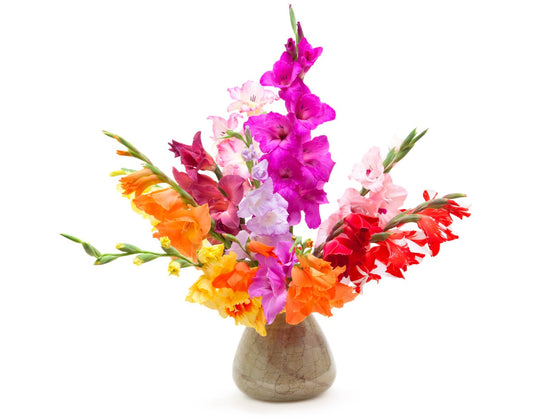
Gladioli
Grow gladioli from corms in Australia: planting depth and timing for six zones, staking, feeding, cutting, lifting and storing, pests and the wild weed species.
| Position | Full sun, sheltered from wind |
|---|---|
| Depth | 10 to 15 cm, flat side down |
| Spacing | 10 to 15 cm |
| First pick | 13 to 17 weeks from planting |