
How to Grow Canna Lilies in Australia
Plant canna rhizomes in spring once frosts are over and the soil is warm. Lay them flat, growing tips up, under 5 to 10 cm of soil and 50 to 70 cm apart. Give full sun, rich soil and deep summer watering, with potash once flowers show. Flowers usually follow six to eight weeks after shooting. Cut stems to the ground in winter.
| Sun | Full sun |
|---|---|
| Water | Moist through summer, drier when dormant |
| Soil | Rich, moist, free-draining, near neutral |
| Feed | Blood and bone, then fortnightly potash feeds |
| Spacing | 50 to 70 cm |
| Depth | 5 to 10 cm, eyes up |
| Germination | Grown from rhizomes; shoots once soil warms |
| Harvest | 6 to 8 weeks from shooting |
| Container | Yes, 30 cm pot minimum |
| Frost | Tender; lift or mulch where soil freezes |
| Use | Summer beds, pots and cut flowers |
Canna lilies (Canna hybrids) are clumping perennials in the canna family (Cannaceae), grown for spikes of bright flowers above broad, banana-like leaves. Despite the name they are not true lilies, which belong to the genus Lilium. They grow from rhizomes (fleshy underground stems that store food) and suit Australian heat, flowering from summer into autumn. The usual stumble is planting them too deep in cold, wet soil, where the rhizome rots before it shoots.
Three mistakes that matter
- Burying rhizomes deep in cold soil. A rhizome set deep in cold, wet ground sits idle and can rot before a shoot appears. Once frosts are over and the soil is warm, cover it with 5 to 10 cm at most, less in heavy ground.
- Letting the clump go dry or hungry in summer. Cannas are not drought tolerant, and lack of water or poor soil are common reasons for few flowers. Water deeply through hot weather and feed as under Care by growth stage.
- Starting too late in cool districts. A rhizome planted late in a short summer may make leaves and run out of season before it flowers. Start it in a pot under cover, as under Pre-sprouting, then plant out after the last frost.
When to plant
Plant rhizomes in spring once the last frost has passed and the soil feels warm, or from late winter in frost-free gardens. One planting is enough: the clump dies back in autumn, returns in spring and flowers about six to eight weeks after it comes up.
| Zone | Example cities | Plant | Flowering | Notes |
|---|---|---|---|---|
| Tropical | Darwin NT; Cairns, Townsville QLD; Broome WA | Aug-Oct | Oct-May | Frost-free, so clumps stay in the ground. Plant before the wet season build-up; flowering can run spring to autumn. |
| Subtropical | Brisbane, Gold Coast, Sunshine Coast QLD; Coffs Harbour, Lismore NSW | Aug-Oct | Oct-May | Clumps stay in the ground all year. Plant well away from creeks, where canna escapes into waterways. |
| Arid and semi-arid | Alice Springs NT; Broken Hill, Dubbo NSW; Mildura VIC | Sep-Nov | Dec-Apr | Plant after the last inland frost. Mulch thickly and water deeply, as cannas are not drought tolerant. |
| Temperate | Sydney, Newcastle, Wollongong NSW; Melbourne, Geelong VIC | Aug-Nov | Dec-Apr | Sydney gardens can plant from August. In Melbourne, wait until frosts end and the soil warms, often October. |
| Mediterranean | Perth, Bunbury WA; Adelaide and the SA coast | Sep-Nov | Dec-Apr | Water deeply and mulch through the long dry summer. Clumps can winter in free-draining ground. |
| Cool and alpine | Hobart, Launceston TAS; Canberra ACT; Ballarat VIC; Orange NSW | Oct-Dec | Jan-Apr | Plant after the last frost, often Melbourne Cup weekend. Lift rhizomes or mulch deeply before the ground freezes. |
Where frost reaches the soil, lift rhizomes or mulch them deeply for winter, as under Cutting Back. A planting made late in the window still flowers, but often for a shorter run.
Site, soil and setup
Cannas want sun, warmth, steady moisture and rich soil. They cope with damp ground better than most bulbs, yet a rhizome left in cold, airless mud over winter can still rot.
| Need | What to do |
|---|---|
| Sun | Full sun gives the most flowers. Dwarf types also take part shade, with fewer blooms. |
| Shelter | A sheltered spot keeps the broad leaves from tearing in wind. |
| Soil | Deep, moist and rich in organic matter. Most soils suit if they are improved and kept watered. |
| pH | Cannas like a sweet soil, around neutral. On acid soil, scratch in dolomite lime at 100 to 200 g per square metre four weeks before planting. |
| Bed preparation | Dig in a 5 cm layer of compost or well-rotted manure four to six weeks ahead. At planting, add blood and bone at 100 to 150 g per square metre and sulphate of potash at 30 to 50 g per square metre. |
| Mulch | A thick layer of compost or well-rotted manure after planting, topped up before winter in cold districts. |
A clump can stay put for years, so rotation does not apply. Replant into fresh soil if a clump was lost to rot or virus.
Canna and the weed lists
The wild species, Canna indica, has escaped gardens and forms dense clumps along waterways, crowding out wetland plants. It is most invasive in south-eastern Queensland and also spreads along the New South Wales coast. Birds carry its seed, and floods and dumped garden waste carry seed and rhizomes. The garden hybrids are close relatives and have also naturalised here.
| State or territory | What the weed lists say about Canna indica |
|---|---|
| Queensland | Not on the state's prohibited or restricted invasive plant lists. Regarded as an environmental weed in the south-east, where Brisbane City Council lists it with no declaration. |
| New South Wales | Covered by the general biosecurity duty that applies to all pest plants. Naturalised mostly along the coast in high rainfall areas. |
| Victoria | Not on the noxious weeds list. |
| Tasmania | Not on the declared weeds index. |
| South Australia | Not on the list of declared plants, though it has naturalised in the south-east of the state. |
| Western Australia | A permitted organism on the state's organism list, as is the garden canna, Canna x generalis. |
| Northern Territory | Not on the list of declared weeds. |
| Australian Capital Territory | Not on the declared pest plant list. |
Keep plantings well back from creeks and drains, and cut spent spikes before seed ripens. Never tip rhizome offcuts into bushland; ask your council how to dispose of them.
Container growing
Dwarf cannas, about 60 cm to 1 m tall, make good pot plants for a sunny patio or pool surround. Use a pot at least 30 cm wide, about 14.5 L, and 30 to 45 cm deep, with drainage holes. Fill it with potting mix enriched with compost, and mix in a controlled release granular for containers. All three dwarf varieties, 'Bronze Scarlet', 'Tropical Rose' and 'Tropical Ruby', suit pots.
- Watering. Keep the mix moist but not soggy, checking daily in hot weather. See watering pots through summer.
- Feeding. Give fish and seaweed blend at 25 mL per 9 L, or an all-purpose soluble (NPK around 23-4-18), every fortnight from the first leaves. Once flowering starts, switch to liquid potash at the label rate, or a fruiting and flowering soluble (NPK around 15-4-26), every fortnight.
- Position. Full sun to part shade, out of strong wind.
- Winter. Once the leaves die back, cut the stems down and move the pot somewhere frost-free, watering only enough to stop the mix drying out completely.
Planting Rhizomes
Cannas start from a rhizome or a bare-rooted plant, set straight into warm soil or started early in a pot.
Pre-sprouting
In cool districts, pot rhizomes under cover about two to three months before the last frost. Use a pot about 20 cm wide, cover the rhizome with just enough mix to leave any young shoots exposed, and water lightly. Keep it at about 10 to 16°C in a bright spot, watering more as leaves grow. After the last frost, harden it off (a week or two of longer daily stays outdoors) before planting out. See hardening off seedlings.
Planting direct
- Choose firm rhizomes with plump growing tips, often called eyes, and discard any that are soft.
- Lay each rhizome flat with the eyes facing up, under 5 to 10 cm of soil. In heavy soil, keep the eyes just below the surface.
- For a bare-rooted plant, spread the roots evenly in the hole and cover only to the crown.
- Space plants 50 to 70 cm apart.
- Water in once, then water lightly until shoots appear, and mulch.
Care by growth stage
Cannas are hungry, thirsty plants in summer, and flowering follows water and potash. Feed generously from the first leaves, then switch towards potassium once the spikes show colour.
| Stage | Water | Feed | Watch for |
|---|---|---|---|
| Planting to first shoots, weeks 0 to 3 | Water in, then lightly until shoots appear | Bed preparation only; or a controlled release all-purpose granular (NPK around 14-5-10) mixed in at planting | Snails on new shoots; soft, rotting rhizomes in cold, wet soil |
| Leafy growth, weeks 3 to 6 | Water deeply whenever the top few centimetres dry out | Fish and seaweed blend at 25 mL per 9 L every fortnight; or all-purpose soluble (NPK around 23-4-18) every fortnight | Aphids on unfurling leaves |
| First flowers, weeks 6 to 10 | Keep the soil evenly moist; mulch holds water in | Sulphate of potash at 30 to 50 g per square metre once, then liquid potash at the label rate every fortnight; or a fruiting and flowering soluble (NPK around 15-4-26) every fortnight | Stippled, yellowing leaves in hot, dry weather |
| Peak flowering, summer to autumn | Keep watering steadily while spikes keep coming | Fish and seaweed blend at 25 mL per 9 L every fortnight; or a fruiting and flowering soluble (NPK around 15-4-26) every fortnight; stop feeding in mid autumn | Yellow streaks or mottling on leaves; rusty spots under leaves in humid weather |
| Dying back, late autumn to winter | Water only in long dry spells; keep dormant rhizomes on the dry side | None | Frost-blackened leaves; rot in waterlogged beds |
Week ranges run from planting and shift with the weather. In later years, scatter blood and bone and sulphate of potash over established clumps in late winter, at the bed preparation rates.
Cutting Back
Each spike flowers in two flushes, so cutting at the right point keeps colour coming. In winter the whole clump is cut back, and every two or three years it is lifted and split.
- When a spike has no more buds, cut it down to the next side shoot, where a second spike forms.
- Remove finished spikes before the seed pods ripen, so birds do not carry seed away.
- In autumn, clear damaged leaves and old flower heads.
- Once the stems die back in winter, cut them down to ground level.
- Divide crowded clumps in late winter or early spring, cutting so each piece keeps at least one good shoot.
- Where the ground freezes, lift rhizomes before the first frost, trim stems to about 15 cm and store them barely moist at 5 to 10°C.
Lifted clumps break apart fairly easily by hand. For the full method, see dividing perennials.
Companion planting
Bold cannas suit a sunny border with plants that share their love of summer water and rich soil.
Grows well with
- Dahlias, especially the short bedding types, which flower alongside them in the same rich, watered bed.
- Echinacea, a summer to autumn bloomer for the front of the clump.
- Alyssum, a low edging that draws hoverflies, whose larvae eat aphids.
Some neighbours fight the canna for water or light.
Keep apart
- Lavender and other dry-country plants, which want the summer dryness that cannas cannot take.
- Portulaca and other low sun lovers, which sit in the shade of the broad leaves.
- Dense spreading groundcovers, which crowd the rhizomes and hide snails.
Harvesting Blooms
Cut a stem for the vase when its lowest flowers have opened and the buds above show colour.
- Pick in the cool of the morning.
- Cut the stem low, just above a leaf, and leave most of the leaves on the clump.
- Stand stems in clean water as soon as they are cut.
- Pull off each flower in the vase as it fades, so the next bud shows.
- Keep picking and deadheading in the garden, which encourages more spikes.
Each flower lasts only a few days, but the buds behind it open in turn. Store cut stems in a cool room out of direct sun, and change the water every couple of days. Of the three, 'Tropical Rose' is the pick for cutting, set in a tall vase with foliage.
Common problems
No flowers. A late start, dry soil or poor soil is usually to blame, as covered in Three mistakes that matter. Plants in heavy shade also flower poorly, so move the clump into full sun.
Rhizomes that never come up. Deep planting in cold, wet soil rots them (see Three mistakes that matter). Dig one up: a firm rhizome is still waiting for warmth, while a soft one has rotted. Read more
Leaves blackened after a cold night. Cannas are frost tender, and frost kills the top growth. Cut damaged stems down to about 15 to 20 cm and the clump usually regrows when the weather warms.
A crowded clump with fewer, smaller spikes. Old clumps grow large and congested if left for years. Lift and divide them, as under Cutting Back.
Pests and diseases
Cannas are tough, and most trouble comes from three familiar garden pests, a rust and a virus.
Garden snail (Cornu aspersum). Snails and slugs chew ragged holes in new shoots and unfurling leaves. Check after rain and on mild evenings, and pick them off. Read more
Aphids (Aphididae). These small, soft insects cluster on new growth and leave sticky honeydew. Hose off small colonies. Read more
Two-spotted mite (Tetranychus urticae). These tiny mites feed under the leaves, leaving fine yellow stippling and webbing, and build up fast in hot, dry weather. Hose the undersides and keep plants well watered. Read more
Canna rust (Puccinia thaliae). In warm, humid weather, rusty spots form on the leaves, worst underneath and often in lines along the veins, and badly hit leaves die. Pick off spotted leaves and bin them rather than composting, water at soil level and give clumps sun and space for air.
Canna yellow mottle virus (Badnavirus betamaculaflavicannae). Infected leaves show yellow streaking, mottling or distortion, and the virus is established in Australia. There is no cure, so bin the whole clump rather than dividing it.
Prevention first
- Plant only firm, healthy rhizomes, and never divide a clump with streaked leaves.
- Check new shoots for snails after rain.
- Keep the soil moist in hot weather, since mites thrive on dry, stressed plants.
- Look under young leaves every week or two for aphids and mites.
Tips
- Set the bronze leaves of 'Bronze Scarlet' beside the green-leaved 'Tropical Rose' or 'Tropical Ruby', so each sets off the other.
- Plant three or more of one colour in a drift, which reads as one bold block of colour from across the garden.
- Push a stake beside each clump before it dies back, so it is not dug through while dormant in winter.
Due to quarantine restrictions and our shipping policy, we cannot send canna lily plants to Western Australia or Tasmania.
Questions
Is a canna lily a true lily?
No. Cannas belong to their own family, Cannaceae, and grow from rhizomes. True lilies belong to the genus Lilium and grow from scaly bulbs. The shared name comes from the showy, lily-like flowers.
How deep do you plant canna lily rhizomes?
Lay the rhizome flat with its growing tips up, under 5 to 10 cm of soil, and space plants 50 to 70 cm apart. In heavy soil, keep the tips just below the surface. Planting too deep in cold, wet soil can rot the rhizome.
Do you cut back canna lilies in winter?
Yes. Once the stems die back in late autumn or winter, cut them to ground level. Through summer, cut each finished spike down to the next side shoot so a second spike can flower. Where the ground freezes, lift the rhizomes before the first frost instead.
Why is my canna lily not flowering?
The usual causes are a late start, dry soil, poor soil or too much shade. Plant in full sun, water deeply in hot weather and feed with potash from the first flower spikes. Very crowded old clumps also flower poorly until they are divided.
Are canna lilies a weed in Australia?
The wild species, Canna indica, is an environmental weed along waterways in south-eastern Queensland and coastal New South Wales. No state declares it, and Western Australia lists it as permitted. Keep cannas away from creeks, remove seed pods and never dump rhizomes in bushland.
Are canna lilies poisonous to dogs and cats?
The ASPCA lists garden canna as non-toxic to dogs, cats and horses. Even so, grow them as ornamentals only. Keep pets and children from chewing the leaves or rhizomes, and ask a vet about any animal that eats a lot.
More bulbs and tubers to sow in October
All bulbs and tubersCalla Lily
Grow coloured calla lilies from tubers: planting depth and timing for six zones, water and feeding, lifting and storing, pests, toxicity and the arum lily weed.
| Position | Full sun, hot-afternoon shade |
|---|---|
| Depth | 10 cm, rough side up |
| Spacing | 20 to 30 cm |
| First pick | 7 to 12 weeks from planting |
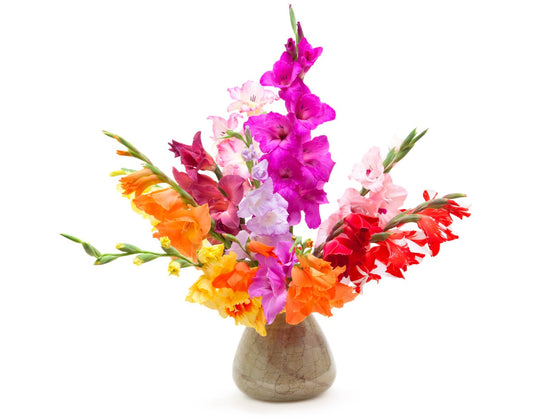
Gladioli
Grow gladioli from corms in Australia: planting depth and timing for six zones, staking, feeding, cutting, lifting and storing, pests and the wild weed species.
| Position | Full sun, sheltered from wind |
|---|---|
| Depth | 10 to 15 cm, flat side down |
| Spacing | 10 to 15 cm |
| First pick | 13 to 17 weeks from planting |
Hippeastrum
Grow hippeastrums in any Australian zone: when to plant bulbs, why the neck sits above the soil, pots, feeding, frost, pests, toxicity and state weed status.
| Position | Full sun or dappled shade |
|---|---|
| Depth | Top third above soil |
| Spacing | 10 to 30 cm |
| First pick | 5 to 8 weeks |
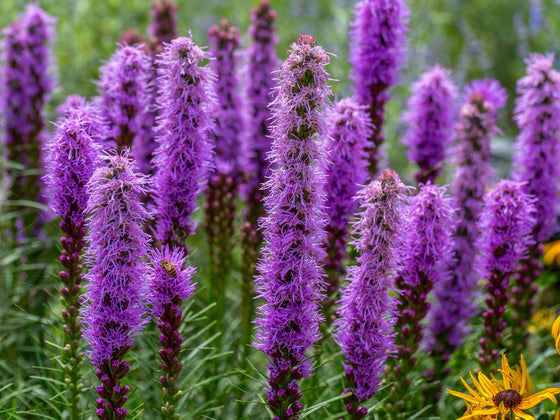
Liatris
Grow liatris corms in Australia: planting depth and months for six zones, free-draining soil, pots, cutting and drying the spikes, pests and state weed lists.
| Position | Full sun |
|---|---|
| Depth | 5 to 10 cm deep |
| Spacing | 15 to 30 cm apart |
| First pick | About 10 to 13 weeks |