
How to Grow Ixias in Australia
Plant ixia corms in autumn, 5 cm deep and 5 to 10 cm apart, in full sun and free-draining soil. Water while the leaves are green, then let the corms rest dry over summer. Flowers follow in spring and cut well. Several ixias are bushland weeds in southern states, so cut spent stems before seed forms and never dump corms.
| Sun | Full sun |
|---|---|
| Water | Moist in growth; dry summer rest |
| Soil | Light, free-draining; neutral to slightly alkaline |
| Feed | Bone meal at planting; potash from first flowers |
| Spacing | 5 to 10 cm |
| Depth | 5 cm deep |
| Germination | Grown from corms; leaves appear in autumn |
| Harvest | Sep to Dec, by zone |
| Container | Yes; a pot at least 30 cm wide |
| Frost | Light frost only; mulch or shelter in cold areas |
| Use | Beds, pots and cut flowers |
Ixia (Ixia hybrids), the corn lily of the iris family Iridaceae, grows wiry stems of starry spring flowers for beds, pots and the vase. The corms come from the winter-rainfall Cape of South Africa, and southern Australia suits them well enough that several species run wild in bushland. The usual failure is a bed kept wet over summer, which rots the resting corms.
Three mistakes that matter
- Keeping the soil wet in summer. Ixias grow through winter and rest through summer, and corms left sitting in damp soil rot. Plant in free-draining soil, stop watering as the leaves yellow, and keep sprinklers off the bed until autumn.
- Cutting the leaves off after flowering. The green leaves feed the corm for next spring's flowers. Leave them until they have yellowed and withered, then pull them away. Corms stripped of green leaves often flower poorly the following year.
- Letting spent stems seed, or dumping old corms. Ixias spread by seed and by small daughter corms, and garden waste carries them into bushland. Cut each stem as it fades, before seed forms, and bag and bin unwanted corms.
When to plant
Plant corms in autumn, once the summer heat has passed and the soil starts to cool. Anzac Day falls in the middle of the window in most southern gardens. One planting flowers once a year, in spring.
| Zone | Example cities | Plant | Flowering | Notes |
|---|---|---|---|---|
| Tropical | Darwin NT; Cairns, Townsville QLD; Broome WA | Not recommended | Not recommended | No cool growing season, and wet-season heat and rain rot the resting corms. |
| Subtropical | Brisbane, Gold Coast, Bundaberg QLD; Coffs Harbour, Lismore NSW | Apr-May | Sep-Oct | Plant in pots or raised beds, and lift or cover corms before summer storms soak the soil. |
| Arid and semi-arid | Alice Springs NT; Broken Hill, Dubbo NSW; Mildura VIC; Kalgoorlie WA | Apr-May | Sep-Nov | Water through winter and spring growth. Hot, dry summers suit the resting corms; shelter flowers from hot winds. |
| Temperate | Sydney, Newcastle, Wollongong NSW; Melbourne, Geelong VIC | Mar-May | Oct-Nov | Plant as the soil cools around Anzac Day. In Sydney, keep summer storm water off the bed. |
| Mediterranean | Perth, Bunbury WA; Adelaide and the SA coast | Mar-May | Sep-Nov | The climate matches the corms' home, so ixias spread readily here. Plant once the summer heat breaks and soil cools. |
| Cool and alpine | Hobart, Launceston TAS; Canberra ACT; Ballarat VIC; Orange NSW | Apr-May | Oct-Dec | Hard frost burns the winter leaves. Plant in a warm, sheltered bed and mulch, or grow in pots. |
Early in the window, wait for the first cool nights rather than planting into hot soil. Corms bought early keep well in a paper bag somewhere dry and airy until then.
Site, soil and setup
Choose the sunniest, best-drained spot in the garden, because most ixia flowers open only in sunshine and the corms rot in wet ground.
| Need | What to do |
|---|---|
| Light | Full sun. In hot inland districts, light afternoon shade helps the flowers last longer. |
| Shelter | Out of strong wind, since a heavy head of flowers can bend the thin stems over. |
| Soil | Light, sandy or loamy soil that drains freely. |
| pH | Neutral to slightly alkaline. If a soil test reads below pH 6, dig in garden lime at 100 to 200 g per square metre 4 weeks before planting. |
| Bed preparation | Dig a 5 cm layer of compost through the bed. Rake in bone meal at 100 g per square metre at planting. Never use fresh chook manure, which can burn corms. |
| Drainage | On heavy clay, or where water lies after rain, plant in a raised bed or a pot, because corms rot in poorly drained ground. |
Where corms have rotted, replant healthy ones in a different, better-drained spot.
Weed status, state by state
Ixias have escaped from gardens into bushland across southern Australia, where they crowd out the native plants that wildlife feeds on. Only one species, Ixia odorata, is declared, and only in Western Australia. Several others are environmental weeds of bushland in Western Australia and Victoria, and variable ixia has invaded South Australian conservation parks.
| State or territory | What the weed lists say |
|---|---|
| Western Australia | Yellow ixia (Ixia maculata) and its hybrid with variable ixia (Ixia polystachya) are permitted (section 11) on the Western Australian Organism List. Ixia odorata is a declared pest, prohibited (section 12). Yellow and variable ixia are environmental weeds of woodland from Perth to Albany and the Darling Range. |
| South Australia | No ixia on the list of declared weeds. Variable ixia has naturalised in Adelaide Hills reserves, including Belair National Park and Cleland Conservation Park. |
| Victoria | No ixia on the declared noxious weeds list. The state's advisory list of environmental weeds rates yellow and variable ixia very high risk, and three more ixias high risk. |
| New South Wales | No ixia listed in NSW WeedWise. Variable ixia has naturalised around Sydney and on the far south coast. |
| Queensland | Not a prohibited or restricted invasive plant. Yellow ixia is sparingly naturalised in south-east Queensland. |
| Tasmania | No ixia on the declared weeds index. Yellow ixia has been recorded in Tasmanian bushland and coastal reserves. |
| Northern Territory | No ixia on the list of weeds in the NT. |
| Australian Capital Territory | No ixia among the declared pest plants. |
In every state, deal with spent stems and spare corms as under Three mistakes. Never tip corms, daughter corms or old bulb soil over a fence or into bushland. Keep seed heads out of green waste, where they can spread through the mulch.
Container growing
Pots suit ixias in every zone and are safest where summers are wet, because a pot can go under cover once the leaves die down. Use a pot at least 30 cm wide with drainage holes, about 15 L or more. Fill it with premium potting mix with a few handfuls of coarse sand mixed through, and plant about 15 corms 5 cm deep.
Candy Mixed carries white, orange, red, purple and yellow flowers with dark centres on 50 to 70 cm stems, so choose a heavy pot. The store also sells 'Elvira'.
- Watering. Water once at planting, then whenever the surface of the mix is dry while the leaves are green. Stop as the leaves yellow and keep the pot dry until autumn.
- Feeding. Water in seaweed solution at 30 mL per 9 L every fortnight while the leaves grow. From the first flowers, switch to liquid potash at the label rate every fortnight until the leaves yellow.
- Position. Full sun while in growth. Move the pot under cover for summer so rain cannot wet the resting corms.
Planting Corms
Ixias start from corms (bulb-like storage stems), planted dormant in autumn with the pointed end up.
Planting a bed of corms
- Prepare the bed as under Site, soil and setup.
- Choose firm, plump corms and discard any that are soft or mouldy.
- Set each corm pointed end up, 5 cm deep, about twice as deep as the corm is wide. If the tip is unclear, lay the corm on its side.
- Space corms 5 to 10 cm apart, or plant three to five to a hole for a fuller clump.
- Water in well, then water again only if the soil dries out before the leaves appear.
- Mark the spot, so a spade does not find the corms over summer.
Lifting and dividing
In dry-summer gardens, leave the corms in the ground, where they multiply into clumps. Lift and divide a clump once it is crowded, usually after four or five years, once the leaves have withered. In the subtropics, and anywhere the bed gets summer water, lift the corms every year as the leaves die.
Separate the small daughter corms from each parent and discard any soft ones. Store them completely dry, somewhere airy at around 20 to 25°C, and replant in autumn.
Care by growth stage
Steady moisture while the leaves are green, full sun and a dry summer rest decide how well ixias flower. Feed lightly and avoid high-nitrogen feeds.
| Stage | Water | Feed | Watch for |
|---|---|---|---|
| Planted, roots forming, autumn | Water in well, then only if the soil dries out | Bone meal at 100 g per square metre raked in at planting | Water lying over the corms after heavy rain |
| Leaves growing, late autumn to winter | Water when the top few centimetres dry out | Seaweed solution at 30 mL per 9 L every fortnight | Snails on new shoots; frost-burnt leaf tips in cold districts |
| Flower spikes and flowering, spring | Keep the soil steadily moist through flowering, also while cutting stems | Liquid potash at the label rate every fortnight from the first flowers, or sulphate of potash at 30 to 50 g per square metre once | Aphids on buds; stems bent by wind |
| After flowering, leaves yellowing, late spring | Water less as the leaves turn yellow, then stop | Liquid potash at the label rate every fortnight until the leaves yellow | Seed capsules forming; cut spent stems |
| Dormant, summer | None; the corms need a dry rest | None | Sprinklers or summer storms wetting the bed; lift corms in wet-summer zones |
If growth stalls in poor soil, a light dose of all-purpose controlled release granular (NPK around 14-5-10) scratched in as the leaves appear can help. Each autumn, before growth resumes, spread compost in a 5 cm layer over established clumps.
Companion planting
Neighbours that share the ixia's taste for sun, sharp drainage and a dry summer suit it best. Low ones also hide its leaves as they die down.
Grows well with
- Lavender, which wants the same sunny bed and dry summer.
- Rosemary, a drought-hardy shrub that fills the space once the ixias die down.
- Catmint, a low grey mound that hides the yellowing ixia leaves.
- Dianthus, low edging that likes the same free-draining soil.
Keep apart
- Dahlias and canna lilies, which need the summer water that rots resting ixia corms.
- Lawns on sprinklers and beds on summer irrigation, for the same reason.
- Garden edges that meet bushland or a creek, where seed and daughter corms escape.
Harvesting Blooms
Cut stems when the lowest buds show colour but have not yet opened.
- Cut in the cool of early morning, when the stems are full of water.
- Use clean, sharp secateurs and stand the stems in water straight away.
- Take the flower stem but leave the leaves on the plant to feed the corm.
- Grow a few clumps just for cutting, so picking does not thin the display.
The buds open in turn up the spike, and a vase can last up to two weeks. Ixias add height and movement to mixed spring posies.
Common problems
Leaves but few or no flowers. Shade, a crowded clump or leaves cut before they yellowed can leave corms too weak to flower; divide crowded clumps as under Planting Corms.
Flowers shut or stems flopping. Shade, dull weather or wind is the usual cause. Move the corms to a sunny, sheltered spot while they are dormant, as under Site, soil and setup.
Ixias coming up outside the bed. Seed or daughter corms have spread; dig the plants out with their corms while the leaves are green, then bag and bin them.
Soft, rotten corms. Wet summer soil is the usual cause, as under Three mistakes; discard soft corms at lifting.
Pests and diseases
Ixias are generally trouble-free, and most problems start with damp corms or soft spring growth.
Aphids (Aphididae). Widespread in Australia, aphids can cluster on ixia buds and young leaves in spring, though seldom badly. Hose them off, or spray an insecticidal soap at its label rate. Read more
Mealybugs (Pseudococcidae). These small, white, waxy sap-suckers can infest corms, especially in pots and in storage. Check corms at lifting and planting, and discard any carrying white, cottony colonies. Read more
Garden snail (Cornu aspersum). Widespread in Australian gardens, snails chew young shoots as they emerge. Hand-pick on damp evenings, or scatter an iron-based bait thinly by its label, where pets cannot reach it. Read more
Prevention first
- Spare ladybirds, lacewings and hoverfly larvae, which eat aphids, by avoiding broad-spectrum sprays.
- Treat ants on pots as a warning sign, since they tend mealybugs and shield them from predators.
- Check new shoots and buds on damp evenings for snails and aphids.
- Clear dead leaves and spent stems from the bed.
Tips
- Plant clumps in front of summer perennials, which grow up to fill the gap once the ixias die down.
- Keep a pot of spare corms in wet-summer zones, so one rainy summer does not take the whole planting.
- Plant corms inside an old colander or wire basket sunk into the bed, so the clump is easy to find and lift.
Due to quarantine restrictions and our shipping policy, we cannot send ixia corms to Western Australia or Tasmania.
Questions
When do you plant ixia corms in Australia?
Plant in autumn, once the summer heat has passed and the soil starts to cool. Temperate and Mediterranean gardens plant from March to May, while subtropical, inland and cool districts plant in April and May. Ixias flower in spring, from about September in warm areas to December in cool ones.
Are ixias a weed in Australia?
Several species have escaped into bushland, mainly in Western Australia, South Australia and Victoria. Only Ixia odorata is declared, and only in Western Australia. Cut spent stems before seed forms, never dump corms, and bag and bin unwanted corms and seed heads.
How deep do you plant ixia corms?
Plant them 5 cm deep with the pointed end up, about twice as deep as the corm is wide. Space them 5 to 10 cm apart, or plant three to five to a hole for a fuller clump. Water in well, then water only if the soil dries out.
Do ixia corms need to be lifted after flowering?
Not in dry-summer gardens, where they can stay in the ground for years. Lift and divide crowded clumps after the leaves wither. In the subtropics, or where the bed gets summer water, lift the corms every year and store them dry until autumn.
Can you grow ixias in pots?
Yes. Use a pot at least 30 cm wide with drainage holes, filled with potting mix and some coarse sand. Plant about 15 corms 5 cm deep. Keep the pot in full sun while the leaves are green, then move it under cover for a dry summer rest.
Why are my ixias not flowering?
Usually the clump is crowded, the spot is too shady, or the leaves were cut off before they yellowed. Divide crowded clumps, move the corms into full sun and leave the leaves until they wither. Corms kept wet over summer may also rot.
More bulbs and tubers to sow in October
All bulbs and tubersCalla Lily
Grow coloured calla lilies from tubers: planting depth and timing for six zones, water and feeding, lifting and storing, pests, toxicity and the arum lily weed.
| Position | Full sun, hot-afternoon shade |
|---|---|
| Depth | 10 cm, rough side up |
| Spacing | 20 to 30 cm |
| First pick | 7 to 12 weeks from planting |
Canna Lily
Grow dwarf canna lilies from rhizomes: planting depth and timing for six zones, feeding for flowers, cutting back, dividing, pests, and the weed lists by state.
| Position | Full sun |
|---|---|
| Depth | 5 to 10 cm, eyes up |
| Spacing | 50 to 70 cm |
| First pick | 6 to 8 weeks from shooting |
Crinum
Grow crinum lilies in Australia: plant bulbs with the neck above the soil, where to site them, care through flowering, lily caterpillar control and toxicity.
| Position | Full sun to part shade |
|---|---|
| Depth | Neck just above soil |
| Spacing | 40 to 60 cm |
| First pick | Nov to Apr flowers |
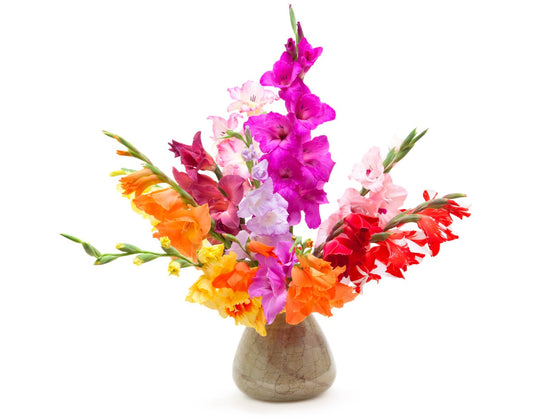
Gladioli
Grow gladioli from corms in Australia: planting depth and timing for six zones, staking, feeding, cutting, lifting and storing, pests and the wild weed species.
| Position | Full sun, sheltered from wind |
|---|---|
| Depth | 10 to 15 cm, flat side down |
| Spacing | 10 to 15 cm |
| First pick | 13 to 17 weeks from planting |